

 登录
登录
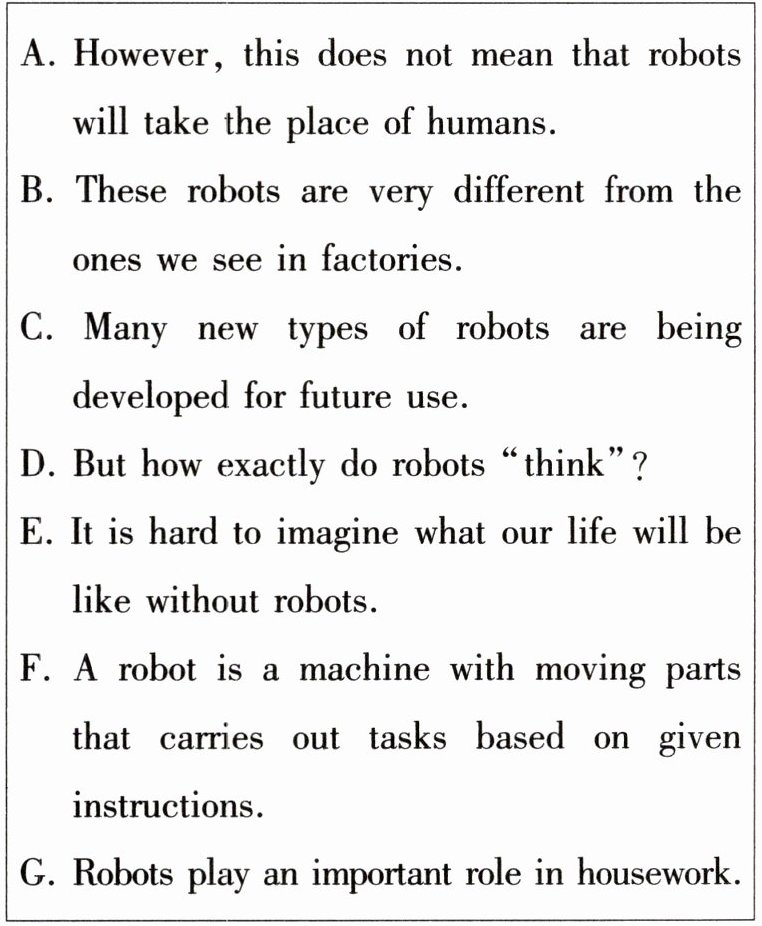
第二节 根据短文内容,从选项中选出能填入空白处的最佳选项。选项中有两项为多余选项。
Nowadays, robots are widely used in different industries. 16.
work in factories, where they take on boring tasks that need to be done in the same way every time. Some robots can work in deep oceans. These robots are more than just simple moving machines; they are actually “thinking” devices.
17.
Known as the Mars Exploration Rovers, they have metal and plastic bodies to protect their mechanical parts. 18.
What will robots be able to do in the future? 19.
项目式作业——科技之光
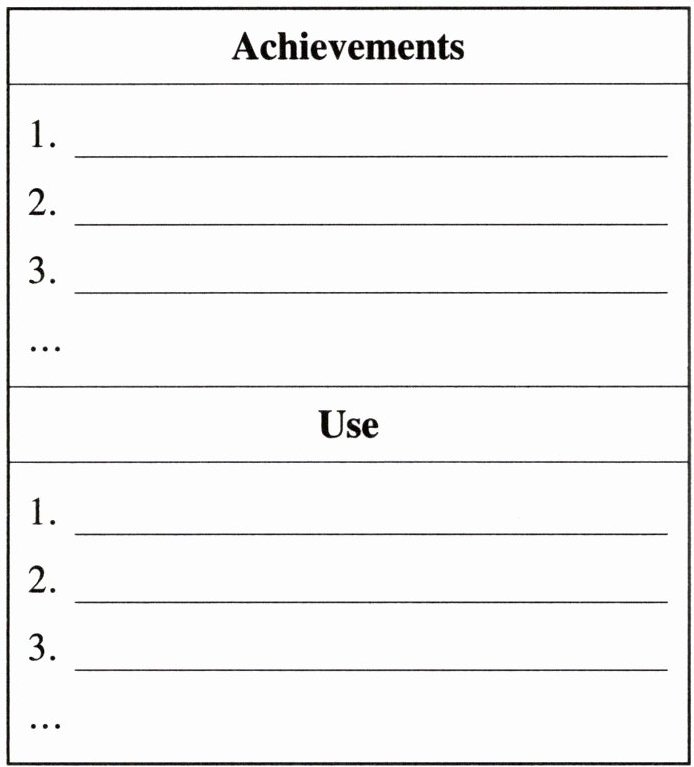
List China’s achievements in science and technology.
Nowadays, robots are widely used in different industries. 16.
F
Most of themwork in factories, where they take on boring tasks that need to be done in the same way every time. Some robots can work in deep oceans. These robots are more than just simple moving machines; they are actually “thinking” devices.
17.
D
A robot’s “thinking” ability comes from programming. A program is a set of computer instructions that tell the robot exactly what to do. Chips(芯片)play an important role in helping robots finish their tasks. In fact, two advanced robots are currently on Mars, exploring the planet.Known as the Mars Exploration Rovers, they have metal and plastic bodies to protect their mechanical parts. 18.
B
Their “brains” are computers, and their “eyes” are cameras. These robots have sent a lot of photos and information about Mars’ surface back to Earth.What will robots be able to do in the future? 19.
C
. For example, one type of robot will be able to recognize human voices and have conversations with people. It is expected to be used as a part of home security systems. Another kind of robot is able to carry bags and open doors. It can walk forward and backward, turn smoothly without stopping, and even climb stairs. Besides, it can keep its balance on rough (粗糙的) ground. Some people think that robots may be able to do almost everything in the future. 20. A
. They are not designed to replace humans, but to make difficult and tiring tasks easier for us.项目式作业——科技之光
List China’s achievements in science and technology.
答案
16. F 17. D 18. B 19. C 20. A
项目式作业
答案略。
项目式作业
答案略。
解析
【分析】
本题为英语七选五题型,解题思路如下:1. 通读全文,明确文章主旨(围绕机器人的应用、能力来源、火星探测应用及未来发展展开);2. 定位每个空格前后的关键信息,分析句子间的逻辑关系(如引出下文、过渡衔接、举例说明、转折呼应等);3. 结合选项逐一匹配,排除多余选项,确定最佳答案。
【解析】
16. 空格前提及机器人广泛应用于不同行业,空格后说明大部分机器人在工厂承担重复任务,需填入衔接行业应用具体场景的内容,对应选项F;
17. 空格后阐述机器人“思考”能力的来源,需填入引出该话题的内容,对应选项D;
18. 空格前介绍火星探测器的身体构造,空格后说明其“大脑”“眼睛”的功能,需填入衔接构造与功能的过渡内容,对应选项B;
19. 空格前提问未来机器人的能力,空格后举例说明机器人的具体功能,需填入引出未来功能话题的内容,对应选项C;
20. 空格前提及有人认为机器人可做所有事,空格后转折说明机器人的实际作用,需填入衔接转折逻辑的内容,对应选项A;
项目式作业为开放性题目,答案略。
【答案】16.F 17.D 18.B 19.C 20.A;项目式作业答案略
【知识点】英语阅读理解(七选五题型)
【点评】本题考查学生对英语文章上下文逻辑衔接的理解与推理能力,需结合语境和逻辑关系匹配选项,难度适中。
【难度系数】0.6
本题为英语七选五题型,解题思路如下:1. 通读全文,明确文章主旨(围绕机器人的应用、能力来源、火星探测应用及未来发展展开);2. 定位每个空格前后的关键信息,分析句子间的逻辑关系(如引出下文、过渡衔接、举例说明、转折呼应等);3. 结合选项逐一匹配,排除多余选项,确定最佳答案。
【解析】
16. 空格前提及机器人广泛应用于不同行业,空格后说明大部分机器人在工厂承担重复任务,需填入衔接行业应用具体场景的内容,对应选项F;
17. 空格后阐述机器人“思考”能力的来源,需填入引出该话题的内容,对应选项D;
18. 空格前介绍火星探测器的身体构造,空格后说明其“大脑”“眼睛”的功能,需填入衔接构造与功能的过渡内容,对应选项B;
19. 空格前提问未来机器人的能力,空格后举例说明机器人的具体功能,需填入引出未来功能话题的内容,对应选项C;
20. 空格前提及有人认为机器人可做所有事,空格后转折说明机器人的实际作用,需填入衔接转折逻辑的内容,对应选项A;
项目式作业为开放性题目,答案略。
【答案】16.F 17.D 18.B 19.C 20.A;项目式作业答案略
【知识点】英语阅读理解(七选五题型)
【点评】本题考查学生对英语文章上下文逻辑衔接的理解与推理能力,需结合语境和逻辑关系匹配选项,难度适中。
【难度系数】0.6
