

 登录
登录
九、提素养 实践创新 毛毛想去英国,读一读他
在网站的提问和收到的回复,完成任务。
Maomao: I want to visit the UK in July(七
月).
There are two replies(回复).
Ben: In the UK, people often talk about
the weather. It is summer from June
(六月) to August(八月). But in the UK,
people can have four seasons in a day.
Maybe it's a warm "spring" morning
when you go outside, but it's very
cold in the afternoon just like in
winter. And it rains a lot.
Tommy: It often rains in the UK. Maybe
it's sunny now. After an hour, it's
raining cats and dogs(瓢泼大雨).
And then it's windy, cloudy ... And
it's rainy again later on. So when
you see some British people take
umbrellas or raincoats with them
on a warm sunny morning, do not
laugh at(嘲笑) them. If you don't
take an umbrella or a raincoat,
maybe you will regret it.
任务一:在"?"处,毛毛可能问了什么?
(
B. What's the weather like there
C. What's the best time to go there
任务二:看完网友的回复,毛毛有几点疑惑,
(
to(到达) the UK?
—It is
A. summer B. winter C. autumn
(
A. 后悔 B. 生气 C. 失望
任务三:毛毛用备忘录记下了几个要点,请根
据回复判断是(√)否(×)正确。
□ It is often sunny in the UK in summer.
□ I should take an umbrella or a
raincoat with me in the UK.
□ The weather in the UK is changeable
(多变的) in summer.
在网站的提问和收到的回复,完成任务。
Maomao: I want to visit the UK in July(七
月).
What's the weather like there
?There are two replies(回复).
Ben: In the UK, people often talk about
the weather. It is summer from June
(六月) to August(八月). But in the UK,
people can have four seasons in a day.
Maybe it's a warm "spring" morning
when you go outside, but it's very
cold in the afternoon just like in
winter. And it rains a lot.
Tommy: It often rains in the UK. Maybe
it's sunny now. After an hour, it's
raining cats and dogs(瓢泼大雨).
And then it's windy, cloudy ... And
it's rainy again later on. So when
you see some British people take
umbrellas or raincoats with them
on a warm sunny morning, do not
laugh at(嘲笑) them. If you don't
take an umbrella or a raincoat,
maybe you will regret it.
任务一:在"?"处,毛毛可能问了什么?
(
B
)A. Which place should I visitB. What's the weather like there
C. What's the best time to go there
任务二:看完网友的回复,毛毛有几点疑惑,
(
A
)1. —Which season is it when I getto(到达) the UK?
—It is
summer
.A. summer B. winter C. autumn
(
A
)2. What does "regret" mean here?A. 后悔 B. 生气 C. 失望
任务三:毛毛用备忘录记下了几个要点,请根
据回复判断是(√)否(×)正确。
□ It is often sunny in the UK in summer.
□ I should take an umbrella or a
raincoat with me in the UK.
□ The weather in the UK is changeable
(多变的) in summer.
答案
九、任务一:B
任务二:1.A 2.A
任务三:× √ √
解析
任务一:
通过Ben和Tommy的两条回复发现回答的主要
内容与天气有关。在英国,人们可以在一天中体
验四季,英国天气多变,还经常下雨,由此可知毛
毛的问题是那里的天气怎么样,故选B。A选项问
的是"我应该参观哪个地方",C选项问的是"去那
里的最佳时间是什么时候",这两个选项与下文的
回复都不相符。
任务二:
1. 句意:——当我到英国的时候是哪个季节?
——是________。
依据:Maomao: I want to visit the UK in July.
Ben: ... It is summer from June to August.
分析:毛毛七月去英国,在英国六至八月是夏季,
故选A。
2. 句意:"regret"在这里是什么意思?
分析:结合Ben和Tommy的回复可知,英国经常
下雨,一天中天气多变,可能早上还是大晴
天,不一会儿就下雨了,所以如果你不带雨
伞或雨衣的话,(突然下雨被淋湿时)可能就
会后悔,由此可猜测此处regret是"后悔"的
意思,故选A。
任务三:
句意:英国的夏天经常是晴天。
在英国我应该随身携带一把雨伞或一件雨衣。
英国夏天的天气是多变的。
分析:由Ben和Tommy的回复中"And it rains a
lot."和"It often rains in the UK."可知,英国经
常下雨,并非经常是晴天,第1句错误;英国经
常下雨,一天中天气多变,带上雨伞或雨衣是
明智的,第2句正确;综合两人的回复可知,英
国夏天天气多变,能一天体验四季,经历阴晴
雨的状况,第3句正确。
任务二:1.A 2.A
任务三:× √ √
解析
任务一:
通过Ben和Tommy的两条回复发现回答的主要
内容与天气有关。在英国,人们可以在一天中体
验四季,英国天气多变,还经常下雨,由此可知毛
毛的问题是那里的天气怎么样,故选B。A选项问
的是"我应该参观哪个地方",C选项问的是"去那
里的最佳时间是什么时候",这两个选项与下文的
回复都不相符。
任务二:
1. 句意:——当我到英国的时候是哪个季节?
——是________。
依据:Maomao: I want to visit the UK in July.
Ben: ... It is summer from June to August.
分析:毛毛七月去英国,在英国六至八月是夏季,
故选A。
2. 句意:"regret"在这里是什么意思?
分析:结合Ben和Tommy的回复可知,英国经常
下雨,一天中天气多变,可能早上还是大晴
天,不一会儿就下雨了,所以如果你不带雨
伞或雨衣的话,(突然下雨被淋湿时)可能就
会后悔,由此可猜测此处regret是"后悔"的
意思,故选A。
任务三:
句意:英国的夏天经常是晴天。
在英国我应该随身携带一把雨伞或一件雨衣。
英国夏天的天气是多变的。
分析:由Ben和Tommy的回复中"And it rains a
lot."和"It often rains in the UK."可知,英国经
常下雨,并非经常是晴天,第1句错误;英国经
常下雨,一天中天气多变,带上雨伞或雨衣是
明智的,第2句正确;综合两人的回复可知,英
国夏天天气多变,能一天体验四季,经历阴晴
雨的状况,第3句正确。
解析
【分析】
我们可以分任务逐步思考:
1. 任务一:先观察两条回复的核心内容,Ben和Tommy都在描述英国的天气特点,比如一天四季、经常下雨等,所以毛毛的问题应该和天气相关,据此排除询问景点和最佳出行时间的选项。
2. 任务二:第1题,根据原文中“July(七月)”以及“It is summer from June to August”的信息,七月处于六到八月的区间,对应夏季;第2题,结合上下文,英国天气多变,晴天可能突然变雨天,不带雨具会遭遇淋雨的情况,由此推测“regret”的含义是“后悔”。
3. 任务三:逐一对照原文内容判断正误,原文提到英国经常下雨,所以“经常晴天”的表述错误;回复提醒要带雨具,所以第二点正确;原文明确说英国一天能经历四季、天气多变,所以第三点正确。
【解析】
任务一:
通过阅读Ben和Tommy的回复可知,两人的回答均围绕英国的天气展开,包括天气多变、降雨频繁等内容。A选项询问参观地点,C选项询问最佳出行时间,均与回复内容不符,只有B选项“那里的天气怎么样”符合语境,故选B。
任务二:
1. 根据原文“Maomao: I want to visit the UK in July”以及“Ben: ... It is summer from June to August”可知,七月处于英国夏季的时间范围(六月至八月),所以到达英国时是夏季,选A。
2. 结合回复内容,英国天气多变,晴天可能很快转为雨天,若不带雨伞或雨衣,很可能会被淋湿,此时会产生“后悔”的情绪,由此可推测“regret”在这里的意思是“后悔”,选A。
任务三:
1. 原文提到“And it rains a lot.”和“It often rains in the UK.”,说明英国夏季经常降雨,并非经常晴天,所以该表述错误(×)。
2. 回复中提到“So when you see some British people take umbrellas or raincoats with them on a warm sunny morning, do not laugh at them. If you don't take an umbrella or a raincoat, maybe you will regret it.”,说明在英国需要随身携带雨伞或雨衣,该表述正确(√)。
3. 根据Ben的回复“people can have four seasons in a day”以及Tommy的回复描述天气的快速变化,可知英国夏季天气多变,该表述正确(√)。
【答案】
九、任务一:B
任务二:1.A 2.A
任务三:× √ √
【知识点】
1. 细节理解
2. 词义猜测
3. 推理判断
【点评】
本题围绕英国天气这一贴近生活的话题展开,考查学生英语阅读中的信息提取、词义猜测和推理判断能力,同时渗透了英国的天气文化常识,有助于提升学生在实际场景中的英语运用能力。
【难度系数】
0.8
我们可以分任务逐步思考:
1. 任务一:先观察两条回复的核心内容,Ben和Tommy都在描述英国的天气特点,比如一天四季、经常下雨等,所以毛毛的问题应该和天气相关,据此排除询问景点和最佳出行时间的选项。
2. 任务二:第1题,根据原文中“July(七月)”以及“It is summer from June to August”的信息,七月处于六到八月的区间,对应夏季;第2题,结合上下文,英国天气多变,晴天可能突然变雨天,不带雨具会遭遇淋雨的情况,由此推测“regret”的含义是“后悔”。
3. 任务三:逐一对照原文内容判断正误,原文提到英国经常下雨,所以“经常晴天”的表述错误;回复提醒要带雨具,所以第二点正确;原文明确说英国一天能经历四季、天气多变,所以第三点正确。
【解析】
任务一:
通过阅读Ben和Tommy的回复可知,两人的回答均围绕英国的天气展开,包括天气多变、降雨频繁等内容。A选项询问参观地点,C选项询问最佳出行时间,均与回复内容不符,只有B选项“那里的天气怎么样”符合语境,故选B。
任务二:
1. 根据原文“Maomao: I want to visit the UK in July”以及“Ben: ... It is summer from June to August”可知,七月处于英国夏季的时间范围(六月至八月),所以到达英国时是夏季,选A。
2. 结合回复内容,英国天气多变,晴天可能很快转为雨天,若不带雨伞或雨衣,很可能会被淋湿,此时会产生“后悔”的情绪,由此可推测“regret”在这里的意思是“后悔”,选A。
任务三:
1. 原文提到“And it rains a lot.”和“It often rains in the UK.”,说明英国夏季经常降雨,并非经常晴天,所以该表述错误(×)。
2. 回复中提到“So when you see some British people take umbrellas or raincoats with them on a warm sunny morning, do not laugh at them. If you don't take an umbrella or a raincoat, maybe you will regret it.”,说明在英国需要随身携带雨伞或雨衣,该表述正确(√)。
3. 根据Ben的回复“people can have four seasons in a day”以及Tommy的回复描述天气的快速变化,可知英国夏季天气多变,该表述正确(√)。
【答案】
九、任务一:B
任务二:1.A 2.A
任务三:× √ √
【知识点】
1. 细节理解
2. 词义猜测
3. 推理判断
【点评】
本题围绕英国天气这一贴近生活的话题展开,考查学生英语阅读中的信息提取、词义猜测和推理判断能力,同时渗透了英国的天气文化常识,有助于提升学生在实际场景中的英语运用能力。
【难度系数】
0.8
十、书面表达。
学校正在开展“我最喜欢的季节”的投票
活动。你也来投上一票吧!(不少于5句话)
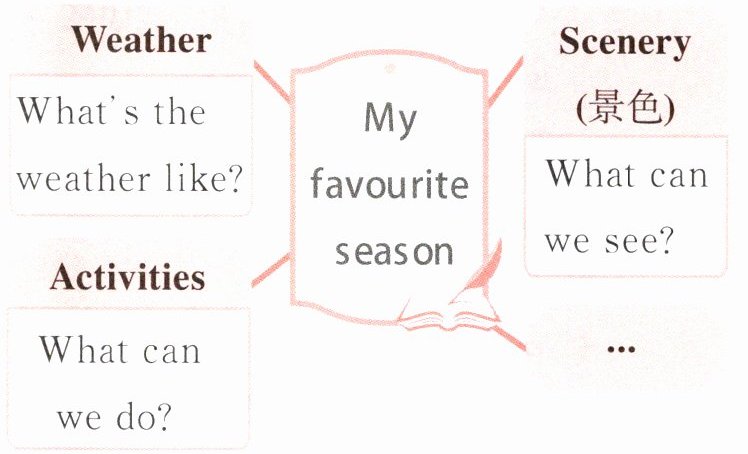
My favourite season
I like
is
I can
I
学校正在开展“我最喜欢的季节”的投票
活动。你也来投上一票吧!(不少于5句话)
My favourite season
I like
spring
best. The weatheris
warm
. There is/arelots of pretty flowers
.I can
plant trees
.I
often go on a picnic with my family on the weekend
.Spring is lovely
and I really love it
答案
示例:
My favourite season
I like spring best. The weather is warm. There
are lots of pretty flowers. I can plant trees. I often
go on a picnic with my family on the weekend.
Spring is lovely and I really love it.
解析
写作思路
1. 先选定最喜欢的季节。
2. 围绕天气、景色、活动等角度展开。
·天气:用形容词描述季节的天气;
·景色:介绍季节特有的景象;
·活动:列举该季节的典型活动。
3. 可补充个人感受。
注意事项
1. 季节、天气、活动类词汇要准确运用。
2. 至少写5句话。
My favourite season
I like spring best. The weather is warm. There
are lots of pretty flowers. I can plant trees. I often
go on a picnic with my family on the weekend.
Spring is lovely and I really love it.
解析
写作思路
1. 先选定最喜欢的季节。
2. 围绕天气、景色、活动等角度展开。
·天气:用形容词描述季节的天气;
·景色:介绍季节特有的景象;
·活动:列举该季节的典型活动。
3. 可补充个人感受。
注意事项
1. 季节、天气、活动类词汇要准确运用。
2. 至少写5句话。
解析
【分析】
首先要确定自己最喜欢的季节,接着按照题目提示的天气、景色、活动这几个核心角度展开写作:第一步用合适的形容词描述该季节的天气特点;第二步介绍这个季节独有的景色;第三步列举该季节的典型活动;最后补充自己对这个季节的感受,这样既能满足不少于5句话的要求,也能让内容完整丰富。
【解析】
1. 选定季节:先确定要写作的季节,示例中选择了spring(春天)。
2. 描述天气:用匹配的形容词描述季节天气,如用warm(温暖的)形容春天的天气。
3. 介绍景色:写出季节特有的景象,比如春天有lots of pretty flowers(许多漂亮的花)。
4. 列举活动:描述该季节可以开展的活动,比如plant trees(种树)、go on a picnic with my family(和家人去野餐)。
5. 补充感受:表达自己对这个季节的喜爱之情,如Spring is lovely and I really love it.
注意:要准确运用季节、天气、活动类词汇,确保句子数量不少于5句。
【答案】
My favourite season
I like spring best. The weather is warm. There are lots of pretty flowers. I can plant trees. I often go on a picnic with my family on the weekend. Spring is lovely and I really love it.
【知识点】
季节主题写作
英语语句组织
日常活动表达
【点评】
本题围绕“最喜欢的季节”展开写作,贴近学生日常生活,考察学生对季节、天气、活动相关英语词汇和句型的掌握,同时锻炼学生的语言组织和情景写作能力,内容灵活,学生可结合自身实际发挥。
【难度系数】
0.8
首先要确定自己最喜欢的季节,接着按照题目提示的天气、景色、活动这几个核心角度展开写作:第一步用合适的形容词描述该季节的天气特点;第二步介绍这个季节独有的景色;第三步列举该季节的典型活动;最后补充自己对这个季节的感受,这样既能满足不少于5句话的要求,也能让内容完整丰富。
【解析】
1. 选定季节:先确定要写作的季节,示例中选择了spring(春天)。
2. 描述天气:用匹配的形容词描述季节天气,如用warm(温暖的)形容春天的天气。
3. 介绍景色:写出季节特有的景象,比如春天有lots of pretty flowers(许多漂亮的花)。
4. 列举活动:描述该季节可以开展的活动,比如plant trees(种树)、go on a picnic with my family(和家人去野餐)。
5. 补充感受:表达自己对这个季节的喜爱之情,如Spring is lovely and I really love it.
注意:要准确运用季节、天气、活动类词汇,确保句子数量不少于5句。
【答案】
My favourite season
I like spring best. The weather is warm. There are lots of pretty flowers. I can plant trees. I often go on a picnic with my family on the weekend. Spring is lovely and I really love it.
【知识点】
季节主题写作
英语语句组织
日常活动表达
【点评】
本题围绕“最喜欢的季节”展开写作,贴近学生日常生活,考察学生对季节、天气、活动相关英语词汇和句型的掌握,同时锻炼学生的语言组织和情景写作能力,内容灵活,学生可结合自身实际发挥。
【难度系数】
0.8
