

 登录
登录
一、用 un-/im-/in-写出下面方框中形容词的否定形式
possible friendly formal tidy healthy
perfect important common happy
polite
1. un-:
2. im-:
3. in-:
possible friendly formal tidy healthy
perfect important common happy
polite
1. un-:
unfriendly, untidy, unhealthy, unimportant, uncommon, unhappy
2. im-:
impossible, imperfect, impolite
3. in-:
informal
答案
1. unfriendly, untidy, unhealthy,
unimportant, uncommon, unhappy
2. impossible, imperfect, impolite
3. informal
unimportant, uncommon, unhappy
2. impossible, imperfect, impolite
3. informal
解析
【分析】首先明确题目要求是用un-、im-、in-三个否定前缀将给定形容词变为否定形式,需先回忆这三个否定前缀的常见搭配规则:un-多用于普通形容词前构成否定;im-多用于以p开头的形容词前;in-多用于特定形容词(如formal)前。接着逐个判断每个形容词对应的否定前缀,再分类填入对应空格即可。
【解析】根据否定前缀的搭配规则:
1. 用un-构成否定的形容词:friendly→unfriendly,tidy→untidy,healthy→unhealthy,important→unimportant,common→uncommon,happy→unhappy;
2. 用im-构成否定的形容词:possible→impossible,perfect→imperfect,polite→impolite;
3. 用in-构成否定的形容词:formal→informal。
【答案】1. unfriendly, untidy, unhealthy, unimportant, uncommon, unhappy;2. impossible, imperfect, impolite;3. informal
【知识点】形容词否定前缀(un-/im-/in-)的用法
【点评】本题考察常见否定前缀的词汇变形,属于基础题型,需学生掌握常用否定前缀的适用范围。
【难度系数】0.6
【解析】根据否定前缀的搭配规则:
1. 用un-构成否定的形容词:friendly→unfriendly,tidy→untidy,healthy→unhealthy,important→unimportant,common→uncommon,happy→unhappy;
2. 用im-构成否定的形容词:possible→impossible,perfect→imperfect,polite→impolite;
3. 用in-构成否定的形容词:formal→informal。
【答案】1. unfriendly, untidy, unhealthy, unimportant, uncommon, unhappy;2. impossible, imperfect, impolite;3. informal
【知识点】形容词否定前缀(un-/im-/in-)的用法
【点评】本题考察常见否定前缀的词汇变形,属于基础题型,需学生掌握常用否定前缀的适用范围。
【难度系数】0.6
二、根据图片及语境提示填写单词
There are many rules and
1.
use chopsticks properly. 2.
, don't stick your
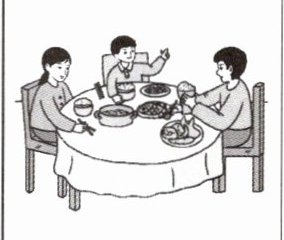
chopsticks into food. Secondly,
don't pull dishes close to you
with your chopsticks. 3.
, don't point at others
with your chopsticks. Lastly, hold
your chopsticks 4.
There are many rules and
1.
traditions
about how touse chopsticks properly. 2.
Firstly
, don't stick your
chopsticks into food. Secondly,
don't pull dishes close to you
with your chopsticks. 3.
Thirdly
, don't point at others
with your chopsticks. Lastly, hold
your chopsticks 4.
correctly
.答案
1. traditions 2. Firstly 3. Thirdly
4. correctly
4. correctly
解析
【分析】
先通读短文理解语境:第一空需与“rules(规则)”并列,结合筷子使用的相关内容,应填名词;后文出现“secondly(第二)”“lastly(最后)”,对应前面的序数词提示;最后一空修饰动词“hold”,需用副词,结合语境确定词义。
【解析】
1. 由“many rules and...”可知,此处需填可数名词复数,tradition(传统)符合筷子使用的相关文化语境,故填traditions;
2. 后文有“secondly”,对应第一点的序数词,故填Firstly(首先);
3. 前文为Firstly、Secondly,最后是lastly,对应第三点的序数词,故填Thirdly(第三);
4. 修饰动词“hold”需用副词,结合“正确使用筷子”的语境,故填correctly(正确地)。
【答案】1. traditions 2. Firstly 3. Thirdly 4. correctly
【知识点】英语词汇运用;序数词;副词用法
【点评】本题考查结合语境填写英语单词,需理解上下文逻辑和词性要求,难度适中。
【难度系数】0.6
先通读短文理解语境:第一空需与“rules(规则)”并列,结合筷子使用的相关内容,应填名词;后文出现“secondly(第二)”“lastly(最后)”,对应前面的序数词提示;最后一空修饰动词“hold”,需用副词,结合语境确定词义。
【解析】
1. 由“many rules and...”可知,此处需填可数名词复数,tradition(传统)符合筷子使用的相关文化语境,故填traditions;
2. 后文有“secondly”,对应第一点的序数词,故填Firstly(首先);
3. 前文为Firstly、Secondly,最后是lastly,对应第三点的序数词,故填Thirdly(第三);
4. 修饰动词“hold”需用副词,结合“正确使用筷子”的语境,故填correctly(正确地)。
【答案】1. traditions 2. Firstly 3. Thirdly 4. correctly
【知识点】英语词汇运用;序数词;副词用法
【点评】本题考查结合语境填写英语单词,需理解上下文逻辑和词性要求,难度适中。
【难度系数】0.6
两人一组,轮流问答
典型句式:
—Should we bring a gift when ... ?
—Yes, it's important to bring a gift when ...
典型句式:
—Should we bring a gift when ... ?
—Yes, it's important to bring a gift when ...
答案
示例对话:
1. —Should we bring a gift when we go to a classmate's birthday party?
—Yes, it's important to bring a gift when we go to a classmate's birthday party.
2. —Should we bring a gift when we visit our grandparents on the Spring Festival?
—Yes, it's important to bring a gift when we visit our grandparents on the Spring Festival.
1. —Should we bring a gift when we go to a classmate's birthday party?
—Yes, it's important to bring a gift when we go to a classmate's birthday party.
2. —Should we bring a gift when we visit our grandparents on the Spring Festival?
—Yes, it's important to bring a gift when we visit our grandparents on the Spring Festival.
解析
【分析】本题要求仿写给定的英语交际句式,需先明确问句结构为“Should we bring a gift when + 具体场景?”,答句结构为“Yes, it's important to bring a gift when + 对应场景”,需结合日常社交礼仪的常见场景(如参加生日派对、看望长辈等)补全内容,确保符合英语日常交际的表达习惯。
【解析】根据给定的典型句式,选取合适的日常社交场景,分别补全问句和答句中when引导的场景部分,形成符合要求的对话即可。例如选择参加同学生日派对、春节看望祖父母的场景,套入句式完成仿写。
【答案】示例对话:
1. —Should we bring a gift when we go to a classmate's birthday party?
—Yes, it's important to bring a gift when we go to a classmate's birthday party.
2. —Should we bring a gift when we visit our grandparents on the Spring Festival?
—Yes, it's important to bring a gift when we visit our grandparents on the Spring Festival.
【知识点】日常交际用语、英语句式运用
【点评】本题考查日常交际中关于是否带礼物的表达,贴近生活实际,要求学生掌握给定句式结构并灵活运用常见社交场景,难度较低。
【难度系数】0.3
【解析】根据给定的典型句式,选取合适的日常社交场景,分别补全问句和答句中when引导的场景部分,形成符合要求的对话即可。例如选择参加同学生日派对、春节看望祖父母的场景,套入句式完成仿写。
【答案】示例对话:
1. —Should we bring a gift when we go to a classmate's birthday party?
—Yes, it's important to bring a gift when we go to a classmate's birthday party.
2. —Should we bring a gift when we visit our grandparents on the Spring Festival?
—Yes, it's important to bring a gift when we visit our grandparents on the Spring Festival.
【知识点】日常交际用语、英语句式运用
【点评】本题考查日常交际中关于是否带礼物的表达,贴近生活实际,要求学生掌握给定句式结构并灵活运用常见社交场景,难度较低。
【难度系数】0.3
跟踪练习
—I
He invited us to visit his hometown in his letter.
—Do we
haven't met him for 3 years.
A. received; accept
B. accepted; receive
C. received; received
D. accepted; accepted
2. I'm so excited to see you. 见到你我很兴奋。
剖析 excited是"动词-ed形式"构成的形容词,常用于描述人的情感或心理状态,意为"感到……"。
bored感到无聊的 frightened感到害怕的 interested感兴趣的 tired感到疲倦的
拓展"动词-ing形式"构成的形容词的用法:
(1)描述事物的特征或性质。
interesting有趣的 exciting令人兴奋的 boring令人无聊的 frightening令人害怕的 amazing令人惊叹的
(2)描述人或事物引起的情感或反应。
surprising令人惊讶的 embarrassing令人尴尬的 encouraging令人鼓舞的
—I
received
a letter from Mike on Monday.He invited us to visit his hometown in his letter.
—Do we
accept
his invitation? Wehaven't met him for 3 years.
A. received; accept
B. accepted; receive
C. received; received
D. accepted; accepted
2. I'm so excited to see you. 见到你我很兴奋。
剖析 excited是"动词-ed形式"构成的形容词,常用于描述人的情感或心理状态,意为"感到……"。
bored感到无聊的 frightened感到害怕的 interested感兴趣的 tired感到疲倦的
拓展"动词-ing形式"构成的形容词的用法:
(1)描述事物的特征或性质。
interesting有趣的 exciting令人兴奋的 boring令人无聊的 frightening令人害怕的 amazing令人惊叹的
(2)描述人或事物引起的情感或反应。
surprising令人惊讶的 embarrassing令人尴尬的 encouraging令人鼓舞的
答案
1. A
解析
【分析】首先明确易混动词receive和accept的区别:receive侧重“客观上收到(不一定主动接受)”,accept侧重“主观上主动接受”。第一句语境是“我周一收到迈克的一封信”,是客观收到信件,需用receive的过去式received;第二句语境是“我们接受他的邀请吗?”,是询问主观是否接受邀请,需用动词原形accept,据此可确定正确选项。
【解析】1. 辨析动词含义:receive意为“收到(客观动作)”,accept意为“接受(主观意愿)”;2. 第一空:句中“收到信”是客观行为,用receive的过去式received;3. 第二空:助动词do后接动词原形,此处表达“接受邀请”的主观意愿,用accept,因此选A。
【答案】A
【知识点】动词词义辨析;一般过去时;动词原形
【点评】本题考查初中英语核心易混动词的词义辨析,需结合语境区分receive(客观收到)和accept(主观接受)的用法,同时掌握助动词后接动词原形、一般过去时动词变形的规则,属于基础题型,难度适中。
【难度系数】0.7
【解析】1. 辨析动词含义:receive意为“收到(客观动作)”,accept意为“接受(主观意愿)”;2. 第一空:句中“收到信”是客观行为,用receive的过去式received;3. 第二空:助动词do后接动词原形,此处表达“接受邀请”的主观意愿,用accept,因此选A。
【答案】A
【知识点】动词词义辨析;一般过去时;动词原形
【点评】本题考查初中英语核心易混动词的词义辨析,需结合语境区分receive(客观收到)和accept(主观接受)的用法,同时掌握助动词后接动词原形、一般过去时动词变形的规则,属于基础题型,难度适中。
【难度系数】0.7
