

 登录
登录
九、阅读与表达
The history of sushi
Maybe many of us like sushi. Do you know when and how people invented sushi?
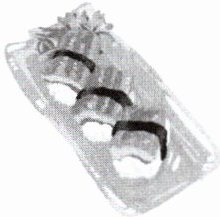
Sushi is popular all over the world. It has a history of at least 1,800 years.
The earliest sushi appeared in China in 200 AD. At that time, "sushi" was a way of preserving food. People put fish in rice to ferment. In this way, people could preserve the fish for some time. The rice was thrown away and the fish was eaten when it was wanted.
By the 7th century, this method of preserving food had spread to Japan. The Japanese began to eat the rice with the fish. In the early 19th century, Hanaya Yohei placed a piece of fresh fish on top of an oblong-shaped piece of seasoned rice. That is now the common way of eating Japanese sushi.
Sushi is still changing. People create new styles of sushi every year. The history of sushi is far from over.
1. When did the earliest sushi appear in China?
2. Why did Chinese people put fish in rice to ferment at that time?
3. What is the common way of eating Japanese sushi now?
The history of sushi
Maybe many of us like sushi. Do you know when and how people invented sushi?
Sushi is popular all over the world. It has a history of at least 1,800 years.
The earliest sushi appeared in China in 200 AD. At that time, "sushi" was a way of preserving food. People put fish in rice to ferment. In this way, people could preserve the fish for some time. The rice was thrown away and the fish was eaten when it was wanted.
By the 7th century, this method of preserving food had spread to Japan. The Japanese began to eat the rice with the fish. In the early 19th century, Hanaya Yohei placed a piece of fresh fish on top of an oblong-shaped piece of seasoned rice. That is now the common way of eating Japanese sushi.
Sushi is still changing. People create new styles of sushi every year. The history of sushi is far from over.
1. When did the earliest sushi appear in China?
2. Why did Chinese people put fish in rice to ferment at that time?
3. What is the common way of eating Japanese sushi now?
答案
1. In 200 AD.
2. Because people could preserve the fish for some time in this way.
3. To place a piece of fresh fish on top of an oblong-shaped piece of seasoned rice.
2. Because people could preserve the fish for some time in this way.
3. To place a piece of fresh fish on top of an oblong-shaped piece of seasoned rice.
解析
【分析】
本题为英语阅读理解细节题,解题思路是:先阅读题目,标记每个问题的关键词;再带着关键词回到原文中定位对应段落;最后从定位的句子中提取准确答案,确保答案与原文表述一致。
【解析】
1. 针对问题1,关键词为“earliest sushi appear in China”,定位原文第三段第一句“The earliest sushi appeared in China in 200 AD.”,直接提取时间即可。
2. 针对问题2,关键词为“put fish in rice to ferment”,定位原文第三段“People put fish in rice to ferment. In this way, people could preserve the fish for some time.”,可知原因是为了保存鱼一段时间。
3. 针对问题3,关键词为“common way of eating Japanese sushi”,定位原文第四段“In the early 19th century, Hanaya Yohei placed a piece of fresh fish on top of an oblong-shaped piece of seasoned rice. That is now the common way of eating Japanese sushi.”,提取该做法即可。
【答案】
1. In 200 AD.
2. Because people could preserve the fish for some time in this way.
3. To place a piece of fresh fish on top of an oblong-shaped piece of seasoned rice.
【知识点】
英语阅读理解、细节信息查找
【点评】
本题是基础的英语阅读理解细节题,考查学生定位并提取原文信息的能力,难度较低,只要能准确找到原文对应内容就能答对,适合巩固英语阅读的基础技能。
【难度系数】
0.9
本题为英语阅读理解细节题,解题思路是:先阅读题目,标记每个问题的关键词;再带着关键词回到原文中定位对应段落;最后从定位的句子中提取准确答案,确保答案与原文表述一致。
【解析】
1. 针对问题1,关键词为“earliest sushi appear in China”,定位原文第三段第一句“The earliest sushi appeared in China in 200 AD.”,直接提取时间即可。
2. 针对问题2,关键词为“put fish in rice to ferment”,定位原文第三段“People put fish in rice to ferment. In this way, people could preserve the fish for some time.”,可知原因是为了保存鱼一段时间。
3. 针对问题3,关键词为“common way of eating Japanese sushi”,定位原文第四段“In the early 19th century, Hanaya Yohei placed a piece of fresh fish on top of an oblong-shaped piece of seasoned rice. That is now the common way of eating Japanese sushi.”,提取该做法即可。
【答案】
1. In 200 AD.
2. Because people could preserve the fish for some time in this way.
3. To place a piece of fresh fish on top of an oblong-shaped piece of seasoned rice.
【知识点】
英语阅读理解、细节信息查找
【点评】
本题是基础的英语阅读理解细节题,考查学生定位并提取原文信息的能力,难度较低,只要能准确找到原文对应内容就能答对,适合巩固英语阅读的基础技能。
【难度系数】
0.9
