

 登录
登录
六、信息还原。
阅读下面短文,从短文后的选项中选出可以填入空白处的最佳选项。选项中有两项为多余选项。
Napoga is a 12-year-old girl in Ghana(加纳),Africa. It is hard for her family to get clean water. Every morning, she leaves home at half past five to get clean water for her family in a village far away. 1 She has no time to go to school or to play with her friends. Millions of people in the world are facing the problem of water shortage like Napoga. They can't get enough clean water to keep healthy.
Earth Day is on April 22. 2 The water we use is the most important natural resource on the earth. Water covers about 70% of the earth's surface. 3 We can't use it for many things. Fresh water covers only a little of the earth's surface.
4 But that doesn't mean you don't have to worry about water. We all face serious water problems. One of them is water pollution. Many kinds of things from cars, factories, farms and homes make our rivers, lakes and oceans dirty.
Polluted water is very bad for people to drink. 5 Now, many fish are dying out.
Scientists say that in 30 years, more than half of the people in the world won't have enough clean water. We have to learn how to save more water for ourselves and our children.
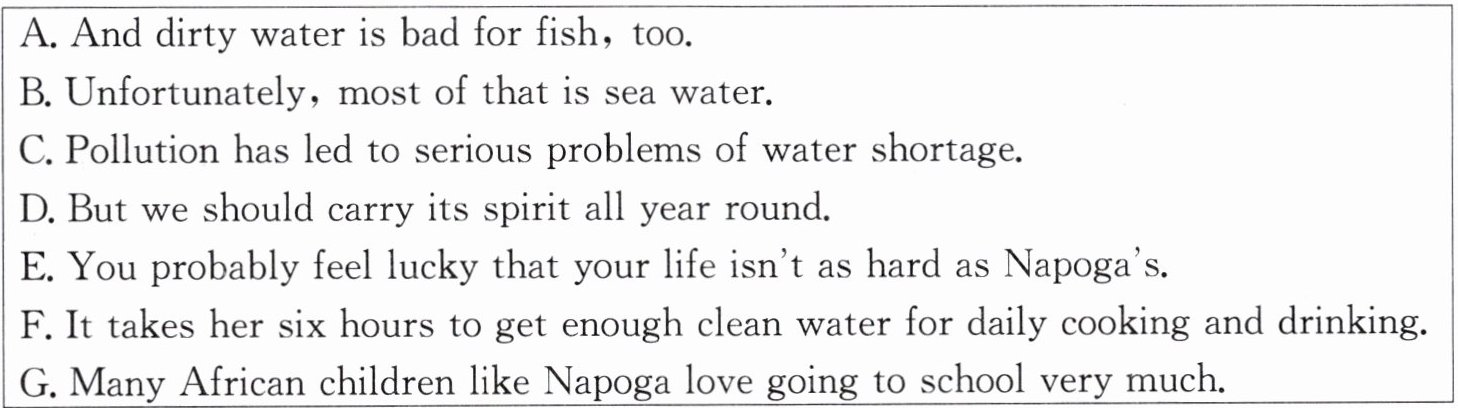
A. And dirty water is bad for fish, too.
B. Unfortunately, most of that is sea water.
C. Pollution has led to serious problems of water shortage.
D. But we should carry its spirit all year round.
E. You probably feel lucky that your life isn't as hard as Napoga's.
F. It takes her six hours to get enough clean water for daily cooking and drinking.
G. Many African children like Napoga love going to school very much.
1.
2.
3.
4.
5.
阅读下面短文,从短文后的选项中选出可以填入空白处的最佳选项。选项中有两项为多余选项。
Napoga is a 12-year-old girl in Ghana(加纳),Africa. It is hard for her family to get clean water. Every morning, she leaves home at half past five to get clean water for her family in a village far away. 1 She has no time to go to school or to play with her friends. Millions of people in the world are facing the problem of water shortage like Napoga. They can't get enough clean water to keep healthy.
Earth Day is on April 22. 2 The water we use is the most important natural resource on the earth. Water covers about 70% of the earth's surface. 3 We can't use it for many things. Fresh water covers only a little of the earth's surface.
4 But that doesn't mean you don't have to worry about water. We all face serious water problems. One of them is water pollution. Many kinds of things from cars, factories, farms and homes make our rivers, lakes and oceans dirty.
Polluted water is very bad for people to drink. 5 Now, many fish are dying out.
Scientists say that in 30 years, more than half of the people in the world won't have enough clean water. We have to learn how to save more water for ourselves and our children.
A. And dirty water is bad for fish, too.
B. Unfortunately, most of that is sea water.
C. Pollution has led to serious problems of water shortage.
D. But we should carry its spirit all year round.
E. You probably feel lucky that your life isn't as hard as Napoga's.
F. It takes her six hours to get enough clean water for daily cooking and drinking.
G. Many African children like Napoga love going to school very much.
1.
F
2.
D
3.
B
4.
E
5.
A
答案
六、1. F 2. D 3. B 4. E 5. A
解析
【分析】
这是一篇七选五信息还原题,解题思路如下:首先通读全文,梳理文章围绕水资源短缺、水资源保护展开的叙事逻辑,逐空结合前后文的线索匹配选项:
1. 第1空前文介绍Napoga每天很早出门去很远的村子取净水,后文说她没有时间上学、和朋友玩耍,需要填入衔接“取水”和“时间不够”的内容,对应描述取水耗时的选项即可。
2. 第2空前文提到“地球日是4月22日”,后文开始介绍水资源的重要性,需要填入衔接地球日主题、延伸到长期关注水资源的内容。
3. 第3空前文说地球表面70%被水覆盖,后文说明我们无法大量使用这些水、淡水占比极低,需要填入解释“大部分水无法直接使用”的过渡内容。
4. 第4空后文出现转折词“但这不代表你不需要担忧水资源问题”,前文需要铺垫“你觉得自己不需要为取水发愁”的相关表述,形成合理转折逻辑。
5. 第5空前文说明污水对人体有害,后文提到很多鱼类正在灭绝,需要填入衔接污水和鱼类危害的过渡内容。
最后验证剩余选项不符合任意空的逻辑,排除多余选项即可得到答案。
【解析】
1. 空前句提到Napoga每天五点半离家去远方的村子取净水,空后句说明她没有时间上学和玩耍,F选项“她要花六个小时才能获取足够的净水用于日常做饭和饮用”刚好承接取水的行为,解释了她没有空余时间的原因,逻辑通顺。
2. 空前句点明地球日的日期,空后转入对水资源重要性的介绍,D选项“但我们应该全年践行它(地球日)的精神”,将单日的地球日主题延伸到长期关注水资源保护的语境中,衔接自然。
3. 空前句说明地球表面70%被水覆盖,空后句指出我们无法大量使用这些水、淡水占比极低,B选项“不幸的是,其中大部分是海水”,解释了为什么地球表面水占比很高但可用淡水极少的矛盾,符合逻辑。
4. 空后句以转折词开头,说明你依然需要担忧水资源问题,E选项“你可能觉得自己很幸运,你的生活不像Napoga的那么艰难”,先铺垫读者的“幸运感”,再通过转折引出依然要关注水问题的观点,逻辑连贯。
5. 空前句说明被污染的水对人体饮用有害,空后句提到现在很多鱼类正在灭绝,A选项“脏水对鱼类也有害”,承接前文对人的危害,引出后文鱼类灭绝的结果,前后呼应。
【答案】
1. F 2. D 3. B 4. E 5. A
【知识点】
七选五阅读还原,上下文逻辑衔接,语篇整体理解
【点评】
本题以水资源保护为主题,重点考察学生对语篇顺承、转折等逻辑关系的把握,解题时通过定位前后文的关键词和逻辑线索,就能快速匹配对应选项,多余选项和文章语境的契合度很低,干扰性较弱。
【难度系数】
0.7
这是一篇七选五信息还原题,解题思路如下:首先通读全文,梳理文章围绕水资源短缺、水资源保护展开的叙事逻辑,逐空结合前后文的线索匹配选项:
1. 第1空前文介绍Napoga每天很早出门去很远的村子取净水,后文说她没有时间上学、和朋友玩耍,需要填入衔接“取水”和“时间不够”的内容,对应描述取水耗时的选项即可。
2. 第2空前文提到“地球日是4月22日”,后文开始介绍水资源的重要性,需要填入衔接地球日主题、延伸到长期关注水资源的内容。
3. 第3空前文说地球表面70%被水覆盖,后文说明我们无法大量使用这些水、淡水占比极低,需要填入解释“大部分水无法直接使用”的过渡内容。
4. 第4空后文出现转折词“但这不代表你不需要担忧水资源问题”,前文需要铺垫“你觉得自己不需要为取水发愁”的相关表述,形成合理转折逻辑。
5. 第5空前文说明污水对人体有害,后文提到很多鱼类正在灭绝,需要填入衔接污水和鱼类危害的过渡内容。
最后验证剩余选项不符合任意空的逻辑,排除多余选项即可得到答案。
【解析】
1. 空前句提到Napoga每天五点半离家去远方的村子取净水,空后句说明她没有时间上学和玩耍,F选项“她要花六个小时才能获取足够的净水用于日常做饭和饮用”刚好承接取水的行为,解释了她没有空余时间的原因,逻辑通顺。
2. 空前句点明地球日的日期,空后转入对水资源重要性的介绍,D选项“但我们应该全年践行它(地球日)的精神”,将单日的地球日主题延伸到长期关注水资源保护的语境中,衔接自然。
3. 空前句说明地球表面70%被水覆盖,空后句指出我们无法大量使用这些水、淡水占比极低,B选项“不幸的是,其中大部分是海水”,解释了为什么地球表面水占比很高但可用淡水极少的矛盾,符合逻辑。
4. 空后句以转折词开头,说明你依然需要担忧水资源问题,E选项“你可能觉得自己很幸运,你的生活不像Napoga的那么艰难”,先铺垫读者的“幸运感”,再通过转折引出依然要关注水问题的观点,逻辑连贯。
5. 空前句说明被污染的水对人体饮用有害,空后句提到现在很多鱼类正在灭绝,A选项“脏水对鱼类也有害”,承接前文对人的危害,引出后文鱼类灭绝的结果,前后呼应。
【答案】
1. F 2. D 3. B 4. E 5. A
【知识点】
七选五阅读还原,上下文逻辑衔接,语篇整体理解
【点评】
本题以水资源保护为主题,重点考察学生对语篇顺承、转折等逻辑关系的把握,解题时通过定位前后文的关键词和逻辑线索,就能快速匹配对应选项,多余选项和文章语境的契合度很低,干扰性较弱。
【难度系数】
0.7
