

 登录
登录
五、首字母填空
根据短文内容及首字母提示写出所缺单词,使短文意思完整,每空一词。
体裁: 说明文 主题: 文学作品 难度: ★★★★★ 建议用时: 8 min 正确率: /10
Classical Chinese is a script(书写) form of the Chinese language used in ancient China, mainly based on the language from before the Qin period. Before 1918, all articles were w 1 in Classical Chinese. Today, we generally call it “wenyanwen”.
Classical Chinese is now an important c 2 for every middle school student. Learning it helps us understand h 3 ancient Chinese spoke and thought. I would like to r 4 a book for students who are deeply interested in Classical Chinese.
Ancient Chinese is a famous series with 4 books and 14 units. Each unit has three parts: anthology(文选), common words and archaic Chinese(古汉语通论). Anthology p 5 many famous articles from The Analects, Stratagems of the Warring States, Zuo Tradition and The Works of Mencius. These works have made great contributions to Chinese literary history. After reading the anthology, you will learn how to tell the d 6 between ancient and modern words. For example, in spoken language, we say “你吃饭了吗?”, but in Classical Chinese, it becomes “饭否?”. Archaic Chinese tells the b 7 of the anthlogy, helping you better understand the stories.
These parts are c 8 connected. If you only read the anthology, you will only understand what the teacher explains. If you only study common words but don’t read the anthology, you will only get some k 9 about words. Without learning archaic Chinese, you cannot truly master Classical Chinese as a w 10 . So, you must study all three parts together. If you enjoy Classical Chinese, we hope this book will help deepen your interest in Classical Chinese, history and literature.
1. 2. 3. 4. 5.
6. 7. 8. 9. 10.
根据短文内容及首字母提示写出所缺单词,使短文意思完整,每空一词。
体裁: 说明文 主题: 文学作品 难度: ★★★★★ 建议用时: 8 min 正确率: /10
Classical Chinese is a script(书写) form of the Chinese language used in ancient China, mainly based on the language from before the Qin period. Before 1918, all articles were w 1 in Classical Chinese. Today, we generally call it “wenyanwen”.
Classical Chinese is now an important c 2 for every middle school student. Learning it helps us understand h 3 ancient Chinese spoke and thought. I would like to r 4 a book for students who are deeply interested in Classical Chinese.
Ancient Chinese is a famous series with 4 books and 14 units. Each unit has three parts: anthology(文选), common words and archaic Chinese(古汉语通论). Anthology p 5 many famous articles from The Analects, Stratagems of the Warring States, Zuo Tradition and The Works of Mencius. These works have made great contributions to Chinese literary history. After reading the anthology, you will learn how to tell the d 6 between ancient and modern words. For example, in spoken language, we say “你吃饭了吗?”, but in Classical Chinese, it becomes “饭否?”. Archaic Chinese tells the b 7 of the anthlogy, helping you better understand the stories.
These parts are c 8 connected. If you only read the anthology, you will only understand what the teacher explains. If you only study common words but don’t read the anthology, you will only get some k 9 about words. Without learning archaic Chinese, you cannot truly master Classical Chinese as a w 10 . So, you must study all three parts together. If you enjoy Classical Chinese, we hope this book will help deepen your interest in Classical Chinese, history and literature.
1. 2. 3. 4. 5.
6. 7. 8. 9. 10.
答案
五、【语篇解读】本文是一篇说明文。文章主要推荐了学习文言文的书籍《古代汉语》。
1. written 根据上文“Classical Chinese is a script form of the Chinese language used in ancient China”可知文言文是中国古代使用的汉语书写形式,1918 年以前所有文章都用文言文书写;根据空前“were”可知此处用被动语态。故填 written。
2. course 根据空后“for every middle school student”并结合常识可知,文言文现在是每个中学生的一门重要课程。故填 course。
3. how 句意:学习它有助于我们理解古代中国人如何说话和思考。此处用“how”引导宾语从句。故填 how。
4. recommend 根据空后“for students who are deeply interested in Classical Chinese”和下文对《古代汉语》的介绍可知,作者给对文言文深感兴趣的学生推荐书籍;would like to do sth.表示“想要做某事”。故填 recommend。
5. picks 根据空后“many famous articles from The Analects, Stratagems of the Warring States, Zuo Tradition and The Works of Mencius”可知文选选取了《论语》《战国策》《左传》和《孟子》中的许多著名文章;句子时态是一般现在时,主语“Anthology”是单数,谓语动词用第三人称单数形式。故填 picks。
6. difference(s) 根据下文“For example, in spoken language, we say ‘你吃饭了吗?’, but in Classical Chinese, it becomes ‘饭否?’.”可知读完文选后,你将学会如何区分古今词汇;tell the difference(s) between...表示“区分……之间的差异”。故填 difference(s)。
7. background 根据空后“helping you better understand the stories”和下文“Without learning archaic Chinese, you cannot truly master Classical Chinese as a w 10.”可知古汉语通论介绍文选的背景知识,帮助你更好地理解故事。故填 background。
8. closely 根据下文“If you only read the anthology... So, you must study all three parts together.”可知文选、常用词和古汉语通论三个部分必须一起学习,由此可知这些部分紧密相连;修饰空后动词“connected”,应用副词。故填 closely。
9. knowledge 根据空前“If you only study common words but don't read the anthology”可知如果你只学习常用词,只会得到一些关于词汇的知识。故填 knowledge。
10. whole 根据下文“So, you must study all three parts together.”可知文选、常用词和古汉语通论三个部分必须一起学习,如果不学习古汉语通论,无法真正整体掌握文言文;as a whole 表示“总体上”。故填 whole。
1. written 根据上文“Classical Chinese is a script form of the Chinese language used in ancient China”可知文言文是中国古代使用的汉语书写形式,1918 年以前所有文章都用文言文书写;根据空前“were”可知此处用被动语态。故填 written。
2. course 根据空后“for every middle school student”并结合常识可知,文言文现在是每个中学生的一门重要课程。故填 course。
3. how 句意:学习它有助于我们理解古代中国人如何说话和思考。此处用“how”引导宾语从句。故填 how。
4. recommend 根据空后“for students who are deeply interested in Classical Chinese”和下文对《古代汉语》的介绍可知,作者给对文言文深感兴趣的学生推荐书籍;would like to do sth.表示“想要做某事”。故填 recommend。
5. picks 根据空后“many famous articles from The Analects, Stratagems of the Warring States, Zuo Tradition and The Works of Mencius”可知文选选取了《论语》《战国策》《左传》和《孟子》中的许多著名文章;句子时态是一般现在时,主语“Anthology”是单数,谓语动词用第三人称单数形式。故填 picks。
6. difference(s) 根据下文“For example, in spoken language, we say ‘你吃饭了吗?’, but in Classical Chinese, it becomes ‘饭否?’.”可知读完文选后,你将学会如何区分古今词汇;tell the difference(s) between...表示“区分……之间的差异”。故填 difference(s)。
7. background 根据空后“helping you better understand the stories”和下文“Without learning archaic Chinese, you cannot truly master Classical Chinese as a w 10.”可知古汉语通论介绍文选的背景知识,帮助你更好地理解故事。故填 background。
8. closely 根据下文“If you only read the anthology... So, you must study all three parts together.”可知文选、常用词和古汉语通论三个部分必须一起学习,由此可知这些部分紧密相连;修饰空后动词“connected”,应用副词。故填 closely。
9. knowledge 根据空前“If you only study common words but don't read the anthology”可知如果你只学习常用词,只会得到一些关于词汇的知识。故填 knowledge。
10. whole 根据下文“So, you must study all three parts together.”可知文选、常用词和古汉语通论三个部分必须一起学习,如果不学习古汉语通论,无法真正整体掌握文言文;as a whole 表示“总体上”。故填 whole。
解析
【分析】
解题时先通读全文,把握文章主旨(本文是推荐学习文言文的书籍《古代汉语》的说明文);接着逐句分析每个空格,结合首字母提示,从上下文语境、句子语法结构(如被动语态、时态、主谓一致)、固定搭配等角度推断合适的单词,确保填入的单词符合文意、语法及逻辑要求,最后验证所有单词使短文通顺完整。
【解析】
1. written:根据上文“Classical Chinese is a script form of the Chinese language used in ancient China”可知文言文是中国古代使用的汉语书写形式,1918年以前所有文章都用文言文书写;结合空前“were”可知此处用一般过去时的被动语态,结构为“were + 过去分词”,故填written。
2. course:根据空后“for every middle school student”及常识可知,文言文是每个中学生的一门重要课程,结合首字母c,故填course。
3. how:句意:学习它有助于我们理解古代中国人如何说话和思考。此处用how引导宾语从句,表方式,结合首字母h,故填how。
4. recommend:根据空后“for students who are deeply interested in Classical Chinese”及下文对《古代汉语》的介绍可知,作者要给对文言文感兴趣的学生推荐书籍;would like to do sth.表示“想要做某事”,结合首字母r,故填recommend。
5. picks:根据空后“many famous articles from The Analects...”可知文选选取了多部经典著作中的文章;句子时态为一般现在时,主语“Anthology”是单数,谓语动词用第三人称单数形式,结合首字母p,故填picks。
6. difference(s):根据下文举例(古今表达的不同)可知,读完文选后能学会区分古今词汇的差异;固定搭配tell the difference(s) between...表示“区分……之间的差异”,结合首字母d,故填difference(s)。
7. background:根据空后“helping you better understand the stories”及古汉语通论的作用可知,古汉语通论介绍文选的背景知识,帮助理解故事,结合首字母b,故填background。
8. closely:根据下文“必须一起学习三个部分”可知,文选、常用词和古汉语通论三个部分紧密相连;此处修饰动词connected,需用副词,结合首字母c,故填closely。
9. knowledge:根据空前“只学习常用词但不读文选”可知,这样只能获得一些关于词汇的知识,结合首字母k,故填knowledge。
10. whole:根据下文“必须一起学习三个部分”可知,不学习古汉语通论就无法真正整体掌握文言文;固定搭配as a whole表示“总体上,整体上”,结合首字母w,故填whole。
【答案】
1. written 2. course 3. how 4. recommend 5. picks 6. difference(s) 7. background 8. closely 9. knowledge 10. whole
【知识点】
首字母填空、说明文阅读理解、词汇运用
【点评】
本题为说明文类首字母填空题,围绕文言文学习及相关书籍推荐展开,难度较高,需要学生具备扎实的词汇储备、较强的语境理解能力和语法分析能力,能结合上下文逻辑、固定搭配及语法规则准确推断单词,全面考查学生的语言综合运用能力。
【难度系数】
0.1
解题时先通读全文,把握文章主旨(本文是推荐学习文言文的书籍《古代汉语》的说明文);接着逐句分析每个空格,结合首字母提示,从上下文语境、句子语法结构(如被动语态、时态、主谓一致)、固定搭配等角度推断合适的单词,确保填入的单词符合文意、语法及逻辑要求,最后验证所有单词使短文通顺完整。
【解析】
1. written:根据上文“Classical Chinese is a script form of the Chinese language used in ancient China”可知文言文是中国古代使用的汉语书写形式,1918年以前所有文章都用文言文书写;结合空前“were”可知此处用一般过去时的被动语态,结构为“were + 过去分词”,故填written。
2. course:根据空后“for every middle school student”及常识可知,文言文是每个中学生的一门重要课程,结合首字母c,故填course。
3. how:句意:学习它有助于我们理解古代中国人如何说话和思考。此处用how引导宾语从句,表方式,结合首字母h,故填how。
4. recommend:根据空后“for students who are deeply interested in Classical Chinese”及下文对《古代汉语》的介绍可知,作者要给对文言文感兴趣的学生推荐书籍;would like to do sth.表示“想要做某事”,结合首字母r,故填recommend。
5. picks:根据空后“many famous articles from The Analects...”可知文选选取了多部经典著作中的文章;句子时态为一般现在时,主语“Anthology”是单数,谓语动词用第三人称单数形式,结合首字母p,故填picks。
6. difference(s):根据下文举例(古今表达的不同)可知,读完文选后能学会区分古今词汇的差异;固定搭配tell the difference(s) between...表示“区分……之间的差异”,结合首字母d,故填difference(s)。
7. background:根据空后“helping you better understand the stories”及古汉语通论的作用可知,古汉语通论介绍文选的背景知识,帮助理解故事,结合首字母b,故填background。
8. closely:根据下文“必须一起学习三个部分”可知,文选、常用词和古汉语通论三个部分紧密相连;此处修饰动词connected,需用副词,结合首字母c,故填closely。
9. knowledge:根据空前“只学习常用词但不读文选”可知,这样只能获得一些关于词汇的知识,结合首字母k,故填knowledge。
10. whole:根据下文“必须一起学习三个部分”可知,不学习古汉语通论就无法真正整体掌握文言文;固定搭配as a whole表示“总体上,整体上”,结合首字母w,故填whole。
【答案】
1. written 2. course 3. how 4. recommend 5. picks 6. difference(s) 7. background 8. closely 9. knowledge 10. whole
【知识点】
首字母填空、说明文阅读理解、词汇运用
【点评】
本题为说明文类首字母填空题,围绕文言文学习及相关书籍推荐展开,难度较高,需要学生具备扎实的词汇储备、较强的语境理解能力和语法分析能力,能结合上下文逻辑、固定搭配及语法规则准确推断单词,全面考查学生的语言综合运用能力。
【难度系数】
0.1
六、书面表达
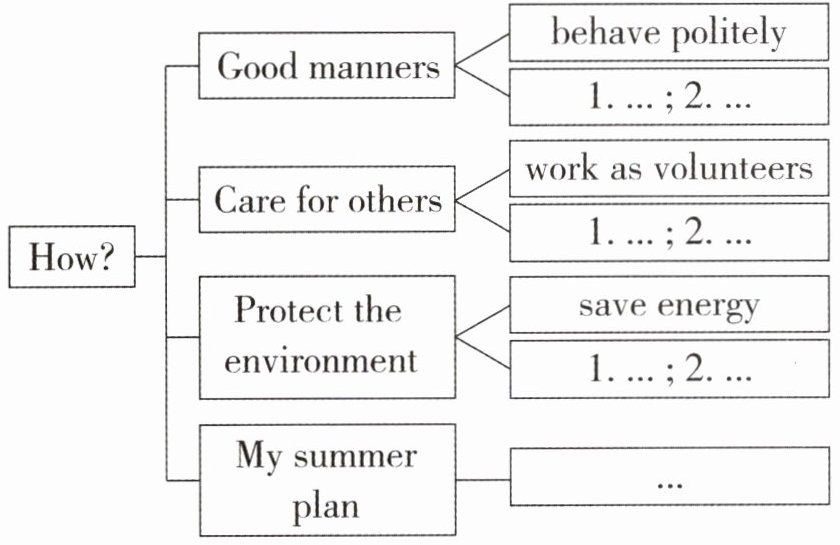
假如你是李华,将参加学校举行的主题为“How to be a civilized student?”的校园“文明小卫士”演讲比赛,请结合下图信息提示,写一篇英语演讲稿。
注意:1. 要点齐全,省略号部分须补充;
2. 文中请勿提及真实的校名及人名;
3. 词数 100 左右,开头和结尾已给出,不计入总词数。
Dear classmates,
As a Grade 8 student, I think I can do something to be more civilized.
Let’s try our best to become civilized students. May our school become even better!
假如你是李华,将参加学校举行的主题为“How to be a civilized student?”的校园“文明小卫士”演讲比赛,请结合下图信息提示,写一篇英语演讲稿。
注意:1. 要点齐全,省略号部分须补充;
2. 文中请勿提及真实的校名及人名;
3. 词数 100 左右,开头和结尾已给出,不计入总词数。
Dear classmates,
As a Grade 8 student, I think I can do something to be more civilized.
Let’s try our best to become civilized students. May our school become even better!
答案
六、例文
Dear classmates,
As a Grade 8 student, I think I can do something to be more civilized.
Good manners start with behaving politely. Firstly, always queue in line in the dining hall or library. Secondly, listen carefully without interrupting when others speak.
To care for others, let's work as volunteers. We can clean up public parks on weekends and help elderly neighbors carry heavy things. Actions speak louder than words!
Protecting the environment means saving energy. When we leave classrooms, we should turn off the lights; similarly, when printing documents, we must use both sides of paper.
This summer, I'll join a “Green Campus” project to plant trees. Small steps today make a big difference tomorrow.
Let's try our best to become civilized students. May our school become even better!
Dear classmates,
As a Grade 8 student, I think I can do something to be more civilized.
Good manners start with behaving politely. Firstly, always queue in line in the dining hall or library. Secondly, listen carefully without interrupting when others speak.
To care for others, let's work as volunteers. We can clean up public parks on weekends and help elderly neighbors carry heavy things. Actions speak louder than words!
Protecting the environment means saving energy. When we leave classrooms, we should turn off the lights; similarly, when printing documents, we must use both sides of paper.
This summer, I'll join a “Green Campus” project to plant trees. Small steps today make a big difference tomorrow.
Let's try our best to become civilized students. May our school become even better!
解析
【分析】首先明确题目要求:以李华身份参加“如何成为文明学生”的演讲比赛,需结合思维导图的四个核心模块(良好礼仪、关爱他人、保护环境、暑假计划)完成演讲稿,要点齐全,补充省略号内容,词数约100,开头结尾已给出。解题思路:1. 围绕思维导图各分支,补充具体可行的例子对应模块要求;2. 采用演讲稿条理清晰的结构,分段落阐述;3. 合理补充暑假计划的省略内容,贴合主题。
【解析】写作步骤:1. 承接开头,写良好礼仪部分:对应behave politely,补充排队、不打断他人发言的例子;2. 写关爱他人部分:对应work as volunteers,补充周末打扫公园、帮老人搬重物的例子;3. 写保护环境部分:对应save energy,补充离开教室关灯、双面用纸的例子;4. 补充暑假计划:对应My summer plan,加入参加“绿色校园”项目种树的内容;5. 结尾呼应开头,发出号召完成演讲稿。
【答案】Dear classmates,
As a Grade 8 student, I think I can do something to be more civilized.
Good manners start with behaving politely. Firstly, always queue in line in the dining hall or library. Secondly, listen carefully without interrupting when others speak.
To care for others, let's work as volunteers. We can clean up public parks on weekends and help elderly neighbors carry heavy things. Actions speak louder than words!
Protecting the environment means saving energy. When we leave classrooms, we should turn off the lights; similarly, when printing documents, we must use both sides of paper.
This summer, I'll join a “Green Campus” project to plant trees. Small steps today make a big difference tomorrow.
Let's try our best to become civilized students. May our school become even better!
【知识点】英语书面表达、演讲稿写作、要点整合
【点评】本文紧扣主题,覆盖思维导图所有要点,补充内容合理具体,结构清晰,语言通顺,符合演讲稿文体要求,适配八年级学生写作水平。
【难度系数】0.6
【解析】写作步骤:1. 承接开头,写良好礼仪部分:对应behave politely,补充排队、不打断他人发言的例子;2. 写关爱他人部分:对应work as volunteers,补充周末打扫公园、帮老人搬重物的例子;3. 写保护环境部分:对应save energy,补充离开教室关灯、双面用纸的例子;4. 补充暑假计划:对应My summer plan,加入参加“绿色校园”项目种树的内容;5. 结尾呼应开头,发出号召完成演讲稿。
【答案】Dear classmates,
As a Grade 8 student, I think I can do something to be more civilized.
Good manners start with behaving politely. Firstly, always queue in line in the dining hall or library. Secondly, listen carefully without interrupting when others speak.
To care for others, let's work as volunteers. We can clean up public parks on weekends and help elderly neighbors carry heavy things. Actions speak louder than words!
Protecting the environment means saving energy. When we leave classrooms, we should turn off the lights; similarly, when printing documents, we must use both sides of paper.
This summer, I'll join a “Green Campus” project to plant trees. Small steps today make a big difference tomorrow.
Let's try our best to become civilized students. May our school become even better!
【知识点】英语书面表达、演讲稿写作、要点整合
【点评】本文紧扣主题,覆盖思维导图所有要点,补充内容合理具体,结构清晰,语言通顺,符合演讲稿文体要求,适配八年级学生写作水平。
【难度系数】0.6
