

 登录
登录
Ⅳ. 跨学科 鸡血石和鸡血石雕 (2024·南京玄武区期末)首字母填空
你了解鸡血石和鸡血石雕吗? 阅读下面的短文了解一下吧!
As red as chicken blood, the chicken-blood stone is one of the most costly ornamental(装饰用的) materials in China. With its 1. b____ red colour and jade-like texture(质地), it has been used for centuries to create carved works.
Changhua in Zhejiang is one of the producing areas of such stones. The stones were created by volcanic activity 75 million years ago. 2. S____ the Ming Dynasty, local people have been using chicken-blood stones to carve all kinds of things in different 3. s____ and sizes.
In 2008, the chicken-blood stone carving was 4. a____ to the national intangible cultural heritage(非物质文化遗产) list. It not only records geological(地质的) changes, but is also a cultural relic that shows people's lives of different times. For Chinese people, the carving's red colour also means 5. j____, success and good luck.
Craftsman Qian Gaochao, 67, and his son, 6. s____ more than six months making three “chicken-blood” stone carvings showing the takewondo and wrestling(跆拳道和摔跤) competitions for the 19th Asian Games in Hangzhou.
Qian is a national inheritor(继承人) of the intangible cultural heritage of the chicken-blood stone carving technique. He said, “It's a great honour to be able to contribute to the Asian Games, 7. h____ in my hometown, through my hand skills.”
According to Qian, the content and themes he chooses for carvings keep up with and show the style of the times. “I'm not only doing carving work, but also 8. r____ the development and changes of our society, and remembering the important events through my carvings,” he said.
Qian has created fascinating works, many of which are related to important events in Chinese history, 9. i____ the Zunyi Conference in January 1935. He also did work to celebrate the 100th anniversary of the founding of the Communist Party of China.
Qian hopes the technique can be learned by more people so that it can be passed down. “We are looking for qualified people to continue to inherit and develop these traditional skills. At the same time, we also hold research activities and provide training courses, 10. a____ more young students to understand and learn Chinese traditional culture,” he said.
你了解鸡血石和鸡血石雕吗? 阅读下面的短文了解一下吧!
As red as chicken blood, the chicken-blood stone is one of the most costly ornamental(装饰用的) materials in China. With its 1. b____ red colour and jade-like texture(质地), it has been used for centuries to create carved works.
Changhua in Zhejiang is one of the producing areas of such stones. The stones were created by volcanic activity 75 million years ago. 2. S____ the Ming Dynasty, local people have been using chicken-blood stones to carve all kinds of things in different 3. s____ and sizes.
In 2008, the chicken-blood stone carving was 4. a____ to the national intangible cultural heritage(非物质文化遗产) list. It not only records geological(地质的) changes, but is also a cultural relic that shows people's lives of different times. For Chinese people, the carving's red colour also means 5. j____, success and good luck.
Craftsman Qian Gaochao, 67, and his son, 6. s____ more than six months making three “chicken-blood” stone carvings showing the takewondo and wrestling(跆拳道和摔跤) competitions for the 19th Asian Games in Hangzhou.
Qian is a national inheritor(继承人) of the intangible cultural heritage of the chicken-blood stone carving technique. He said, “It's a great honour to be able to contribute to the Asian Games, 7. h____ in my hometown, through my hand skills.”
According to Qian, the content and themes he chooses for carvings keep up with and show the style of the times. “I'm not only doing carving work, but also 8. r____ the development and changes of our society, and remembering the important events through my carvings,” he said.
Qian has created fascinating works, many of which are related to important events in Chinese history, 9. i____ the Zunyi Conference in January 1935. He also did work to celebrate the 100th anniversary of the founding of the Communist Party of China.
Qian hopes the technique can be learned by more people so that it can be passed down. “We are looking for qualified people to continue to inherit and develop these traditional skills. At the same time, we also hold research activities and provide training courses, 10. a____ more young students to understand and learn Chinese traditional culture,” he said.
答案
1. bright 2. Since 3. shapes 4. added 5. joy
6. spent 7. held 8. recording 9. including 10. allowing
素养考向 本题主要考查学生的文化意识素养。
6. spent 7. held 8. recording 9. including 10. allowing
素养考向 本题主要考查学生的文化意识素养。
Ⅴ. (2024·宿迁宿城区二模)语法填空
你了解吹糖人艺术的传承者——熊传发吗? 阅读下面短文,我们一起来了解一下吧!
Xiong Chuanfa is a 37-year-old man. He can blow a lively tiger out of sugar in just minutes. Xiong 1. ____ (blow) sugar figurines (吹糖人) for over twenty years. Blowing sugar figurines is a Chinese 2. ____ (tradition) folk art with a history of over 600 years.
Every morning, Xiong prepares the sugar and 3. ____ (drive) to different markets to start his “magic show” around his city. He heats the sugar, pulls off a little to make a ball and blows it into different shapes, such as rabbits, 4. ____ (monkey) and even Bing Dwen Dwen.
To make young people closer to the art, he also stops by universities. Many university students are interested in the art and they 5. ____ (allow) to experience the making of sugar figurines. Among them, Simon, a foreign student, also wanted to make one sugar figurine by 6. ____ (he). However, he couldn't get the desired shape though he tried several times. “It looks easy, but actually it's much 7. ____ (difficult) than we thought,” he said. Thanks to Xiong's help, Simon finally 8. ____ (see) a horse coming out slowly. “I can't believe I can do this,” he said 9. ____ (happy).
Xiong said that his family has passed down this art for four generations. “We will spend the rest of our lives 10. ____ (help) pass on this skill,” Xiong said.
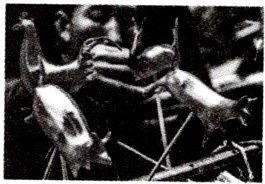
你了解吹糖人艺术的传承者——熊传发吗? 阅读下面短文,我们一起来了解一下吧!
Xiong Chuanfa is a 37-year-old man. He can blow a lively tiger out of sugar in just minutes. Xiong 1. ____ (blow) sugar figurines (吹糖人) for over twenty years. Blowing sugar figurines is a Chinese 2. ____ (tradition) folk art with a history of over 600 years.
Every morning, Xiong prepares the sugar and 3. ____ (drive) to different markets to start his “magic show” around his city. He heats the sugar, pulls off a little to make a ball and blows it into different shapes, such as rabbits, 4. ____ (monkey) and even Bing Dwen Dwen.
To make young people closer to the art, he also stops by universities. Many university students are interested in the art and they 5. ____ (allow) to experience the making of sugar figurines. Among them, Simon, a foreign student, also wanted to make one sugar figurine by 6. ____ (he). However, he couldn't get the desired shape though he tried several times. “It looks easy, but actually it's much 7. ____ (difficult) than we thought,” he said. Thanks to Xiong's help, Simon finally 8. ____ (see) a horse coming out slowly. “I can't believe I can do this,” he said 9. ____ (happy).
Xiong said that his family has passed down this art for four generations. “We will spend the rest of our lives 10. ____ (help) pass on this skill,” Xiong said.
答案
1. has blown 2. traditional 3. drives 4. monkeys
5. are allowed 6. himself 7. more difficult 8. saw
9. happily 10. helping
5. are allowed 6. himself 7. more difficult 8. saw
9. happily 10. helping
