

 登录
登录
My life went on the island (岛). Every month, I learned to do or to make something new. But I had troubles (麻烦) too. Once there was a very heavy rain. My house fell down (倒塌), and nearly killed me! I had to build (建造) it up again with many pieces of wood. 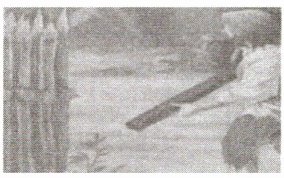
Luckily, I had a lot of food now. I cooked it over a fire or dried it in the sun, so I had enough meat during the rainy months. I learned to make pots (陶盆) to keep my food in. But I wanted very much to make a harder, stronger pot—a pot that would not break (破裂) in a fire.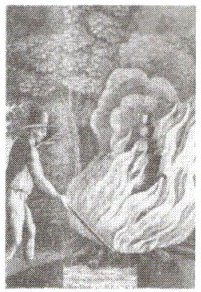
I tried many times, but I could not do it. Then one day I was lucky. I made some new pots and put them in a very hot fire. They changed colours, but did not break. They were hard and strong. I had useful pots now. That night I was very happy. With them, I had hot water for the first time on the island.
One day, I found a little bag. We used it on the ship to keep the chickens’ food in. There was still some of the food in the bag, and I dropped some of it onto the ground. A month later, I saw something bright green there. The seedlings (幼苗) grew fast and after six months I had a very small field of corn (玉米). That was luck and I was very excited.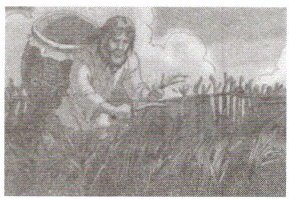
(From Robinson Crusoe)
(
A. had no house to live in
B. had a bad cold
C. had no food to eat
D. couldn’t cook meals
(
A. He didn’t have enough meat to eat.
B. He couldn’t cook food over a fire.
C. He had to drink cold water before.
D. He couldn’t make a pot to keep food.
(
A. Paragraph 1
B. Paragraph 2
C. Paragraph 3
D. Paragraph 4
(
A. Rice.
B. Corn.
C. Fruits.
D. Vegetables.
(
A. He may build a new house.
B. He may leave the island.
C. He may grow more food.
D. He may plant some trees.
Luckily, I had a lot of food now. I cooked it over a fire or dried it in the sun, so I had enough meat during the rainy months. I learned to make pots (陶盆) to keep my food in. But I wanted very much to make a harder, stronger pot—a pot that would not break (破裂) in a fire.
I tried many times, but I could not do it. Then one day I was lucky. I made some new pots and put them in a very hot fire. They changed colours, but did not break. They were hard and strong. I had useful pots now. That night I was very happy. With them, I had hot water for the first time on the island.
One day, I found a little bag. We used it on the ship to keep the chickens’ food in. There was still some of the food in the bag, and I dropped some of it onto the ground. A month later, I saw something bright green there. The seedlings (幼苗) grew fast and after six months I had a very small field of corn (玉米). That was luck and I was very excited.
(From Robinson Crusoe)
(
A
) 10. After a heavy rain, Robinson .A. had no house to live in
B. had a bad cold
C. had no food to eat
D. couldn’t cook meals
(
C
) 11. What can we learn from the passage about Robinson?A. He didn’t have enough meat to eat.
B. He couldn’t cook food over a fire.
C. He had to drink cold water before.
D. He couldn’t make a pot to keep food.
(
D
) 12. The following sentence “Maybe now I could make my own bread!” can be put at the end of .A. Paragraph 1
B. Paragraph 2
C. Paragraph 3
D. Paragraph 4
(
B
) 13. What was probably (可能) the chicken food in the bag?A. Rice.
B. Corn.
C. Fruits.
D. Vegetables.
(
C
) 14. What may Robinson do next?A. He may build a new house.
B. He may leave the island.
C. He may grow more food.
D. He may plant some trees.
答案
10. A 11. C 12. D 13. B 14. C
解析
【分析】本题为《鲁滨逊漂流记》的阅读理解题,需先通读全文把握内容,再针对每个小题定位原文对应段落,结合细节信息逐一分析选项:10题定位大雨后的房屋情况;11题结合陶器带来热水的细节推断之前的情况;12题需结合句子含义(做面包需谷物)匹配对应段落;13题通过鸡食长出玉米的细节判断;14题结合种玉米的经历推断后续行为。
【解析】10题:根据第一段“Once there was a very heavy rain. My house fell down...”可知,大雨后鲁滨逊的房子倒塌,对应A选项;11题:根据第三段最后一句“With them, I had hot water for the first time on the island”,说明之前没有热水,即喝冷水,对应C选项;12题:句子“Maybe now I could make my own bread!”提到做面包需要谷物,第四段讲述鲁滨逊种出了玉米,因此该句应放在第四段末尾,对应D选项;13题:根据第四段“...I saw something bright green there. The seedlings grew fast and after six months I had a very small field of corn”,可知鸡食是玉米,对应B选项;14题:鲁滨逊成功种出玉米,接下来最可能的行为是种植更多食物,对应C选项。
【答案】10. A 11. C 12. D 13. B 14. C
【知识点】阅读理解、细节理解、推理判断
【点评】本题选取经典文学片段,考查学生对文章细节的定位、推理及信息关联能力,需结合原文内容逐一分析选项,整体难度适中。
【难度系数】0.5
【解析】10题:根据第一段“Once there was a very heavy rain. My house fell down...”可知,大雨后鲁滨逊的房子倒塌,对应A选项;11题:根据第三段最后一句“With them, I had hot water for the first time on the island”,说明之前没有热水,即喝冷水,对应C选项;12题:句子“Maybe now I could make my own bread!”提到做面包需要谷物,第四段讲述鲁滨逊种出了玉米,因此该句应放在第四段末尾,对应D选项;13题:根据第四段“...I saw something bright green there. The seedlings grew fast and after six months I had a very small field of corn”,可知鸡食是玉米,对应B选项;14题:鲁滨逊成功种出玉米,接下来最可能的行为是种植更多食物,对应C选项。
【答案】10. A 11. C 12. D 13. B 14. C
【知识点】阅读理解、细节理解、推理判断
【点评】本题选取经典文学片段,考查学生对文章细节的定位、推理及信息关联能力,需结合原文内容逐一分析选项,整体难度适中。
【难度系数】0.5
三、七选五阅读
根据对话内容和所给的句子选项,将对话补充完整,使其通顺达意。有两个选项为多余选项。
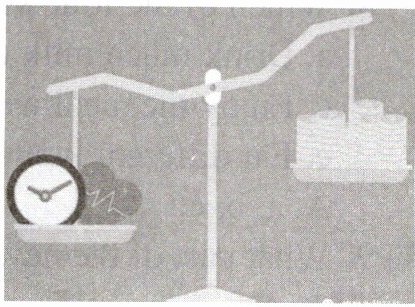
A: Hi, Mary! We are having a discussion (讨论) about wealth (财富) and health. Which one do you think is more important?
B: Hi, Tom! 1
A: Yes. But how can we keep healthy?
B: 2
A: Can we eat too much meat?
B: No. 3
A: What else should we do?
B: 4 But remember not to do sports soon after meals.
A: I see. 5
B: It is good. Early to bed and early to rise (起床) makes you healthy.
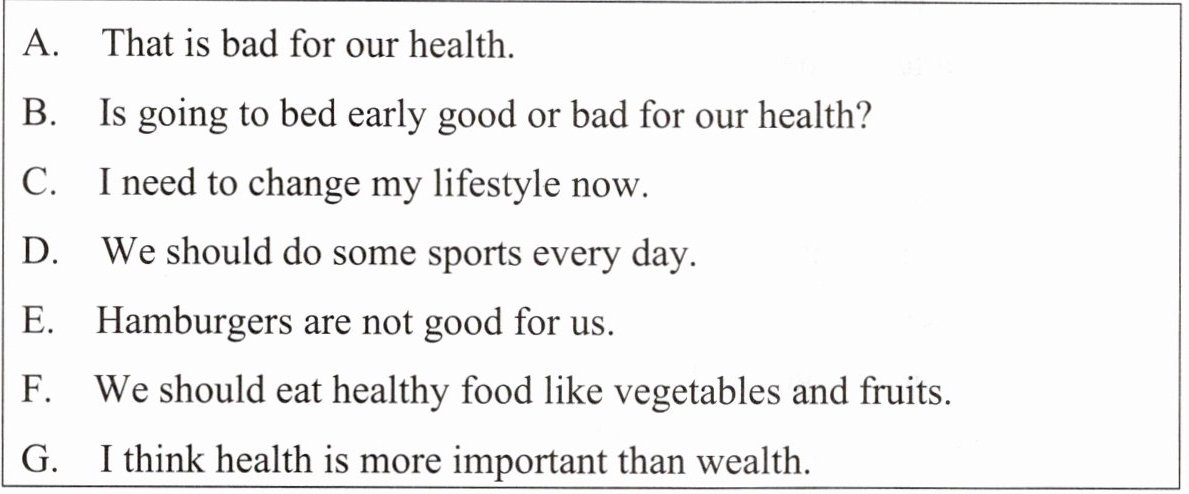
A. That is bad for our health.
B. Is going to bed early good or bad for our health?
C. I need to change my lifestyle now.
D. We should do some sports every day.
E. Hamburgers are not good for us.
F. We should eat healthy food like vegetables and fruits.
G. I think health is more important than wealth.
1. 2. 3. 4. 5.
根据对话内容和所给的句子选项,将对话补充完整,使其通顺达意。有两个选项为多余选项。
A: Hi, Mary! We are having a discussion (讨论) about wealth (财富) and health. Which one do you think is more important?
B: Hi, Tom! 1
A: Yes. But how can we keep healthy?
B: 2
A: Can we eat too much meat?
B: No. 3
A: What else should we do?
B: 4 But remember not to do sports soon after meals.
A: I see. 5
B: It is good. Early to bed and early to rise (起床) makes you healthy.
A. That is bad for our health.
B. Is going to bed early good or bad for our health?
C. I need to change my lifestyle now.
D. We should do some sports every day.
E. Hamburgers are not good for us.
F. We should eat healthy food like vegetables and fruits.
G. I think health is more important than wealth.
1. 2. 3. 4. 5.
答案
1. G 2. F 3. A 4. D 5. B
解析
【分析】
先通读对话,明确上下文的语境与逻辑关系。第1空A询问健康和财富哪个更重要,B需给出观点,对应选项G;第2空A问如何保持健康,B应给出健康饮食的建议,对应选项F;第3空A问能否吃太多肉,B否定后需说明原因,对应选项A;第4空A问还有什么要做的,B应给出另一项健康建议,对应选项D;第5空结合B的回答“早睡早起有益健康”,可知A询问的是早睡的好坏,对应选项B。
【解析】
1. 第1空:A提出“健康和财富哪个更重要”的问题,选项G“我认为健康比财富更重要”直接回应观点,符合语境,故选G;
2. 第2空:A询问“如何保持健康”,选项F“我们应该吃像蔬菜和水果这样的健康食物”是健康饮食的具体建议,符合语境,故选F;
3. 第3空:A问“能不能吃太多肉”,B回答“No”,选项A“那对我们的健康有害”说明吃太多肉的坏处,承接否定回答,符合语境,故选A;
4. 第4空:A问“还有什么要做的”,选项D“我们应该每天做一些运动”是另一项健康建议,符合语境,故选D;
5. 第5空:B回答“早睡早起有益健康”,选项B“早睡对我们的健康是好还是坏?”对应A的提问,符合语境,故选B。
【答案】1.G 2.F 3.A 4.D 5.B
【知识点】英语七选五阅读、情景对话理解
【点评】本题考查情景对话的上下文衔接,需结合语境和逻辑关系匹配选项,属于基础题型,侧重考查学生的日常交际用语运用能力。
【难度系数】0.5
先通读对话,明确上下文的语境与逻辑关系。第1空A询问健康和财富哪个更重要,B需给出观点,对应选项G;第2空A问如何保持健康,B应给出健康饮食的建议,对应选项F;第3空A问能否吃太多肉,B否定后需说明原因,对应选项A;第4空A问还有什么要做的,B应给出另一项健康建议,对应选项D;第5空结合B的回答“早睡早起有益健康”,可知A询问的是早睡的好坏,对应选项B。
【解析】
1. 第1空:A提出“健康和财富哪个更重要”的问题,选项G“我认为健康比财富更重要”直接回应观点,符合语境,故选G;
2. 第2空:A询问“如何保持健康”,选项F“我们应该吃像蔬菜和水果这样的健康食物”是健康饮食的具体建议,符合语境,故选F;
3. 第3空:A问“能不能吃太多肉”,B回答“No”,选项A“那对我们的健康有害”说明吃太多肉的坏处,承接否定回答,符合语境,故选A;
4. 第4空:A问“还有什么要做的”,选项D“我们应该每天做一些运动”是另一项健康建议,符合语境,故选D;
5. 第5空:B回答“早睡早起有益健康”,选项B“早睡对我们的健康是好还是坏?”对应A的提问,符合语境,故选B。
【答案】1.G 2.F 3.A 4.D 5.B
【知识点】英语七选五阅读、情景对话理解
【点评】本题考查情景对话的上下文衔接,需结合语境和逻辑关系匹配选项,属于基础题型,侧重考查学生的日常交际用语运用能力。
【难度系数】0.5
