

 登录
登录
六、看图,根据首字母提示补全短文。
 (第1题)
(第1题)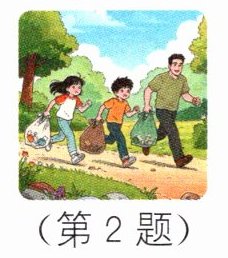 (第2题)
(第2题)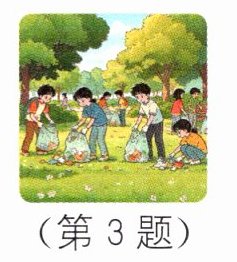 (第3题)
(第3题)
Do you like 1. r
Many 3. c
Plogging is a great family activity. 5. P
(第1题)(第2题)(第3题)Do you like 1. r
running
? Do you want to help the Earth? Then 2. pplogging
is for you! Plogging means jogging and picking up rubbish at the same time. It comes from two words: “plocka upp” (Swedish for “pick up”) and “jogging”.Many 3. c
children
love plogging. Claire, a 12-year-old girl, goes plogging 4. wwith
her dad and brother every weekend. They wear gloves and carry rubbish bags. While they jog, they pick up plastic, cans and paper along the way.Plogging is a great family activity. 5. P
Parents
and children can work together to care for the environment.答案
1. running
2. plogging
3. children
4. with
5. Parents
2. plogging
3. children
4. with
5. Parents
解析
【解析】
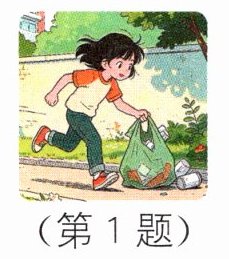
1. 第一空:图1展示了跑步同时捡垃圾的场景,like后接动名词,结合首字母r,填running,意为“跑步”。
2. 第二空:后文明确解释了Plogging的含义,结合首字母p,填plogging,意为“跑步捡垃圾活动”。
3. 第三空:图3展示了很多孩子参与活动的场景,many后接可数名词复数,结合首字母c,填children,意为“孩子们”。
4. 第四空:此处表达和爸爸、哥哥一起进行这项活动,结合首字母w,填with,意为“和……一起”。
5. 第五空:对应前一句的家庭活动,和children并列的群体,结合首字母P,填Parents,意为“父母们”。
【答案】
1. running
2. plogging
3. children
4. with
5. Parents
【知识点】
动名词用法
名词复数
介词搭配
【点评】
本题结合插图和首字母提示完成短文,既考查对上下文语境的理解能力,也检验常见词汇的拼写与固定搭配的掌握,同时渗透环保相关的趣味课外知识,难度适中。
【难度系数】
0.8
1. 第一空:图1展示了跑步同时捡垃圾的场景,like后接动名词,结合首字母r,填running,意为“跑步”。
2. 第二空:后文明确解释了Plogging的含义,结合首字母p,填plogging,意为“跑步捡垃圾活动”。
3. 第三空:图3展示了很多孩子参与活动的场景,many后接可数名词复数,结合首字母c,填children,意为“孩子们”。
4. 第四空:此处表达和爸爸、哥哥一起进行这项活动,结合首字母w,填with,意为“和……一起”。
5. 第五空:对应前一句的家庭活动,和children并列的群体,结合首字母P,填Parents,意为“父母们”。
【答案】
1. running
2. plogging
3. children
4. with
5. Parents
【知识点】
动名词用法
名词复数
介词搭配
【点评】
本题结合插图和首字母提示完成短文,既考查对上下文语境的理解能力,也检验常见词汇的拼写与固定搭配的掌握,同时渗透环保相关的趣味课外知识,难度适中。
【难度系数】
0.8
七、阅读短文,选择正确的答案。
I am a little squirrel named Nutty. I live happily with my family in a quiet and beautiful forest. I enjoy running around the tall trees, collecting tasty nuts and playing games with my little animal friends.
However, I feel really sad lately. More and more litter has appeared in the forest. Plastic bottles lie on the grass. Snack bags hang on branches, and waste paper flies around. My friend bird nearly ate a piece of plastic by mistake, which made me frightened.
One Saturday, many families came to go plogging. They cleaned up litter carefully and sorted trash. Soon the forest turned clean again. They promised to come every weekend. Now more people join them. I truly believe small efforts from everyone can protect our lovely home.
(
A. Nutty.
B. Sunny.
C. Nanny.
(
A. He has no nuts to eat.
B. The forest is full of litter.
C. He has no friends to play with.
(
A. A bird.
B. A sheep.
C. Another squirrel.
(
A. They played games.
B. They had a picnic.
C. They went plogging.
(
A. Animals should live far away from people.
B. Everyone's small efforts can protect our home.
C. People only come to the forest on weekends.
I am a little squirrel named Nutty. I live happily with my family in a quiet and beautiful forest. I enjoy running around the tall trees, collecting tasty nuts and playing games with my little animal friends.
However, I feel really sad lately. More and more litter has appeared in the forest. Plastic bottles lie on the grass. Snack bags hang on branches, and waste paper flies around. My friend bird nearly ate a piece of plastic by mistake, which made me frightened.
One Saturday, many families came to go plogging. They cleaned up litter carefully and sorted trash. Soon the forest turned clean again. They promised to come every weekend. Now more people join them. I truly believe small efforts from everyone can protect our lovely home.
(
A
)1. What is the squirrel's name?A. Nutty.
B. Sunny.
C. Nanny.
(
B
)2. Why does the squirrel feel sad?A. He has no nuts to eat.
B. The forest is full of litter.
C. He has no friends to play with.
(
A
)3. Who nearly ate a piece of plastic?A. A bird.
B. A sheep.
C. Another squirrel.
(
C
)4. What did the families come to do in the forest?A. They played games.
B. They had a picnic.
C. They went plogging.
(
B
)5. What can we learn from the story?A. Animals should live far away from people.
B. Everyone's small efforts can protect our home.
C. People only come to the forest on weekends.
答案
1. A
2. B
3. A 解析 根据原文第二段中“My friend bird nearly ate a piece of plastic by mistake, which made me frightened.”可知,是一只鸟差点误食了塑料。
4. C 解析 根据原文第三段中“One Saturday, many families came to go plogging.”可知,这些家庭来森林里是为了进行拾荒慢跑。
5. B
2. B
3. A 解析 根据原文第二段中“My friend bird nearly ate a piece of plastic by mistake, which made me frightened.”可知,是一只鸟差点误食了塑料。
4. C 解析 根据原文第三段中“One Saturday, many families came to go plogging.”可知,这些家庭来森林里是为了进行拾荒慢跑。
5. B
解析
【分析】
做这类阅读理解选择题,需先通读短文了解大意,再根据题干关键词定位原文对应内容,逐一比对选项与原文信息,选出正确答案。本题5道题均为细节理解题,精准定位原文对应描述即可得出答案。
【解析】
1. 根据短文第一句“I am a little squirrel named Nutty.”可知松鼠名字是Nutty,故选A;
2. 根据短文第二段“However, I feel really sad lately. More and more litter has appeared in the forest.”可知松鼠难过是因为森林里有很多垃圾,故选B;
3. 根据短文第二段“My friend bird nearly ate a piece of plastic by mistake, which made me frightened.”可知差点误食塑料的是一只鸟,故选A;
4. 根据短文第三段“One Saturday, many families came to go plogging.”可知这些家庭来森林是为了拾荒慢跑,故选C;
5. 根据短文最后一句“I truly believe small efforts from everyone can protect our lovely home.”可知我们能学到每个人的小努力可以保护家园,故选B。
【答案】
1.A 2.B 3.A 4.C 5.B
【知识点】
英语阅读理解、细节理解题、主旨大意题
【点评】
本题是环保主题的英语阅读理解题,侧重考查学生提取原文细节信息的能力,题目设置简单,仔细阅读短文即可解答,适合小学阶段学生巩固阅读基础。
【难度系数】
0.8
做这类阅读理解选择题,需先通读短文了解大意,再根据题干关键词定位原文对应内容,逐一比对选项与原文信息,选出正确答案。本题5道题均为细节理解题,精准定位原文对应描述即可得出答案。
【解析】
1. 根据短文第一句“I am a little squirrel named Nutty.”可知松鼠名字是Nutty,故选A;
2. 根据短文第二段“However, I feel really sad lately. More and more litter has appeared in the forest.”可知松鼠难过是因为森林里有很多垃圾,故选B;
3. 根据短文第二段“My friend bird nearly ate a piece of plastic by mistake, which made me frightened.”可知差点误食塑料的是一只鸟,故选A;
4. 根据短文第三段“One Saturday, many families came to go plogging.”可知这些家庭来森林是为了拾荒慢跑,故选C;
5. 根据短文最后一句“I truly believe small efforts from everyone can protect our lovely home.”可知我们能学到每个人的小努力可以保护家园,故选B。
【答案】
1.A 2.B 3.A 4.C 5.B
【知识点】
英语阅读理解、细节理解题、主旨大意题
【点评】
本题是环保主题的英语阅读理解题,侧重考查学生提取原文细节信息的能力,题目设置简单,仔细阅读短文即可解答,适合小学阶段学生巩固阅读基础。
【难度系数】
0.8
