

 登录
登录
六、阅读理解。
①When I was your age, my mum always told me, “I just want you to be happy. ” She didn't care what I grew up to be as long as I promised to stay happy. But what exactly is happiness? Is it about having fun playing the latest online games? Is it about getting the basketball shoes in fashion? Is it about achieving our goal? Is it a destination, or is it more like a road that never ends?
②Is happiness on social media? It surely seems that way. Take a look at the most popular platforms Weibo and Xiaohongshu. Youngsters love posting(发布)perfect pictures of their best moments on them to get a like from others. It usually takes them hours to make their pictures perfect and hours to reply to others' comments. They do get a lot of likes from others but do these likes bring them joy? Plenty of research has connected social media use to low moods. One US study found that people who frequently check their social media are twice as likely to feel lonely.
③When we share a happy moment, we must have felt happy. When something good happens, we get excited and happy, but after a while, we return to feeling the same as before. In other words, happiness doesn't last for long. As the influences of one “happy” moment go off, we start to search for new sources of happiness.
④Happily, there's still hope for us to find lasting happiness:It's called “emotional authenticity(情感真实性)”. This happens when we allow ourselves to feel and experience feelings like anger, fear and sadness. It's not easy, but when we are honest about our experiences, we build deeper and more meaningful connections with others. And those friendships bring us smiles that last much longer than any number of “likes” on a screen!
⑤March 20th is World Happiness Day. Take it as a reminder that happiness isn't about running after a picture - perfect life. Trying to be happy all the time is like trying to catch a unicorn(独角兽)—it's just not going to happen. Instead, pay attention to your own journey and accept different feelings you'll feel along the way.
(
A. The reasons why people love posting pictures online.
B. The influence of social media on users' emotions.
C. How to avoid feeling lonely when using social media.
D. Which social media platforms are the most suitable for sharing life.
(
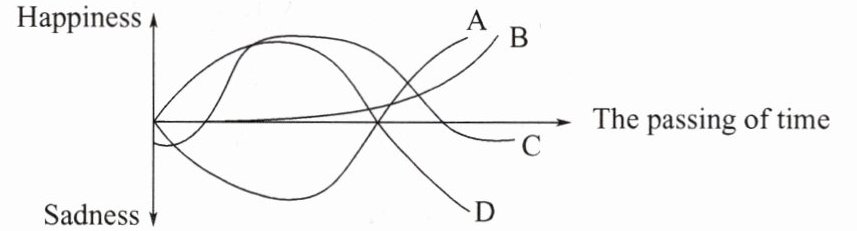
A. A
B. B
C. C
D. D
(
A. It is easy to achieve a picture - perfect life if people keep trying.
B. Trying to be happy all the time is an impossible goal.
C. Unicorns are magical creatures that can bring long - lasting happiness.
D. People should spend more time pursuing different things to feel happy.
(

A.
B.
C.
D.
①When I was your age, my mum always told me, “I just want you to be happy. ” She didn't care what I grew up to be as long as I promised to stay happy. But what exactly is happiness? Is it about having fun playing the latest online games? Is it about getting the basketball shoes in fashion? Is it about achieving our goal? Is it a destination, or is it more like a road that never ends?
②Is happiness on social media? It surely seems that way. Take a look at the most popular platforms Weibo and Xiaohongshu. Youngsters love posting(发布)perfect pictures of their best moments on them to get a like from others. It usually takes them hours to make their pictures perfect and hours to reply to others' comments. They do get a lot of likes from others but do these likes bring them joy? Plenty of research has connected social media use to low moods. One US study found that people who frequently check their social media are twice as likely to feel lonely.
③When we share a happy moment, we must have felt happy. When something good happens, we get excited and happy, but after a while, we return to feeling the same as before. In other words, happiness doesn't last for long. As the influences of one “happy” moment go off, we start to search for new sources of happiness.
④Happily, there's still hope for us to find lasting happiness:It's called “emotional authenticity(情感真实性)”. This happens when we allow ourselves to feel and experience feelings like anger, fear and sadness. It's not easy, but when we are honest about our experiences, we build deeper and more meaningful connections with others. And those friendships bring us smiles that last much longer than any number of “likes” on a screen!
⑤March 20th is World Happiness Day. Take it as a reminder that happiness isn't about running after a picture - perfect life. Trying to be happy all the time is like trying to catch a unicorn(独角兽)—it's just not going to happen. Instead, pay attention to your own journey and accept different feelings you'll feel along the way.
(
B
)1. What can we learn from Paragraph ②?A. The reasons why people love posting pictures online.
B. The influence of social media on users' emotions.
C. How to avoid feeling lonely when using social media.
D. Which social media platforms are the most suitable for sharing life.
(
C
)2. Which of the following line shows the change in our feelings after something good happens to us according to the text?A. A
B. B
C. C
D. D
(
B
)3. What does the writer want to tell people with the unicorn analogy(比喻)in the last paragraph?A. It is easy to achieve a picture - perfect life if people keep trying.
B. Trying to be happy all the time is an impossible goal.
C. Unicorns are magical creatures that can bring long - lasting happiness.
D. People should spend more time pursuing different things to feel happy.
(
A
)4. Which of the following shows the structure of this text?A.
B.
C.
D.
答案
1.B 2.C 3.B 4.A
解析
【分析】
解这篇阅读理解的核心思路是先通读全文把握主旨,再根据每道题的题干提示精准定位到对应段落,结合原文内容逐一排除错误选项得出答案:
1. 第1题明确指定范围是第2段,先梳理第二段核心内容,排除和段落主旨不符的干扰选项;
2. 第2题定位到第3段关于好事发生后情绪变化的描述,匹配对应的情绪变化图示;
3. 第3题定位最后一段的比喻句,重点看破折号后的解释内容,直接对应作者要表达的含义;
4. 第4题逐段梳理全文的行文逻辑,划分出开篇引入、反面论证错误幸福观、正面给出正确做法的三层结构,匹配对应的篇章结构选项。
【解析】
1. 第1题:第二段核心阐述了看似能带来点赞快乐的社交媒体,实际会给用户带来情绪低落、孤独等负面影响,也就是社交媒体对用户情绪的作用。A选项“人们爱在线发图的原因”只是段落次要细节,不是核心内容;C选项“使用社交媒体时如何避免孤独”在段落中完全没有提及;D选项“哪个社交平台最适合分享生活”不符合段落表述,因此选B。
2. 第2题:根据第三段原文"When something good happens, we get excited and happy, but after a while, we return to feeling the same as before"可知,情绪变化轨迹为:初始平稳状态→好事发生后情绪快速升高→一段时间后情绪回落至最初的平稳水平,该变化特征对应C选项的图示。
3. 第3题:独角兽比喻的后文直接给出解释"it's just not going to happen",意思是一直试图保持快乐是不可能实现的目标。A选项和原文“幸福不是追求完美滤镜的生活”表述相悖;C选项完全曲解了比喻的含义;D选项原文没有相关表述,因此选B。
4. 第4题:梳理全文行文逻辑:第①段开篇设问,引出“什么是幸福”的核心讨论主题;第②-③段分别批判了靠社交媒体点赞获取快乐、追求转瞬即逝的短暂快乐这两种错误的幸福认知;第④-⑤段提出获得持久幸福的方法,借世界幸福日发出接纳不同情绪的倡议,该结构完全对应A选项的篇章框架。
【答案】
1.B 2.C 3.B 4.A
【知识点】
英语阅读细节查找,篇章结构分析,阅读逻辑推理
【点评】
这是一篇典型的议论文类阅读理解,难度适中,既考查学生快速定位原文细节的基础能力,也涉及篇章整体逻辑梳理的综合能力,提醒学生解题时不要被段落的次要细节干扰,遇到修辞类题目要重点关注上下文的解释内容,避免主观臆断错选答案。
【难度系数】
0.65
解这篇阅读理解的核心思路是先通读全文把握主旨,再根据每道题的题干提示精准定位到对应段落,结合原文内容逐一排除错误选项得出答案:
1. 第1题明确指定范围是第2段,先梳理第二段核心内容,排除和段落主旨不符的干扰选项;
2. 第2题定位到第3段关于好事发生后情绪变化的描述,匹配对应的情绪变化图示;
3. 第3题定位最后一段的比喻句,重点看破折号后的解释内容,直接对应作者要表达的含义;
4. 第4题逐段梳理全文的行文逻辑,划分出开篇引入、反面论证错误幸福观、正面给出正确做法的三层结构,匹配对应的篇章结构选项。
【解析】
1. 第1题:第二段核心阐述了看似能带来点赞快乐的社交媒体,实际会给用户带来情绪低落、孤独等负面影响,也就是社交媒体对用户情绪的作用。A选项“人们爱在线发图的原因”只是段落次要细节,不是核心内容;C选项“使用社交媒体时如何避免孤独”在段落中完全没有提及;D选项“哪个社交平台最适合分享生活”不符合段落表述,因此选B。
2. 第2题:根据第三段原文"When something good happens, we get excited and happy, but after a while, we return to feeling the same as before"可知,情绪变化轨迹为:初始平稳状态→好事发生后情绪快速升高→一段时间后情绪回落至最初的平稳水平,该变化特征对应C选项的图示。
3. 第3题:独角兽比喻的后文直接给出解释"it's just not going to happen",意思是一直试图保持快乐是不可能实现的目标。A选项和原文“幸福不是追求完美滤镜的生活”表述相悖;C选项完全曲解了比喻的含义;D选项原文没有相关表述,因此选B。
4. 第4题:梳理全文行文逻辑:第①段开篇设问,引出“什么是幸福”的核心讨论主题;第②-③段分别批判了靠社交媒体点赞获取快乐、追求转瞬即逝的短暂快乐这两种错误的幸福认知;第④-⑤段提出获得持久幸福的方法,借世界幸福日发出接纳不同情绪的倡议,该结构完全对应A选项的篇章框架。
【答案】
1.B 2.C 3.B 4.A
【知识点】
英语阅读细节查找,篇章结构分析,阅读逻辑推理
【点评】
这是一篇典型的议论文类阅读理解,难度适中,既考查学生快速定位原文细节的基础能力,也涉及篇章整体逻辑梳理的综合能力,提醒学生解题时不要被段落的次要细节干扰,遇到修辞类题目要重点关注上下文的解释内容,避免主观臆断错选答案。
【难度系数】
0.65
