

 登录
登录
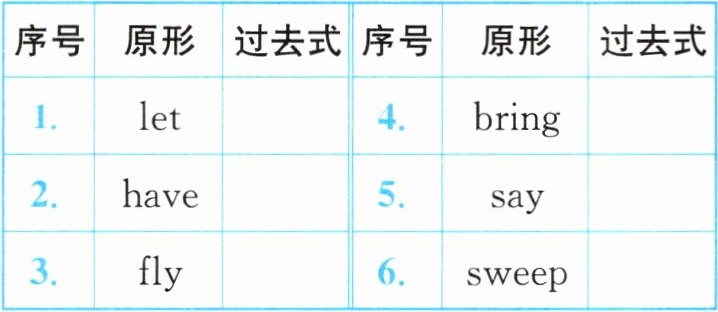
Ⅰ Write the past tense forms of the following verbs.
答案
1. let 2. had 3. flew 4. brought 5. said
6. swept
6. swept
解析
【分析】
这道题要求写出给定动词的过去式,所有给出的动词都属于英语中的不规则动词,不遵循规则动词直接加ed的变形规律。解题时只需要逐个回忆课内要求掌握的高频不规则动词的特殊过去式形式,一一对应填写即可,这些都是日常英语使用中非常常见的特殊变形,只需要做好对应识记就能顺利完成。
【解析】
我们逐个对应写出每个动词的正确过去式:
1. 动词let(含义为让、允许)是不规则动词,过去式和原形同形,为let;
2. 动词have(含义为拥有、进行、食用等)的不规则过去式为had;
3. 动词fly(含义为飞、飞行)的不规则过去式为flew;
4. 动词bring(含义为带来)的不规则过去式为brought;
5. 动词say(含义为说)的不规则过去式为said;
6. 动词sweep(含义为打扫、清扫)的不规则过去式为swept。
【答案】
1. let 2. had 3. flew 4. brought 5. said 6. swept
【知识点】
不规则动词过去式,动词时态变形
【点评】
本题全部选取中小学阶段英语学习中最核心的高频不规则动词,没有设置额外陷阱,核心考察学生对基础特殊动词过去式的识记熟练度,平时可以按照变形规律分类整理不规则动词,比如原形过去式同形类、变内部元音类、词尾特殊变化类,能大幅提升记忆效率。
【难度系数】
0.8
这道题要求写出给定动词的过去式,所有给出的动词都属于英语中的不规则动词,不遵循规则动词直接加ed的变形规律。解题时只需要逐个回忆课内要求掌握的高频不规则动词的特殊过去式形式,一一对应填写即可,这些都是日常英语使用中非常常见的特殊变形,只需要做好对应识记就能顺利完成。
【解析】
我们逐个对应写出每个动词的正确过去式:
1. 动词let(含义为让、允许)是不规则动词,过去式和原形同形,为let;
2. 动词have(含义为拥有、进行、食用等)的不规则过去式为had;
3. 动词fly(含义为飞、飞行)的不规则过去式为flew;
4. 动词bring(含义为带来)的不规则过去式为brought;
5. 动词say(含义为说)的不规则过去式为said;
6. 动词sweep(含义为打扫、清扫)的不规则过去式为swept。
【答案】
1. let 2. had 3. flew 4. brought 5. said 6. swept
【知识点】
不规则动词过去式,动词时态变形
【点评】
本题全部选取中小学阶段英语学习中最核心的高频不规则动词,没有设置额外陷阱,核心考察学生对基础特殊动词过去式的识记熟练度,平时可以按照变形规律分类整理不规则动词,比如原形过去式同形类、变内部元音类、词尾特殊变化类,能大幅提升记忆效率。
【难度系数】
0.8
Ⅱ. Complete the sentences with proper English words according to the Chinese given.
7. The little girl dressed up as a beautiful
8. I can't
9. Don't forget to write down the correct answers next to the
10. To improve our English writing, we
11. The
7. The little girl dressed up as a beautiful
princess
公主 for the school play.8. I can't
believe
认为 it's already the end of the school year.9. Don't forget to write down the correct answers next to the
mistakes
错误.10. To improve our English writing, we
need
需要 to learn the basic grammar.11. The
apple
苹果 tastes very delicious. Can I have one more?答案
7. princess 8. believe 9. mistakes
10. need 11. apple
10. need 11. apple
解析
【分析】
这是一道根据中文提示填写适当英文单词的题型,解题时首先要先结合句子结构判断空格处所需单词的词性,再对照中文提示选出对应英文词汇,最后还要结合冠词、情态动词、主谓一致、语境逻辑等规则调整单词的正确形式:比如看到不定冠词a要接可数名词单数,情态动词后接动词原形,语境里指代多处错误要使用名词复数,主语为复数时一般现在时谓语动词用原形,谓语为第三人称单数时主语要匹配单数形式,一步步推导就能得到正确答案。
【解析】
7. 空格前有不定冠词a,要求后续接可数名词单数,中文“公主”对应的英文单词为princess,完全符合句子搭配要求。
8. 空格前是情态动词的否定形式can't,规则要求情态动词后接动词原形,结合语境“无法认为/相信学年已经结束”,对应中文“认为”的合适英文为believe。
9. 句意为“不要忘记在错误旁边写下正确答案”,练习、试卷里的错误通常不止一处,需要使用可数名词复数,中文“错误”对应的单词mistake的复数形式为mistakes。
10. 句子主语是we,时态为一般现在时,空格后有to do结构,对应“需要”的英文单词need,构成固定搭配need to do sth,符合语法规则。
11. 空格后的谓语动词是第三人称单数形式tastes,说明主语为可数名词单数,中文“苹果”对应的英文单词为apple,满足主谓一致要求。
【答案】
7. princess 8. believe 9. mistakes 10. need 11. apple
【知识点】
单词拼写;名词单复数;情态动词用法
【点评】
本题属于基础词汇考察题型,核心考点不是生硬记忆单词的中文释义,而是要求学生结合句子的语法规则调整单词的正确形式,避免出现只写出对应单词、忽略形式变化的低级失分,适合用来巩固课内核心词汇的应用能力。
【难度系数】
0.8
这是一道根据中文提示填写适当英文单词的题型,解题时首先要先结合句子结构判断空格处所需单词的词性,再对照中文提示选出对应英文词汇,最后还要结合冠词、情态动词、主谓一致、语境逻辑等规则调整单词的正确形式:比如看到不定冠词a要接可数名词单数,情态动词后接动词原形,语境里指代多处错误要使用名词复数,主语为复数时一般现在时谓语动词用原形,谓语为第三人称单数时主语要匹配单数形式,一步步推导就能得到正确答案。
【解析】
7. 空格前有不定冠词a,要求后续接可数名词单数,中文“公主”对应的英文单词为princess,完全符合句子搭配要求。
8. 空格前是情态动词的否定形式can't,规则要求情态动词后接动词原形,结合语境“无法认为/相信学年已经结束”,对应中文“认为”的合适英文为believe。
9. 句意为“不要忘记在错误旁边写下正确答案”,练习、试卷里的错误通常不止一处,需要使用可数名词复数,中文“错误”对应的单词mistake的复数形式为mistakes。
10. 句子主语是we,时态为一般现在时,空格后有to do结构,对应“需要”的英文单词need,构成固定搭配need to do sth,符合语法规则。
11. 空格后的谓语动词是第三人称单数形式tastes,说明主语为可数名词单数,中文“苹果”对应的英文单词为apple,满足主谓一致要求。
【答案】
7. princess 8. believe 9. mistakes 10. need 11. apple
【知识点】
单词拼写;名词单复数;情态动词用法
【点评】
本题属于基础词汇考察题型,核心考点不是生硬记忆单词的中文释义,而是要求学生结合句子的语法规则调整单词的正确形式,避免出现只写出对应单词、忽略形式变化的低级失分,适合用来巩固课内核心词汇的应用能力。
【难度系数】
0.8
Ⅲ. Rewrite the sentences as required.
12. We had enough food to eat at that time.改为一般疑问句
13. The magical story moved all the old readers.改为否定句
14. The man took the fresh vegetables to the market.对画线部分提问
15. The police all went to look for the missing boy.改为一般疑问句,并作肯定回答
12. We had enough food to eat at that time.改为一般疑问句
Did you have enough food to eat at that time?
13. The magical story moved all the old readers.改为否定句
The magical story didn't move all the old readers.
14. The man took the fresh vegetables to the market.对画线部分提问
Where did the man take the fresh vegetables?
15. The police all went to look for the missing boy.改为一般疑问句,并作肯定回答
—Did the police all go to look for the missing boy? —Yes, they did.
答案
12. Did you have enough food to eat at that time?
13. The magical story didn't move all the old
readers.
14. Where did the man take the fresh vegetables?
15. —Did the police all go to look for the missing
boy? —Yes, they did.
13. The magical story didn't move all the old
readers.
14. Where did the man take the fresh vegetables?
15. —Did the police all go to look for the missing
boy? —Yes, they did.
解析
【分析】
这是一组一般过去时框架下的句型转换题,解题核心思路是先判断原句时态:所有原句的谓语都是实义动词的过去式,没有出现be动词、情态动词,因此改写时都需要借助助动词did完成句式变换,且要特别注意借助did后,原句的实义动词过去式必须还原为动词原形。逐题思考逻辑:12题改一般疑问句,句首加助动词did,同时把原句第一人称we转换为疑问句常用的第二人称you,把had还原为have,其余内容照抄即可;13题改否定句,在主语后加didn't,把moved还原为move,其余内容不变;14题画线部分是地点状语,对地点提问用where,剩余部分按一般过去时的疑问句规则调整语序即可;15题改一般疑问句句首加did,went还原为go,肯定回答遵循"Yes, 主语+did"的结构,注意police是复数概念,用they指代。
【解析】
12. 原句为一般过去时,谓语had是实义动词have的过去式,变一般疑问句时:①句首添加助动词Did;②第一人称We转换为第二人称you;③将谓语had还原为原形have,剩余成分语序不变,句末加问号,得到对应句子。
13. 原句为一般过去时,谓语moved是实义动词move的过去式,变否定句时:①在主语The magical story后添加助动词的否定形式didn't;②将谓语moved还原为原形move,剩余成分全部保留,句末加句号,得到对应句子。
14. 画线部分to the market是动作发生的地点状语,对地点提问:①选用特殊疑问词Where放在句首;②剩余部分变为一般疑问句语序,借助助动词did,将原谓语took还原为take,其余成分对应保留,句末加问号,得到对应句子。
15. 改写一般疑问句并作肯定回答:①原句谓语went是实义动词go的过去式,句首添加助动词Did,将went还原为原形go,其余成分保留得到一般疑问句;②肯定回答遵循结构"Yes, 指代主语的代词+did",the police是复数群体,用they指代,得到对应答语。
【答案】
12. Did you have enough food to eat at that time?
13. The magical story didn't move all the old readers.
14. Where did the man take the fresh vegetables?
15. —Did the police all go to look for the missing boy? —Yes, they did.
【知识点】
一般过去时句型转换;特殊疑问句;一般疑问句回答
【点评】
本题考查一般过去时的基础句型变换,核心易错点是很多同学容易忘记借助助动词did后要把原句的实义动词过去式还原为原形,同时要注意对地点提问的特殊疑问词选用、人称的合理转换,是小学高段到初中低年级英语的核心基础考点。
【难度系数】
0.7
这是一组一般过去时框架下的句型转换题,解题核心思路是先判断原句时态:所有原句的谓语都是实义动词的过去式,没有出现be动词、情态动词,因此改写时都需要借助助动词did完成句式变换,且要特别注意借助did后,原句的实义动词过去式必须还原为动词原形。逐题思考逻辑:12题改一般疑问句,句首加助动词did,同时把原句第一人称we转换为疑问句常用的第二人称you,把had还原为have,其余内容照抄即可;13题改否定句,在主语后加didn't,把moved还原为move,其余内容不变;14题画线部分是地点状语,对地点提问用where,剩余部分按一般过去时的疑问句规则调整语序即可;15题改一般疑问句句首加did,went还原为go,肯定回答遵循"Yes, 主语+did"的结构,注意police是复数概念,用they指代。
【解析】
12. 原句为一般过去时,谓语had是实义动词have的过去式,变一般疑问句时:①句首添加助动词Did;②第一人称We转换为第二人称you;③将谓语had还原为原形have,剩余成分语序不变,句末加问号,得到对应句子。
13. 原句为一般过去时,谓语moved是实义动词move的过去式,变否定句时:①在主语The magical story后添加助动词的否定形式didn't;②将谓语moved还原为原形move,剩余成分全部保留,句末加句号,得到对应句子。
14. 画线部分to the market是动作发生的地点状语,对地点提问:①选用特殊疑问词Where放在句首;②剩余部分变为一般疑问句语序,借助助动词did,将原谓语took还原为take,其余成分对应保留,句末加问号,得到对应句子。
15. 改写一般疑问句并作肯定回答:①原句谓语went是实义动词go的过去式,句首添加助动词Did,将went还原为原形go,其余成分保留得到一般疑问句;②肯定回答遵循结构"Yes, 指代主语的代词+did",the police是复数群体,用they指代,得到对应答语。
【答案】
12. Did you have enough food to eat at that time?
13. The magical story didn't move all the old readers.
14. Where did the man take the fresh vegetables?
15. —Did the police all go to look for the missing boy? —Yes, they did.
【知识点】
一般过去时句型转换;特殊疑问句;一般疑问句回答
【点评】
本题考查一般过去时的基础句型变换,核心易错点是很多同学容易忘记借助助动词did后要把原句的实义动词过去式还原为原形,同时要注意对地点提问的特殊疑问词选用、人称的合理转换,是小学高段到初中低年级英语的核心基础考点。
【难度系数】
0.7
Ⅳ. Reading comprehension.
Money can bring you happiness, but only if you spend it in a clever way.
Buying a new car makes you happy. However, you will forget the feeling when the car gets old. But if you spend a week travelling, it's more possible that you'll remember the great experience, and you'll remember the feeling for a long time. A new study shows that spending money on
For material things, it's possible that you'll care about every little thing. If you buy a nice pen and then someone else buys one with less money, it's possible that you may be unhappy because you spend more money. When it comes to experiences like trips, you won't think like that. If the experience is generally good, you will be happy with the price.
Material things can be compared more easily. If you buy a watch and then see a more suitable one, you may regret buying the first one. However, if you have a nice dinner at one restaurant and then learn about another better restaurant, you'll not regret the first meal.
Material things can cause jealousy. For example, if you buy a new toy and then find that your friend has a better one, you'll feel unhappy. Instead, if you travel to a beautiful place, no matter where your friends have been, it won't make the memory of your trip less happy.
(
A. buying a car B. in a clever way
C. on our study D. buying a new house
(
A. plans B. ideas C. experiences D. dreams
(
A. buy a better one B. ask for our money back
C. throw the first one away D. regret buying the first one
(
A. Spending money in a clever way makes people happy.
B. People like travelling more than buying material things.
C. Material things may cause jealousy, so we should be careful with them.
D. People care about few things when they buy material things.
Money can bring you happiness, but only if you spend it in a clever way.
Buying a new car makes you happy. However, you will forget the feeling when the car gets old. But if you spend a week travelling, it's more possible that you'll remember the great experience, and you'll remember the feeling for a long time. A new study shows that spending money on
experiences
makes people happier than spending it on material物质的 things.For material things, it's possible that you'll care about every little thing. If you buy a nice pen and then someone else buys one with less money, it's possible that you may be unhappy because you spend more money. When it comes to experiences like trips, you won't think like that. If the experience is generally good, you will be happy with the price.
Material things can be compared more easily. If you buy a watch and then see a more suitable one, you may regret buying the first one. However, if you have a nice dinner at one restaurant and then learn about another better restaurant, you'll not regret the first meal.
Material things can cause jealousy. For example, if you buy a new toy and then find that your friend has a better one, you'll feel unhappy. Instead, if you travel to a beautiful place, no matter where your friends have been, it won't make the memory of your trip less happy.
(
B
)16. The passage mainly tells us that we should spend money in a clever way
.A. buying a car B. in a clever way
C. on our study D. buying a new house
(
C
)17. The best word for the blank may be "experiences
".A. plans B. ideas C. experiences D. dreams
(
D
)18. The writer thinks if we buy a watch and then see a better one, we will regret buying the first one
.A. buy a better one B. ask for our money back
C. throw the first one away D. regret buying the first one
(
B
)19. According to the passage, which of the following is NOT true?A. Spending money in a clever way makes people happy.
B. People like travelling more than buying material things.
C. Material things may cause jealousy, so we should be careful with them.
D. People care about few things when they buy material things.
答案
16.B 17.C 18.D 19.B
解析
【分析】
这是一篇说明类阅读理解,解题时首先通读全文抓住核心论述方向,再针对不同题型采用对应方法:主旨类题目优先定位首尾段找核心观点,细节类题目带着题干关键词回原文精准定位找原句,正误判断类题目逐个核对选项和原文表述是否匹配,排除符合原文的选项后选出描述错误的答案,就能顺利完成所有题目。
【解析】
16. 文章开篇第一句就点明核心观点"Money can bring you happiness, but only if you spend it in a clever way",全文都在对比把钱花在体验和物质上的不同效果,论证聪明花钱能带来更持久的快乐,核心是告诉我们要聪明地花钱。选项A买车只是文中提到的物质消费的例子,C学习、D买房在文中均未提及,因此选B。
17. 空格前举了旅行的例子,空格后明确提到和"material(物质的) things"形成对比,后文也多次出现"experiences like trips"的表述,说明这里指把钱花在体验上比花在物质上更让人快乐,因此选C。
18. 定位文章第四段第二句"If you buy a watch and then see a more suitable one, you may regret buying the first one",直接对应选项D的描述,因此选D。
19. 逐一核对选项:A选项和原文首段表述一致,正确;B选项,文章仅说明把钱花在体验上比花在物质上更能带来持久快乐,并没有提及人们比起买物质东西更喜欢旅行,表述不符合原文;C选项和最后一段"Material things can cause jealousy"表述一致,正确;D选项符合文中对物质消费的相关描述,表述正确。本题要求选不正确的,因此选B。
【答案】
16.B 17.C 18.D 19.B
【知识点】
阅读理解细节定位,主旨大意把握,语篇逻辑判断
【点评】
本篇阅读话题贴近生活,整体难度偏低,绝大多数题目的答案都能在原文直接找到对应依据,仅最后一道正误判断题需要学生仔细比对选项和原文的细节差异,避免被偷换概念的干扰项误导,适合用来锻炼学生快速回原文定位信息的阅读能力。
【难度系数】
0.7
这是一篇说明类阅读理解,解题时首先通读全文抓住核心论述方向,再针对不同题型采用对应方法:主旨类题目优先定位首尾段找核心观点,细节类题目带着题干关键词回原文精准定位找原句,正误判断类题目逐个核对选项和原文表述是否匹配,排除符合原文的选项后选出描述错误的答案,就能顺利完成所有题目。
【解析】
16. 文章开篇第一句就点明核心观点"Money can bring you happiness, but only if you spend it in a clever way",全文都在对比把钱花在体验和物质上的不同效果,论证聪明花钱能带来更持久的快乐,核心是告诉我们要聪明地花钱。选项A买车只是文中提到的物质消费的例子,C学习、D买房在文中均未提及,因此选B。
17. 空格前举了旅行的例子,空格后明确提到和"material(物质的) things"形成对比,后文也多次出现"experiences like trips"的表述,说明这里指把钱花在体验上比花在物质上更让人快乐,因此选C。
18. 定位文章第四段第二句"If you buy a watch and then see a more suitable one, you may regret buying the first one",直接对应选项D的描述,因此选D。
19. 逐一核对选项:A选项和原文首段表述一致,正确;B选项,文章仅说明把钱花在体验上比花在物质上更能带来持久快乐,并没有提及人们比起买物质东西更喜欢旅行,表述不符合原文;C选项和最后一段"Material things can cause jealousy"表述一致,正确;D选项符合文中对物质消费的相关描述,表述正确。本题要求选不正确的,因此选B。
【答案】
16.B 17.C 18.D 19.B
【知识点】
阅读理解细节定位,主旨大意把握,语篇逻辑判断
【点评】
本篇阅读话题贴近生活,整体难度偏低,绝大多数题目的答案都能在原文直接找到对应依据,仅最后一道正误判断题需要学生仔细比对选项和原文的细节差异,避免被偷换概念的干扰项误导,适合用来锻炼学生快速回原文定位信息的阅读能力。
【难度系数】
0.7
