

 登录
登录
Ⅰ. Listen and answer the questions.
(
A. Teng Fei.
B. Fu Xing.
C. Chen Jie.
(
A. He practised a lot before the show.
B. He plays the drums better than others.
C. His music sounds louder than Fu Xing’s.
(
B
)1. Who is playing the pipa?A. Teng Fei.
B. Fu Xing.
C. Chen Jie.
(
A
)2. Which of the following is Peter’s opinion about Teng Fei?A. He practised a lot before the show.
B. He plays the drums better than others.
C. His music sounds louder than Fu Xing’s.
答案
1. B 2. A
Ⅱ. Circle the words in the puzzle. Write the words and their comparative forms.
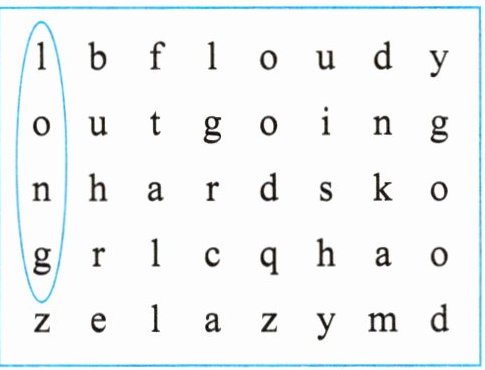
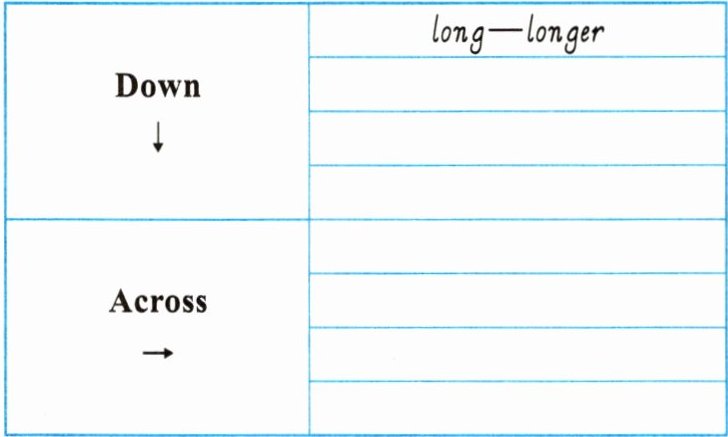
答案
Down: tall—taller, shy—shyer, good—better
Across: loud—louder, outgoing—more outgoing, hard—harder, lazy—lazier
Across: loud—louder, outgoing—more outgoing, hard—harder, lazy—lazier
解析
【分析】
这道题需要先在字谜中识别出纵向(Down)和横向(Across)的形容词,再根据形容词比较级的变化规则写出对应形式。解题时,先明确题目要求的两个方向,定位出目标形容词,再回忆不同类型形容词的比较级变化规则:单音节词一般加-er,以“辅音字母+y”结尾的词变y为i加-er,不规则变化需特殊记忆,多音节词前加more。
【解析】
根据题目要求,纵向(Down)的形容词及比较级:tall变为taller,shy变为shyer,good变为better;横向(Across)的形容词及比较级:loud变为louder,outgoing变为more outgoing,hard变为harder,lazy变为lazier。
【答案】
Down: tall—taller, shy—shyer, good—better
Across: loud—louder, outgoing—more outgoing, hard—harder, lazy—lazier
【知识点】
形容词比较级的构成;词汇识别
【点评】
本题考查形容词比较级的基本变化规则,需要学生掌握不同类型形容词的比较级变化方法,同时结合字谜的词汇定位能力,属于英语基础题型。
【难度系数】
0.6
这道题需要先在字谜中识别出纵向(Down)和横向(Across)的形容词,再根据形容词比较级的变化规则写出对应形式。解题时,先明确题目要求的两个方向,定位出目标形容词,再回忆不同类型形容词的比较级变化规则:单音节词一般加-er,以“辅音字母+y”结尾的词变y为i加-er,不规则变化需特殊记忆,多音节词前加more。
【解析】
根据题目要求,纵向(Down)的形容词及比较级:tall变为taller,shy变为shyer,good变为better;横向(Across)的形容词及比较级:loud变为louder,outgoing变为more outgoing,hard变为harder,lazy变为lazier。
【答案】
Down: tall—taller, shy—shyer, good—better
Across: loud—louder, outgoing—more outgoing, hard—harder, lazy—lazier
【知识点】
形容词比较级的构成;词汇识别
【点评】
本题考查形容词比较级的基本变化规则,需要学生掌握不同类型形容词的比较级变化方法,同时结合字谜的词汇定位能力,属于英语基础题型。
【难度系数】
0.6
Ⅲ. Complete the sentences with the correct forms of the words from Exercise Ⅱ.
1. Lisa’s hair is getting
2. The music is too soft. Can you play it
3. I’m outgoing, and my cousin Jerry is a lot
4. Jack always gets good grades because he works
5. Chen Jie practises a lot, so she can play the flute
6. Tom is 1.75 metres tall now, and he is
7. I often do housework, but my brother never does. He is much
8. Alice doesn’t like talking to strangers. She is much
1. Lisa’s hair is getting
longer
every month.2. The music is too soft. Can you play it
louder
?3. I’m outgoing, and my cousin Jerry is a lot
more outgoing
than me.4. Jack always gets good grades because he works
harder
than others.5. Chen Jie practises a lot, so she can play the flute
better
than before.6. Tom is 1.75 metres tall now, and he is
taller
than he was two years ago.7. I often do housework, but my brother never does. He is much
lazier
than me.8. Alice doesn’t like talking to strangers. She is much
shyer
than others.答案
1. longer 2. louder 3. more outgoing 4. harder 5. better 6. taller
7. lazier 8. shyer
7. lazier 8. shyer
解析
【分析】
本题要求用指定单词的正确形式完成句子,核心考查形容词和副词的比较级用法。解题时需先结合句子语境判断所需词性,再根据是否有比较级标志词(如than)确定使用比较级,最后遵循不同单词的比较级变化规则(单音节词加-er、多音节词加-more、不规则变化、以y结尾变y为i加-er等)填写正确形式。
【解析】
1. 句意为“Lisa的头发每月都变长”,描述头发长度变化,用形容词long的比较级longer。
2. 句意为“音乐太轻,能弹得更大声吗”,修饰动词play用副词loud的比较级louder。
3. 句中有than,outgoing是多音节形容词,比较级为more outgoing,表“更外向”。
4. 句中有than,修饰动词work用副词hard的比较级harder,表“更努力”。
5. 句中有than,修饰动词play用副词well的不规则比较级better,表“更好”。
6. 句中有than,描述身高,用形容词tall的比较级taller。
7. 句中有than,从不做家务说明更懒,lazy以y结尾,比较级为lazier。
8. 句中有than,不喜欢和陌生人说话说明更害羞,shy的比较级为shyer。
【答案】
1. longer 2. louder 3. more outgoing 4. harder 5. better 6. taller 7. lazier 8. shyer
【知识点】
形容词比较级、副词比较级、词汇运用
【点评】
本题聚焦形容词和副词比较级的基础用法,需结合语境和比较级标志词判断形式,变化规则多为常见类型,仅个别不规则变化需记忆,整体难度不大,适合巩固基础语法。
【难度系数】
0.6
本题要求用指定单词的正确形式完成句子,核心考查形容词和副词的比较级用法。解题时需先结合句子语境判断所需词性,再根据是否有比较级标志词(如than)确定使用比较级,最后遵循不同单词的比较级变化规则(单音节词加-er、多音节词加-more、不规则变化、以y结尾变y为i加-er等)填写正确形式。
【解析】
1. 句意为“Lisa的头发每月都变长”,描述头发长度变化,用形容词long的比较级longer。
2. 句意为“音乐太轻,能弹得更大声吗”,修饰动词play用副词loud的比较级louder。
3. 句中有than,outgoing是多音节形容词,比较级为more outgoing,表“更外向”。
4. 句中有than,修饰动词work用副词hard的比较级harder,表“更努力”。
5. 句中有than,修饰动词play用副词well的不规则比较级better,表“更好”。
6. 句中有than,描述身高,用形容词tall的比较级taller。
7. 句中有than,从不做家务说明更懒,lazy以y结尾,比较级为lazier。
8. 句中有than,不喜欢和陌生人说话说明更害羞,shy的比较级为shyer。
【答案】
1. longer 2. louder 3. more outgoing 4. harder 5. better 6. taller 7. lazier 8. shyer
【知识点】
形容词比较级、副词比较级、词汇运用
【点评】
本题聚焦形容词和副词比较级的基础用法,需结合语境和比较级标志词判断形式,变化规则多为常见类型,仅个别不规则变化需记忆,整体难度不大,适合巩固基础语法。
【难度系数】
0.6
Ⅳ. Read and complete the tasks.
A. Complete the conversation with the sentences in the box. There is one extra option.
(Han Lin and Teng Fei are having a discussion after listening to two speeches for class monitor election.)
Han Lin: Hi, Teng Fei. What do you think of the two speeches?
Teng Fei: They are both great! 1.
Han Lin: That’s true. He enjoys talking with others and helping organize activities.
2.
Teng Fei: She works very hard, and she likes to share her learning skills with us.
Han Lin: You’re right! 3.
Teng Fei: What’s more, a good monitor should help the class make progress together.
Han Lin: Yes. I think both of them are good choices. 4.
Teng Fei: Hmm ... it’s hard to say. Lin Hua is more outgoing, but Song Meimei is more careful with her work.
Han Lin: That’s true. No matter who wins, I hope the winner can be a good bridge between the teachers and the class.
Teng Fei: Me too! Let’s wait and see.
A. How about Song Meimei?
B. But who do you think will win?
C. She always does some reading before class.
D. Lin Hua is better at communicating with others.
E. She helped me with a maths problem yesterday.
B. Complete the table.
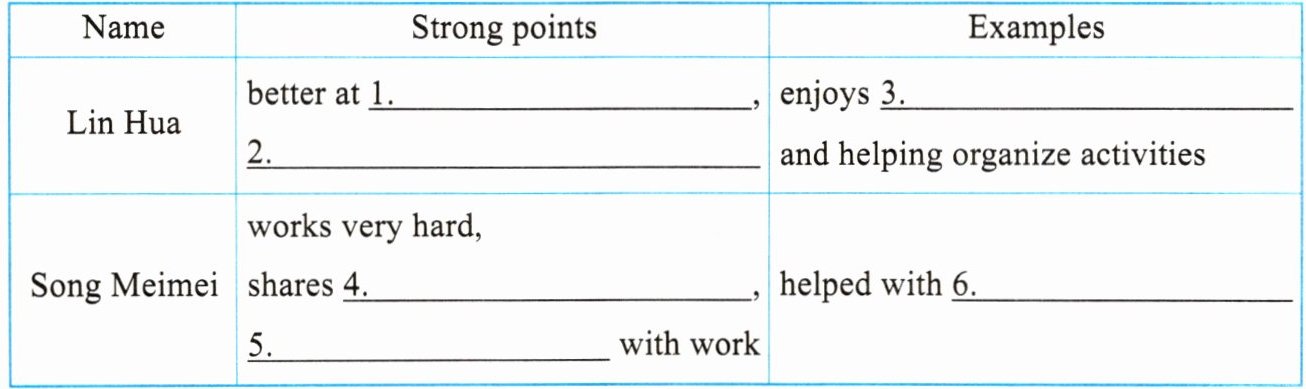
C. Answer the questions.
What are your strong points? Do you want to be a class monitor? Why or why not?
A. Complete the conversation with the sentences in the box. There is one extra option.
(Han Lin and Teng Fei are having a discussion after listening to two speeches for class monitor election.)
Han Lin: Hi, Teng Fei. What do you think of the two speeches?
Teng Fei: They are both great! 1.
D
Han Lin: That’s true. He enjoys talking with others and helping organize activities.
2.
A
Teng Fei: She works very hard, and she likes to share her learning skills with us.
Han Lin: You’re right! 3.
E
A good monitor should always be ready to help others.Teng Fei: What’s more, a good monitor should help the class make progress together.
Han Lin: Yes. I think both of them are good choices. 4.
B
Teng Fei: Hmm ... it’s hard to say. Lin Hua is more outgoing, but Song Meimei is more careful with her work.
Han Lin: That’s true. No matter who wins, I hope the winner can be a good bridge between the teachers and the class.
Teng Fei: Me too! Let’s wait and see.
A. How about Song Meimei?
B. But who do you think will win?
C. She always does some reading before class.
D. Lin Hua is better at communicating with others.
E. She helped me with a maths problem yesterday.
B. Complete the table.
C. Answer the questions.
What are your strong points? Do you want to be a class monitor? Why or why not?
I think I'm friendly and responsible. I like helping my classmates and working in a team. Yes, I want to be a class monitor because I want to make our class better and help everyone.
答案
A. 1. D 2. A 3. E 4. B
B. 1. communicating 2. more outgoing 3. talking with others
4. learning skills 5. more careful 6. a maths problem
C. One possible version: I think I'm friendly and responsible. I like helping my classmates and working in a team. Yes, I want to be a class monitor because I want to make our class better and help everyone.
B. 1. communicating 2. more outgoing 3. talking with others
4. learning skills 5. more careful 6. a maths problem
C. One possible version: I think I'm friendly and responsible. I like helping my classmates and working in a team. Yes, I want to be a class monitor because I want to make our class better and help everyone.
解析
【分析】
本题分为三部分:A部分补全对话,需结合上下文语境匹配句子;B部分完成表格,需对应对话中人物的优点及事例;C部分开放性问答,需结合自身实际合理表达。解题时先梳理对话逻辑,再提取关键信息填表格,最后按要求回答问题。
【解析】
A. 补全对话:
1. 后句提到Lin Hua喜欢与人交流、组织活动,对应选项D(Lin Hua更擅长与人交流),故选D;
2. 后句介绍Song Meimei的情况,对应选项A(Song Meimei呢?),故选A;
3. 前句说好班长要乐于助人,对应选项E(她昨天帮我解决了一道数学题),故选E;
4. 后句讨论谁会赢,对应选项B(但你认为谁会赢?),故选B。
B. 完成表格:
1. 对应Lin Hua擅长的内容,填communicating;
2. 对应Lin Hua的性格特点,填more outgoing;
3. 对应Lin Hua的例子,填talking with others;
4. 对应Song Meimei分享的内容,填learning skills;
5. 对应Song Meimei的工作特点,填more careful;
6. 对应Song Meimei帮忙的事例,填a maths problem。
C. 开放性问答:结合自身优点,表达想当班长的意愿及原因即可。
【答案】
A. 1.D 2.A 3.E 4.B
B. 1.communicating 2.more outgoing 3.talking with others 4.learning skills 5.more careful 6.a maths problem
C. One possible version: I think I'm friendly and responsible. I like helping my classmates and working in a team. Yes, I want to be a class monitor because I want to make our class better and help everyone.
【知识点】
英语日常交际用语、信息匹配、开放性书面表达
【点评】
本题贴近校园生活,考查学生的语境理解、信息提取及语言表达能力,题型基础且实用。
【难度系数】
0.6
本题分为三部分:A部分补全对话,需结合上下文语境匹配句子;B部分完成表格,需对应对话中人物的优点及事例;C部分开放性问答,需结合自身实际合理表达。解题时先梳理对话逻辑,再提取关键信息填表格,最后按要求回答问题。
【解析】
A. 补全对话:
1. 后句提到Lin Hua喜欢与人交流、组织活动,对应选项D(Lin Hua更擅长与人交流),故选D;
2. 后句介绍Song Meimei的情况,对应选项A(Song Meimei呢?),故选A;
3. 前句说好班长要乐于助人,对应选项E(她昨天帮我解决了一道数学题),故选E;
4. 后句讨论谁会赢,对应选项B(但你认为谁会赢?),故选B。
B. 完成表格:
1. 对应Lin Hua擅长的内容,填communicating;
2. 对应Lin Hua的性格特点,填more outgoing;
3. 对应Lin Hua的例子,填talking with others;
4. 对应Song Meimei分享的内容,填learning skills;
5. 对应Song Meimei的工作特点,填more careful;
6. 对应Song Meimei帮忙的事例,填a maths problem。
C. 开放性问答:结合自身优点,表达想当班长的意愿及原因即可。
【答案】
A. 1.D 2.A 3.E 4.B
B. 1.communicating 2.more outgoing 3.talking with others 4.learning skills 5.more careful 6.a maths problem
C. One possible version: I think I'm friendly and responsible. I like helping my classmates and working in a team. Yes, I want to be a class monitor because I want to make our class better and help everyone.
【知识点】
英语日常交际用语、信息匹配、开放性书面表达
【点评】
本题贴近校园生活,考查学生的语境理解、信息提取及语言表达能力,题型基础且实用。
【难度系数】
0.6
