

 登录
登录
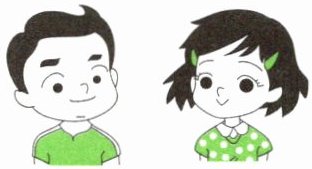
Ⅵ. Read, choose and write(Shenshen 克服了恐惧,演讲得越来越棒。阅读她和Minmin的对话,联系上下文,选择正确的句子填空,把字母代号填在横线上)
A. I learned from videos and practised a lot every day.
B. Yes! My family filmed me and gave many tips.
C. I used to be shy and always hide behind my mum.
D. I joined the school storytelling contest.
E. Now I feel excited to share stories!
Minmin: Shenshen, you were so great at the storytelling contest! How did you make it?
Shenshen: 1.
Minmin: Really? What helped you improve?
Shenshen: 2.
Minmin: Did your family help too?
Shenshen: 3.
Minmin: What hard tasks did you take on?
Shenshen: 4.
Minmin: How do you feel now?
Shenshen: 5.
A. I learned from videos and practised a lot every day.
B. Yes! My family filmed me and gave many tips.
C. I used to be shy and always hide behind my mum.
D. I joined the school storytelling contest.
E. Now I feel excited to share stories!
Minmin: Shenshen, you were so great at the storytelling contest! How did you make it?
Shenshen: 1.
C
I was nervous to speak in front of people.Minmin: Really? What helped you improve?
Shenshen: 2.
A
I learned how to use gestures and expressions.Minmin: Did your family help too?
Shenshen: 3.
B
Their support made me braver.Minmin: What hard tasks did you take on?
Shenshen: 4.
D
It was scary but I didn’t give up. I tried my best.Minmin: How do you feel now?
Shenshen: 5.
E
I even want to try bigger stages!答案
1. C 2. A 3. B 4. D 5. E
解析
【分析】
本题是情景对话填空题,需结合对话上下文的语境、问答对应关系,梳理Shenshen从害羞到勇敢的成长过程,逐个匹配符合逻辑的选项。先通读对话把握整体脉络,再针对每个空的前后内容,选择语义连贯的句子。
【解析】
1. 第一个空后提到“我过去在人前说话很紧张”,对应选项C“我过去很害羞,总是躲在妈妈身后”,符合语境,故选C。
2. 第二个空前问“什么帮助你进步?”,后提到学习手势和表情,对应选项A“我从视频里学习,每天练习很多”,是进步的方法,故选A。
3. 第三个空是一般疑问句“你的家人也帮忙了吗?”,需用Yes/No回答,对应选项B“是的!我的家人拍我视频,给了很多建议”,符合问答逻辑,故选B。
4. 第四个空问“你承担了什么困难的任务?”,对应选项D“我参加了学校的讲故事比赛”,比赛属于困难任务,故选D。
5. 第五个空问“你现在感觉怎么样?”,对应选项E“现在我很兴奋分享故事!”,符合语境,故选E。
【答案】
1.C 2.A 3.B 4.D 5.E
【知识点】
情景对话、日常交际用语
【点评】
本题通过贴近生活的对话,考查学生对情景交际的理解与运用能力,需结合上下文逻辑匹配选项,难度适中。
【难度系数】
0.5
本题是情景对话填空题,需结合对话上下文的语境、问答对应关系,梳理Shenshen从害羞到勇敢的成长过程,逐个匹配符合逻辑的选项。先通读对话把握整体脉络,再针对每个空的前后内容,选择语义连贯的句子。
【解析】
1. 第一个空后提到“我过去在人前说话很紧张”,对应选项C“我过去很害羞,总是躲在妈妈身后”,符合语境,故选C。
2. 第二个空前问“什么帮助你进步?”,后提到学习手势和表情,对应选项A“我从视频里学习,每天练习很多”,是进步的方法,故选A。
3. 第三个空是一般疑问句“你的家人也帮忙了吗?”,需用Yes/No回答,对应选项B“是的!我的家人拍我视频,给了很多建议”,符合问答逻辑,故选B。
4. 第四个空问“你承担了什么困难的任务?”,对应选项D“我参加了学校的讲故事比赛”,比赛属于困难任务,故选D。
5. 第五个空问“你现在感觉怎么样?”,对应选项E“现在我很兴奋分享故事!”,符合语境,故选E。
【答案】
1.C 2.A 3.B 4.D 5.E
【知识点】
情景对话、日常交际用语
【点评】
本题通过贴近生活的对话,考查学生对情景交际的理解与运用能力,需结合上下文逻辑匹配选项,难度适中。
【难度系数】
0.5
Ⅶ. Read and judge(你了解史蒂芬·霍金的故事吗?读一读,判断句子与短文内容是否相符,相符的用T表示,不符的用F表示)
When Stephen Hawking was 21, he got a serious illness. His body became very weak. Doctors thought he might only live for two years. But Hawking never gave up.
He loved science and wanted to study stars. Even when he lost his voice and couldn’t move, he used a special computer. The computer understood his cheek movements (面部表情动作) to help him speak and write.
He wrote a famous book A Brief History of Time (《时间简史》) to explain space science in simple words. He said, “Although my body is weak, my mind is free.” He kept working for over 50 years and became one of the world’s greatest scientists.
(
(
(
(
(
QUICK TIPS
看见陌生词别害怕,尝试猜一猜它的含义。或许这个陌生词并不影响你的阅读。
When Stephen Hawking was 21, he got a serious illness. His body became very weak. Doctors thought he might only live for two years. But Hawking never gave up.
He loved science and wanted to study stars. Even when he lost his voice and couldn’t move, he used a special computer. The computer understood his cheek movements (面部表情动作) to help him speak and write.
He wrote a famous book A Brief History of Time (《时间简史》) to explain space science in simple words. He said, “Although my body is weak, my mind is free.” He kept working for over 50 years and became one of the world’s greatest scientists.
(
T
) 1. Hawking got ill when he was twenty-one.(
F
) 2. Doctors believed Hawking could live a long life.(
F
) 3. Hawking used eye movements to control his computer.(
T
) 4. Hawking’s book helped people understand space easily.(
F
) 5. Hawking thought his illness stopped his thinking.QUICK TIPS
看见陌生词别害怕,尝试猜一猜它的含义。或许这个陌生词并不影响你的阅读。
答案
1. T 2. F 3. F 4. T 5. F
解析
【分析】
做此类阅读判断题时,需先通读短文把握大意,再逐题定位原文对应内容,将题目句子与原文信息逐一对比,相符选T,不符选F。具体步骤:1.定位第1题关于霍金生病年龄的原文;2.定位第2题医生对霍金寿命的判断;3.定位第3题霍金控制电脑的方式;4.定位第4题《时间简史》的作用;5.定位第5题霍金对疾病与思维的看法,逐一核对即可。
【解析】
1. 原文第一句明确提到“When Stephen Hawking was 21, he got a serious illness”,与题目表述一致,故为T;
2. 原文提到“Doctors thought he might only live for two years”,说明医生认为他活不久,并非长寿,与题目不符,故为F;
3. 原文提到电脑通过“cheek movements(面部表情动作)”帮助他,而非题目中的“eye movements(眼部动作)”,故为F;
4. 原文提到他写《时间简史》是“to explain space science in simple words”,即用简单语言解释太空科学,帮助人们轻松理解,与题目表述一致,故为T;
5. 原文霍金说“Although my body is weak, my mind is free”,说明他的思维并未被疾病阻止,与题目表述不符,故为F。
【答案】
1.T 2.F 3.F 4.T 5.F
【知识点】
阅读理解判断正误、细节信息查找
【点评】
本题为人物故事类阅读理解判断题,侧重考查学生提取短文关键细节并对比判断的能力,题目均为原文细节的直接考查,难度较低,只要仔细阅读原文定位对应信息即可正确解答。
【难度系数】
0.8
做此类阅读判断题时,需先通读短文把握大意,再逐题定位原文对应内容,将题目句子与原文信息逐一对比,相符选T,不符选F。具体步骤:1.定位第1题关于霍金生病年龄的原文;2.定位第2题医生对霍金寿命的判断;3.定位第3题霍金控制电脑的方式;4.定位第4题《时间简史》的作用;5.定位第5题霍金对疾病与思维的看法,逐一核对即可。
【解析】
1. 原文第一句明确提到“When Stephen Hawking was 21, he got a serious illness”,与题目表述一致,故为T;
2. 原文提到“Doctors thought he might only live for two years”,说明医生认为他活不久,并非长寿,与题目不符,故为F;
3. 原文提到电脑通过“cheek movements(面部表情动作)”帮助他,而非题目中的“eye movements(眼部动作)”,故为F;
4. 原文提到他写《时间简史》是“to explain space science in simple words”,即用简单语言解释太空科学,帮助人们轻松理解,与题目表述一致,故为T;
5. 原文霍金说“Although my body is weak, my mind is free”,说明他的思维并未被疾病阻止,与题目表述不符,故为F。
【答案】
1.T 2.F 3.F 4.T 5.F
【知识点】
阅读理解判断正误、细节信息查找
【点评】
本题为人物故事类阅读理解判断题,侧重考查学生提取短文关键细节并对比判断的能力,题目均为原文细节的直接考查,难度较低,只要仔细阅读原文定位对应信息即可正确解答。
【难度系数】
0.8
