

 登录
登录
四、阅读理解
A long time ago, the world was very cold. Ice covered most of the land. This cold time lasted millions of years and was called an ice age. The last ice age ended around 10 000 years ago. The earth slowly warmed up and much of the ice melted.
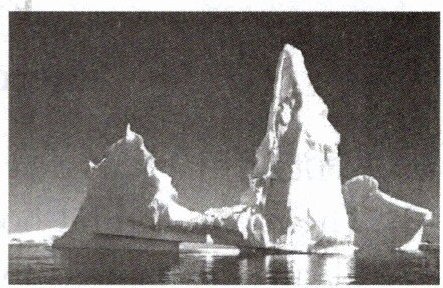
Sometimes, a big piece of ice breaks off (断裂) from an ice shelf. It falls into the ocean and floats (漂浮) away. This is an iceberg (冰山). An iceberg may look small, but in fact, it is very big. Only a small part of it can be seen above the water.
Most of the iceberg is underwater, out of sight. Between one seventh and one tenth of an iceberg can be seen above the water. This makes it dangerous to shipping.
In March 2000, an iceberg named B-15 broke off from an ice shelf in Antarctica (南极洲). It was 295 kilometres long and covered an area six times the size of Greater London.
Smaller parts of B-15 were still being tracked (追踪) after it broke away from the ice shelf. Those parts melted as the icebergs moved into warmer water.
Icebergs can be very dangerous. In 1912, a large passenger ship called the Titanic was sailing from England to New York when it hit an iceberg in the North Atlantic Ocean. It fell to the bottom (底部) of the ocean and 1 500 people lost their lives.
Today, scientists mainly use radar and satellite (卫星) pictures to track the paths of icebergs. Sometimes ships such as icebreakers (破冰船) work with helicopters (直升机) on iceberg patrols (巡逻). They make sure that there are no icebergs around that can do harm to passing ships. Helicopters fly out over the sea and locate (定位) all the icebergs they can find. As an iceberg floats along, the wind and the weather can carve the ice into strange shapes.
Icebergs are made of fresh water. Some scientists believe that one day it will be possible to make use of them to get drinking water for dry parts of the world. If all the ice on earth melted, the sea level (海平面) would rise by about sixty metres. If there was another ice age, more water would freeze and the sea level would fall.
At the moment, sea levels are rising at about three millimetres every year. This is believed to be because of the warming of the earth's climate. Melting ice and rising sea levels also have an effect on areas far away from the frozen areas.
()1. What does the underlined word “freeze” mean in this passage?
A. Turn to ice. B. Mix with ice. C. Stop moving. D. Break off.
( )2. The sentence “Some icebergs, especially (尤其) in the Antarctic, can be very huge.” can be best put at the beginning of ______ .
A. Paragraph 2 B. Paragraph 3 C. Paragraph 4 D. Paragraph 5
()3. The writer mentioned the Titanic .
A. to tell what icebergs are made of
B. to tell where icebergs can be found
C. to show how dangerous icebergs are
D. to guess why icebergs are in strange shapes
()4. What can we learn about icebergs?
A. Most parts of the icebergs can be seen easily.
B. The sea level would fall a lot if the icebergs on earth melt.
C. It is easy for people to get drinking water from icebergs now.
D. Scientists have some ways to help ships keep away from icebergs.
A long time ago, the world was very cold. Ice covered most of the land. This cold time lasted millions of years and was called an ice age. The last ice age ended around 10 000 years ago. The earth slowly warmed up and much of the ice melted.
Sometimes, a big piece of ice breaks off (断裂) from an ice shelf. It falls into the ocean and floats (漂浮) away. This is an iceberg (冰山). An iceberg may look small, but in fact, it is very big. Only a small part of it can be seen above the water.
Most of the iceberg is underwater, out of sight. Between one seventh and one tenth of an iceberg can be seen above the water. This makes it dangerous to shipping.
In March 2000, an iceberg named B-15 broke off from an ice shelf in Antarctica (南极洲). It was 295 kilometres long and covered an area six times the size of Greater London.
Smaller parts of B-15 were still being tracked (追踪) after it broke away from the ice shelf. Those parts melted as the icebergs moved into warmer water.
Icebergs can be very dangerous. In 1912, a large passenger ship called the Titanic was sailing from England to New York when it hit an iceberg in the North Atlantic Ocean. It fell to the bottom (底部) of the ocean and 1 500 people lost their lives.
Today, scientists mainly use radar and satellite (卫星) pictures to track the paths of icebergs. Sometimes ships such as icebreakers (破冰船) work with helicopters (直升机) on iceberg patrols (巡逻). They make sure that there are no icebergs around that can do harm to passing ships. Helicopters fly out over the sea and locate (定位) all the icebergs they can find. As an iceberg floats along, the wind and the weather can carve the ice into strange shapes.
Icebergs are made of fresh water. Some scientists believe that one day it will be possible to make use of them to get drinking water for dry parts of the world. If all the ice on earth melted, the sea level (海平面) would rise by about sixty metres. If there was another ice age, more water would freeze and the sea level would fall.
At the moment, sea levels are rising at about three millimetres every year. This is believed to be because of the warming of the earth's climate. Melting ice and rising sea levels also have an effect on areas far away from the frozen areas.
()1. What does the underlined word “freeze” mean in this passage?
A. Turn to ice. B. Mix with ice. C. Stop moving. D. Break off.
( )2. The sentence “Some icebergs, especially (尤其) in the Antarctic, can be very huge.” can be best put at the beginning of ______ .
A. Paragraph 2 B. Paragraph 3 C. Paragraph 4 D. Paragraph 5
()3. The writer mentioned the Titanic .
A. to tell what icebergs are made of
B. to tell where icebergs can be found
C. to show how dangerous icebergs are
D. to guess why icebergs are in strange shapes
()4. What can we learn about icebergs?
A. Most parts of the icebergs can be seen easily.
B. The sea level would fall a lot if the icebergs on earth melt.
C. It is easy for people to get drinking water from icebergs now.
D. Scientists have some ways to help ships keep away from icebergs.
答案
1.A 2.C 3.C 4.D
解析
【分析】
本题是关于冰山的英语阅读理解题,需结合文章内容,通过词义猜测、细节理解、句子还原等方法解题:第1题根据上下文语境猜测词义;第2题需匹配句子与对应段落的内容;第3题通过举例目的分析;第4题逐一核对选项与文章细节。
【解析】
1. 词义猜测题:根据文章第八段“If there was another ice age, more water would freeze and the sea level would fall.”可知,冰期时更多水会变成冰,海平面下降,故“freeze”意为“结冰”,选A。
2. 句子还原题:题干句子强调南极冰山尤其巨大,文章第四段举例B-15冰山(长295公里,面积是大伦敦的6倍)体现其巨大,因此该句放在第四段开头合适,选C。
3. 细节理解题:文章第六段提及泰坦尼克号撞冰山沉没、1500人遇难,目的是说明冰山的危险性,选C。
4. 细节理解题:A选项错误,文章第三段指出冰山大部分在水下;B选项错误,冰融化会使海平面上升;C选项错误,文章提到未来可能用冰山获取淡水,目前不可行;D选项正确,文章第七段说明科学家用雷达、卫星追踪,破冰船与直升机巡逻帮助船只远离冰山,选D。
【答案】
1.A 2.C 3.C 4.D
【知识点】
词义猜测题、细节理解题、句子还原题
【点评】
本题围绕冰山知识设置题目,考查学生英语阅读理解的综合解题能力,需准确理解文章细节、结合语境推理,难度适中。
【难度系数】
0.6
本题是关于冰山的英语阅读理解题,需结合文章内容,通过词义猜测、细节理解、句子还原等方法解题:第1题根据上下文语境猜测词义;第2题需匹配句子与对应段落的内容;第3题通过举例目的分析;第4题逐一核对选项与文章细节。
【解析】
1. 词义猜测题:根据文章第八段“If there was another ice age, more water would freeze and the sea level would fall.”可知,冰期时更多水会变成冰,海平面下降,故“freeze”意为“结冰”,选A。
2. 句子还原题:题干句子强调南极冰山尤其巨大,文章第四段举例B-15冰山(长295公里,面积是大伦敦的6倍)体现其巨大,因此该句放在第四段开头合适,选C。
3. 细节理解题:文章第六段提及泰坦尼克号撞冰山沉没、1500人遇难,目的是说明冰山的危险性,选C。
4. 细节理解题:A选项错误,文章第三段指出冰山大部分在水下;B选项错误,冰融化会使海平面上升;C选项错误,文章提到未来可能用冰山获取淡水,目前不可行;D选项正确,文章第七段说明科学家用雷达、卫星追踪,破冰船与直升机巡逻帮助船只远离冰山,选D。
【答案】
1.A 2.C 3.C 4.D
【知识点】
词义猜测题、细节理解题、句子还原题
【点评】
本题围绕冰山知识设置题目,考查学生英语阅读理解的综合解题能力,需准确理解文章细节、结合语境推理,难度适中。
【难度系数】
0.6
