

 登录
登录
E Look and write
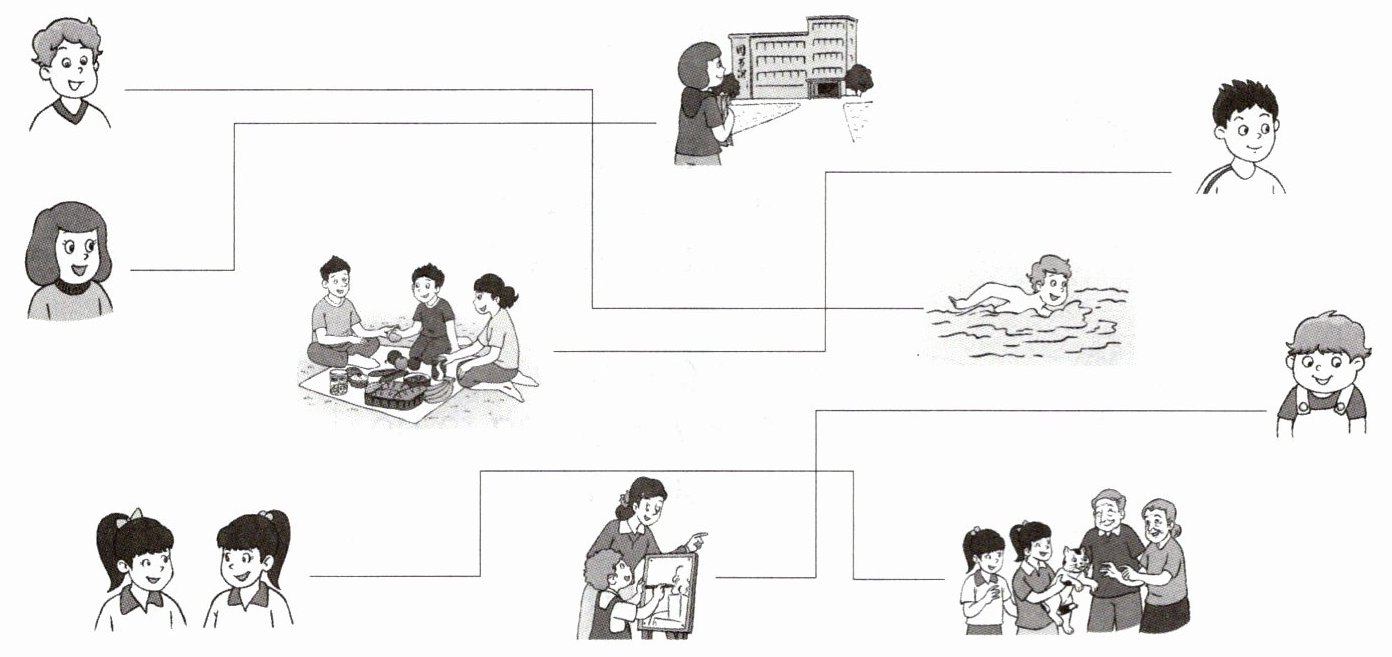
1 Mike is going to this weekend.
2 Nancy is .
3 Su Hai and Su Yang .
4 Liu Tao .
5 Tim .
1 Mike is going to this weekend.
2 Nancy is .
3 Su Hai and Su Yang .
4 Liu Tao .
5 Tim .
答案
1. swim
2. going to have a picnic
3. are going to visit their grandparents
4. is going to take photos in front of the school
5. is going to draw a picture with his teacher
2. going to have a picnic
3. are going to visit their grandparents
4. is going to take photos in front of the school
5. is going to draw a picture with his teacher
解析
1. 根据图片连线,Mike对应的活动是游泳,结合“be going to + 动词原形”的一般将来时结构,填写动词原形swim;
2. Nancy对应的活动是野餐,用“be going to + 动词短语”结构,填写going to have a picnic;
3. Su Hai和Su Yang对应的活动是看望祖父母,主语为复数,be动词用are,填写are going to visit their grandparents;
4. Liu Tao对应的活动是在学校前拍照,主语为单数,be动词用is,填写is going to take photos in front of the school;
5. Tim对应的活动是和老师一起画画,主语为单数,be动词用is,填写is going to draw a picture with his teacher。
2. Nancy对应的活动是野餐,用“be going to + 动词短语”结构,填写going to have a picnic;
3. Su Hai和Su Yang对应的活动是看望祖父母,主语为复数,be动词用are,填写are going to visit their grandparents;
4. Liu Tao对应的活动是在学校前拍照,主语为单数,be动词用is,填写is going to take photos in front of the school;
5. Tim对应的活动是和老师一起画画,主语为单数,be动词用is,填写is going to draw a picture with his teacher。
F Look, read and write
1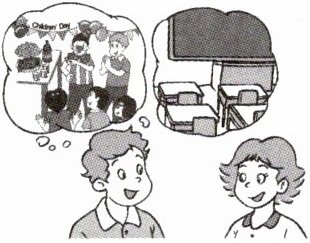
—We're going to a on
Children's Day, Helen.
—Great! are you going to have the
party?
—We're going to have it in our .
2
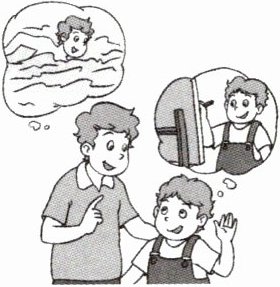
— are you going to this
afternoon, Mike?
—I'm going to with Liu Tao. What
about you?
—I'm pictures at
home.
3
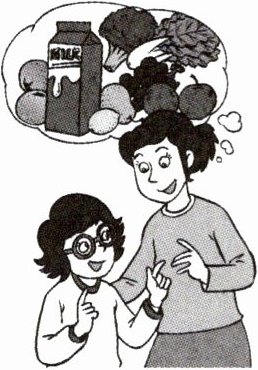
— you to the supermarket
this weekend, Mum?
—Yes, I am.
— are you going to ?
—I'm going to buy some ,
and vegetables.
—That's great. I'd like to go with you.
4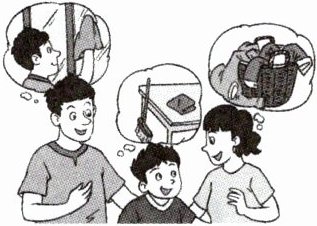
—I'm going to the . What
are you going to do, Liu Tao?
—I'm going to the and
the table. What about you, Mum?
—I'm going to .
1
—We're going to a on
Children's Day, Helen.
—Great! are you going to have the
party?
—We're going to have it in our .
2
— are you going to this
afternoon, Mike?
—I'm going to with Liu Tao. What
about you?
—I'm pictures at
home.
3
— you to the supermarket
this weekend, Mum?
—Yes, I am.
— are you going to ?
—I'm going to buy some ,
and vegetables.
—That's great. I'd like to go with you.
4
—I'm going to the . What
are you going to do, Liu Tao?
—I'm going to the and
the table. What about you, Mum?
—I'm going to .
答案
1. have; party
Where
classroom
2. What; do
swim
going to draw
3. Are; going
What; buy
milk; fruit
4. clean; window
clean; door; clean
wash the clothes
Where
classroom
2. What; do
swim
going to draw
3. Are; going
What; buy
milk; fruit
4. clean; window
clean; door; clean
wash the clothes
解析
1. 根据图片派对场景,用一般将来时be going to+动词原形:第一、二空填have、party,构成have a party(举办派对);询问地点用疑问词Where;根据教室图片,最后一空填classroom。
2. 询问下午计划用What引导的特殊疑问句,搭配do;图片显示游泳,填swim;回答用be going to+draw表达“打算画画”,填going to draw。
3. 一般疑问句用Are开头,搭配going(be going to结构);询问购买物品用What+buy;根据图片的牛奶、水果,填milk和fruit。
4. 图片显示擦窗户,填clean、window;擦门填clean、door,擦桌子填clean;妈妈计划洗衣服,填wash the clothes,均遵循be going to+动词原形结构。
2. 询问下午计划用What引导的特殊疑问句,搭配do;图片显示游泳,填swim;回答用be going to+draw表达“打算画画”,填going to draw。
3. 一般疑问句用Are开头,搭配going(be going to结构);询问购买物品用What+buy;根据图片的牛奶、水果,填milk和fruit。
4. 图片显示擦窗户,填clean、window;擦门填clean、door,擦桌子填clean;妈妈计划洗衣服,填wash the clothes,均遵循be going to+动词原形结构。
