

 登录
登录
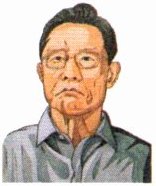
五、课堂上,老师正在向同学们介绍一位伟大的医生——钟南山,请从方框中选词补全关于他的介绍(有一个多余)。
happy good habits goes to bed takes exercise gets up never always
Do you know Zhong Nanshan? He is a great doctor. He helps lots of people. He is over 80 years old. But he looks very healthy. He has many 1.
happy good habits goes to bed takes exercise gets up never always
Do you know Zhong Nanshan? He is a great doctor. He helps lots of people. He is over 80 years old. But he looks very healthy. He has many 1.
good habits
. First, he gets plenty of sleep. He often 2. goes to bed
before 11 p. m. and 3. gets up
before 7 a. m. Second, he always 4. takes exercise
. He runs for half an hour and swims with his wife. Finally, he is very busy but he 5. never
worries too much. He often dances because dancing can make him 6. happy
. To be healthy, we should learn from him.答案
1. good habits 2. goes to bed 3. gets up 4. takes exercise 5. never 6. happy
解析
【解析】
1. 根据前文“He looks very healthy”及后文介绍的睡眠、锻炼等健康相关内容,此处应填“good habits”,many后接可数名词短语复数形式,符合语境。
2. 根据“First, he gets plenty of sleep.”和“before 11 p. m.”的时间提示,此处指他晚上11点前上床睡觉,主语he是第三人称单数,故填“goes to bed”。
3. 结合“before 7 a. m.”的早上时间提示,此处指他早上7点前起床,主语为第三人称单数,填“gets up”。
4. 根据后文“He runs for half an hour and swims with his wife.”的运动描述,可知他坚持锻炼,主语为第三人称单数,填“takes exercise”。
5. 根据前文“he is very busy but”的转折关系,可知他从不过度担忧,填频度副词“never”。
6. 根据“dancing can make him”的句式,此处需要形容词作宾语补足语,结合语境填“happy”,表示跳舞能让他开心。
【答案】
1. good habits
2. goes to bed
3. gets up
4. takes exercise
5. never
6. happy
【知识点】
动词短语运用、频度副词辨析、形容词作宾补
【点评】
本题通过介绍钟南山院士的健康生活习惯,考查学生对语境的理解和词汇的辨析运用,既巩固了英语基础词汇的用法,也传递了积极健康的生活理念。
【难度系数】
0.7
1. 根据前文“He looks very healthy”及后文介绍的睡眠、锻炼等健康相关内容,此处应填“good habits”,many后接可数名词短语复数形式,符合语境。
2. 根据“First, he gets plenty of sleep.”和“before 11 p. m.”的时间提示,此处指他晚上11点前上床睡觉,主语he是第三人称单数,故填“goes to bed”。
3. 结合“before 7 a. m.”的早上时间提示,此处指他早上7点前起床,主语为第三人称单数,填“gets up”。
4. 根据后文“He runs for half an hour and swims with his wife.”的运动描述,可知他坚持锻炼,主语为第三人称单数,填“takes exercise”。
5. 根据前文“he is very busy but”的转折关系,可知他从不过度担忧,填频度副词“never”。
6. 根据“dancing can make him”的句式,此处需要形容词作宾语补足语,结合语境填“happy”,表示跳舞能让他开心。
【答案】
1. good habits
2. goes to bed
3. gets up
4. takes exercise
5. never
6. happy
【知识点】
动词短语运用、频度副词辨析、形容词作宾补
【点评】
本题通过介绍钟南山院士的健康生活习惯,考查学生对语境的理解和词汇的辨析运用,既巩固了英语基础词汇的用法,也传递了积极健康的生活理念。
【难度系数】
0.7
六、根据材料内容,判断正(T)误(F)。
People all over the world have their own habits. Some are good and some are bad. I have a lot of habits. Here are some of my good habits.
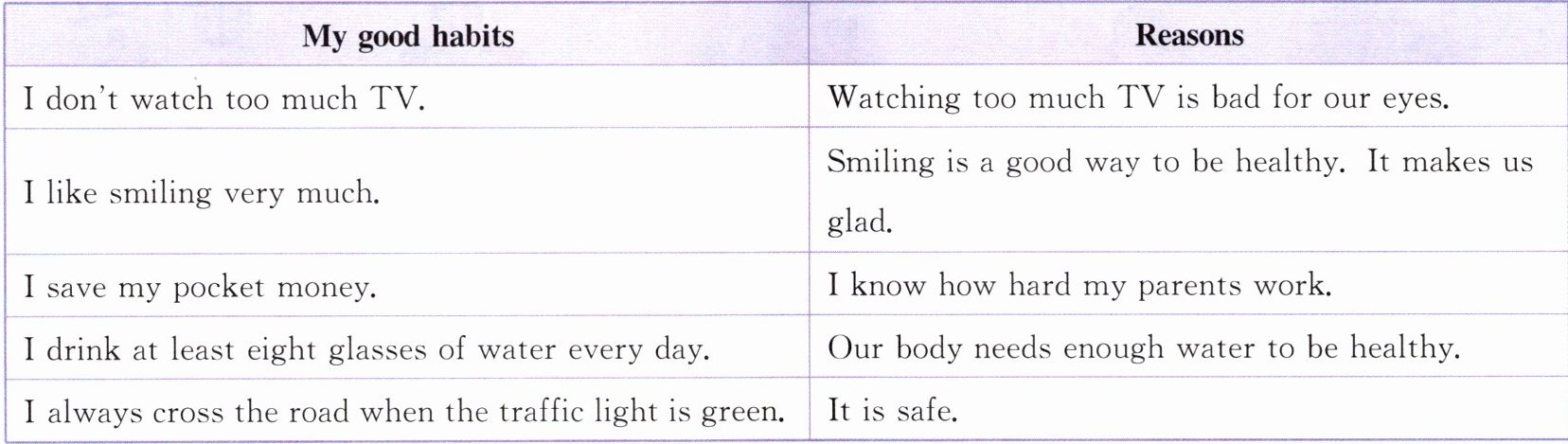
However, I also have some bad habits, so I must correct them. You can also find your good and bad habits. What will you do next?
(
(
(
(
(
People all over the world have their own habits. Some are good and some are bad. I have a lot of habits. Here are some of my good habits.
However, I also have some bad habits, so I must correct them. You can also find your good and bad habits. What will you do next?
(
F
) 1. The writer doesn't watch TV at all.(
F
) 2. The writer doesn't like smiling.(
F
) 3. The writer saves her pocket money because she doesn't want to buy anything.(
T
) 4. The writer drinks at least eight glasses of water every day now.(
F
) 5. The writer doesn't have any bad habits.答案
1. F 2. F 3. F 4. T 5. F
解析
【解析】
1. 原文提到“I don’t watch too much TV.”,说明作者是不看太多电视,并非完全不看电视,所以题目表述错误。
2. 原文明确写了“I like smiling very much.”,与题目中“doesn't like smiling”表述相反,题目错误。
3. 作者攒零花钱的原因是“I know how hard my parents work.”,并非题目所说的“不想买任何东西”,题目表述错误。
4. 原文直接给出“I drink at least eight glasses of water every day.”,与题目表述一致,题目正确。
5. 原文最后一段提到“However, I also have some bad habits”,说明作者有坏习惯,题目表述错误。
【答案】
1. F 2. F 3. F 4. T 5. F
【知识点】
英语细节理解、信息比对判断、阅读理解正误判断
【点评】
本题属于小学英语基础阅读理解题型,重点考查学生对文本细节信息的提取、甄别与比对能力,解题时需逐句核对原文与题目表述的差异,避免因粗心大意造成误判。
【难度系数】
0.85
1. 原文提到“I don’t watch too much TV.”,说明作者是不看太多电视,并非完全不看电视,所以题目表述错误。
2. 原文明确写了“I like smiling very much.”,与题目中“doesn't like smiling”表述相反,题目错误。
3. 作者攒零花钱的原因是“I know how hard my parents work.”,并非题目所说的“不想买任何东西”,题目表述错误。
4. 原文直接给出“I drink at least eight glasses of water every day.”,与题目表述一致,题目正确。
5. 原文最后一段提到“However, I also have some bad habits”,说明作者有坏习惯,题目表述错误。
【答案】
1. F 2. F 3. F 4. T 5. F
【知识点】
英语细节理解、信息比对判断、阅读理解正误判断
【点评】
本题属于小学英语基础阅读理解题型,重点考查学生对文本细节信息的提取、甄别与比对能力,解题时需逐句核对原文与题目表述的差异,避免因粗心大意造成误判。
【难度系数】
0.85
