

 登录
登录
Ⅱ. 根据要求,完成下列任务。
任务一:将下列短语分类。

work hard hardly mention be quiet about one's achievement
carry out one's research never stop belong to the team
put effort into seldom think about personal honour or wealth
积极探索:
淡泊名利:
任务二:用上述短语的适当形式填空,使短文完整。
A great researcher always 1.
任务一:将下列短语分类。
work hard hardly mention be quiet about one's achievement
carry out one's research never stop belong to the team
put effort into seldom think about personal honour or wealth
积极探索:
work hard, carry out one's research, never stop, put effort into
淡泊名利:
hardly mention, be quiet about one's achievement, belong to the team, seldom think about personal honour or wealth
任务二:用上述短语的适当形式填空,使短文完整。
A great researcher always 1.
works hard
and 2. carries out his research
day and night. He will 3. never stop
even when facing difficulties, and 4. puts effort into
his project. He 5. is quiet about his achievement
and 6. seldom thinks about personal honour or wealth
, because he thinks his work 7. belongs to the team
.答案
任务一:
积极探索:work hard, carry out one's research, never stop, put effort into
淡泊名利:hardly mention, be quiet about one's achievement, belong to the team, seldom
think about personal honour or wealth
任务二(答案不唯一):
1. works hard 2. carries out his research 3. never stop 4. puts effort into
5. is quiet about his achievement 6. seldom thinks about personal honour or wealth
7. belongs to the team
积极探索:work hard, carry out one's research, never stop, put effort into
淡泊名利:hardly mention, be quiet about one's achievement, belong to the team, seldom
think about personal honour or wealth
任务二(答案不唯一):
1. works hard 2. carries out his research 3. never stop 4. puts effort into
5. is quiet about his achievement 6. seldom thinks about personal honour or wealth
7. belongs to the team
解析
【分析】
任务一:首先要明确两类短语的核心指向,“积极探索”聚焦主动付出、持续钻研的行动类短语,“淡泊名利”聚焦不看重个人荣誉、财富的态度类短语。先逐个解读短语含义:
1. work hard(努力工作)、carry out one's research(开展研究)、never stop(永不停止)、put effort into(投入精力)这些短语都体现了主动钻研、持续付出的积极行为,符合“积极探索”的范畴;
2. hardly mention(几乎不提及)、be quiet about one's achievement(对自己的成就保持低调)、belong to the team(强调集体而非个人)、seldom think about personal honour or wealth(很少考虑个人荣誉与财富)这些短语体现了不看重个人名利的态度,符合“淡泊名利”的范畴。
任务二:首先确定主语是第三人称单数“a great researcher”,除will后的动词用原形外,其他谓语动词需变为第三人称单数形式。结合语境,研究者日常会努力工作、开展研究;面对困难会永不停止,投入精力到项目;同时他对自己的成就保持低调,不看重个人名利,认为工作属于团队,据此选择合适短语的适当形式填空。
【解析】
任务一:
积极探索类:依据短语语义,work hard(努力工作)、carry out one's research(开展个人研究)、never stop(永不停止)、put effort into(投入精力)都体现了积极钻研、持续付出的行为,归为此类。
淡泊名利类:hardly mention(几乎不提及个人相关名利内容)、be quiet about one's achievement(对自己的成就保持低调)、belong to the team(认为成果属于团队而非个人)、seldom think about personal honour or wealth(很少考虑个人荣誉财富)都体现了不看重个人名利的态度,归为此类。
任务二:
1. 主语为第三人称单数,“努力工作”变形为works hard;
2. “开展他的研究”变形为carries out his research;
3. will后接动词原形,“永不停止”用never stop;
4. “投入精力到他的项目”变形为puts effort into;
5. “对他的成就保持低调”变形为is quiet about his achievement;
6. “很少考虑个人荣誉财富”变形为seldom thinks about personal honour or wealth;
7. “属于团队”变形为belongs to the team。
【答案】
任务一:
积极探索:work hard, carry out one's research, never stop, put effort into
淡泊名利:hardly mention, be quiet about one's achievement, belong to the team, seldom think about personal honour or wealth
任务二(答案不唯一):
1. works hard 2. carries out his research 3. never stop 4. puts effort into
5. is quiet about his achievement 6. seldom thinks about personal honour or wealth
7. belongs to the team
【知识点】
短语语义辨析,主谓一致,动词形式变形
【点评】
本题考查英语短语的语义理解与实际运用,既需要准确区分短语的语义范畴完成分类,又要结合语境和语法规则正确变形短语,全方位考查了学生的短语运用能力和语法基础。
【难度系数】
0.6
任务一:首先要明确两类短语的核心指向,“积极探索”聚焦主动付出、持续钻研的行动类短语,“淡泊名利”聚焦不看重个人荣誉、财富的态度类短语。先逐个解读短语含义:
1. work hard(努力工作)、carry out one's research(开展研究)、never stop(永不停止)、put effort into(投入精力)这些短语都体现了主动钻研、持续付出的积极行为,符合“积极探索”的范畴;
2. hardly mention(几乎不提及)、be quiet about one's achievement(对自己的成就保持低调)、belong to the team(强调集体而非个人)、seldom think about personal honour or wealth(很少考虑个人荣誉与财富)这些短语体现了不看重个人名利的态度,符合“淡泊名利”的范畴。
任务二:首先确定主语是第三人称单数“a great researcher”,除will后的动词用原形外,其他谓语动词需变为第三人称单数形式。结合语境,研究者日常会努力工作、开展研究;面对困难会永不停止,投入精力到项目;同时他对自己的成就保持低调,不看重个人名利,认为工作属于团队,据此选择合适短语的适当形式填空。
【解析】
任务一:
积极探索类:依据短语语义,work hard(努力工作)、carry out one's research(开展个人研究)、never stop(永不停止)、put effort into(投入精力)都体现了积极钻研、持续付出的行为,归为此类。
淡泊名利类:hardly mention(几乎不提及个人相关名利内容)、be quiet about one's achievement(对自己的成就保持低调)、belong to the team(认为成果属于团队而非个人)、seldom think about personal honour or wealth(很少考虑个人荣誉财富)都体现了不看重个人名利的态度,归为此类。
任务二:
1. 主语为第三人称单数,“努力工作”变形为works hard;
2. “开展他的研究”变形为carries out his research;
3. will后接动词原形,“永不停止”用never stop;
4. “投入精力到他的项目”变形为puts effort into;
5. “对他的成就保持低调”变形为is quiet about his achievement;
6. “很少考虑个人荣誉财富”变形为seldom thinks about personal honour or wealth;
7. “属于团队”变形为belongs to the team。
【答案】
任务一:
积极探索:work hard, carry out one's research, never stop, put effort into
淡泊名利:hardly mention, be quiet about one's achievement, belong to the team, seldom think about personal honour or wealth
任务二(答案不唯一):
1. works hard 2. carries out his research 3. never stop 4. puts effort into
5. is quiet about his achievement 6. seldom thinks about personal honour or wealth
7. belongs to the team
【知识点】
短语语义辨析,主谓一致,动词形式变形
【点评】
本题考查英语短语的语义理解与实际运用,既需要准确区分短语的语义范畴完成分类,又要结合语境和语法规则正确变形短语,全方位考查了学生的短语运用能力和语法基础。
【难度系数】
0.6
Ⅲ. 根据课本第73~75页的听力内容,完成以下任务。
Welcome to the Amazon Rainforest! There is a special boiling river here. Its water can be as hot as 86 degrees! People use it to cook, clean and make tea—no fire is needed.
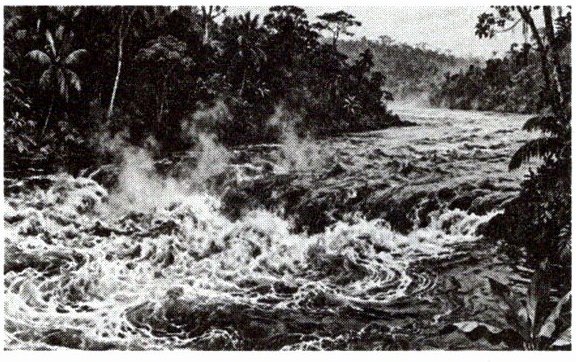
Why does the river get so hot? Ancient people thought the sun was the reason. But the guide says it's unlikely, just like outdoor swimming pools don't get that hot in summer. A girl guesses that perhaps the river passes a volcano and becomes hot, but the nearest one is 700 km away. Another guess is that maybe there are some chemicals in the water. They can produce heat. However, scientists haven't found such chemicals in the river yet. They need to do more research to find out why the river is so hot.
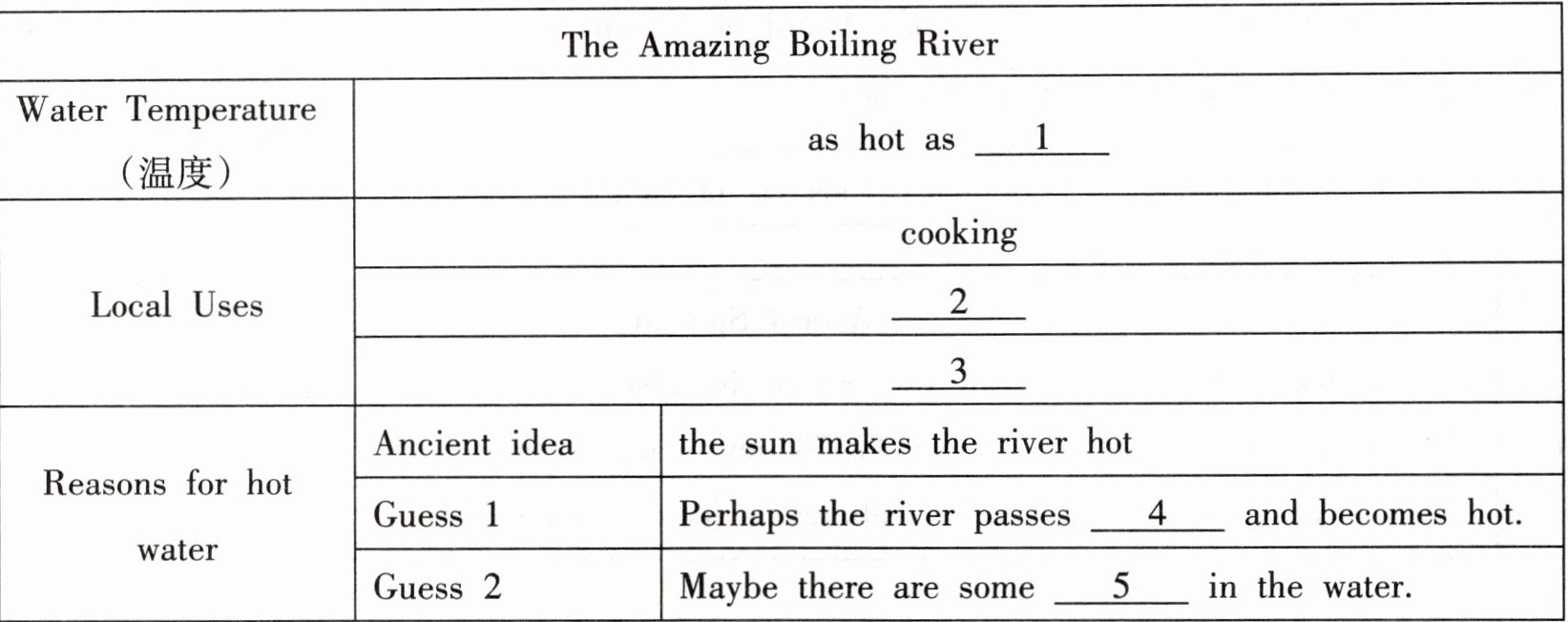
任务一:根据短文内容完成下表,每空不超过3个单词。
1.
任务二:回答下列问题。
6. What do scientists need to do to find out why the river is hot?
7. In your opinion, what makes the boiling river so hot?
Welcome to the Amazon Rainforest! There is a special boiling river here. Its water can be as hot as 86 degrees! People use it to cook, clean and make tea—no fire is needed.
Why does the river get so hot? Ancient people thought the sun was the reason. But the guide says it's unlikely, just like outdoor swimming pools don't get that hot in summer. A girl guesses that perhaps the river passes a volcano and becomes hot, but the nearest one is 700 km away. Another guess is that maybe there are some chemicals in the water. They can produce heat. However, scientists haven't found such chemicals in the river yet. They need to do more research to find out why the river is so hot.
任务一:根据短文内容完成下表,每空不超过3个单词。
1.
86 degrees
2. cleaning
3. making tea
4. a volcano
5. chemicals
任务二:回答下列问题。
6. What do scientists need to do to find out why the river is hot?
They need to do more research.
7. In your opinion, what makes the boiling river so hot?
I think maybe there are some unknown hot things under the river.(答案不唯一,合理即可)
答案
任务一:1. 86 degrees 2. cleaning 3. making tea 4. a volcano 5. chemicals
任务二:6. They need to do more research.
7. I think maybe there are some unknown hot things under the river.(答案不唯一,合理
即可)
任务二:6. They need to do more research.
7. I think maybe there are some unknown hot things under the river.(答案不唯一,合理
即可)
解析
【分析
要完成这任务,需先通读短文,精准定位对应信息来逐一完成:
1. 任务一:先找河流温度的描述,定位到文中提到的河流温度信息;接着找人们利用河流的用途,结合表格的形式要求(推测为动形式,对应ccooking)转换词性;再分别定位两个猜测的内容,直接提取关键短语。
2.任务二第6题,直接定位短文结尾的相关句子,直接提取答案;第7题是开放性问题,只需结合河流发热的主题给出合理推测即可。
【解析
任务一:
1. 根据短文句子"Its water can be as hot as 86 degrees!,可知河流的最高温度为86 degrees,故填86 degrees。
2、3.根据"People use it to cook, clean and make tea— no fire is needed,结合表格的动形式格式(对应cc cooking,将clean转换为cleaning,make tea转换为making tea。
4.根据"A girl guess that perhaps the river passes a volcano and becomes hot,直接提取关键短语a volcano。
5.根据"Another guess is that maybe there are some chemicals in the water,提取关键单词chemical。
任务二:
6.根据短文最后句子"They need to do more research to find find out why the river is so hot,直接提取答案They need to do more research.。
7这是开放性问题,只需给出贴合主题的合理推测即可,示例答案:I think maybe there are some unknown hot things under the river.。
【答案
任务一:1. 86 degrees 2. cleaning 3. making tea 4. a volcano 5. chemicals
任务二:6. They need to do more research.
7. I think maybe there are some unknown hot things under the the river.(答案不不唯一,合理即可
【知识点
细节信息提取、开放性主观表达、非谓语动(动形式)
【点评
本题基于听力文本设置阅读任务,重点考查学生的文本细节提取能力,同时通过开放性问题考查学生的发散思维。完成细节题需仔细定位原文对应内容,注意词性形式的适配;开放性问题需围绕河流发热的主题,给出符合逻辑的推测即可。
【难度系数
00.7
要完成这任务,需先通读短文,精准定位对应信息来逐一完成:
1. 任务一:先找河流温度的描述,定位到文中提到的河流温度信息;接着找人们利用河流的用途,结合表格的形式要求(推测为动形式,对应ccooking)转换词性;再分别定位两个猜测的内容,直接提取关键短语。
2.任务二第6题,直接定位短文结尾的相关句子,直接提取答案;第7题是开放性问题,只需结合河流发热的主题给出合理推测即可。
【解析
任务一:
1. 根据短文句子"Its water can be as hot as 86 degrees!,可知河流的最高温度为86 degrees,故填86 degrees。
2、3.根据"People use it to cook, clean and make tea— no fire is needed,结合表格的动形式格式(对应cc cooking,将clean转换为cleaning,make tea转换为making tea。
4.根据"A girl guess that perhaps the river passes a volcano and becomes hot,直接提取关键短语a volcano。
5.根据"Another guess is that maybe there are some chemicals in the water,提取关键单词chemical。
任务二:
6.根据短文最后句子"They need to do more research to find find out why the river is so hot,直接提取答案They need to do more research.。
7这是开放性问题,只需给出贴合主题的合理推测即可,示例答案:I think maybe there are some unknown hot things under the river.。
【答案
任务一:1. 86 degrees 2. cleaning 3. making tea 4. a volcano 5. chemicals
任务二:6. They need to do more research.
7. I think maybe there are some unknown hot things under the the river.(答案不不唯一,合理即可
【知识点
细节信息提取、开放性主观表达、非谓语动(动形式)
【点评
本题基于听力文本设置阅读任务,重点考查学生的文本细节提取能力,同时通过开放性问题考查学生的发散思维。完成细节题需仔细定位原文对应内容,注意词性形式的适配;开放性问题需围绕河流发热的主题,给出符合逻辑的推测即可。
【难度系数
00.7
