

 登录
登录
In small villages, people often say hello to their neighbours in stores, on the streets, or outside their homes. But in cities, many people don't greet their neighbours, even when they are standing in line at a supermarket. A recent study shows that greeting neighbours, especially up to six people a day, is really good for you.
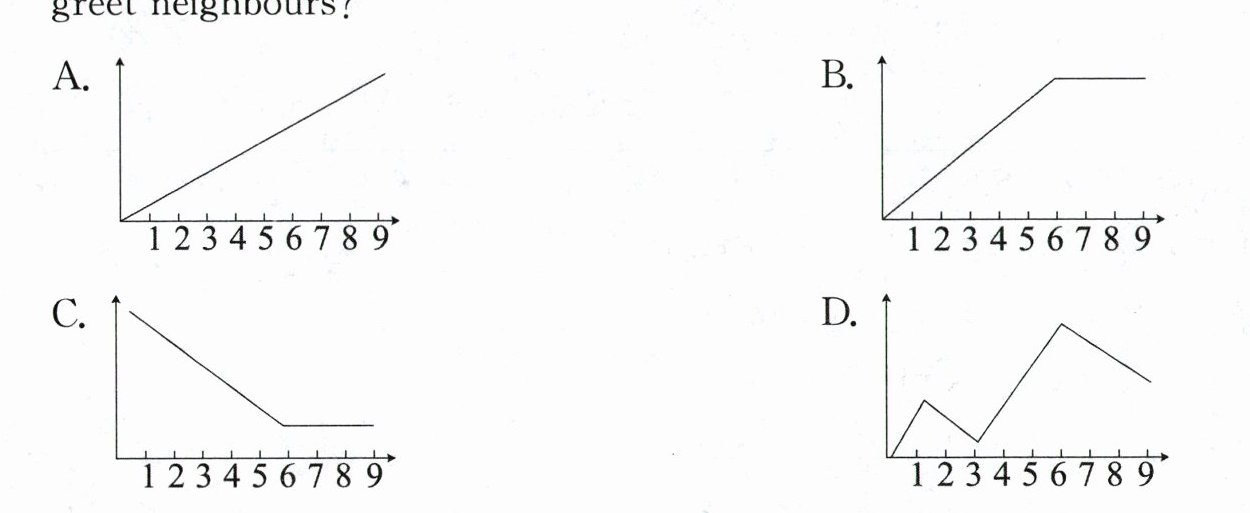
The study has found that greeting others can make you happier. The magic number is six. When you greet up to six people, your happiness score goes up. After that, the score shows no further rise. The study was carried out last year and got replies from more than 4,000 people. It tested people's social happiness, physical happiness, community happiness and more. People who greeted six neighbours had a much higher happiness score than those who didn't greet anyone.
You might think that saying hello is only about social happiness, but that's not true. Regular(经常的) greetings also improve your physical and community happiness. If you feel your community is safe, it's more possible for you to talk to people. Walking around your neighbourhood can make you feel better physically.
Dan Witters, the leader of the study, said, "We don't mean that you should know the person well. Just stop and talk to them. The more people you greet, the more chances you have to start a conversation."
Remember, saying hello regularly is a good way to improve your own happiness.
(
A. By telling a story.
B. By explaining the reason.
C. By asking a question.
D. By introducing different scenes.
(
(
A. That's because all of these are joined together.
B. It's best to greet your neighbours in the morning.
C. Different neighbours can greet you in different ways.
D. The reason is they have nothing to do with each other.
(
A. The more people you know, the happier you are.
B. Saying hello may help people start a conversation.
C. Nothing improves happiness more than conversations.
D. Knowing people is more important than greeting them.
30-4
(
A. The differences between village life and city life.
B. The importance of knowing neighbours well in cities.
C. The good points of greeting neighbours in our daily lives.
D. The useful way to help people get to know neighbours.
The study has found that greeting others can make you happier. The magic number is six. When you greet up to six people, your happiness score goes up. After that, the score shows no further rise. The study was carried out last year and got replies from more than 4,000 people. It tested people's social happiness, physical happiness, community happiness and more. People who greeted six neighbours had a much higher happiness score than those who didn't greet anyone.
You might think that saying hello is only about social happiness, but that's not true. Regular(经常的) greetings also improve your physical and community happiness. If you feel your community is safe, it's more possible for you to talk to people. Walking around your neighbourhood can make you feel better physically.
Dan Witters, the leader of the study, said, "We don't mean that you should know the person well. Just stop and talk to them. The more people you greet, the more chances you have to start a conversation."
Remember, saying hello regularly is a good way to improve your own happiness.
(
D
)26. How does the writer lead into the topic?A. By telling a story.
B. By explaining the reason.
C. By asking a question.
D. By introducing different scenes.
(
B
)27. 新考法 学科融合 Which of the following shows the change in happiness score after people greet neighbours?(
A
)28. 新考法 句子回填 Which sentence can be put in ""?A. That's because all of these are joined together.
B. It's best to greet your neighbours in the morning.
C. Different neighbours can greet you in different ways.
D. The reason is they have nothing to do with each other.
(
B
)29. What can we learn from Dan Witters' words?A. The more people you know, the happier you are.
B. Saying hello may help people start a conversation.
C. Nothing improves happiness more than conversations.
D. Knowing people is more important than greeting them.
30-4
(
C
)30. What is the main idea of the passage?A. The differences between village life and city life.
B. The importance of knowing neighbours well in cities.
C. The good points of greeting neighbours in our daily lives.
D. The useful way to help people get to know neighbours.
答案
26. D 【解析】根据第一段内容可知,作者是通过介绍在农村和城市人们是否会与邻居打招呼这一现象来引入主题的。
27. B 28. A 29. B 30. C
27. B 28. A 29. B 30. C
解析
【分析】
要解决27题,需先从文章中提取幸福感分数随问候邻居数量的变化规律:文章明确提到“当你问候最多6个人时,你的幸福感分数上升,之后分数不再进一步上升”,即幸福感分数的变化趋势是:随问候人数增加,分数上升,到6人后保持平稳。接下来对比四个选项的图表,匹配该趋势即可。
【解析】
根据文章第二段关键句“When you greet up to six people, your happiness score goes up. After that, the score shows no further rise.”,可知幸福感分数在问候人数达到6时上升,超过6后不再上升,呈平稳状态。分析选项:A图分数持续上升,不符合;B图分数上升至6后保持水平,符合;C图分数下降,不符合;D图分数有波动,不符合。因此答案为B。
【答案】
B
【知识点】
英语阅读理解、图表信息提取
【点评】
本题为学科融合题,将英语阅读与图表分析结合,考查学生提取文章关键信息并转化为图表判断的能力,需准确把握文章描述的变化趋势。
【难度系数】
0.5
要解决27题,需先从文章中提取幸福感分数随问候邻居数量的变化规律:文章明确提到“当你问候最多6个人时,你的幸福感分数上升,之后分数不再进一步上升”,即幸福感分数的变化趋势是:随问候人数增加,分数上升,到6人后保持平稳。接下来对比四个选项的图表,匹配该趋势即可。
【解析】
根据文章第二段关键句“When you greet up to six people, your happiness score goes up. After that, the score shows no further rise.”,可知幸福感分数在问候人数达到6时上升,超过6后不再上升,呈平稳状态。分析选项:A图分数持续上升,不符合;B图分数上升至6后保持水平,符合;C图分数下降,不符合;D图分数有波动,不符合。因此答案为B。
【答案】
B
【知识点】
英语阅读理解、图表信息提取
【点评】
本题为学科融合题,将英语阅读与图表分析结合,考查学生提取文章关键信息并转化为图表判断的能力,需准确把握文章描述的变化趋势。
【难度系数】
0.5
