

 登录
登录
六、从方框中选择合适的句子补全对话。
(It’s three o’clock in the afternoon. Four children are in the kitchen. )
A: What’s Mingming doing?
B: 1.
A: 2.
B: David is.
A: Is Wu Binbin helping too?
B: 3.
A: 4.
B: She’s cooking vegetables.
A: 5.
B: Yes, they are.
A. Who is cooking?
B. Are they all happy?
C. Yes, he is.
D. What’s Lily doing?
E. He is cutting vegetables.
(It’s three o’clock in the afternoon. Four children are in the kitchen. )
A: What’s Mingming doing?
B: 1.
E
He’s good at it.A: 2.
A
B: David is.
A: Is Wu Binbin helping too?
B: 3.
C
He’s washing vegetables.A: 4.
D
B: She’s cooking vegetables.
A: 5.
B
B: Yes, they are.
A. Who is cooking?
B. Are they all happy?
C. Yes, he is.
D. What’s Lily doing?
E. He is cutting vegetables.
答案
1. E 2. A 3. C 4. D 5. B
解析
【分析】
做这类补全对话题,首先要先通读对话全文和所有备选句子,明确对话场景是几个孩子在厨房讨论彼此正在做的事,再结合每空的上下文问答逻辑匹配选项:
1. 第一空上文是询问明明正在做什么,要选择描述男性动作的答句;
2. 第二空的答句直接给出人物David,说明问句是对人物身份提问;
3. 第三空上文是Is开头的一般疑问句,且后文补充他正在洗菜,说明是肯定回答;
4. 第四空答句的主语是She,说明问句是询问某位女性正在做什么;
5. 第五空答句是Yes, they are.,说明问句是Are开头的复数主语的一般疑问句,逐一匹配就能选出正确答案。
【解析】
1. 第一空:问句"What’s Mingming doing?"是询问明明正在做什么,E选项"He is cutting vegetables.(他正在切菜)"符合语境,选E。
2. 第二空:答句"David is."回应的是人物身份,A选项"Who is cooking?(谁在做饭?)"是对人物提问的特殊疑问句,符合问答逻辑,选A。
3. 第三空:问句"Is Wu Binbin helping too?"是Is引导的一般疑问句,后文补充他正在洗菜,说明是肯定回答,C选项"Yes, he is."符合要求,选C。
4. 第四空:答句"She’s cooking vegetables."的主语是指代女性的She,D选项"What’s Lily doing?(Lily正在做什么?)"中Lily是女性名字,符合语境,选D。
5. 第五空:答句"Yes, they are."是Are引导的一般疑问句的肯定回答,B选项"Are they all happy?(他们都开心吗?)"符合问答结构,选B。
【答案】
1. E 2. A 3. C 4. D 5. B
【知识点】
情景交际补全对话;现在进行时问答;一般疑问句应答
【点评】
本题围绕厨房场景下的人物活动讨论展开,重点考察小学阶段现在进行时各类问句的应答逻辑,难度较低,解题时抓住问答句的主语、疑问词、句首助动词的对应线索,就能快速排除错项选出正确答案。
【难度系数】
0.8
做这类补全对话题,首先要先通读对话全文和所有备选句子,明确对话场景是几个孩子在厨房讨论彼此正在做的事,再结合每空的上下文问答逻辑匹配选项:
1. 第一空上文是询问明明正在做什么,要选择描述男性动作的答句;
2. 第二空的答句直接给出人物David,说明问句是对人物身份提问;
3. 第三空上文是Is开头的一般疑问句,且后文补充他正在洗菜,说明是肯定回答;
4. 第四空答句的主语是She,说明问句是询问某位女性正在做什么;
5. 第五空答句是Yes, they are.,说明问句是Are开头的复数主语的一般疑问句,逐一匹配就能选出正确答案。
【解析】
1. 第一空:问句"What’s Mingming doing?"是询问明明正在做什么,E选项"He is cutting vegetables.(他正在切菜)"符合语境,选E。
2. 第二空:答句"David is."回应的是人物身份,A选项"Who is cooking?(谁在做饭?)"是对人物提问的特殊疑问句,符合问答逻辑,选A。
3. 第三空:问句"Is Wu Binbin helping too?"是Is引导的一般疑问句,后文补充他正在洗菜,说明是肯定回答,C选项"Yes, he is."符合要求,选C。
4. 第四空:答句"She’s cooking vegetables."的主语是指代女性的She,D选项"What’s Lily doing?(Lily正在做什么?)"中Lily是女性名字,符合语境,选D。
5. 第五空:答句"Yes, they are."是Are引导的一般疑问句的肯定回答,B选项"Are they all happy?(他们都开心吗?)"符合问答结构,选B。
【答案】
1. E 2. A 3. C 4. D 5. B
【知识点】
情景交际补全对话;现在进行时问答;一般疑问句应答
【点评】
本题围绕厨房场景下的人物活动讨论展开,重点考察小学阶段现在进行时各类问句的应答逻辑,难度较低,解题时抓住问答句的主语、疑问词、句首助动词的对应线索,就能快速排除错项选出正确答案。
【难度系数】
0.8
七、[文化知识]阅读材料,选择正确的答案。
Chinese food is famous all over the world. Peter is from London. He often watches the TV program A Bite of China. Let’s get to know his favourite Chinese food!
Noodles

Noodles are the most popular food on birthdays for the Chinese. It’s a symbol(象征)of long life.
Fish
It’s a traditional Chinese New Year dish. The Chinese word for fish, “yu”, sounds like the word for plenty(富裕).
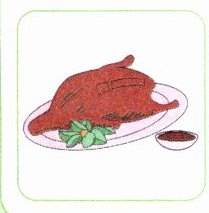
Beijing Roast Duck
It’s always served in well-cut slices(薄片). People usually eat the duck with shallots(葱), cucumbers and paste.
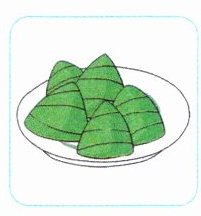
Rice dumplings
People also call it zongzi with meat, eggs or other delicious food in it. At the Dragon Boat Festival, people eat zongzi to remember Qu Yuan.
(
A. Australia.
B. The UK.
C. Canada.
(
A. A picture book.
B. A newspaper.
C. A TV program.
(
A. One.
B. Two.
C. Three.
(
A. Noodles.
B. Fish.
C. Beijing Roast Duck.
(
A. Chinese food.
B. Chinese festivals.
C. Chinese symbols.
Chinese food is famous all over the world. Peter is from London. He often watches the TV program A Bite of China. Let’s get to know his favourite Chinese food!
Noodles
Noodles are the most popular food on birthdays for the Chinese. It’s a symbol(象征)of long life.
Fish
It’s a traditional Chinese New Year dish. The Chinese word for fish, “yu”, sounds like the word for plenty(富裕).
Beijing Roast Duck
It’s always served in well-cut slices(薄片). People usually eat the duck with shallots(葱), cucumbers and paste.
Rice dumplings
People also call it zongzi with meat, eggs or other delicious food in it. At the Dragon Boat Festival, people eat zongzi to remember Qu Yuan.
(
B
) 1. Where does Peter come from?A. Australia.
B. The UK.
C. Canada.
(
C
) 2. What is A Bite of China?A. A picture book.
B. A newspaper.
C. A TV program.
(
A
) 3. How many names of festivals are mentioned in this material?A. One.
B. Two.
C. Three.
(
C
) 4. Which food do people usually eat with shallots, cucumbers and paste?A. Noodles.
B. Fish.
C. Beijing Roast Duck.
(
A
) 5. What does the material mainly talk about?A. Chinese food.
B. Chinese festivals.
C. Chinese symbols.
答案
1. B 2. C 3. B 4. C 5. A
解析
【分析】
这是一篇介绍中国特色美食的阅读理解题,解题时可以先浏览所有题干,带着问题回到原文逐一定位对应信息点,不需要逐字翻译全文,找到和题干描述匹配的原文内容即可选出正确答案:第1题找Peter的来源地相关描述,第2题定位"A Bite of China"的属性,第3题扫读全文找出所有出现的节日名称统计数量,第4题找搭配葱、黄瓜、酱的食物,第5题梳理全文核心内容判断主旨即可。
【解析】
1. 原文明确提到"Peter is from London",伦敦是英国(The UK)的首都,因此Peter来自英国,选B。
2. 原文直接说明"He often watches the TV program A Bite of China",可知《舌尖上的中国》是一档电视节目,选C。
3. 全文一共提到2个节日:分别是Chinese New Year(中国新年)和the Dragon Boat Festival(端午节),因此数量为2,选B。
4. 原文北京烤鸭板块描述"People usually eat the duck with shallots, cucumbers and paste",可知搭配葱、黄瓜、酱食用的是北京烤鸭,选C。
5. 文章开篇点明中国食物享誉全球,随后依次介绍了面条、鱼、北京烤鸭、粽子四种典型的中国特色食物,全文核心围绕中国食物展开,选A。
【知识点】
阅读细节定位,中国饮食文化,主旨大意归纳
【点评】
本题属于低难度的文化类阅读题,绝大多数答案都可以直接在原文中找到对应依据,既考察了学生快速查找文本信息的能力,也融入了中国传统饮食的相关文化常识,兼具知识性和趣味性。
【难度系数】
0.9
这是一篇介绍中国特色美食的阅读理解题,解题时可以先浏览所有题干,带着问题回到原文逐一定位对应信息点,不需要逐字翻译全文,找到和题干描述匹配的原文内容即可选出正确答案:第1题找Peter的来源地相关描述,第2题定位"A Bite of China"的属性,第3题扫读全文找出所有出现的节日名称统计数量,第4题找搭配葱、黄瓜、酱的食物,第5题梳理全文核心内容判断主旨即可。
【解析】
1. 原文明确提到"Peter is from London",伦敦是英国(The UK)的首都,因此Peter来自英国,选B。
2. 原文直接说明"He often watches the TV program A Bite of China",可知《舌尖上的中国》是一档电视节目,选C。
3. 全文一共提到2个节日:分别是Chinese New Year(中国新年)和the Dragon Boat Festival(端午节),因此数量为2,选B。
4. 原文北京烤鸭板块描述"People usually eat the duck with shallots, cucumbers and paste",可知搭配葱、黄瓜、酱食用的是北京烤鸭,选C。
5. 文章开篇点明中国食物享誉全球,随后依次介绍了面条、鱼、北京烤鸭、粽子四种典型的中国特色食物,全文核心围绕中国食物展开,选A。
【知识点】
阅读细节定位,中国饮食文化,主旨大意归纳
【点评】
本题属于低难度的文化类阅读题,绝大多数答案都可以直接在原文中找到对应依据,既考察了学生快速查找文本信息的能力,也融入了中国传统饮食的相关文化常识,兼具知识性和趣味性。
【难度系数】
0.9
