

 登录
登录
B
“The red walls and green tiles(瓦) set each other off beautifully. It’s so Beijing,” said a 33-year-old Beijing person with the family name of Lin. Lin and her 14-year-old cousin were enjoying a city walk along the Beijing Central Axis(中轴线). On this walk, they saw most of the old city buildings of Beijing, like the Forbidden City and the Bell and Drum Towers.
Since the show “Glory Is Back! Beijing(《登场了!北京中轴线》)” was shown in July of 2023, people like Lin travelled on foot to know the axis better themselves.
Dating back to the Yuan Dynasty (1271—1368), the 7.8-kilometre-long Beijing Central Axis starts with Yongdingmen Gate in the south and ends with the Bell and Drum Towers in the north. It matches the Forbidden City and the markets at the Bell and Drum Towers area. This way of city planning is described as “court(宫廷) in the front, market in the back”. Other buildings like the Imperial Ancestral Temple(太庙) stands in the east and the Altar of Land and Grain(社稷坛) lies on the west side of the axis.
Chinese professor Lyu Zhou said that when he walked around the Bell and Drum Towers, he could find peace in the busy city life. At a square between the Bell Tower and the Drum Tower, you can see people relaxing, cycling, playing games and even celebrating life events.
“The towers were once our meeting places. We used to go on dates there. You could say that the towers have seen our love grow,” said a young couple who were taking wedding photos under the Bell and Drum Towers.
The traveller Marco Polo (1254—1324) wrote about what he saw along the Central Axis back in the Yuan Dynasty in *The Travels of Marco Polo*, “Up and down the city there are beautiful palaces ... and fine houses in great numbers.” And another visitor, Osvald Sirén (1879—1966) from Sweden took many photos in Beijing back in the early 20th century. These Western records have given people around the world a taste of its history.
(
A. By asking questions.
B. By giving an example.
C. By making comparisons.
D. By listing numbers.
(
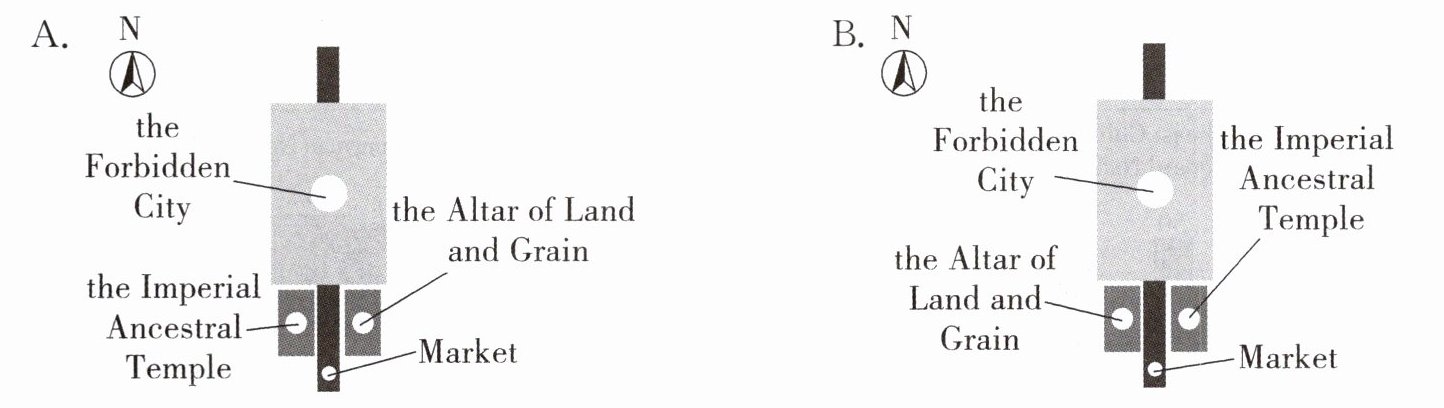
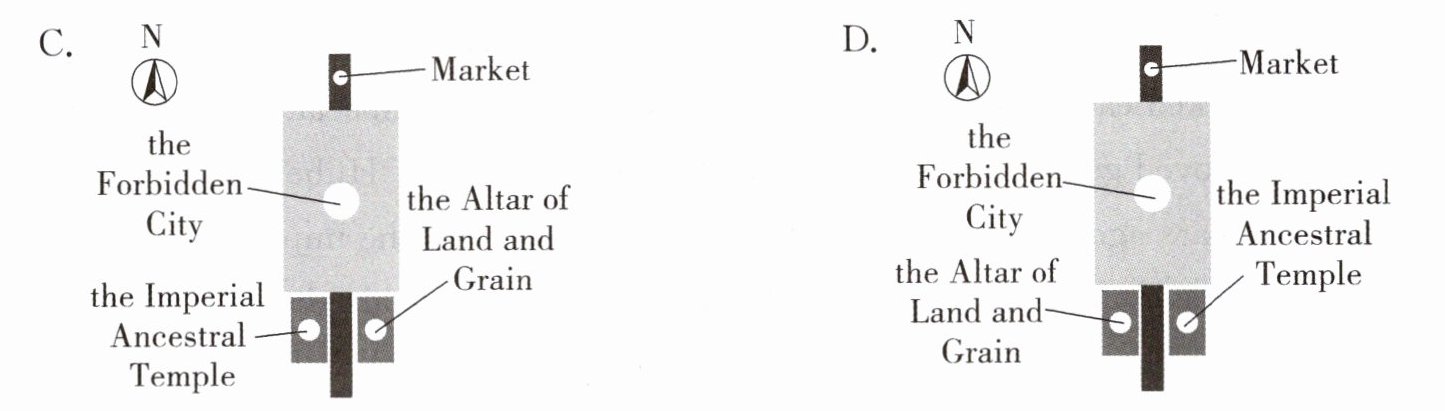
(
A. There was a visitor, Osvald Sirén, from Sweden.
B. Marco Polo took many photos when visiting there.
C. More foreigners will be interested in the Beijing Central Axis.
D. These Western records caused much trouble in the 20th century.
(
A. Travelling Around Beijing by Foot
B. Foreigners’ Impressions of Beijing
C. The Forbidden City: A Symbol of Beijing
D. The Beijing Central Axis: A Historic and Lively Line
“The red walls and green tiles(瓦) set each other off beautifully. It’s so Beijing,” said a 33-year-old Beijing person with the family name of Lin. Lin and her 14-year-old cousin were enjoying a city walk along the Beijing Central Axis(中轴线). On this walk, they saw most of the old city buildings of Beijing, like the Forbidden City and the Bell and Drum Towers.
Since the show “Glory Is Back! Beijing(《登场了!北京中轴线》)” was shown in July of 2023, people like Lin travelled on foot to know the axis better themselves.
Dating back to the Yuan Dynasty (1271—1368), the 7.8-kilometre-long Beijing Central Axis starts with Yongdingmen Gate in the south and ends with the Bell and Drum Towers in the north. It matches the Forbidden City and the markets at the Bell and Drum Towers area. This way of city planning is described as “court(宫廷) in the front, market in the back”. Other buildings like the Imperial Ancestral Temple(太庙) stands in the east and the Altar of Land and Grain(社稷坛) lies on the west side of the axis.
Chinese professor Lyu Zhou said that when he walked around the Bell and Drum Towers, he could find peace in the busy city life. At a square between the Bell Tower and the Drum Tower, you can see people relaxing, cycling, playing games and even celebrating life events.
“The towers were once our meeting places. We used to go on dates there. You could say that the towers have seen our love grow,” said a young couple who were taking wedding photos under the Bell and Drum Towers.
The traveller Marco Polo (1254—1324) wrote about what he saw along the Central Axis back in the Yuan Dynasty in *The Travels of Marco Polo*, “Up and down the city there are beautiful palaces ... and fine houses in great numbers.” And another visitor, Osvald Sirén (1879—1966) from Sweden took many photos in Beijing back in the early 20th century. These Western records have given people around the world a taste of its history.
(
B
)34. How does the writer lead in the topic in the first paragraph?A. By asking questions.
B. By giving an example.
C. By making comparisons.
D. By listing numbers.
(
D
)35. Which of the following describes the Beijing Central Axis correctly?(
C
)36. What can we infer from the last paragraph?A. There was a visitor, Osvald Sirén, from Sweden.
B. Marco Polo took many photos when visiting there.
C. More foreigners will be interested in the Beijing Central Axis.
D. These Western records caused much trouble in the 20th century.
(
D
)37. Which of the following will be the best title for the passage?A. Travelling Around Beijing by Foot
B. Foreigners’ Impressions of Beijing
C. The Forbidden City: A Symbol of Beijing
D. The Beijing Central Axis: A Historic and Lively Line
答案
【语篇解读】本文是一篇说明文,介绍了北京中轴线的历史、建筑特色以及人们在这条历史轴线上的活动,展示了其作为北京历史文化象征的重要性。
34. B 写作手法题。根据“'The red walls and green tiles set each other off beautifully. It's so Beijing,' said a 33-year-old Beijing person with the family name of Lin.”可知,此处通过一个具体的例子——林姓北京人的评价,来引入主题,即北京中轴线的特色。因此,作者通过给出一个例子来引出话题。故选 B。
35. D 图示理解题。根据“the 7.8-kilometre-long Beijing Central Axis starts with Yongdingmen Gate in the south and ends with the Bell and Drum Towers in the north. It matches the Forbidden City and the markets at the Bell and Drum Towers area”可知,市场在北方;根据“Other buildings like the Imperial Ancestral Temple stands in the east and the Altar of Land and Grain lies on the west side of the axis.”可知,太庙在东边,社稷坛在西边。由此可知 D 项图示是正确的。故选 D。
36. C 推理判断题。根据“These Western records have given people around the world a taste of its history.”可知,Marco Polo 和 Osvald Siren 等西方旅行者和学者对北京中轴线的描述和记录使得世界各地的人们能够感受到它的历史。这暗示着北京中轴线的历史和文化价值对外国人也有吸引力。因此,我们可以推测出未来会有更多的外国人对北京中轴线感兴趣。故选 C。
37. D 标题归纳题。通读全文可知,文章主要介绍了北京中轴线的历史、建筑特色以及人们在这条历史轴线上的活动,展示了其作为北京历史文化象征的重要性。因此,最合适的标题是“The Beijing Central Axis: A Historic and Lively Line”。故选 D。
34. B 写作手法题。根据“'The red walls and green tiles set each other off beautifully. It's so Beijing,' said a 33-year-old Beijing person with the family name of Lin.”可知,此处通过一个具体的例子——林姓北京人的评价,来引入主题,即北京中轴线的特色。因此,作者通过给出一个例子来引出话题。故选 B。
35. D 图示理解题。根据“the 7.8-kilometre-long Beijing Central Axis starts with Yongdingmen Gate in the south and ends with the Bell and Drum Towers in the north. It matches the Forbidden City and the markets at the Bell and Drum Towers area”可知,市场在北方;根据“Other buildings like the Imperial Ancestral Temple stands in the east and the Altar of Land and Grain lies on the west side of the axis.”可知,太庙在东边,社稷坛在西边。由此可知 D 项图示是正确的。故选 D。
36. C 推理判断题。根据“These Western records have given people around the world a taste of its history.”可知,Marco Polo 和 Osvald Siren 等西方旅行者和学者对北京中轴线的描述和记录使得世界各地的人们能够感受到它的历史。这暗示着北京中轴线的历史和文化价值对外国人也有吸引力。因此,我们可以推测出未来会有更多的外国人对北京中轴线感兴趣。故选 C。
37. D 标题归纳题。通读全文可知,文章主要介绍了北京中轴线的历史、建筑特色以及人们在这条历史轴线上的活动,展示了其作为北京历史文化象征的重要性。因此,最合适的标题是“The Beijing Central Axis: A Historic and Lively Line”。故选 D。
解析
【分析】
这是一篇介绍北京中轴线的文化类说明文阅读题,解题时可以按题型逐个梳理思路:
1. 第34题是写作手法题,先回忆常见的开篇引入方式:提问、举例子、作对比、列数字,回到第一段对应内容排查,发现作者开篇就讲述了北京市民林女士和表妹逛中轴线的具体事件,没有设置问题、没有对比不同事物、也没有罗列数字,很容易判断引入方式。
2. 第35题是图文匹配题,先定位原文第三段关于中轴线布局的所有细节:南北端点、东西两侧的建筑、南北区域的功能,把这些细节和各个选项的图示逐一比对,就能选出符合原文描述的正确项。
3. 第36题是推理判断题,要牢记推理题的核心要求:答案不能是原文直接明确给出的事实,必须是基于文本内容推导出来的结论,先排除和原文内容不符的错误选项,再排除属于原文直接陈述、不需要推断的选项,剩下的就是正确答案。
4. 第37题是标题归纳题,先梳理全文的核心描述对象,排除只覆盖局部内容的选项,选出最能完整概括全文内容的标题。
【解析】
34. 细节判断:第一段作者通过讲述33岁北京市民林女士和表妹沿北京中轴线漫步的具体事例引入话题,没有使用提问、作对比、列数字的方式,因此选B。
35. 图文匹配:根据原文第三段内容可知,北京中轴线南起永定门,北至钟鼓楼;布局为“前朝后市”,北部钟鼓楼区域是市集;中轴线东侧为太庙,西侧为社稷坛,符合该布局的图示为D选项。
36. 推理判断:逐一分析选项:
A选项:瑞典游客Osvald Sirén到访北京是原文直接陈述的事实,不属于推断得出的结论,不符合题干“infer”的要求;
B选项:原文提到马可波罗在游记中记录见闻,拍摄大量照片的是Osvald Sirén,该选项表述错误;
C选项:这些西方记录让世界各地的人都能了解北京中轴线的历史文化,由此可推知会有更多外国人对北京中轴线产生兴趣,符合推断要求;
D选项:原文完全没有提到这些西方记录在20世纪带来麻烦,属于无中生有。
因此本题选C。
37. 主旨归纳:全文围绕北京中轴线展开,既介绍了它从元代传承至今的悠久历史、独特的古代城市规划设计,也描写了当下沿线居民、游客的鲜活生活场景,D选项完整覆盖了全文核心内容,是最适合的标题。
【答案】
34.B 35.D 36.C 37.D
【知识点】
阅读理解细节定位 推理判断 主旨归纳
【点评】
本题选取介绍北京中轴线的文化类文本,融入中华优秀传统文化元素,贴合新课标对文化意识的考查要求,覆盖了初中英语阅读常考的四类典型题型,解题时要特别注意推理判断题不能选择原文直接给出的事实类选项,要明确区分“直接信息”和“推导结论”的差异,避免误选A类干扰项。
【难度系数】
0.65
这是一篇介绍北京中轴线的文化类说明文阅读题,解题时可以按题型逐个梳理思路:
1. 第34题是写作手法题,先回忆常见的开篇引入方式:提问、举例子、作对比、列数字,回到第一段对应内容排查,发现作者开篇就讲述了北京市民林女士和表妹逛中轴线的具体事件,没有设置问题、没有对比不同事物、也没有罗列数字,很容易判断引入方式。
2. 第35题是图文匹配题,先定位原文第三段关于中轴线布局的所有细节:南北端点、东西两侧的建筑、南北区域的功能,把这些细节和各个选项的图示逐一比对,就能选出符合原文描述的正确项。
3. 第36题是推理判断题,要牢记推理题的核心要求:答案不能是原文直接明确给出的事实,必须是基于文本内容推导出来的结论,先排除和原文内容不符的错误选项,再排除属于原文直接陈述、不需要推断的选项,剩下的就是正确答案。
4. 第37题是标题归纳题,先梳理全文的核心描述对象,排除只覆盖局部内容的选项,选出最能完整概括全文内容的标题。
【解析】
34. 细节判断:第一段作者通过讲述33岁北京市民林女士和表妹沿北京中轴线漫步的具体事例引入话题,没有使用提问、作对比、列数字的方式,因此选B。
35. 图文匹配:根据原文第三段内容可知,北京中轴线南起永定门,北至钟鼓楼;布局为“前朝后市”,北部钟鼓楼区域是市集;中轴线东侧为太庙,西侧为社稷坛,符合该布局的图示为D选项。
36. 推理判断:逐一分析选项:
A选项:瑞典游客Osvald Sirén到访北京是原文直接陈述的事实,不属于推断得出的结论,不符合题干“infer”的要求;
B选项:原文提到马可波罗在游记中记录见闻,拍摄大量照片的是Osvald Sirén,该选项表述错误;
C选项:这些西方记录让世界各地的人都能了解北京中轴线的历史文化,由此可推知会有更多外国人对北京中轴线产生兴趣,符合推断要求;
D选项:原文完全没有提到这些西方记录在20世纪带来麻烦,属于无中生有。
因此本题选C。
37. 主旨归纳:全文围绕北京中轴线展开,既介绍了它从元代传承至今的悠久历史、独特的古代城市规划设计,也描写了当下沿线居民、游客的鲜活生活场景,D选项完整覆盖了全文核心内容,是最适合的标题。
【答案】
34.B 35.D 36.C 37.D
【知识点】
阅读理解细节定位 推理判断 主旨归纳
【点评】
本题选取介绍北京中轴线的文化类文本,融入中华优秀传统文化元素,贴合新课标对文化意识的考查要求,覆盖了初中英语阅读常考的四类典型题型,解题时要特别注意推理判断题不能选择原文直接给出的事实类选项,要明确区分“直接信息”和“推导结论”的差异,避免误选A类干扰项。
【难度系数】
0.65
