

 登录
登录
三、信息还原(每小题 2 分,满分 10 分)
阅读下面短文,从方框中选出能填入空白处的最佳选项。选项中有两项多余。
Everybody knows that there are usually four seasons in a year. 31?
As our planet (星球) moves around the sun, the light from the sun falls on the earth from different directions. This helps create the seasons. At different times of year, there is more sunlight in some places and less sunlight in others. More sunlight means longer days and warmer weather. 32. It gets colder in autumn and winter because the days are shorter, and we get less light from the sun.
The seasons fall at different times of year around the world. For example, China is to the north of the equator (赤道). Here, we experience summer from June to August. 33. In Australia, it is summer from December to February, and Australians have their spring when we have our autumn.
34. The hottest and the coldest parts of the world usually have only two seasons. It is always hot in places close to the equator. These places are called the tropics (热带地区). Instead of our four seasons, many parts of the tropics have a rainy season and a dry season. 35. Around the North and South Poles, there are only two seasons, too: a very, very cold winter and a somewhat less cold summer.
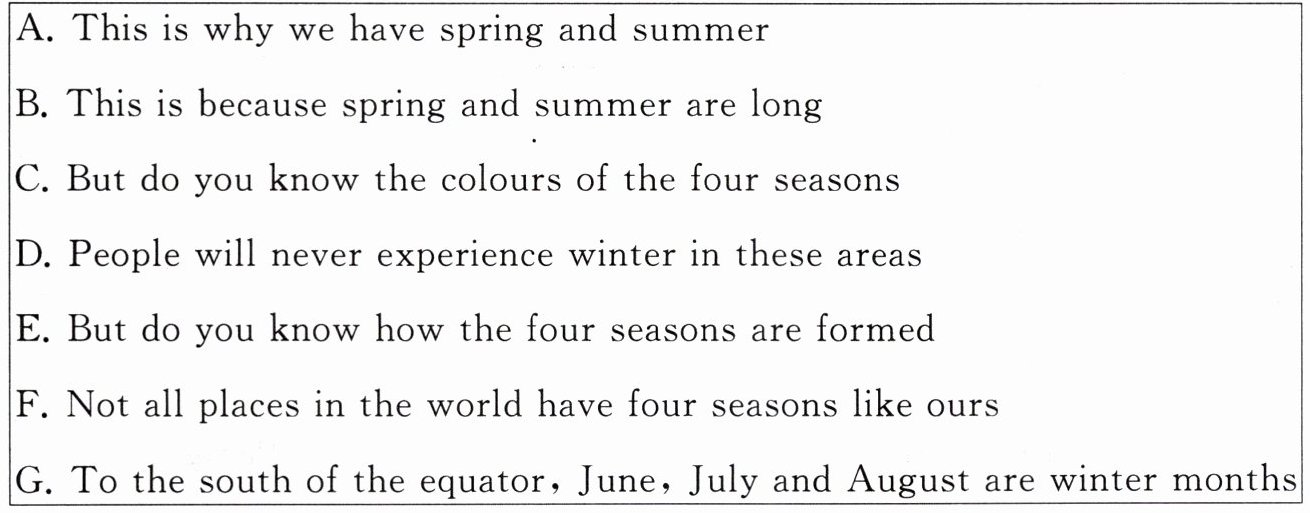
31.
阅读下面短文,从方框中选出能填入空白处的最佳选项。选项中有两项多余。
Everybody knows that there are usually four seasons in a year. 31?
As our planet (星球) moves around the sun, the light from the sun falls on the earth from different directions. This helps create the seasons. At different times of year, there is more sunlight in some places and less sunlight in others. More sunlight means longer days and warmer weather. 32. It gets colder in autumn and winter because the days are shorter, and we get less light from the sun.
The seasons fall at different times of year around the world. For example, China is to the north of the equator (赤道). Here, we experience summer from June to August. 33. In Australia, it is summer from December to February, and Australians have their spring when we have our autumn.
34. The hottest and the coldest parts of the world usually have only two seasons. It is always hot in places close to the equator. These places are called the tropics (热带地区). Instead of our four seasons, many parts of the tropics have a rainy season and a dry season. 35. Around the North and South Poles, there are only two seasons, too: a very, very cold winter and a somewhat less cold summer.
31.
E
32. A
33. G
34. F
35. D
答案
31. E 32. A 33. G 34. F 35. D
解析
【分析】
这是一篇科普类的七选五信息还原题,解题思路是先通读全文,明确本文核心是介绍四季的形成原理、不同地区的季节差异,再逐个分析每个空的前后文逻辑,匹配对应选项:
1. 先看31空:前句说人人都知道一年通常有四季,后文整段都在解释四季形成的原理,说明空处需要引出“四季如何形成”的疑问,对应匹配选项。
2. 再看32空:前句说明更多阳光对应更长白昼、更温暖的天气,后句解释秋冬变冷是因为白昼短、光照少,空处需要顺承逻辑,说明光照充足对应春夏的原因。
3. 33空前后分别介绍北半球中国的夏季时间、澳大利亚和我们季节相反的特点,空处需要衔接南北半球季节相反的规律,引出赤道南侧的季节特征。
4. 34空是该段的总起句,后文开始介绍热带、极地都只有两个季节,和常规四季不同,空处需要总领本段“不是所有地方都有完整四季”的核心内容。
5. 35空前句说明热带区域没有常规四季,只有雨季和旱季,空处需要顺承说明热带区域的季节特点,排除两个多余干扰选项即可得到全部答案。
【解析】
31. 前文点明大众熟知一年有四季的常识,后文紧接着详细讲解四季形成的天文原理,设空处提出关于四季形成的疑问,起到引出下文的作用,对应E选项。
32. 前文阐述光照越多白昼越长、天气越暖的规律,后文解释秋冬寒冷的成因,设空处顺承前文逻辑,点明光照充足就是春夏形成的原因,对应A选项。
33. 前文介绍赤道以北的中国6-8月为夏季,后文举例澳大利亚的季节和北半球完全相反,设空处点明赤道南侧6、7、8月是冬季的规律,承上启下,对应G选项。
34. 后文分别介绍热带、极地都只有两个季节,和常规的四季划分不同,设空处作为段首总起句,点明并非全球所有区域都和我们一样有完整四季,对应F选项。
35. 前文说明热带区域没有常规四季,只有雨季和旱季,设空处顺承说明这类热带区域永远不会出现冬季的特点,对应D选项。
【答案】
31. E 32. A 33. G 34. F 35. D
【知识点】
信息还原阅读,语篇逻辑推理,科普文本理解
【点评】
本题围绕四季相关的科普知识设题,重点考查学生对语篇上下文逻辑衔接的判断能力,干扰选项和正确选项差异明显,只要抓住前后文的对应提示就能顺利选出答案,能够有效锻炼学生的语篇分析能力。
【难度系数】
0.6
这是一篇科普类的七选五信息还原题,解题思路是先通读全文,明确本文核心是介绍四季的形成原理、不同地区的季节差异,再逐个分析每个空的前后文逻辑,匹配对应选项:
1. 先看31空:前句说人人都知道一年通常有四季,后文整段都在解释四季形成的原理,说明空处需要引出“四季如何形成”的疑问,对应匹配选项。
2. 再看32空:前句说明更多阳光对应更长白昼、更温暖的天气,后句解释秋冬变冷是因为白昼短、光照少,空处需要顺承逻辑,说明光照充足对应春夏的原因。
3. 33空前后分别介绍北半球中国的夏季时间、澳大利亚和我们季节相反的特点,空处需要衔接南北半球季节相反的规律,引出赤道南侧的季节特征。
4. 34空是该段的总起句,后文开始介绍热带、极地都只有两个季节,和常规四季不同,空处需要总领本段“不是所有地方都有完整四季”的核心内容。
5. 35空前句说明热带区域没有常规四季,只有雨季和旱季,空处需要顺承说明热带区域的季节特点,排除两个多余干扰选项即可得到全部答案。
【解析】
31. 前文点明大众熟知一年有四季的常识,后文紧接着详细讲解四季形成的天文原理,设空处提出关于四季形成的疑问,起到引出下文的作用,对应E选项。
32. 前文阐述光照越多白昼越长、天气越暖的规律,后文解释秋冬寒冷的成因,设空处顺承前文逻辑,点明光照充足就是春夏形成的原因,对应A选项。
33. 前文介绍赤道以北的中国6-8月为夏季,后文举例澳大利亚的季节和北半球完全相反,设空处点明赤道南侧6、7、8月是冬季的规律,承上启下,对应G选项。
34. 后文分别介绍热带、极地都只有两个季节,和常规的四季划分不同,设空处作为段首总起句,点明并非全球所有区域都和我们一样有完整四季,对应F选项。
35. 前文说明热带区域没有常规四季,只有雨季和旱季,设空处顺承说明这类热带区域永远不会出现冬季的特点,对应D选项。
【答案】
31. E 32. A 33. G 34. F 35. D
【知识点】
信息还原阅读,语篇逻辑推理,科普文本理解
【点评】
本题围绕四季相关的科普知识设题,重点考查学生对语篇上下文逻辑衔接的判断能力,干扰选项和正确选项差异明显,只要抓住前后文的对应提示就能顺利选出答案,能够有效锻炼学生的语篇分析能力。
【难度系数】
0.6
四、任务型阅读(每小题 1.5 分,满分 15 分)
阅读下面短文,并根据所读内容在文章后的表格里填入最恰当的单词,每个空格只填一个单词。
Do you often grab (抓起) something to eat after you get a phone call? Do you often brush your teeth after you pick the brush up? Do you ever touch your food or drink after paying for it with bills (钞票)? If so, you might want to think twice because they are all not clean things around us.
Mobile phones
Mobile phones are a great way to kill time and make more friends, but they are also great places for bacteria (细菌) to live. A study showed that there are as many bacteria on your mobile phone as on your toilet seat. The study said about 2,700 to 4,200 units (单位) of bacteria were found on each one of the phones that the scientists tested. This means it is very important to clean your phone often.
Toothbrushes
Toothbrushes can be dirty too, especially when you leave them close to the toilet. Studies showed that every time you flush (抽水冲洗) the toilet, bacteria can stay in the air for no less than two hours. These bacteria may dirty your toothbrush. You had better put your toothbrush far from the toilet after each use. Don't forget to change your toothbrush every three months.
Bills
Everyone loves money, but no one loves the bacteria that live on the bills. From the supermarket to the classroom to someone's home, a large number of bacteria live on every bill. The US scientists found about 126,000 to 135,000 bacteria were on a bill. The way to deal with this problem is to try to wash your hands as often as you can.
Although bacteria can be everywhere, most of them are harmless (无害的). Don't worry too much about them.
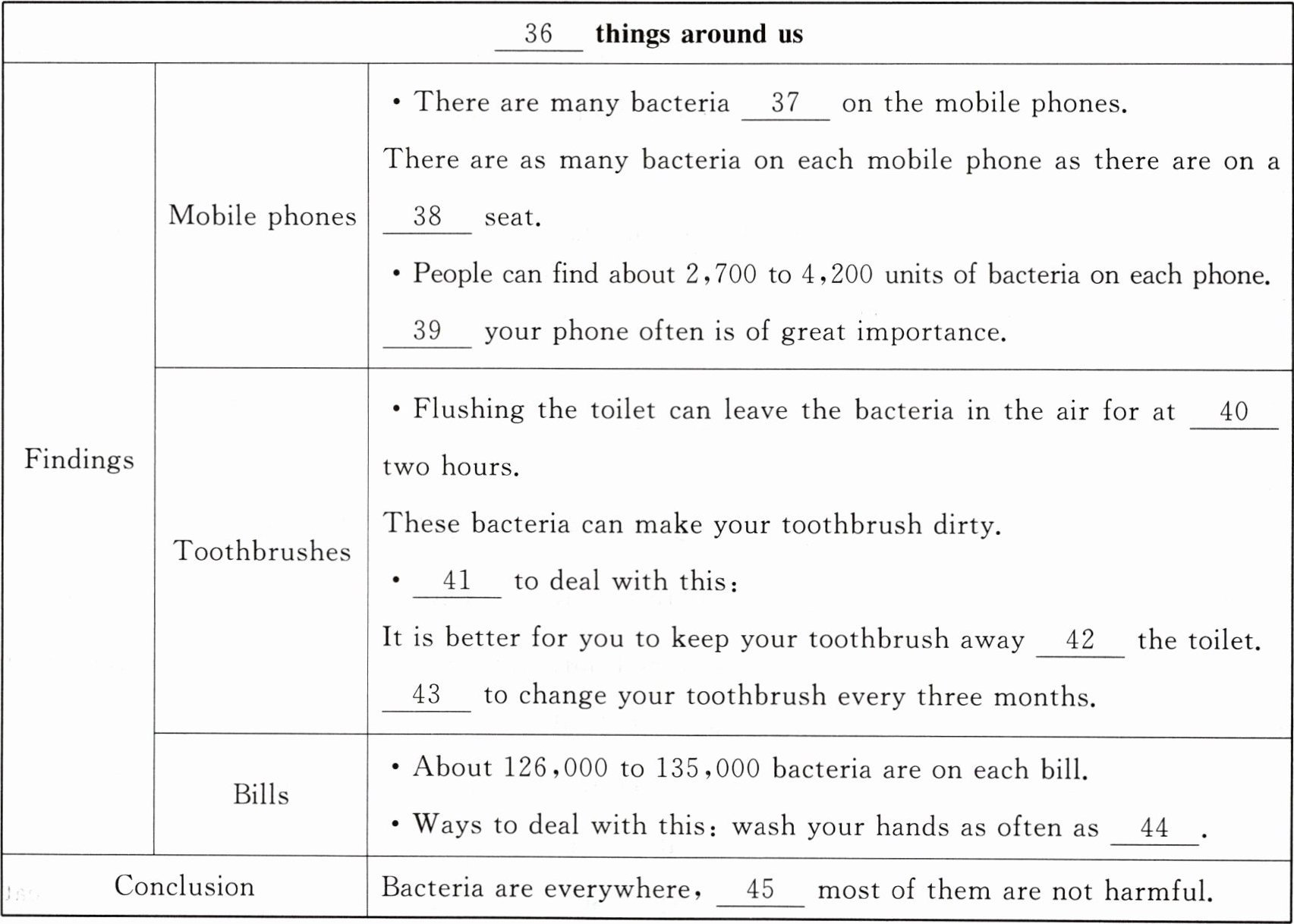
36.
41.
阅读下面短文,并根据所读内容在文章后的表格里填入最恰当的单词,每个空格只填一个单词。
Do you often grab (抓起) something to eat after you get a phone call? Do you often brush your teeth after you pick the brush up? Do you ever touch your food or drink after paying for it with bills (钞票)? If so, you might want to think twice because they are all not clean things around us.
Mobile phones
Mobile phones are a great way to kill time and make more friends, but they are also great places for bacteria (细菌) to live. A study showed that there are as many bacteria on your mobile phone as on your toilet seat. The study said about 2,700 to 4,200 units (单位) of bacteria were found on each one of the phones that the scientists tested. This means it is very important to clean your phone often.
Toothbrushes
Toothbrushes can be dirty too, especially when you leave them close to the toilet. Studies showed that every time you flush (抽水冲洗) the toilet, bacteria can stay in the air for no less than two hours. These bacteria may dirty your toothbrush. You had better put your toothbrush far from the toilet after each use. Don't forget to change your toothbrush every three months.
Bills
Everyone loves money, but no one loves the bacteria that live on the bills. From the supermarket to the classroom to someone's home, a large number of bacteria live on every bill. The US scientists found about 126,000 to 135,000 bacteria were on a bill. The way to deal with this problem is to try to wash your hands as often as you can.
Although bacteria can be everywhere, most of them are harmless (无害的). Don't worry too much about them.
36.
Dirty/Unclean
37. living
38. toilet
39. Cleaning
40. least
41.
Ways/How
42. from
43. Remember
44. possible
45. but
答案
36. Dirty/Unclean 37. living 38. toilet 39. Cleaning 40. least 41. Ways/How 42. from 43. Remember 44. possible 45. but
解析
【分析】
这是表格型任务阅读,解题可以按三步推进:1. 先通读全文,明确文章核心是介绍身边携带细菌的物品的相关研究结论;2. 逐题定位表格空格对应的原文语句,比对原文和表格的句式差异,判断所需单词的词性、含义;3. 严格遵守每空仅填1个单词的要求,同时检查大小写、固定搭配的适配性,通过原文信息提炼、同义转换、固定短语匹配即可推出所有答案。
【解析】
36. 原文第一段最后一句提到"they are all not clean things around us",全文围绕身边带细菌的不干净物品展开,空格修饰名词things,填形容词Dirty/Unclean。
37. 原文第二段第一句"they are also great places for bacteria to live",空格处需要作bacteria的后置定语,用live的现在分词形式living,表“附着在手机上的细菌”。
38. 原文第二段第二句直接说明"there are as many bacteria on your mobile phone as on your toilet seat",直接对应填toilet。
39. 原文第二段最后一句"it is very important to clean your phone often",表格中需要动名词作句子主语,将clean变为动名词形式Cleaning。
40. 原文第三段表述"bacteria can stay in the air for no less than two hours",no less than同义转换为固定短语at least,填least。
41. 后文给出的是处理牙刷细菌问题的方案,对应同类表述"Ways to deal with this",句首大写,可填Ways(也可填How)。
42. 原文第三段"You had better put your toothbrush far from the toilet",对应固定搭配keep away from,填from。
43. 原文第三段"Don't forget to change your toothbrush every three months",Don't forget同义替换为Remember,句首大写。
44. 原文第四段"wash your hands as often as you can",同义转换为固定搭配as often as possible,填possible。
45. 空格前后“细菌无处不在”和“大部分细菌没有害处”是转折逻辑,填转折连词but。
【答案】
36. Dirty/Unclean 37. living 38. toilet 39. Cleaning 40. least 41. Ways/How 42. from 43. Remember 44. possible 45. but
【知识点】
任务型阅读信息提取,固定短语搭配,词性转换
【点评】
本题难度适中,大部分空格可以通过直接定位原文、匹配常见固定短语得出答案,少量空格需要进行简单的句式转换,既考察学生快速定位原文细节的能力,也检验学生对基础词性变化、同义替换知识点的掌握程度。
【难度系数】
0.7
这是表格型任务阅读,解题可以按三步推进:1. 先通读全文,明确文章核心是介绍身边携带细菌的物品的相关研究结论;2. 逐题定位表格空格对应的原文语句,比对原文和表格的句式差异,判断所需单词的词性、含义;3. 严格遵守每空仅填1个单词的要求,同时检查大小写、固定搭配的适配性,通过原文信息提炼、同义转换、固定短语匹配即可推出所有答案。
【解析】
36. 原文第一段最后一句提到"they are all not clean things around us",全文围绕身边带细菌的不干净物品展开,空格修饰名词things,填形容词Dirty/Unclean。
37. 原文第二段第一句"they are also great places for bacteria to live",空格处需要作bacteria的后置定语,用live的现在分词形式living,表“附着在手机上的细菌”。
38. 原文第二段第二句直接说明"there are as many bacteria on your mobile phone as on your toilet seat",直接对应填toilet。
39. 原文第二段最后一句"it is very important to clean your phone often",表格中需要动名词作句子主语,将clean变为动名词形式Cleaning。
40. 原文第三段表述"bacteria can stay in the air for no less than two hours",no less than同义转换为固定短语at least,填least。
41. 后文给出的是处理牙刷细菌问题的方案,对应同类表述"Ways to deal with this",句首大写,可填Ways(也可填How)。
42. 原文第三段"You had better put your toothbrush far from the toilet",对应固定搭配keep away from,填from。
43. 原文第三段"Don't forget to change your toothbrush every three months",Don't forget同义替换为Remember,句首大写。
44. 原文第四段"wash your hands as often as you can",同义转换为固定搭配as often as possible,填possible。
45. 空格前后“细菌无处不在”和“大部分细菌没有害处”是转折逻辑,填转折连词but。
【答案】
36. Dirty/Unclean 37. living 38. toilet 39. Cleaning 40. least 41. Ways/How 42. from 43. Remember 44. possible 45. but
【知识点】
任务型阅读信息提取,固定短语搭配,词性转换
【点评】
本题难度适中,大部分空格可以通过直接定位原文、匹配常见固定短语得出答案,少量空格需要进行简单的句式转换,既考察学生快速定位原文细节的能力,也检验学生对基础词性变化、同义替换知识点的掌握程度。
【难度系数】
0.7
