

 登录
登录
文化链接
The Father and His Sons
There was once a rich farmer. He had three sons. They were strong and healthy but lazy. They didn't work. They didn't help their father at all.
Before he died, the farmer told his sons that there was much gold in the fields. Gold! The three sons were excited. They dug and turned over the soil in the fields but didn't find any gold. They were all disappointed.
One year passed. Something unexpected happened. There were lots of fruit trees in the fields. The trees were full of fruits because the brothers dug and turned over the soil well. They took the fruits to the market. They worked hard. They got rich.
“Ha!” said the elder brother. “Now I understand that our father was a wise man.
He wanted us to work hard.”
“Yes,” said the others. “Hard work makes a man rich.”
【词汇与表达】
dig v. 掘地,挖掘(过去式 dug)
disappointed adj. 失望的,沮丧的
healthy adj. 健康的,健壮的
lazy adj. 懒惰的
unexpected adj. 没有料到的,意外的
wise adj. 聪明的
【知识链接】
这是改编自《伊索寓言》的一个故事,它告诉我们一个道理:勤劳努力,好运才能常相随。《伊索寓言》大部分都是我们所熟悉的以动物为喻的故事,少部分以人或神为主,通过简短的篇幅、生动的形象刻画,揭示了深刻的道理。这就是我们常说的“寓意”。在中国传统文化中,寓言是内容极为丰富的智慧宝库,孔子、孟子、荀子、孙子、墨子、韩非子都善于使用寓言来讲述哲学道理。春秋战国以后的历代哲学家、文学家、诗人和学者都利用寓言传播丰富深刻的宇宙构想、社会智慧和人生观念。
【活动】
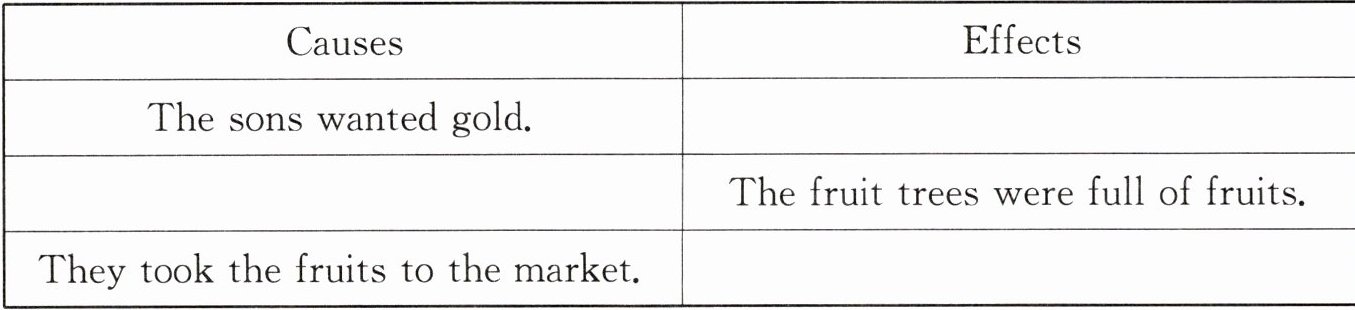
根据短文内容完成表格。
The Father and His Sons
There was once a rich farmer. He had three sons. They were strong and healthy but lazy. They didn't work. They didn't help their father at all.
Before he died, the farmer told his sons that there was much gold in the fields. Gold! The three sons were excited. They dug and turned over the soil in the fields but didn't find any gold. They were all disappointed.
One year passed. Something unexpected happened. There were lots of fruit trees in the fields. The trees were full of fruits because the brothers dug and turned over the soil well. They took the fruits to the market. They worked hard. They got rich.
“Ha!” said the elder brother. “Now I understand that our father was a wise man.
He wanted us to work hard.”
“Yes,” said the others. “Hard work makes a man rich.”
【词汇与表达】
dig v. 掘地,挖掘(过去式 dug)
disappointed adj. 失望的,沮丧的
healthy adj. 健康的,健壮的
lazy adj. 懒惰的
unexpected adj. 没有料到的,意外的
wise adj. 聪明的
【知识链接】
这是改编自《伊索寓言》的一个故事,它告诉我们一个道理:勤劳努力,好运才能常相随。《伊索寓言》大部分都是我们所熟悉的以动物为喻的故事,少部分以人或神为主,通过简短的篇幅、生动的形象刻画,揭示了深刻的道理。这就是我们常说的“寓意”。在中国传统文化中,寓言是内容极为丰富的智慧宝库,孔子、孟子、荀子、孙子、墨子、韩非子都善于使用寓言来讲述哲学道理。春秋战国以后的历代哲学家、文学家、诗人和学者都利用寓言传播丰富深刻的宇宙构想、社会智慧和人生观念。
【活动】
根据短文内容完成表格。
答案
| Causes | Effects |
| ---- | ---- |
| The sons wanted gold. | The sons dug and turned over the soil. |
| They did well in the fields. | The fruit trees were full of fruits. |
| They took the fruits to the market. | They got rich. |
| ---- | ---- |
| The sons wanted gold. | The sons dug and turned over the soil. |
| They did well in the fields. | The fruit trees were full of fruits. |
| They took the fruits to the market. | They got rich. |
