

 登录
登录
四、从方框中选择合适的单词,并运用其适当形式填空,补全短文。
weather learn meal bus country look cold different busy friendly
In the UK, people often go out by
It is very
Different
weather learn meal bus country look cold different busy friendly
In the UK, people often go out by
bus
or subway. On the bus or the subway, you can see a lot of people looking
out of the window or reading books and newspapers. They do not talk very much. When English people meet, they often talk about one thing—the weather
. So when you meet someone in the UK, you can say, "It's a nice day, isn't it?" "But it's a little cold
." Someone may answer. Talking like this is polite and friendly
.It is very
different
in China. When Chinese people meet, we will ask, "Where are you going?" or "Have you eaten yet?" "Are you busy
recently?" Talking about meals
is a good way to greet in China.Different
countries
have different manners. We should respect and learn
more about the culture(文化).答案
bus; looking; weather; cold; friendly;
different; busy; meals; countries; learn
different; busy; meals; countries; learn
解析
【分析】
首先通读短文,明确文章围绕中英两国不同的社交礼仪展开。然后逐个分析每个空的语境和语法要求:
1. 第一空:by后接交通工具,方框中bus是交通工具,符合“乘坐公交”的表达;
2. 第二空:see sb doing sth是固定结构,表示“看到某人正在做某事”,look out of the window是固定短语,所以用look的现在分词形式;
3. 第三空:根据常识,英国人见面常谈论天气,方框中weather符合语境;
4. 第四空:前文说天气好,此处转折说有点冷,cold符合语义;
5. 第五空:与polite并列,描述这种聊天方式的特点,friendly(友好的)符合;
6. 第六空:后文讲中国的情况和英国不同,different符合语境;
7. 第七空:中国人见面常问“最近忙吗”,busy符合语义;
8. 第八空:中国人见面常聊吃饭相关,meal是可数名词,这里表示泛指,用复数形式meals;
9. 第九空:different后接可数名词复数,country变复数countries,表示“不同的国家”;
10. 第十空:与respect并列,表达“学习更多文化”,learn符合语义。
【解析】
1. 第一空:“by + 交通工具”是固定搭配,表示出行方式,结合语境选bus,填bus;
2. 第二空:“see sb doing sth”是固定结构,意为“看见某人正在做某事”,look out of the window是固定短语,故填look的现在分词形式looking;
3. 第三空:根据常识,英国人见面常谈论天气,结合语境选weather,填weather;
4. 第四空:前文提到天气好,此处转折表示“有点冷”,选cold,填cold;
5. 第五空:与polite(礼貌的)并列,描述聊天方式的特点,friendly(友好的)符合,填friendly;
6. 第六空:后文介绍中国的礼仪和英国不同,选different,填different;
7. 第七空:中国人见面常问候“最近忙吗”,busy(忙碌的)符合语境,填busy;
8. 第八空:“Have you eaten yet?”表明聊的是用餐相关,meal是可数名词,此处表泛指,用复数形式meals;
9. 第九空:different后接可数名词复数,country的复数形式是countries,填countries;
10. 第十空:与respect(尊重)并列,表达“学习更多文化”,选learn,填learn。
【答案】
bus; looking; weather; cold; friendly; different; busy; meals; countries; learn
【知识点】
固定搭配运用、名词单复数、形容词词义辨析
【点评】
本题考查词汇在语境中的灵活运用,结合中英文化差异背景,既考查了固定短语、词性变化等语法知识,又帮助学生了解不同国家的社交礼仪,需要学生结合语境和语法知识综合判断。
【难度系数】
0.6
首先通读短文,明确文章围绕中英两国不同的社交礼仪展开。然后逐个分析每个空的语境和语法要求:
1. 第一空:by后接交通工具,方框中bus是交通工具,符合“乘坐公交”的表达;
2. 第二空:see sb doing sth是固定结构,表示“看到某人正在做某事”,look out of the window是固定短语,所以用look的现在分词形式;
3. 第三空:根据常识,英国人见面常谈论天气,方框中weather符合语境;
4. 第四空:前文说天气好,此处转折说有点冷,cold符合语义;
5. 第五空:与polite并列,描述这种聊天方式的特点,friendly(友好的)符合;
6. 第六空:后文讲中国的情况和英国不同,different符合语境;
7. 第七空:中国人见面常问“最近忙吗”,busy符合语义;
8. 第八空:中国人见面常聊吃饭相关,meal是可数名词,这里表示泛指,用复数形式meals;
9. 第九空:different后接可数名词复数,country变复数countries,表示“不同的国家”;
10. 第十空:与respect并列,表达“学习更多文化”,learn符合语义。
【解析】
1. 第一空:“by + 交通工具”是固定搭配,表示出行方式,结合语境选bus,填bus;
2. 第二空:“see sb doing sth”是固定结构,意为“看见某人正在做某事”,look out of the window是固定短语,故填look的现在分词形式looking;
3. 第三空:根据常识,英国人见面常谈论天气,结合语境选weather,填weather;
4. 第四空:前文提到天气好,此处转折表示“有点冷”,选cold,填cold;
5. 第五空:与polite(礼貌的)并列,描述聊天方式的特点,friendly(友好的)符合,填friendly;
6. 第六空:后文介绍中国的礼仪和英国不同,选different,填different;
7. 第七空:中国人见面常问候“最近忙吗”,busy(忙碌的)符合语境,填busy;
8. 第八空:“Have you eaten yet?”表明聊的是用餐相关,meal是可数名词,此处表泛指,用复数形式meals;
9. 第九空:different后接可数名词复数,country的复数形式是countries,填countries;
10. 第十空:与respect(尊重)并列,表达“学习更多文化”,选learn,填learn。
【答案】
bus; looking; weather; cold; friendly; different; busy; meals; countries; learn
【知识点】
固定搭配运用、名词单复数、形容词词义辨析
【点评】
本题考查词汇在语境中的灵活运用,结合中英文化差异背景,既考查了固定短语、词性变化等语法知识,又帮助学生了解不同国家的社交礼仪,需要学生结合语境和语法知识综合判断。
【难度系数】
0.6
五、阅读短文,判断正(T)误(F)。
Is sports day in Germany(德国) the same as that in China? Find out here.
Sports day is very important for German children. It usually has lots of different games, like sprinting, long jump, throwing and swimming.
Do you know which sport German children like best? Here is the answer.
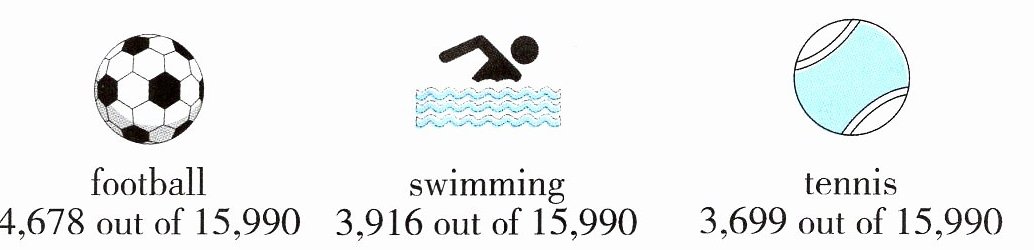
There are also fun games for children, like egg races. Students run with an egg in a spoon(勺). Parents don't usually come on sports day, but they are very happy when their children bring home an Urkunde. Do you know what that is?
An Urkunde is a certificate(证书). Each child can get one for taking part and the winners(获胜者) will get special ones.
(
(
(
(
(
Is sports day in Germany(德国) the same as that in China? Find out here.
Sports day is very important for German children. It usually has lots of different games, like sprinting, long jump, throwing and swimming.
Do you know which sport German children like best? Here is the answer.
There are also fun games for children, like egg races. Students run with an egg in a spoon(勺). Parents don't usually come on sports day, but they are very happy when their children bring home an Urkunde. Do you know what that is?
An Urkunde is a certificate(证书). Each child can get one for taking part and the winners(获胜者) will get special ones.
(
T
)1. The underlined word "sprinting" is a sport.(
F
)2. 新趋势 学科融合 According to the passage, German children like tennis best.(
F
)3. On Sports Day, German parents watch their children playing football or swimming.(
F
)4. On Sports Day, only winners can get certificates.(
T
)5. The title(标题) for the passage may be "Sports Day in Germany".答案
1. T 2. F 3. F 4. F 5. T
解析
【分析】
这是一道阅读理解判断正误题,解题思路为:先通读全文,了解德国运动日的相关内容,再逐个题目回到原文或图表中寻找对应信息,将题目表述与原文/图表信息进行对比,判断表述是否正确。
1. 第1题需判断划线词是否为运动,可根据其所在语境中并列的运动项目推断;
2. 第2题需结合图表数据判断德国孩子最喜欢的运动,比较三项运动的支持人数即可;
3. 第3题需查找原文中关于家长是否参与运动日的描述;
4. 第4题需定位原文中关于证书获取的内容,判断是否只有获胜者能获得证书;
5. 第5题需结合全文主题判断标题是否合适。
【解析】
1. 根据短文第二段“It usually has lots of different games, like sprinting, long jump, throwing and swimming.”可知,sprinting和跳远、游泳等并列,都是运动项目,所以该表述正确,填T。
2. 观察图表数据:喜欢football的有4,678人,喜欢swimming的有3,916人,喜欢tennis的有3,699人,其中football的支持人数最多,说明德国孩子最喜欢的是足球,不是网球,该表述错误,填F。
3. 根据短文第五段“Parents don't usually come on sports day”可知,德国家长通常不会在运动日来观看孩子比赛,该表述错误,填F。
4. 根据短文最后一段“Each child can get one for taking part and the winners will get special ones.”可知,每个参与的孩子都能获得证书,获胜者只是获得特殊证书,并非只有获胜者能得到证书,该表述错误,填F。
5. 短文围绕德国的运动日展开,介绍了运动日的项目、孩子喜欢的运动、趣味游戏以及证书相关内容,所以标题“Sports Day in Germany”符合文章主题,该表述正确,填T。
【答案】
1. T 2. F 3. F 4. F 5. T
【知识点】
细节查找、图表信息提取、主旨判断
【点评】
本题融合文本阅读与图表分析,既考查学生从文本中提取细节信息的能力,又考查学生解读图表数据的能力。解题时需仔细比对题目表述与原文/图表信息,避免因粗心忽略细节而判断错误。
【难度系数】
0.6
这是一道阅读理解判断正误题,解题思路为:先通读全文,了解德国运动日的相关内容,再逐个题目回到原文或图表中寻找对应信息,将题目表述与原文/图表信息进行对比,判断表述是否正确。
1. 第1题需判断划线词是否为运动,可根据其所在语境中并列的运动项目推断;
2. 第2题需结合图表数据判断德国孩子最喜欢的运动,比较三项运动的支持人数即可;
3. 第3题需查找原文中关于家长是否参与运动日的描述;
4. 第4题需定位原文中关于证书获取的内容,判断是否只有获胜者能获得证书;
5. 第5题需结合全文主题判断标题是否合适。
【解析】
1. 根据短文第二段“It usually has lots of different games, like sprinting, long jump, throwing and swimming.”可知,sprinting和跳远、游泳等并列,都是运动项目,所以该表述正确,填T。
2. 观察图表数据:喜欢football的有4,678人,喜欢swimming的有3,916人,喜欢tennis的有3,699人,其中football的支持人数最多,说明德国孩子最喜欢的是足球,不是网球,该表述错误,填F。
3. 根据短文第五段“Parents don't usually come on sports day”可知,德国家长通常不会在运动日来观看孩子比赛,该表述错误,填F。
4. 根据短文最后一段“Each child can get one for taking part and the winners will get special ones.”可知,每个参与的孩子都能获得证书,获胜者只是获得特殊证书,并非只有获胜者能得到证书,该表述错误,填F。
5. 短文围绕德国的运动日展开,介绍了运动日的项目、孩子喜欢的运动、趣味游戏以及证书相关内容,所以标题“Sports Day in Germany”符合文章主题,该表述正确,填T。
【答案】
1. T 2. F 3. F 4. F 5. T
【知识点】
细节查找、图表信息提取、主旨判断
【点评】
本题融合文本阅读与图表分析,既考查学生从文本中提取细节信息的能力,又考查学生解读图表数据的能力。解题时需仔细比对题目表述与原文/图表信息,避免因粗心忽略细节而判断错误。
【难度系数】
0.6
