

 登录
登录
二、根据课文内容完成下面对话(每空不限词数)
Host: Hello everyone! Today we will talk about Wang Zhenyi (1768-1797), an 1.
Guest: Wang Zhenyi grew up in a family that valued education and had a 2.
Host: How did she 3.
Guest: She read widely in her grandfather’s library. At that time, most science books used 4.
Host: What did she do to achieve this?
Guest: She rewrote maths books and created easier calculation methods. 6.
Host: She is really amazing! Did she have other gifts?
Guest: Well, she was also a gifted 8.
Host: Wow, she must have shaken people’s old beliefs at that time!
Guest: That’s true! Sadly, she passed away at only 29. Even with a short life, she achieved great success, and 10.
Host: Totally agree! She is truly an inspiring role model. Thank you for your wonderful sharing!
Host: Hello everyone! Today we will talk about Wang Zhenyi (1768-1797), an 1.
outstanding / excellent
female mathematician and astronomer in the Qing dynasty. What was her childhood like?Guest: Wang Zhenyi grew up in a family that valued education and had a 2.
talent
for learning at an early age.Host: How did she 3.
build
her knowledge in her teens?Guest: She read widely in her grandfather’s library. At that time, most science books used 4.
old-fashioned
language and they were too difficult for 5. ordinary
people to understand. With this in mind, she was determined to make science easier to learn.Host: What did she do to achieve this?
Guest: She rewrote maths books and created easier calculation methods. 6.
In addition to
her maths achievements, she studied astronomy. She explained lunar eclipses with a simple 7. model
and proved that they were completely natural events.Host: She is really amazing! Did she have other gifts?
Guest: Well, she was also a gifted 8.
poet
. In her works, she wrote about unusually modern topics. She was 9. convinced
that women are as intelligent as men.Host: Wow, she must have shaken people’s old beliefs at that time!
Guest: That’s true! Sadly, she passed away at only 29. Even with a short life, she achieved great success, and 10.
it is fitting that
she is remembered forever.Host: Totally agree! She is truly an inspiring role model. Thank you for your wonderful sharing!
答案
1. outstanding / excellent 2. talent 3. build 4. old-fashioned 5. ordinary 6. In addition to 7. model 8. poet 9. convinced 10. it is fitting that
三、阅读文段,根据提示补充完整思维导图(请填写关键信息)
Norman Bethune was a great Canadian doctor and international humanitarian. Born in 1890 in Ontario, Canada, he graduated from the University of Toronto as a medical doctor in 1916. In his early years, he served in World War I and got rich experience in treating wounded soldiers. Later, he became an outstanding surgeon(外科医生) and was widely respected in the medical field.
Bethune was selfless and volunteered to serve in foreign wars. In 1936, he went to Spain to offer medical support during the war. To save more lives, he invented a mobile blood transfusion(输血) service, which greatly improved medical treatment for injured soldiers on the front line.
Bethune is best-known for his contributions to China during the Chinese People's War of Resistance Against Japanese Aggression. In 1938, he decided to travel to northern China, where countless people suffered and lost their lives in the war. He worked selflessly for Chinese soldiers and ordinary local people. He spent long hours performing operations, treating patients and training local medical staff. He also improved simple medical equipment and simplified treatment methods to adapt to difficult wartime conditions.
Bethune never cared about his own safety or comfort. He always remained on the front line to save lives. Sadly, in 1939 in Hebei, he cut his finger during an operation. The wound became infected. With no timely and proper medical treatment, he passed away shortly after.
Though he had a short life, Bethune devoted himself entirely to helping others. To honour his great contributions, the Chinese people have kept his memory alive in many meaningful ways. After his death, Chairman Mao wrote the famous article In Memory of Norman Bethune to praise his great spirit. Moreover, hospitals and medical schools were named after him to uphold his selfless spirit. Memorial halls were also built in China for people to visit and learn from his deeds.
His spirit of selflessness and devotion has inspired generations of Chinese people. He is always remembered as a great international medical hero.
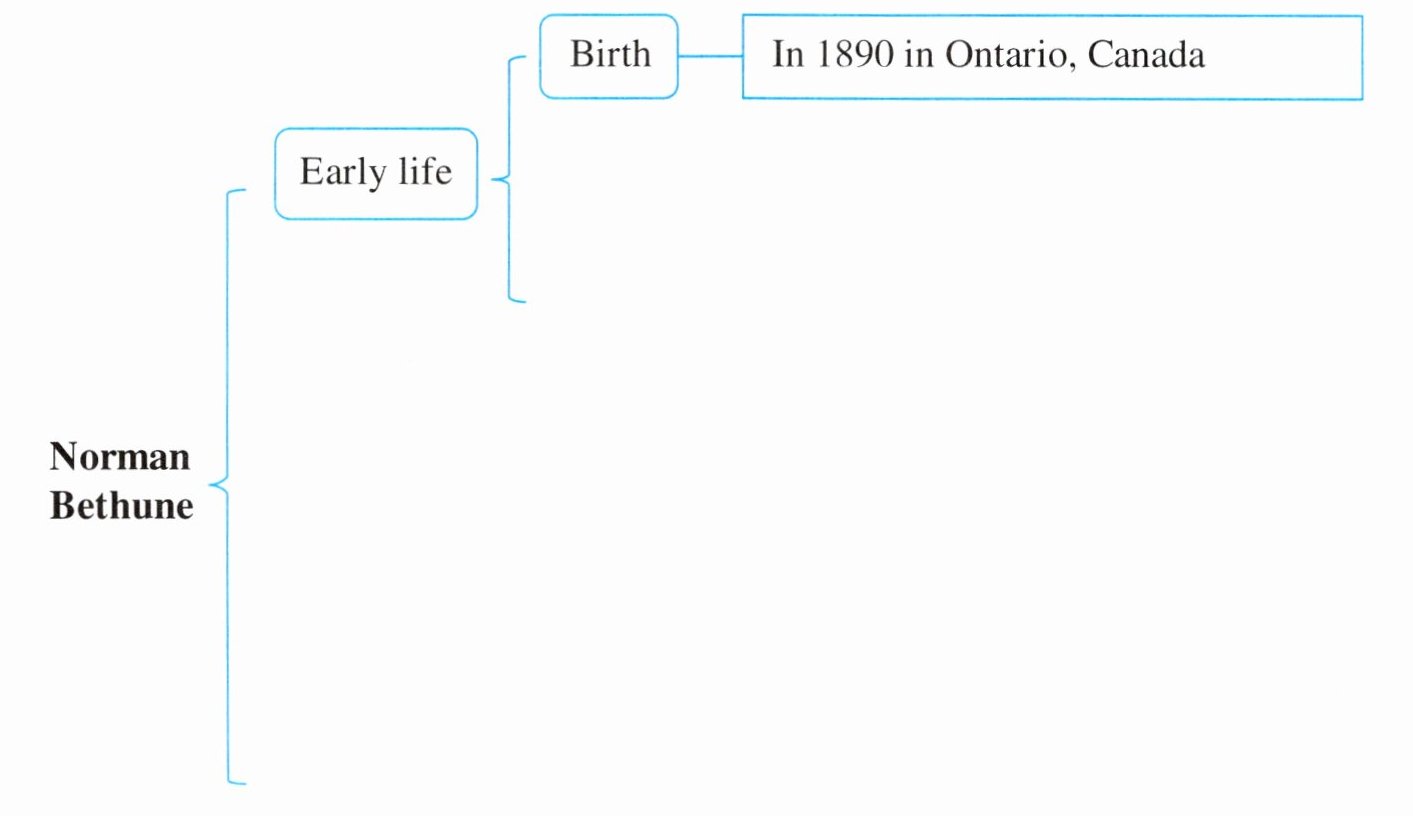
Norman Bethune was a great Canadian doctor and international humanitarian. Born in 1890 in Ontario, Canada, he graduated from the University of Toronto as a medical doctor in 1916. In his early years, he served in World War I and got rich experience in treating wounded soldiers. Later, he became an outstanding surgeon(外科医生) and was widely respected in the medical field.
Bethune was selfless and volunteered to serve in foreign wars. In 1936, he went to Spain to offer medical support during the war. To save more lives, he invented a mobile blood transfusion(输血) service, which greatly improved medical treatment for injured soldiers on the front line.
Bethune is best-known for his contributions to China during the Chinese People's War of Resistance Against Japanese Aggression. In 1938, he decided to travel to northern China, where countless people suffered and lost their lives in the war. He worked selflessly for Chinese soldiers and ordinary local people. He spent long hours performing operations, treating patients and training local medical staff. He also improved simple medical equipment and simplified treatment methods to adapt to difficult wartime conditions.
Bethune never cared about his own safety or comfort. He always remained on the front line to save lives. Sadly, in 1939 in Hebei, he cut his finger during an operation. The wound became infected. With no timely and proper medical treatment, he passed away shortly after.
Though he had a short life, Bethune devoted himself entirely to helping others. To honour his great contributions, the Chinese people have kept his memory alive in many meaningful ways. After his death, Chairman Mao wrote the famous article In Memory of Norman Bethune to praise his great spirit. Moreover, hospitals and medical schools were named after him to uphold his selfless spirit. Memorial halls were also built in China for people to visit and learn from his deeds.
His spirit of selflessness and devotion has inspired generations of Chinese people. He is always remembered as a great international medical hero.
答案
Norman Bethune
Early life
Birth
In 1890 in Ontario, Canada
Study
Graduated from the University of Toronto
Early working experience
Served in World War I and later became an outstanding surgeon
Voluntary experience & Contributions
Volunteer in foreign wars
Offered medical support in Spain; invented a mobile blood transfusion service
Volunteer in China
Spent long hours performing operations, treating patients and training local medical staff
Death
Cut his finger during an operation; became infected and passed away
Evaluation
Memorials
Chairman Mao wrote the famous article; Hospitals and medical schools were named after him; memorial halls were built
People’s admiration
Inspired generations of Chinese people; remembered as a great international medical hero
Early life
Birth
In 1890 in Ontario, Canada
Study
Graduated from the University of Toronto
Early working experience
Served in World War I and later became an outstanding surgeon
Voluntary experience & Contributions
Volunteer in foreign wars
Offered medical support in Spain; invented a mobile blood transfusion service
Volunteer in China
Spent long hours performing operations, treating patients and training local medical staff
Death
Cut his finger during an operation; became infected and passed away
Evaluation
Memorials
Chairman Mao wrote the famous article; Hospitals and medical schools were named after him; memorial halls were built
People’s admiration
Inspired generations of Chinese people; remembered as a great international medical hero
解析
【分析】
本题要求根据英文文段补全关于白求恩的思维导图,解题思路为:先明确思维导图围绕Norman Bethune展开,包含Early life、Voluntary experience & Contributions、Death、Evaluation等模块;再针对每个模块,回到原文段定位对应内容,提取核心关键信息,去除冗余描述,整理成符合思维导图简洁性要求的内容。
【解析】
1. 梳理思维导图分支:除已给出的Birth(1890年加拿大安大略省),需补充Early life下的Study、Early working experience,Voluntary experience & Contributions下的国外(西班牙)和中国经历,Death、Evaluation等模块。
2. 提取各模块关键信息:
Study:原文提到1916年从多伦多大学毕业成为医生,归纳为“Graduated from the University of Toronto”;
Early working experience:原文提到早年参加一战,后成为杰出外科医生,归纳为“Served in World War I and later became an outstanding surgeon”;
西班牙经历:原文提到1936年去西班牙提供医疗支持,发明移动输血服务,归纳为“Offered medical support in Spain; invented a mobile blood transfusion service”;
中国经历:原文提到1938年到中国,做手术、治疗病人、培训医护人员,归纳为“Spent long hours performing operations, treating patients and training local medical staff”;
Death:原文提到1939年在河北手术时割伤手指,感染后去世,归纳为“Cut his finger during an operation; became infected and passed away”;
Evaluation:原文提到毛主席写纪念文章,医院、学校以他命名,纪念馆建成,被中国人铭记、精神激励后人,归纳为“Chairman Mao wrote the famous article; Hospitals and medical schools were named after him; memorial halls were built; inspired generations of Chinese people; remembered as a great international medical hero”。
【答案】
Norman Bethune
Early life
Birth
In 1890 in Ontario, Canada
Study
Graduated from the University of Toronto
Early working experience
Served in World War I and later became an outstanding surgeon
Voluntary experience & Contributions
Volunteer in foreign wars
Offered medical support in Spain; invented a mobile blood transfusion service
Volunteer in China
Spent long hours performing operations, treating patients and training local medical staff
Death
Cut his finger during an operation; became infected and passed away
Evaluation
Memorials
Chairman Mao wrote the famous article; Hospitals and medical schools were named after him; memorial halls were built
People’s admiration
Inspired generations of Chinese people; remembered as a great international medical hero
【知识点】
英语阅读理解信息提取、思维导图补全、人物事迹归纳
【点评】
本题以补全人物事迹思维导图的形式,考查学生从英文文段中定位、提取关键信息并归纳整理的能力,既锻炼英语阅读的信息处理能力,又培养逻辑归纳能力,是英语阅读中常见的实用题型。
【难度系数】
0.5
本题要求根据英文文段补全关于白求恩的思维导图,解题思路为:先明确思维导图围绕Norman Bethune展开,包含Early life、Voluntary experience & Contributions、Death、Evaluation等模块;再针对每个模块,回到原文段定位对应内容,提取核心关键信息,去除冗余描述,整理成符合思维导图简洁性要求的内容。
【解析】
1. 梳理思维导图分支:除已给出的Birth(1890年加拿大安大略省),需补充Early life下的Study、Early working experience,Voluntary experience & Contributions下的国外(西班牙)和中国经历,Death、Evaluation等模块。
2. 提取各模块关键信息:
Study:原文提到1916年从多伦多大学毕业成为医生,归纳为“Graduated from the University of Toronto”;
Early working experience:原文提到早年参加一战,后成为杰出外科医生,归纳为“Served in World War I and later became an outstanding surgeon”;
西班牙经历:原文提到1936年去西班牙提供医疗支持,发明移动输血服务,归纳为“Offered medical support in Spain; invented a mobile blood transfusion service”;
中国经历:原文提到1938年到中国,做手术、治疗病人、培训医护人员,归纳为“Spent long hours performing operations, treating patients and training local medical staff”;
Death:原文提到1939年在河北手术时割伤手指,感染后去世,归纳为“Cut his finger during an operation; became infected and passed away”;
Evaluation:原文提到毛主席写纪念文章,医院、学校以他命名,纪念馆建成,被中国人铭记、精神激励后人,归纳为“Chairman Mao wrote the famous article; Hospitals and medical schools were named after him; memorial halls were built; inspired generations of Chinese people; remembered as a great international medical hero”。
【答案】
Norman Bethune
Early life
Birth
In 1890 in Ontario, Canada
Study
Graduated from the University of Toronto
Early working experience
Served in World War I and later became an outstanding surgeon
Voluntary experience & Contributions
Volunteer in foreign wars
Offered medical support in Spain; invented a mobile blood transfusion service
Volunteer in China
Spent long hours performing operations, treating patients and training local medical staff
Death
Cut his finger during an operation; became infected and passed away
Evaluation
Memorials
Chairman Mao wrote the famous article; Hospitals and medical schools were named after him; memorial halls were built
People’s admiration
Inspired generations of Chinese people; remembered as a great international medical hero
【知识点】
英语阅读理解信息提取、思维导图补全、人物事迹归纳
【点评】
本题以补全人物事迹思维导图的形式,考查学生从英文文段中定位、提取关键信息并归纳整理的能力,既锻炼英语阅读的信息处理能力,又培养逻辑归纳能力,是英语阅读中常见的实用题型。
【难度系数】
0.5
