

 登录
登录
训练3
Have you ever tried talking to yourself instead of writing in a notebook? That's what a voice journal(语音日记) is all about. Instead of using a pen, people record(记录) their thoughts, feelings, or daily events with their voices. It's like keeping diaries—but you speak instead of writing.
Voice journaling is becoming popular among teenagers. Many students feel tired after a long day at school and don't want to write. Recording their voices feels easier and faster. Some voice journal apps, with music and pictures, bring the users more fun when they record their voice.
There are many benefits to keeping a voice journal. First, it helps improve speaking skills. When you talk clearly and with feelings, you learn how to express your own ideas better. Second, voice journals keep real emotions. A written diary might only say "I was sad today", but a voice journal can sound sad. The feelings are more direct and real.
Another great thing is that you don't have to stop what you're doing to keep a voice journal. You can record while walking, lying on your bed, or even brushing your teeth! This way, you can do two things at the same time. It is helpful to students who have a lot to do every day.
Some students also say voice journals help reduce stress. When you talk about your problems aloud, it's like sharing them with a friend. This helps you feel lighter and calmer.
As a new way to keep diaries, voice journals are not for everyone. But why not give it a try? You might have a better understanding of yourself with this tool.
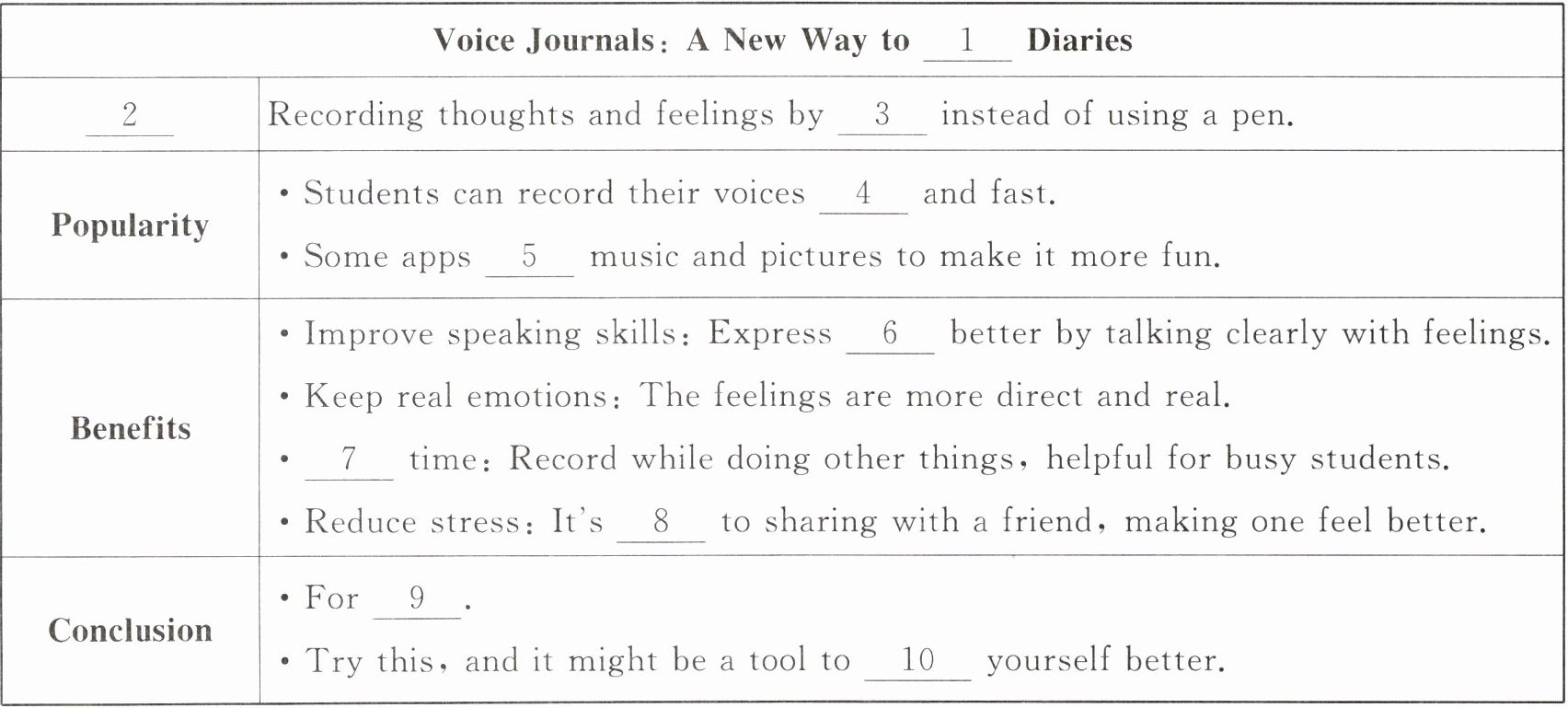
1. 2. 3. 4. 5.
6. 7. 8. 9. 10.
Have you ever tried talking to yourself instead of writing in a notebook? That's what a voice journal(语音日记) is all about. Instead of using a pen, people record(记录) their thoughts, feelings, or daily events with their voices. It's like keeping diaries—but you speak instead of writing.
Voice journaling is becoming popular among teenagers. Many students feel tired after a long day at school and don't want to write. Recording their voices feels easier and faster. Some voice journal apps, with music and pictures, bring the users more fun when they record their voice.
There are many benefits to keeping a voice journal. First, it helps improve speaking skills. When you talk clearly and with feelings, you learn how to express your own ideas better. Second, voice journals keep real emotions. A written diary might only say "I was sad today", but a voice journal can sound sad. The feelings are more direct and real.
Another great thing is that you don't have to stop what you're doing to keep a voice journal. You can record while walking, lying on your bed, or even brushing your teeth! This way, you can do two things at the same time. It is helpful to students who have a lot to do every day.
Some students also say voice journals help reduce stress. When you talk about your problems aloud, it's like sharing them with a friend. This helps you feel lighter and calmer.
As a new way to keep diaries, voice journals are not for everyone. But why not give it a try? You might have a better understanding of yourself with this tool.
1. 2. 3. 4. 5.
6. 7. 8. 9. 10.
答案
1. Keep 根据第一段“It's like keeping diaries—but you speak instead of writing.”可知语音日记是一种新型的日记方式;标题中实词的首字母需大写。故填Keep。
2. Introduction 根据表格右侧的内容可知,此处介绍语音日记;根据“Popularity”可知首字母需大写。故填Introduction。
3. speaking 根据第一段“It's like keeping diaries—but you speak instead of writing.”可知语音日记用说话代替用笔记录;by后接动名词。故填speaking。
4. easily/simply 根据第二段“Recording their voices feels easier and faster.”可知记录声音更容易、更快;修饰空前动词“record”应用副词。故填easily/simply。
5. add 根据第二段“Some voice journal apps, with music and pictures, bring the users more fun when they record their voice.”可知一些语音日记应用会添加音乐和图片来增加趣味性。故填add。
6. yourself 根据第三段“When you talk clearly and with feelings, you learn how to express your own ideas better.”可知当你清晰地带着感情说话时,会学会如何更好地表达自己的想法,即表达自己。故填yourself。
7. Save 根据第四段“You can record while walking, lying on your bed, or even brushing your teeth!”可知你可以一边做其他事情一边记录语音日记,即节省时间。故填Save。
8. similar 根据第五段“it's like sharing them with a friend”
可知语音日记就像和朋友分享一样;be similar to表示“与……相似”。故填similar。
9. someone/somebody 根据最后一段“As a new way to keep diaries, voice journals are not for everyone.”可知语音日记不适合所有人,即适合某些人。故填someone/somebody。
10. understand 根据最后一段“You might have a better understanding of yourself with this tool.”可知尝试语音日记可能帮助你更好地了解自己。故填understand。
2. Introduction 根据表格右侧的内容可知,此处介绍语音日记;根据“Popularity”可知首字母需大写。故填Introduction。
3. speaking 根据第一段“It's like keeping diaries—but you speak instead of writing.”可知语音日记用说话代替用笔记录;by后接动名词。故填speaking。
4. easily/simply 根据第二段“Recording their voices feels easier and faster.”可知记录声音更容易、更快;修饰空前动词“record”应用副词。故填easily/simply。
5. add 根据第二段“Some voice journal apps, with music and pictures, bring the users more fun when they record their voice.”可知一些语音日记应用会添加音乐和图片来增加趣味性。故填add。
6. yourself 根据第三段“When you talk clearly and with feelings, you learn how to express your own ideas better.”可知当你清晰地带着感情说话时,会学会如何更好地表达自己的想法,即表达自己。故填yourself。
7. Save 根据第四段“You can record while walking, lying on your bed, or even brushing your teeth!”可知你可以一边做其他事情一边记录语音日记,即节省时间。故填Save。
8. similar 根据第五段“it's like sharing them with a friend”
可知语音日记就像和朋友分享一样;be similar to表示“与……相似”。故填similar。
9. someone/somebody 根据最后一段“As a new way to keep diaries, voice journals are not for everyone.”可知语音日记不适合所有人,即适合某些人。故填someone/somebody。
10. understand 根据最后一段“You might have a better understanding of yourself with this tool.”可知尝试语音日记可能帮助你更好地了解自己。故填understand。
解析
【分析】
这是一篇表格型任务型阅读题,解题思路如下:首先通读全文,明确本文介绍的主题是语音日记,再对照表格的栏目结构,逐个空回到原文定位对应的语句,结合语法规则(词性要求、固定搭配、大小写规范)推导答案:1. 先看标题,对应原文“记日记”的相关表述,to后接动词原形;2. 观察表格左栏的Popularity、Benefits、Conclusion的并列结构,第一栏是对语音日记的定义介绍,对应填写相关名词;3. 对应原文“不用笔、用说话的方式记录”的表述,by是介词后接动名词;4. 原文提到录音更简单快速,空格修饰动词record,要把形容词转换为副词;5. 对应原文APP自带音乐图片的描述,推导谓语动词“添加”;6. 对应“表达自己的想法”转换为express oneself的固定搭配;7. 边做其他事边录音的特点对应“节省时间”,首字母大写;8. 对应“像和朋友分享”的表述,匹配be similar to固定短语;9. 对应原文“不适合所有人”,推导为适合部分人;10. 把名词短语better understanding of转换为不定式后的动词原形understand即可。
【解析】
1. 定位原文第一段"It's like keeping diaries—but you speak instead of writing.",标题结构为a new way to do sth.,to后接动词原形,对应“记日记”的含义,首字母大写,填Keep。
2. 表格左栏后续栏目分别为Popularity、Benefits、Conclusion,右侧内容是对语音日记的定义介绍,首字母大写,填Introduction。
3. 定位原文第一段"Instead of using a pen, people record their thoughts, feelings, or daily events with their voices. It's like keeping diaries—but you speak instead of writing.",by是介词,后接动名词,填speaking。
4. 定位原文第二段"Recording their voices feels easier and faster.",空格修饰动词record,需要用副词,easy的副词形式为easily,填easily/simply。
5. 定位原文第二段"Some voice journal apps, with music and pictures, bring the users more fun when they record their voice.",说明部分语音日记应用会添加音乐和图片提升趣味性,主语apps为复数,谓语用动词原形add。
6. 定位原文第三段"When you talk clearly and with feelings, you learn how to express your own ideas better.",对应“更好地表达自己”,express oneself为固定搭配,填yourself。
7. 定位原文第四段"You can record while walking, lying on your bed, or even brushing your teeth! This way, you can do two things at the same time.",该特点可以节省时间,要点首字母大写,填Save。
8. 定位原文第五段"When you talk about your problems aloud, it's like sharing them with a friend.",固定搭配be similar to表示“与……相似”,对应like的含义,填similar。
9. 定位原文最后一段"As a new way to keep diaries, voice journals are not for everyone.",说明语音日记不适合所有人,仅适合部分人,填someone/somebody。
10. 定位原文最后一段"You might have a better understanding of yourself with this tool.",不定式to后接动词原形,对应“更好地了解自己”,填understand。
【答案】
1. Keep
2. Introduction
3. speaking
4. easily/simply
5. add
6. yourself
7. Save
8. similar
9. someone/somebody
10. understand
【知识点】
任务型阅读,固定搭配,词性转换
【点评】
本题属于中等难度的任务型阅读,所有答案都能在原文找到对应依据,既考查学生快速定位文本信息的能力,也兼顾了介词后接动名词、副词修饰动词、固定短语等基础语法考点,学生解题时要注意表格大项的首字母大写规则,不要忽略词性转换的细节,避免出现形式错误丢分。
【难度系数】
0.6
这是一篇表格型任务型阅读题,解题思路如下:首先通读全文,明确本文介绍的主题是语音日记,再对照表格的栏目结构,逐个空回到原文定位对应的语句,结合语法规则(词性要求、固定搭配、大小写规范)推导答案:1. 先看标题,对应原文“记日记”的相关表述,to后接动词原形;2. 观察表格左栏的Popularity、Benefits、Conclusion的并列结构,第一栏是对语音日记的定义介绍,对应填写相关名词;3. 对应原文“不用笔、用说话的方式记录”的表述,by是介词后接动名词;4. 原文提到录音更简单快速,空格修饰动词record,要把形容词转换为副词;5. 对应原文APP自带音乐图片的描述,推导谓语动词“添加”;6. 对应“表达自己的想法”转换为express oneself的固定搭配;7. 边做其他事边录音的特点对应“节省时间”,首字母大写;8. 对应“像和朋友分享”的表述,匹配be similar to固定短语;9. 对应原文“不适合所有人”,推导为适合部分人;10. 把名词短语better understanding of转换为不定式后的动词原形understand即可。
【解析】
1. 定位原文第一段"It's like keeping diaries—but you speak instead of writing.",标题结构为a new way to do sth.,to后接动词原形,对应“记日记”的含义,首字母大写,填Keep。
2. 表格左栏后续栏目分别为Popularity、Benefits、Conclusion,右侧内容是对语音日记的定义介绍,首字母大写,填Introduction。
3. 定位原文第一段"Instead of using a pen, people record their thoughts, feelings, or daily events with their voices. It's like keeping diaries—but you speak instead of writing.",by是介词,后接动名词,填speaking。
4. 定位原文第二段"Recording their voices feels easier and faster.",空格修饰动词record,需要用副词,easy的副词形式为easily,填easily/simply。
5. 定位原文第二段"Some voice journal apps, with music and pictures, bring the users more fun when they record their voice.",说明部分语音日记应用会添加音乐和图片提升趣味性,主语apps为复数,谓语用动词原形add。
6. 定位原文第三段"When you talk clearly and with feelings, you learn how to express your own ideas better.",对应“更好地表达自己”,express oneself为固定搭配,填yourself。
7. 定位原文第四段"You can record while walking, lying on your bed, or even brushing your teeth! This way, you can do two things at the same time.",该特点可以节省时间,要点首字母大写,填Save。
8. 定位原文第五段"When you talk about your problems aloud, it's like sharing them with a friend.",固定搭配be similar to表示“与……相似”,对应like的含义,填similar。
9. 定位原文最后一段"As a new way to keep diaries, voice journals are not for everyone.",说明语音日记不适合所有人,仅适合部分人,填someone/somebody。
10. 定位原文最后一段"You might have a better understanding of yourself with this tool.",不定式to后接动词原形,对应“更好地了解自己”,填understand。
【答案】
1. Keep
2. Introduction
3. speaking
4. easily/simply
5. add
6. yourself
7. Save
8. similar
9. someone/somebody
10. understand
【知识点】
任务型阅读,固定搭配,词性转换
【点评】
本题属于中等难度的任务型阅读,所有答案都能在原文找到对应依据,既考查学生快速定位文本信息的能力,也兼顾了介词后接动名词、副词修饰动词、固定短语等基础语法考点,学生解题时要注意表格大项的首字母大写规则,不要忽略词性转换的细节,避免出现形式错误丢分。
【难度系数】
0.6
