

 登录
登录
D
People think differently, but how does this happen? To find out the answer, Dr Guilford, a famous psychologist, carried out a study on creativity(创造力) in the 1970s, known as the Nine-Dot Puzzle(九点谜题).
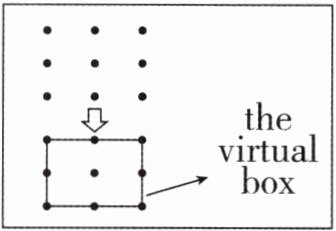
In the research, Guilford asked participants(参与者) to connect all nine dots with at most four straight lines, without lifting pencils from the paper. As a result, only 20% managed to solve the puzzle. The following survey showed that all failed participants had looked for ways in the virtual(虚拟的) box, which is formed with virtual lines. But the winners could break out of the virtual box and continue their lines in the open space around the dots. The results of Guilford's research led him to an idea: creativity needs you to go outside the box.
The idea was widely spread soon. Overnight, it seemed that there were creativity experts everywhere, teaching people how to think outside the box. The idea was so popular that no one thought of checking the facts until two different research teams did another study.
To check if Guilford's idea is correct, the participants were divided(分) into two groups. The first group was given the same instructions as those in Guilford's study. The second group was told they could draw outside the virtual box. Most people think that at least 60% of the second group could solve the puzzle easily. Guess what? Less than 25% solved the puzzle. It was nearly the same as the result of Guilford's study. The result made everyone surprised, but it was the truth.
Let's look more closely at the surprising result. Solving this problem needs people to think outside the box. However, direct and clear instructions—"think outside the box" did not help participants solve the puzzle more easily. In some ways, the idea that thinking outside the box makes people more creative can be improper.
()37. Which of the following can solve the Nine-Dot Puzzle?
()38. Most people thought that in Guilford's study, more participants would solve the puzzle if .
A. they could find out the imagined box more quickly
B. they were given some more time to complete the puzzle
C. they were told to draw the lines outside the imagined box
D. they could discuss the ways together with other participants
()39. Which is the structure of the passage? (P=Paragraph)

()40. The passage probably tells us that .
A. the popular ideas among most people are true
B. the "facts" accepted by many people may not be facts
C. being good at going outside the box means creativity
D. practising solving puzzles does help to think differently
People think differently, but how does this happen? To find out the answer, Dr Guilford, a famous psychologist, carried out a study on creativity(创造力) in the 1970s, known as the Nine-Dot Puzzle(九点谜题).
In the research, Guilford asked participants(参与者) to connect all nine dots with at most four straight lines, without lifting pencils from the paper. As a result, only 20% managed to solve the puzzle. The following survey showed that all failed participants had looked for ways in the virtual(虚拟的) box, which is formed with virtual lines. But the winners could break out of the virtual box and continue their lines in the open space around the dots. The results of Guilford's research led him to an idea: creativity needs you to go outside the box.
The idea was widely spread soon. Overnight, it seemed that there were creativity experts everywhere, teaching people how to think outside the box. The idea was so popular that no one thought of checking the facts until two different research teams did another study.
To check if Guilford's idea is correct, the participants were divided(分) into two groups. The first group was given the same instructions as those in Guilford's study. The second group was told they could draw outside the virtual box. Most people think that at least 60% of the second group could solve the puzzle easily. Guess what? Less than 25% solved the puzzle. It was nearly the same as the result of Guilford's study. The result made everyone surprised, but it was the truth.
Let's look more closely at the surprising result. Solving this problem needs people to think outside the box. However, direct and clear instructions—"think outside the box" did not help participants solve the puzzle more easily. In some ways, the idea that thinking outside the box makes people more creative can be improper.
()37. Which of the following can solve the Nine-Dot Puzzle?
()38. Most people thought that in Guilford's study, more participants would solve the puzzle if .
A. they could find out the imagined box more quickly
B. they were given some more time to complete the puzzle
C. they were told to draw the lines outside the imagined box
D. they could discuss the ways together with other participants
()39. Which is the structure of the passage? (P=Paragraph)
()40. The passage probably tells us that .
A. the popular ideas among most people are true
B. the "facts" accepted by many people may not be facts
C. being good at going outside the box means creativity
D. practising solving puzzles does help to think differently
答案
D
【语篇解读】本文是一篇说明文。文章主要介绍了20世纪70年代,一位名叫Guilford的心理学家进行了一项著名的关于创造力的研究,名为“九点谜题”,这让Guilford得出了一个笼统的结论:创造力需要你跳出框架思维。然而,两个不同的研究队伍做了另一项研究得出了不同的结论。
37~40 DCBB
【语篇解读】本文是一篇说明文。文章主要介绍了20世纪70年代,一位名叫Guilford的心理学家进行了一项著名的关于创造力的研究,名为“九点谜题”,这让Guilford得出了一个笼统的结论:创造力需要你跳出框架思维。然而,两个不同的研究队伍做了另一项研究得出了不同的结论。
37~40 DCBB
解析
【分析】
本题为英语阅读理解题,涵盖细节理解、文章结构、主旨大意三类题型。解题思路如下:1. 细节理解题(37、38):定位原文对应段落,抓取关键信息匹配选项;2. 文章结构题(39):划分段落层次,梳理各段内容逻辑;3. 主旨大意题(40):抓住全文核心观点,排除片面或错误选项。
【解析】
37题:细节理解题。根据原文第二段“the winners could break out of the virtual box and continue their lines in the open space around the dots”,可知成功解决九点谜题的关键是跳出虚拟框,对应选项D。
38题:细节理解题。根据原文第四段“Most people think that at least 60% of the second group could solve the puzzle easily. The second group was told they could draw outside the virtual box”,可知大多数人认为若参与者被告知可在虚拟框外画线,更多人能解决谜题,对应选项C。
39题:文章结构题。文章分为五段:P1引出Guilford的九点谜题研究;P2介绍研究结果及“创造力需跳出框”的结论;P3讲该结论流行后,两支研究团队开展新研究;P4说明新研究的分组、过程及结果;P5总结研究启示,对应结构为选项B。
40题:主旨大意题。根据原文最后一段“In some ways, the idea that thinking outside the box makes people more creative can be improper”,可知很多人接受的“跳出框思维=创造力”这一观点可能并非事实,对应选项B。
【答案】
37.D 38.C 39.B 40.B
【知识点】
英语阅读理解、细节理解、主旨大意
【点评】
本文通过对九点谜题研究的再验证,打破了大众对“跳出框思维=创造力”的固有认知,考查学生对不同阅读题型的解题能力,需准确提取原文信息,避免被流行观点误导,是一篇兼具知识性和思辨性的阅读材料。
【难度系数】
0.5
本题为英语阅读理解题,涵盖细节理解、文章结构、主旨大意三类题型。解题思路如下:1. 细节理解题(37、38):定位原文对应段落,抓取关键信息匹配选项;2. 文章结构题(39):划分段落层次,梳理各段内容逻辑;3. 主旨大意题(40):抓住全文核心观点,排除片面或错误选项。
【解析】
37题:细节理解题。根据原文第二段“the winners could break out of the virtual box and continue their lines in the open space around the dots”,可知成功解决九点谜题的关键是跳出虚拟框,对应选项D。
38题:细节理解题。根据原文第四段“Most people think that at least 60% of the second group could solve the puzzle easily. The second group was told they could draw outside the virtual box”,可知大多数人认为若参与者被告知可在虚拟框外画线,更多人能解决谜题,对应选项C。
39题:文章结构题。文章分为五段:P1引出Guilford的九点谜题研究;P2介绍研究结果及“创造力需跳出框”的结论;P3讲该结论流行后,两支研究团队开展新研究;P4说明新研究的分组、过程及结果;P5总结研究启示,对应结构为选项B。
40题:主旨大意题。根据原文最后一段“In some ways, the idea that thinking outside the box makes people more creative can be improper”,可知很多人接受的“跳出框思维=创造力”这一观点可能并非事实,对应选项B。
【答案】
37.D 38.C 39.B 40.B
【知识点】
英语阅读理解、细节理解、主旨大意
【点评】
本文通过对九点谜题研究的再验证,打破了大众对“跳出框思维=创造力”的固有认知,考查学生对不同阅读题型的解题能力,需准确提取原文信息,避免被流行观点误导,是一篇兼具知识性和思辨性的阅读材料。
【难度系数】
0.5
