

 登录
登录
二、语篇训练
Ⅱ.图表阅读 (2025 岳阳模拟)
Good manners are necessary to show respect for others.
Please/Thank you
Always say "please" if you are asking for something.
Always say "thank you" if someone does something for you.
Personal habits
Stay away from bad habits such as:
Speak loudly in public places.
Jump into other people's conversations.
续表
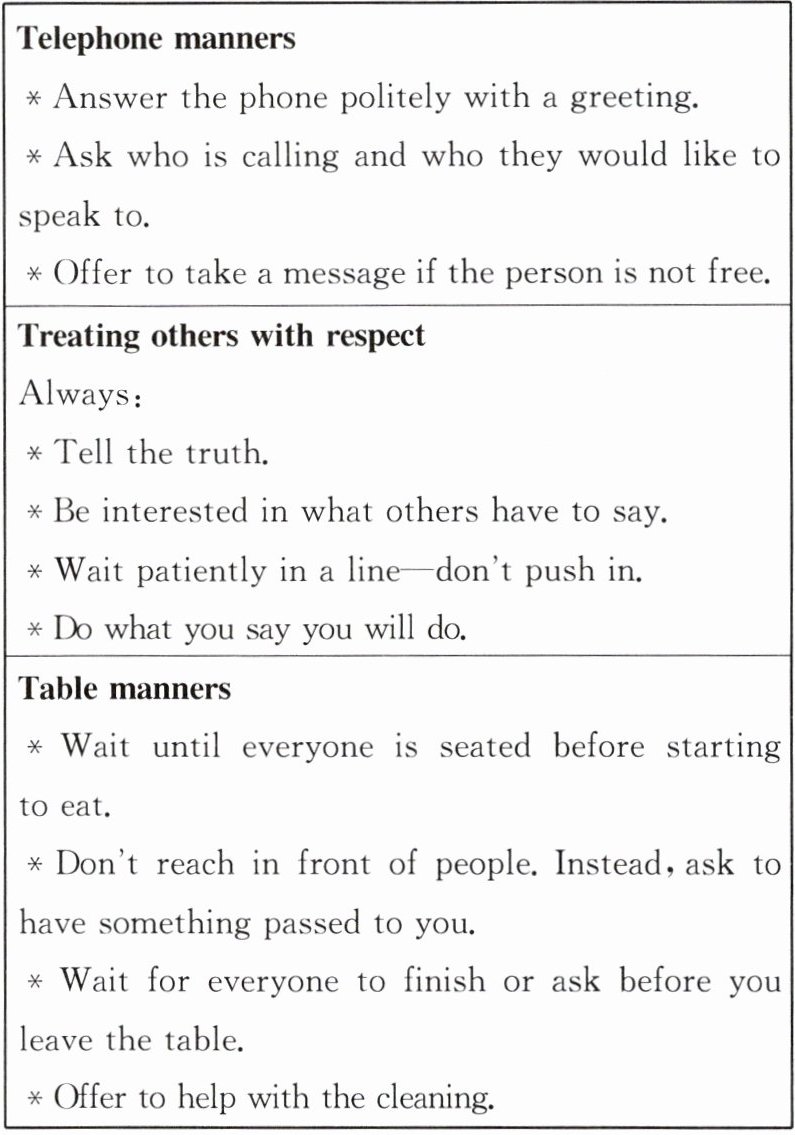
Telephone manners
Answer the phone politely with a greeting.
Ask who is calling and who they would like to speak to.
Offer to take a message if the person is not free.
Treating others with respect
Always:
Tell the truth.
Be interested in what others have to say.
Wait patiently in a -don't push in.
Do what you say you will do.
Table manners
Wait until everyone is seated before starting to eat.
Don't reach in front of people. Instead, ask to have something passed to you.
Wait for everyone to finish or ask before you leave the table.
Offer to help with the cleaning.
21. What should you say when asking for something according to the passage?
A. Excuse me. B. Please.
C. Thank you.
22. Which of the following shows your respect for others?
A. Jump into others' conversation.
B. Show an interest in others' words.
C. Leave the table before everyone finishes the meal.
23. Where can you probably see the passage?
A. On a culture website.
B. In a storybook.
C. In a travel guide.
Ⅱ.图表阅读 (2025 岳阳模拟)
Good manners are necessary to show respect for others.
Please/Thank you
Always say "please" if you are asking for something.
Always say "thank you" if someone does something for you.
Personal habits
Stay away from bad habits such as:
Speak loudly in public places.
Jump into other people's conversations.
续表
Telephone manners
Answer the phone politely with a greeting.
Ask who is calling and who they would like to speak to.
Offer to take a message if the person is not free.
Treating others with respect
Always:
Tell the truth.
Be interested in what others have to say.
Wait patiently in a -don't push in.
Do what you say you will do.
Table manners
Wait until everyone is seated before starting to eat.
Don't reach in front of people. Instead, ask to have something passed to you.
Wait for everyone to finish or ask before you leave the table.
Offer to help with the cleaning.
21. What should you say when asking for something according to the passage?
A. Excuse me. B. Please.
C. Thank you.
22. Which of the following shows your respect for others?
A. Jump into others' conversation.
B. Show an interest in others' words.
C. Leave the table before everyone finishes the meal.
23. Where can you probably see the passage?
A. On a culture website.
B. In a storybook.
C. In a travel guide.
答案
21.B 22.B 23.A
解析
【分析】
这是一篇介绍不同场景日常礼仪规范的图表类阅读理解题,解题可以用题干定位法:先明确每道题的提问核心,直接回到文本对应板块查找匹配信息,无需逐字通读全文,就能快速锁定正确答案,同时逐一排除和原文内容相悖的错误选项。第21题提问索要物品时的用语,直接定位到"Please/Thank you"板块找对应描述;第22题提问尊重他人的行为表现,对照三个选项和原文给出的礼仪要求是否一致即可判断;第23题判断文章出处,结合文本的主题属性匹配对应的内容载体即可。
【解析】
21. 细节理解题:根据原文"Please/Thank you"板块中"Always say 'please' if you are asking for something."的描述,可知索要东西时应该说"Please",对应选项B,排除A(打扰致歉用语)、C(致谢用语)。
22. 细节理解题:选项A打断他人对话属于原文Personal habits板块明确列出的不良习惯;选项B对他人的发言表现出兴趣,完全匹配"Treating others with respect"板块里的"Be interested in what others have to say",是尊重他人的表现;选项C在所有人用餐结束前离桌,不符合Table manners板块的礼仪要求,因此正确答案是B。
23. 推理判断题:本文主题是介绍不同场景的礼仪文化,A选项文化网站是发布这类内容的合理载体;B故事书以叙事故事为主,不符合本文说明类文体属性;C旅游指南以旅行相关攻略内容为主,和本文主题不匹配,因此选A。
【答案】
21.B 22.B 23.A
【知识点】
阅读细节定位,日常礼仪常识,文本出处推断
【点评】
本题属于基础难度的信息类阅读题,考点全部围绕文本明确给出的细节设置,没有复杂的深层推理,内容贴近学生的生活常识,只要学生能耐心对照题干在原文找到对应信息,就可以轻松选出正确答案,适合用来巩固快速定位阅读信息的能力。
【难度系数】
0.8
这是一篇介绍不同场景日常礼仪规范的图表类阅读理解题,解题可以用题干定位法:先明确每道题的提问核心,直接回到文本对应板块查找匹配信息,无需逐字通读全文,就能快速锁定正确答案,同时逐一排除和原文内容相悖的错误选项。第21题提问索要物品时的用语,直接定位到"Please/Thank you"板块找对应描述;第22题提问尊重他人的行为表现,对照三个选项和原文给出的礼仪要求是否一致即可判断;第23题判断文章出处,结合文本的主题属性匹配对应的内容载体即可。
【解析】
21. 细节理解题:根据原文"Please/Thank you"板块中"Always say 'please' if you are asking for something."的描述,可知索要东西时应该说"Please",对应选项B,排除A(打扰致歉用语)、C(致谢用语)。
22. 细节理解题:选项A打断他人对话属于原文Personal habits板块明确列出的不良习惯;选项B对他人的发言表现出兴趣,完全匹配"Treating others with respect"板块里的"Be interested in what others have to say",是尊重他人的表现;选项C在所有人用餐结束前离桌,不符合Table manners板块的礼仪要求,因此正确答案是B。
23. 推理判断题:本文主题是介绍不同场景的礼仪文化,A选项文化网站是发布这类内容的合理载体;B故事书以叙事故事为主,不符合本文说明类文体属性;C旅游指南以旅行相关攻略内容为主,和本文主题不匹配,因此选A。
【答案】
21.B 22.B 23.A
【知识点】
阅读细节定位,日常礼仪常识,文本出处推断
【点评】
本题属于基础难度的信息类阅读题,考点全部围绕文本明确给出的细节设置,没有复杂的深层推理,内容贴近学生的生活常识,只要学生能耐心对照题干在原文找到对应信息,就可以轻松选出正确答案,适合用来巩固快速定位阅读信息的能力。
【难度系数】
0.8
Ⅲ.阅读还原 (2025 长沙模拟改编)
All around the world, people drink tea.
24.
25.
Tea is very important in Japan. The Japanese have a special way of serving tea called the "tea ceremony茶道". 26.
Another tea drinking country is England, and the late afternoon is people's "teatime". Almost everyone has a cup of tea then. The British usually make tea in a teapot and drink it with milk and sugar. 27.
In the United States people drink tea mostly for breakfast or after meals. Americans usually use tea bags to make their tea. It is fast and easy to use tea bags to make tea. In summer, many Americans drink "iced tea".
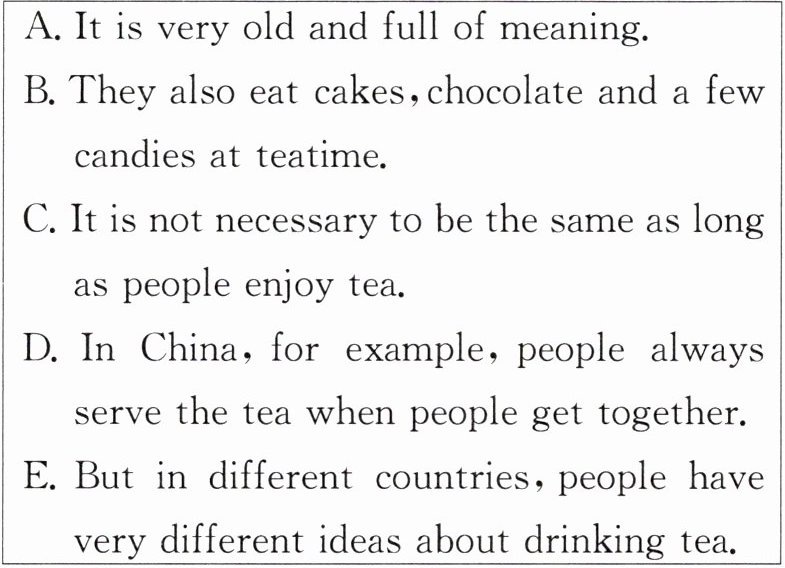
A. It is very old and full of meaning.
B. They also eat cakes, chocolate and a few candies at teatime.
C. It is not necessary to be the same as long as people enjoy t
D. In China, for example, people always serve the tea when people get together.
E. But in different countries, people have very different ideas about drinking tea.
All around the world, people drink tea.
24.
E
Here are some countries and their tea-drinking habits.25.
D
The Chinese drink it at any time of the day at home or in teahouses. They like to drink plain tea清茶 best.Tea is very important in Japan. The Japanese have a special way of serving tea called the "tea ceremony茶道". 26.
A
People do everything in a special way in the ceremony仪式. There is even a special room for it in Japanese homes.Another tea drinking country is England, and the late afternoon is people's "teatime". Almost everyone has a cup of tea then. The British usually make tea in a teapot and drink it with milk and sugar. 27.
B
This is the so called "Afternoon Tea" in Britain.In the United States people drink tea mostly for breakfast or after meals. Americans usually use tea bags to make their tea. It is fast and easy to use tea bags to make tea. In summer, many Americans drink "iced tea".
A. It is very old and full of meaning.
B. They also eat cakes, chocolate and a few candies at teatime.
C. It is not necessary to be the same as long as people enjoy t
D. In China, for example, people always serve the tea when people get together.
E. But in different countries, people have very different ideas about drinking tea.
答案
24.E 25.D 26.A 27.B
解析
【分析】
这是一篇介绍全球不同国家饮茶习俗的说明文类阅读还原题,解题时首先通读全文和所有备选选项,明确文章核心主线:先总述全球人都饮茶,再分别介绍中国、日本、英国、美国的特色饮茶习惯。逐空梳理逻辑:
1. 第24空:前文点明“全世界的人都喝茶”,后文引出“这里有不同国家的饮茶习惯”,需要填入承上启下、引出“不同国家饮茶观念有差异”的过渡句。
2. 第25空:空后紧接着开始介绍中国人的饮茶场景,因此空处需要填入引出中国饮茶相关内容的总起句。
3. 第26空:前文提到日本特色的“茶道”,后文描述茶道仪式的流程十分讲究,空处需要填入对茶道特点的描述,衔接前后文。
4. 第27空:前文介绍英国下午茶时段人们会喝茶,后文点明这就是英国的“下午茶”,空处需要补充英国下午茶的配套习俗,让逻辑完整。
【解析】
24. 前文总述全球人都饮茶,后文开启不同国家饮茶习惯的介绍,E选项“但是在不同的国家,人们对喝茶有截然不同的看法”完美承上启下,符合语境。
25. 空后全部是关于中国饮茶的细节描述,D选项“比如在中国,人们聚会的时候总会上茶”是引出中国饮茶例子的总起句,和后文内容完全对应。
26. 空前提到日本的特殊饮茶形式“茶道”,空后描述茶道仪式的流程十分讲究,A选项中的it指代前文的茶道,“它非常古老且富有意义”符合茶道的属性,衔接前后内容。
27. 空前提到英国人在下午茶时段会喝加奶加糖的茶,B选项“他们在下午茶时段还会吃蛋糕、巧克力和一些糖果”补充了英国下午茶的其他习俗,完整解释了英国下午茶的内容,和后文“这就是所谓的英国下午茶”完美呼应。
【答案】
24.E 25.D 26.A 27.B
【知识点】
阅读还原,上下文逻辑衔接,饮茶文化常识
【点评】
本题围绕不同国家的饮茶文化展开,话题贴近生活,各空的逻辑提示非常明确,重点考察学生抓取上下文指代关系、话题对应关系的能力,属于阅读还原题型里的基础难度题,适合学生巩固说明文类阅读补全的解题思路。
【难度系数】
0.8
这是一篇介绍全球不同国家饮茶习俗的说明文类阅读还原题,解题时首先通读全文和所有备选选项,明确文章核心主线:先总述全球人都饮茶,再分别介绍中国、日本、英国、美国的特色饮茶习惯。逐空梳理逻辑:
1. 第24空:前文点明“全世界的人都喝茶”,后文引出“这里有不同国家的饮茶习惯”,需要填入承上启下、引出“不同国家饮茶观念有差异”的过渡句。
2. 第25空:空后紧接着开始介绍中国人的饮茶场景,因此空处需要填入引出中国饮茶相关内容的总起句。
3. 第26空:前文提到日本特色的“茶道”,后文描述茶道仪式的流程十分讲究,空处需要填入对茶道特点的描述,衔接前后文。
4. 第27空:前文介绍英国下午茶时段人们会喝茶,后文点明这就是英国的“下午茶”,空处需要补充英国下午茶的配套习俗,让逻辑完整。
【解析】
24. 前文总述全球人都饮茶,后文开启不同国家饮茶习惯的介绍,E选项“但是在不同的国家,人们对喝茶有截然不同的看法”完美承上启下,符合语境。
25. 空后全部是关于中国饮茶的细节描述,D选项“比如在中国,人们聚会的时候总会上茶”是引出中国饮茶例子的总起句,和后文内容完全对应。
26. 空前提到日本的特殊饮茶形式“茶道”,空后描述茶道仪式的流程十分讲究,A选项中的it指代前文的茶道,“它非常古老且富有意义”符合茶道的属性,衔接前后内容。
27. 空前提到英国人在下午茶时段会喝加奶加糖的茶,B选项“他们在下午茶时段还会吃蛋糕、巧克力和一些糖果”补充了英国下午茶的其他习俗,完整解释了英国下午茶的内容,和后文“这就是所谓的英国下午茶”完美呼应。
【答案】
24.E 25.D 26.A 27.B
【知识点】
阅读还原,上下文逻辑衔接,饮茶文化常识
【点评】
本题围绕不同国家的饮茶文化展开,话题贴近生活,各空的逻辑提示非常明确,重点考察学生抓取上下文指代关系、话题对应关系的能力,属于阅读还原题型里的基础难度题,适合学生巩固说明文类阅读补全的解题思路。
【难度系数】
0.8
