

 登录
登录
探究点1 traffic 的用法
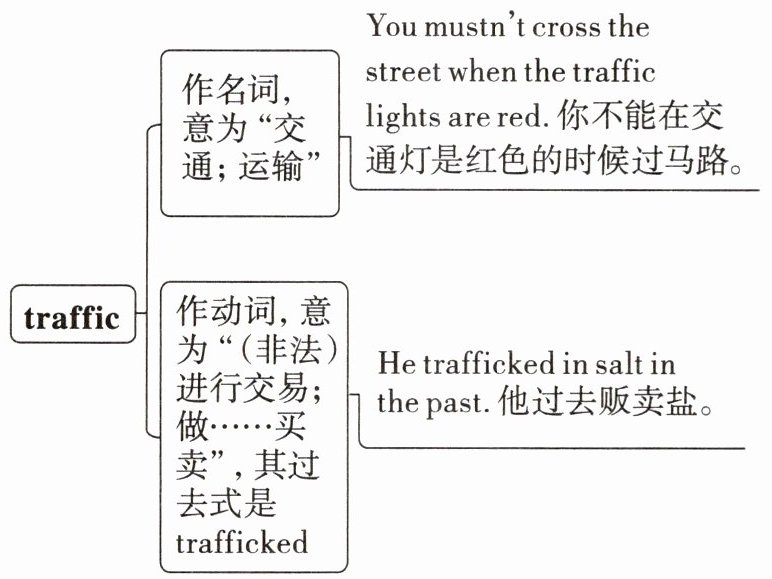
情境应用
1. reaches a peak(高峰) between 8 o'clock and 9 o'clock in the morning.(交通)
2. These fishermen said they had never the man.(与……非法交易)
探究点2 video 的用法
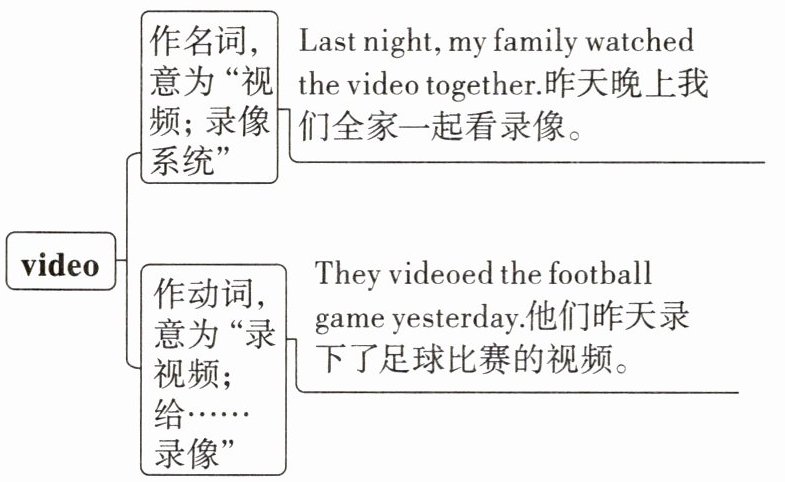
情境应用
1. —What about learning English by watching ? (video)
—That’s a great idea.
2. My brother the show me last week.(为……录像)
情境应用
1. reaches a peak(高峰) between 8 o'clock and 9 o'clock in the morning.(交通)
2. These fishermen said they had never the man.(与……非法交易)
探究点2 video 的用法
情境应用
1. —What about learning English by watching ? (video)
—That’s a great idea.
2. My brother the show me last week.(为……录像)
答案
探究点1 情境应用:1. Traffic 2. trafficked with
探究点2 情境应用:1. videos 2. videoed; for
探究点2 情境应用:1. videos 2. videoed; for
解析
探究点1 traffic用法:1. 此处要表达含义“交通”,traffic作名词表示“交通”时是不可数名词,放在句首首字母需要大写。2. 句子时态为过去完成时,结构是“had + 动词过去分词”,对应“与……非法交易”的表达是traffic with,traffic的过去分词为trafficked。
探究点2 video用法:1. 此处表泛指各类视频,video是可数名词,要使用复数形式videos,构成常用搭配watch videos“看视频”。2. 根据时间状语last week可知句子用一般过去时,“为某人录某物”的表达是video sth for sb,video作动词的过去式为videoed。
探究点2 video用法:1. 此处表泛指各类视频,video是可数名词,要使用复数形式videos,构成常用搭配watch videos“看视频”。2. 根据时间状语last week可知句子用一般过去时,“为某人录某物”的表达是video sth for sb,video作动词的过去式为videoed。
() 1. Hurry up, Nancy! The meeting in ten minutes.
A.start
B.starts
C.starting
D.will start
A.start
B.starts
C.starting
D.will start
答案
D
解析
句中时间状语"in ten minutes"意为“十分钟后”,是一般将来时的标志,谓语需使用will+动词原形的结构。选项A为动词原形、B为一般现在时第三人称单数形式、C为现在分词不能单独作谓语,均不符合时态要求,只有D选项will start符合一般将来时规则。
() 2. —Who is the fastest runner in your class?
—I’m not sure. It is David.
A.probably
B.really
C.wisely
D.luckily
—I’m not sure. It is David.
A.probably
B.really
C.wisely
D.luckily
答案
A
解析
根据前句“I'm not sure(我不确定)”可知此处是表达推测。辨析选项词义:A.probably意为“大概、可能”,用于表推测;B.really意为“真正地”;C.wisely意为“明智地”;D.luckily意为“幸运地”。只有A符合不确定的推测语境。
() 3. Doctors often say, “ vegetables and meat can help you keep fit.”
A.Fewer;less
B.More;less
C.Fewer;fewer
D.Less;less
A.Fewer;less
B.More;less
C.Fewer;fewer
D.Less;less
答案
B
解析
1. 明确修饰规则:fewer修饰可数名词复数,less修饰不可数名词,more可修饰可数/不可数名词表示“更多的”。2. 句中vegetables是可数名词复数,meat是不可数名词。3. 结合健康常识,保持健康需要多吃蔬菜、少吃肉,因此第一空填More,第二空填less。
() 4. —Hey, what's up?
—
A.Not much, just homework.
B.That's all right.
C.It's sunny.
D.Sure. Here you are.
—
A.Not much, just homework.
B.That's all right.
C.It's sunny.
D.Sure. Here you are.
答案
A
解析
"What's up?"是日常交际用语,用于询问对方近况或正在忙什么。逐一辨析选项:A项意为“没什么,只是在写作业”,符合该问句的回应逻辑;B项用于回应道谢或道歉,不符合语境;C项用于回答天气类提问,不符合语境;D项是递物品给对方时的回应,不符合语境。由此确定正确选项。
() 5. —Let’s go hiking in the mountains this weekend!
— I can’t wait to enjoy the fresh air.
A.I don’t think so!
B.That’s true!
C.You’re welcome!
D.That sounds wonderful!
— I can’t wait to enjoy the fresh air.
A.I don’t think so!
B.That’s true!
C.You’re welcome!
D.That sounds wonderful!
答案
D
解析
该题考查情景交际,上句是提出周末去山间徒步的建议,根据后句“我迫不及待要享受新鲜空气”可知答话人赞同该提议。A表不认同,B用于肯定既定事实,C用于回应他人道谢,均不符合语境;D选项“那听起来很棒”符合回应提议的语境。
