

 登录
登录
C
In Bulgaria(保加利亚)and some parts of Greece(希腊),people communicate in a special way. They shake their heads to say “yes” and nod to say “no”. This is completely opposite to what most cultures practice.
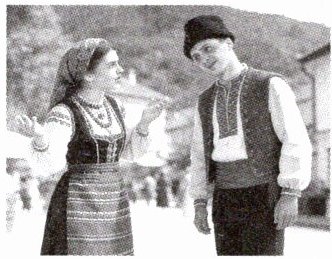
Tom is an English student visiting Bulgaria. On his first day,he asked his host,“Is the dinner ready?” The host nodded. Thinking this meant “yes”,Tom went to wash his hands. When he returned,he found everyone still cooking. The host had actually said “no” with that nod! They all laughed when they realized the misunderstanding. Later,Tom experienced another confusing situation. He asked a shopkeeper,“Do you have cold drinks?” The shopkeeper shook his head. Tom was about to leave when the shopkeeper brought out the drinks. Actually,the head shake meant “yes”!
These experiences taught Tom an important lesson about body language differences. In India,for example,people often shake their heads from side to side while listening,which doesn’t necessarily mean “no”. In Japan,bowing has different meanings depending on how deep you bow. People usually thumb up when they want to take a taxi in the USA.
When we travel abroad,we should remember that even simple gestures(手势)can have different meanings. Observing(观察)how local people communicate and asking questions when confused can help avoid misunderstandings. Learning about these differences makes our travels more enjoyable and helps us make friends around the world.
(
A. People kiss when they meet.
B. Hand shakes are very long.
C. Head shakes mean “yes”.
D. Eye contact is avoided.
(
A. He didn’t hear the answer clearly.
B. He interpreted the nod differently.
C. The host spoke another language.
D. The host changed his mind later.
(
A. Americans will thumb up when taking a taxi.
B. Indians may head shake while listening.
C. Japanese bow in various ways.
D. All of the above.
(
A. Tom’s funny travel stories.
B. The importance of learning languages.
C. Cultural differences in communication.
D. How to make friends in Bulgaria.
In Bulgaria(保加利亚)and some parts of Greece(希腊),people communicate in a special way. They shake their heads to say “yes” and nod to say “no”. This is completely opposite to what most cultures practice.
Tom is an English student visiting Bulgaria. On his first day,he asked his host,“Is the dinner ready?” The host nodded. Thinking this meant “yes”,Tom went to wash his hands. When he returned,he found everyone still cooking. The host had actually said “no” with that nod! They all laughed when they realized the misunderstanding. Later,Tom experienced another confusing situation. He asked a shopkeeper,“Do you have cold drinks?” The shopkeeper shook his head. Tom was about to leave when the shopkeeper brought out the drinks. Actually,the head shake meant “yes”!
These experiences taught Tom an important lesson about body language differences. In India,for example,people often shake their heads from side to side while listening,which doesn’t necessarily mean “no”. In Japan,bowing has different meanings depending on how deep you bow. People usually thumb up when they want to take a taxi in the USA.
When we travel abroad,we should remember that even simple gestures(手势)can have different meanings. Observing(观察)how local people communicate and asking questions when confused can help avoid misunderstandings. Learning about these differences makes our travels more enjoyable and helps us make friends around the world.
(
C
)1. What is special about body language in Bulgaria?A. People kiss when they meet.
B. Hand shakes are very long.
C. Head shakes mean “yes”.
D. Eye contact is avoided.
(
B
)2. Why did Tom misunderstand his host?A. He didn’t hear the answer clearly.
B. He interpreted the nod differently.
C. The host spoke another language.
D. The host changed his mind later.
(
D
)3. How do other cultures use body language?A. Americans will thumb up when taking a taxi.
B. Indians may head shake while listening.
C. Japanese bow in various ways.
D. All of the above.
(
C
)4. What is the main idea of this passage?A. Tom’s funny travel stories.
B. The importance of learning languages.
C. Cultural differences in communication.
D. How to make friends in Bulgaria.
答案
1 - 4 CBDC
解析
【解析】
1. 细节理解题。根据第一段“In Bulgaria(保加利亚)and some parts of Greece(希腊),people communicate in a special way. They shake their heads to say ‘yes’ and nod to say ‘no’.”可知,保加利亚的肢体语言特殊之处在于摇头表示“是”,故选C。
2. 细节理解题。根据第二段内容,Tom作为英国人习惯点头表示“是”,但保加利亚点头表示“否”,他错误解读了主人的点头动作,导致误解,故选B。
3. 细节理解题。根据第三段“In India,for example,people often shake their heads from side to side while listening...In Japan,bowing has different meanings depending on how deep you bow. People usually thumb up when they want to take a taxi in the USA.”可知,三个选项描述均正确,故选D。
4. 主旨大意题。文章通过Tom在保加利亚的经历,介绍了不同国家肢体语言的文化差异,强调了解这些差异的重要性,主旨是交流中的文化差异,故选C。
【答案】
1-4 CBDC
【知识点】
跨文化交际知识,细节信息提取,主旨大意归纳
【点评】
本文以Tom在保加利亚的文化误解经历为切入点,介绍了不同国家肢体语言的文化差异,既考查了学生对阅读理解细节的查找能力,也引导学生关注跨文化交际中的差异,避免交流误解。
【难度系数】
0.6
1. 细节理解题。根据第一段“In Bulgaria(保加利亚)and some parts of Greece(希腊),people communicate in a special way. They shake their heads to say ‘yes’ and nod to say ‘no’.”可知,保加利亚的肢体语言特殊之处在于摇头表示“是”,故选C。
2. 细节理解题。根据第二段内容,Tom作为英国人习惯点头表示“是”,但保加利亚点头表示“否”,他错误解读了主人的点头动作,导致误解,故选B。
3. 细节理解题。根据第三段“In India,for example,people often shake their heads from side to side while listening...In Japan,bowing has different meanings depending on how deep you bow. People usually thumb up when they want to take a taxi in the USA.”可知,三个选项描述均正确,故选D。
4. 主旨大意题。文章通过Tom在保加利亚的经历,介绍了不同国家肢体语言的文化差异,强调了解这些差异的重要性,主旨是交流中的文化差异,故选C。
【答案】
1-4 CBDC
【知识点】
跨文化交际知识,细节信息提取,主旨大意归纳
【点评】
本文以Tom在保加利亚的文化误解经历为切入点,介绍了不同国家肢体语言的文化差异,既考查了学生对阅读理解细节的查找能力,也引导学生关注跨文化交际中的差异,避免交流误解。
【难度系数】
0.6
