

 登录
登录
D
Once upon a time, there lived a man. He
was blind, but he always took a lamp(灯) with
him whenever he went out at night.
One night, when he came home after
having dinner outside, he met a group of
young men. They saw a blind man taking a
lamp(灯), so they made fun of him. One of
them asked, "Hey, man! You are blind and
can't see anything! Why do you take the
lamp with you then?"
The blind man said, "Yes, I am blind
and I can't see anything, but the lamp is for
the people like you who can see. They can
see me coming and won't knock into me.
That is why I take a lamp." The young men
felt ashamed and said sorry to the man.
The story tells us: we should think
before judging others. Always be polite to
others and learn to see things from others'
point of view.
(
"blind" mean?
A. can't walk B. can't hear
C. can't speak D. can't see
(
night.
A. meet friends
B. eat dinner
C. see a movce
D. buy clothes
(
men why he took a lamp, the
young men
A. made fun of him
B. joined him
C. said sorry to him
D. helped him go home
(
that
A. we shouldn't judge anyone
B. we should help blind people all
the time
C. we should learn to see things
from others' point of view
D. we should let the blind people
walk first
Once upon a time, there lived a man. He
was blind, but he always took a lamp(灯) with
him whenever he went out at night.
One night, when he came home after
having dinner outside, he met a group of
young men. They saw a blind man taking a
lamp(灯), so they made fun of him. One of
them asked, "Hey, man! You are blind and
can't see anything! Why do you take the
lamp with you then?"
The blind man said, "Yes, I am blind
and I can't see anything, but the lamp is for
the people like you who can see. They can
see me coming and won't knock into me.
That is why I take a lamp." The young men
felt ashamed and said sorry to the man.
The story tells us: we should think
before judging others. Always be polite to
others and learn to see things from others'
point of view.
(
D
)13. What does the underlined word"blind" mean?
A. can't walk B. can't hear
C. can't speak D. can't see
(
B
)14. The man went out to eat dinner
at thatnight.
A. meet friends
B. eat dinner
C. see a movce
D. buy clothes
(
C
)15. After the man told the youngmen why he took a lamp, the
young men
said sorry to him
.A. made fun of him
B. joined him
C. said sorry to him
D. helped him go home
(
C
)16. From the passage we can knowthat
we should learn to see things from others' point of view
.A. we shouldn't judge anyone
B. we should help blind people all
the time
C. we should learn to see things
from others' point of view
D. we should let the blind people
walk first
答案
13—16:DBCC
解析
【分析】
这是一篇记叙文类阅读理解题,解题时首先可以先浏览题干明确各题考点:第13题是词义猜测题,需要结合上下文语境推导划线词含义;13、14、15题属于细节题,只需要带着题干关键词回到原文定位对应语句,就能直接匹配答案;第16题是主旨理解题,定位文章末尾点明寓意的段落即可选出正确选项,同时排除无中生有、表述绝对的干扰项即可顺利完成答题。
【解析】
13. 词义猜测题:根据原文第二段年轻人的问话"Hey, man! You are blind and can't see anything!",直接点明blind对应的特征是看不见东西,A选项不能走路、B选项听不见、C选项不会说话均不符合语境,因此选D。
14. 细节理解题:根据原文第二段第一句"One night, when he came home after having dinner outside, he met a group of young men.",可知当晚这个盲人出门是去外面吃晚饭的,文中没有提及他见朋友、看电影、买衣服的相关内容,因此选B。
15. 细节理解题:根据原文第三段最后一句"The young men felt ashamed and said sorry to the man.",可知听完盲人的解释后,年轻人感到十分羞愧,主动向盲人道歉,取笑盲人是他们之前的行为,其余选项内容文中均未提及,因此选C。
16. 主旨理解题:根据文章最后一段点明寓意的内容"The story tells us: we should think before judging others. Always be polite to others and learn to see things from others' point of view.",可知故事核心道理是要学会站在他人的角度看待问题。A选项表述过于绝对,文中要求评判前先思考而非完全不能评判他人,B、D的内容完全没有在文中出现,因此选C。
【答案】
13.D 14.B 15.C 16.C
【知识点】
细节查找,词义猜测,主旨归纳
【点评】
本篇是低难度的哲理小故事类阅读,绝大多数题目都可以在原文直接找到明确的对应线索,主要考察学生快速定位原文信息的能力,做题时只要细心对照原文内容,避开表述绝对的干扰项就能轻松选出正确答案,同时故事本身也传递了换位思考的正向道理。
【难度系数】
0.9
这是一篇记叙文类阅读理解题,解题时首先可以先浏览题干明确各题考点:第13题是词义猜测题,需要结合上下文语境推导划线词含义;13、14、15题属于细节题,只需要带着题干关键词回到原文定位对应语句,就能直接匹配答案;第16题是主旨理解题,定位文章末尾点明寓意的段落即可选出正确选项,同时排除无中生有、表述绝对的干扰项即可顺利完成答题。
【解析】
13. 词义猜测题:根据原文第二段年轻人的问话"Hey, man! You are blind and can't see anything!",直接点明blind对应的特征是看不见东西,A选项不能走路、B选项听不见、C选项不会说话均不符合语境,因此选D。
14. 细节理解题:根据原文第二段第一句"One night, when he came home after having dinner outside, he met a group of young men.",可知当晚这个盲人出门是去外面吃晚饭的,文中没有提及他见朋友、看电影、买衣服的相关内容,因此选B。
15. 细节理解题:根据原文第三段最后一句"The young men felt ashamed and said sorry to the man.",可知听完盲人的解释后,年轻人感到十分羞愧,主动向盲人道歉,取笑盲人是他们之前的行为,其余选项内容文中均未提及,因此选C。
16. 主旨理解题:根据文章最后一段点明寓意的内容"The story tells us: we should think before judging others. Always be polite to others and learn to see things from others' point of view.",可知故事核心道理是要学会站在他人的角度看待问题。A选项表述过于绝对,文中要求评判前先思考而非完全不能评判他人,B、D的内容完全没有在文中出现,因此选C。
【答案】
13.D 14.B 15.C 16.C
【知识点】
细节查找,词义猜测,主旨归纳
【点评】
本篇是低难度的哲理小故事类阅读,绝大多数题目都可以在原文直接找到明确的对应线索,主要考察学生快速定位原文信息的能力,做题时只要细心对照原文内容,避开表述绝对的干扰项就能轻松选出正确答案,同时故事本身也传递了换位思考的正向道理。
【难度系数】
0.9
赠人玫瑰之手,亦染余香之韵;点亮希望之灯,亦照前行之路;伸出援手之时,亦获温暖之抱。助人亦是助己,请你按照下列思维导图的提示,用英语写一篇短文,介绍你帮助别人的一次经历。
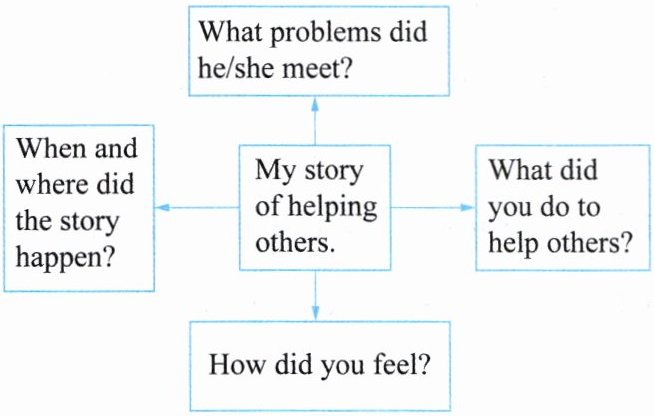
要求:词数70左右,可适当发挥,表达通顺,行文流畅,书写规范。
【写作指导】
一、审题
体裁:
人称:
二、思路点拨
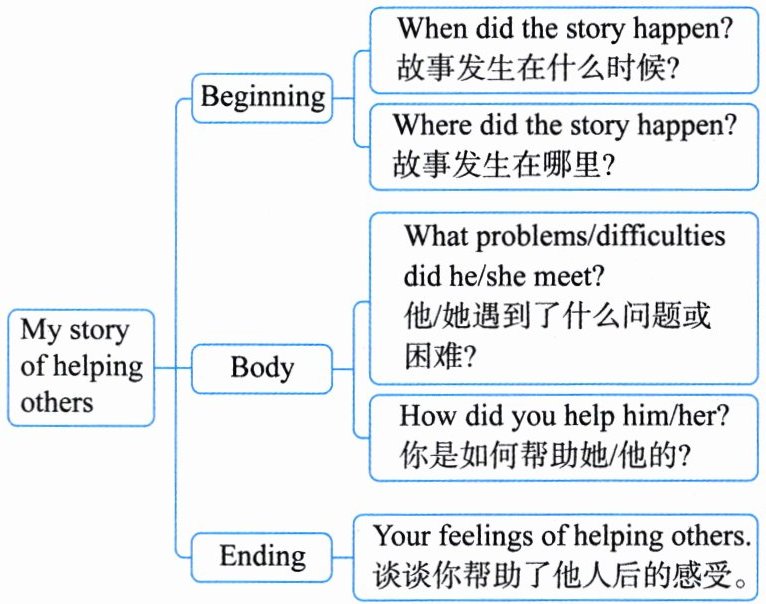
1.开篇点题:故事发生的时间和地点。
2.过程描述:被你帮助的人遇到了什么困难
以及你是如何帮助别人的。
3.归纳总结:帮助他人的感受。
三、句型提示
1. He/She missed the exam/ hurt the leg/
lost the watch...
2. He/ She felt sad/worried/painful...
3. I sent him/her to hospital./ I helped him/
her with the schoolwork./I helped him/
her to look for...
4. Helping others is helping ourselves at the
same time.
5. It's an unforgettable experience for me.
6. I felt happy when I helped others.
四、写作练习
要求:词数70左右,可适当发挥,表达通顺,行文流畅,书写规范。
【写作指导】
一、审题
体裁:
记叙文
时态:以一般过去时为主
人称:
以第一人称为主
二、思路点拨
1.开篇点题:故事发生的时间和地点。
2.过程描述:被你帮助的人遇到了什么困难
以及你是如何帮助别人的。
3.归纳总结:帮助他人的感受。
三、句型提示
1. He/She missed the exam/ hurt the leg/
lost the watch...
2. He/ She felt sad/worried/painful...
3. I sent him/her to hospital./ I helped him/
her with the schoolwork./I helped him/
her to look for...
4. Helping others is helping ourselves at the
same time.
5. It's an unforgettable experience for me.
6. I felt happy when I helped others.
四、写作练习
My story of helping others
One day, my good friend Tom fell
down and hurt his knee.
He cried and couldn't walk. I saw him
and quickly ran to help. I took him to the
teacher and put some ice on his knee. Tom
felt better soon. Helping others is helping
ourselves. It's an unforgettable experience
for me.
I felt very happy when I helped Tom.
From that day, I always try to help people
in need.
One day, my good friend Tom fell
down and hurt his knee.
He cried and couldn't walk. I saw him
and quickly ran to help. I took him to the
teacher and put some ice on his knee. Tom
felt better soon. Helping others is helping
ourselves. It's an unforgettable experience
for me.
I felt very happy when I helped Tom.
From that day, I always try to help people
in need.
答案
一、记叙文 以一般过去时为主 以第一人
称为主
【写作练习】
My story of helping others
One day, my good friend Tom fell
down and hurt his knee.
He cried and couldn't walk. I saw him
and quickly ran to help. I took him to the
teacher and put some ice on his knee. Tom
felt better soon. Helping others is helping
ourselves. It's an unforgettable experience
for me.
I felt very happy when I helped Tom.
From that day, I always try to help people
in need.
称为主
【写作练习】
My story of helping others
One day, my good friend Tom fell
down and hurt his knee.
He cried and couldn't walk. I saw him
and quickly ran to help. I took him to the
teacher and put some ice on his knee. Tom
felt better soon. Helping others is helping
ourselves. It's an unforgettable experience
for me.
I felt very happy when I helped Tom.
From that day, I always try to help people
in need.
解析
【分析】
首先拿到这道题先按要求完成审题步骤:首先明确写作主题是分享一次自己帮助他人的经历,属于叙事类文章,所以体裁确定为记叙文;因为要讲已经发生的过往经历,所以核心时态用一般过去时;文章以讲述自己的经历为核心,所以人称以第一人称为主。接下来按照给出的三步写作思路搭建内容框架:第一步开篇直接交代事件发生的时间、相关人物,快速引入故事;第二步先点明对方遇到的具体困难、当时的状态,再清晰写出你提供帮助的具体行为,补充事件的结果;最后收尾结合提示的句型抒发自己的感受,点出助人亦是助己的主题,调整语句让表达通顺,控制总词数在70左右即可完成写作。
【解析】
1. 完成审题填空:
体裁:记叙文 时态:以一般过去时为主 人称:以第一人称为主
2. 搭建完整短文:
① 开篇点题:用"One day, my good friend Tom fell down and hurt his knee."直接交代事件发生的场景和起因。
② 过程描述:先说明Tom的困境"He cried and couldn't walk.",再依次写出自己的帮助行为"I saw him and quickly ran to help. I took him to the teacher and put some ice on his knee.",补充事件结果"Tom felt better soon.",叙事逻辑清晰完整。
③ 归纳总结:结合提示句型点明主旨,写出自己的真实感受,升华助人助己的主题,行文流畅符合词数要求。
【答案】
一、记叙文 以一般过去时为主 以第一人称为主
【写作练习】
My story of helping others
One day, my good friend Tom fell down and hurt his knee.
He cried and couldn't walk. I saw him and quickly ran to help. I took him to the teacher and put some ice on his knee. Tom felt better soon. Helping others is helping ourselves. It's an unforgettable experience for me.
I felt very happy when I helped Tom. From that day, I always try to help people in need.
【知识点】
英语记叙文写作,一般过去时应用,情景书面表达
【点评】
本题属于基础叙事类英语写作题,给出了明确的审题指引、写作框架和参考句型,大幅降低了写作门槛,既考察了学生对过去时态叙事表达的掌握程度,也渗透了助人助己的正向价值引导,学生只要按照给定的三步结构填充符合逻辑的内容,就能写出达标短文。
【难度系数】
0.8
首先拿到这道题先按要求完成审题步骤:首先明确写作主题是分享一次自己帮助他人的经历,属于叙事类文章,所以体裁确定为记叙文;因为要讲已经发生的过往经历,所以核心时态用一般过去时;文章以讲述自己的经历为核心,所以人称以第一人称为主。接下来按照给出的三步写作思路搭建内容框架:第一步开篇直接交代事件发生的时间、相关人物,快速引入故事;第二步先点明对方遇到的具体困难、当时的状态,再清晰写出你提供帮助的具体行为,补充事件的结果;最后收尾结合提示的句型抒发自己的感受,点出助人亦是助己的主题,调整语句让表达通顺,控制总词数在70左右即可完成写作。
【解析】
1. 完成审题填空:
体裁:记叙文 时态:以一般过去时为主 人称:以第一人称为主
2. 搭建完整短文:
① 开篇点题:用"One day, my good friend Tom fell down and hurt his knee."直接交代事件发生的场景和起因。
② 过程描述:先说明Tom的困境"He cried and couldn't walk.",再依次写出自己的帮助行为"I saw him and quickly ran to help. I took him to the teacher and put some ice on his knee.",补充事件结果"Tom felt better soon.",叙事逻辑清晰完整。
③ 归纳总结:结合提示句型点明主旨,写出自己的真实感受,升华助人助己的主题,行文流畅符合词数要求。
【答案】
一、记叙文 以一般过去时为主 以第一人称为主
【写作练习】
My story of helping others
One day, my good friend Tom fell down and hurt his knee.
He cried and couldn't walk. I saw him and quickly ran to help. I took him to the teacher and put some ice on his knee. Tom felt better soon. Helping others is helping ourselves. It's an unforgettable experience for me.
I felt very happy when I helped Tom. From that day, I always try to help people in need.
【知识点】
英语记叙文写作,一般过去时应用,情景书面表达
【点评】
本题属于基础叙事类英语写作题,给出了明确的审题指引、写作框架和参考句型,大幅降低了写作门槛,既考察了学生对过去时态叙事表达的掌握程度,也渗透了助人助己的正向价值引导,学生只要按照给定的三步结构填充符合逻辑的内容,就能写出达标短文。
【难度系数】
0.8
