

 登录
登录
A. 阅读短文,完成下列任务。
When traveling in foreign countries, knowing how to ask for directions politely is important. Different countries have different ways.
In the UK, people often use “excuse me” first to catch others’ attention. They usually speak slowly and use phrases like “Could you tell me the way to …?” British people like polite and indirect language.
In the US, people are more direct. They may say “Hi, do you know where… is? ”easily. Americans often give clear directions using “turn left” or “go straight”. They also like to use friendly words.
In Japan, people bow(鞠躬) slightly when asking for help. They start with “sumimasen(excuse me)”. Japanese people will try their best to help, even if they don’t speak English well.
Remember, being polite is key everywhere. A smile can also make your trip easier!
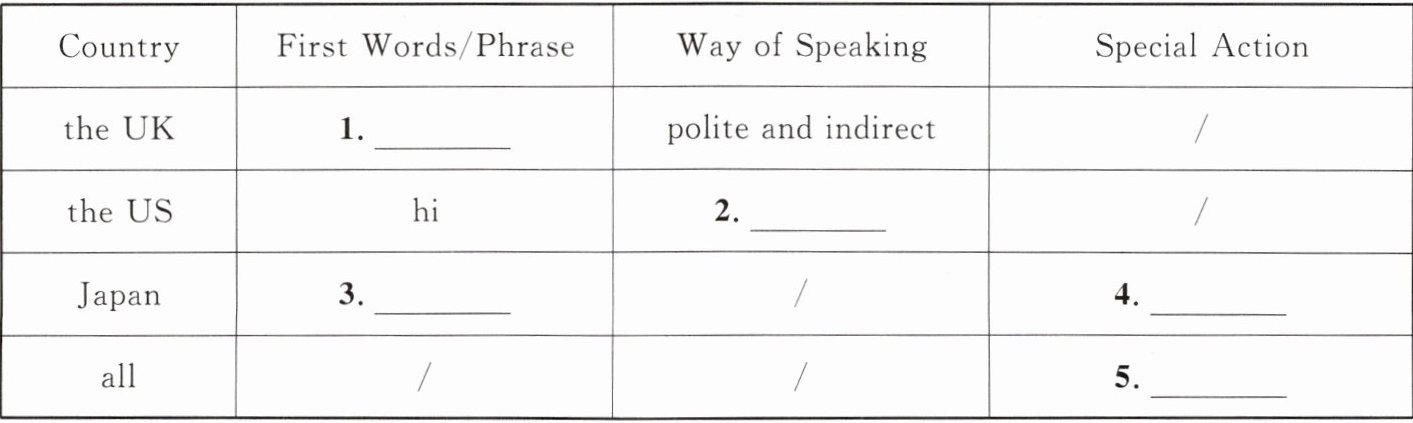
任务一:阅读短文,补全表格。
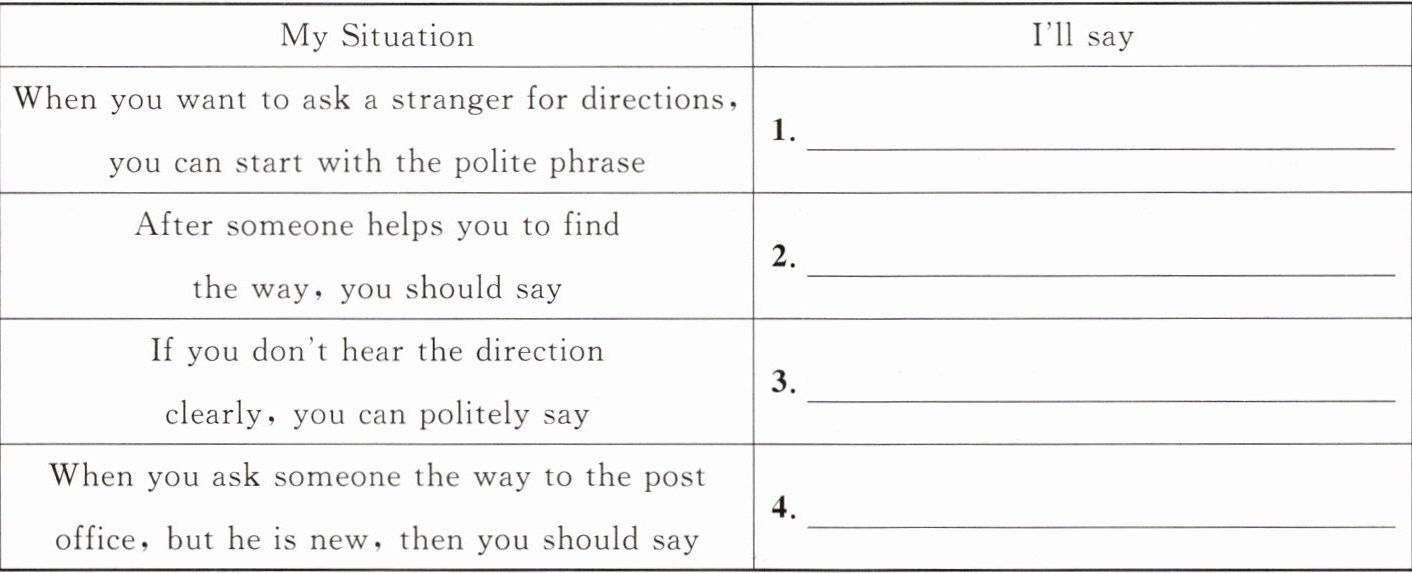
任务二:观察短文中不同国家问路的礼貌习惯,并结合自己的生活实际,补全表格。
When traveling in foreign countries, knowing how to ask for directions politely is important. Different countries have different ways.
In the UK, people often use “excuse me” first to catch others’ attention. They usually speak slowly and use phrases like “Could you tell me the way to …?” British people like polite and indirect language.
In the US, people are more direct. They may say “Hi, do you know where… is? ”easily. Americans often give clear directions using “turn left” or “go straight”. They also like to use friendly words.
In Japan, people bow(鞠躬) slightly when asking for help. They start with “sumimasen(excuse me)”. Japanese people will try their best to help, even if they don’t speak English well.
Remember, being polite is key everywhere. A smile can also make your trip easier!
任务一:阅读短文,补全表格。
任务二:观察短文中不同国家问路的礼貌习惯,并结合自己的生活实际,补全表格。
答案
任务一:
1. excuse me
2. more direct (and friendly)
3. sumimasen(excuse me)
4. bow slightly
5. be polite and have a smile
任务二(参考示例,合理即可):
1. Excuse me
2. Thank you very much for your help.
3. Pardon? / Could you please say that again more slowly?
4. Thank you all the same.
1. excuse me
2. more direct (and friendly)
3. sumimasen(excuse me)
4. bow slightly
5. be polite and have a smile
任务二(参考示例,合理即可):
1. Excuse me
2. Thank you very much for your help.
3. Pardon? / Could you please say that again more slowly?
4. Thank you all the same.
解析
任务一可直接从原文定位对应信息完成填空:
1. 从原文第二段"In the UK, people often use 'excuse me' first to catch others' attention"可提取英国问路的开头用语。
2. 从原文第三段"In the US, people are more direct... They also like to use friendly words"可提取美国的说话特点。
3. 从原文第四段"In Japan... They start with 'sumimasen(excuse me)'"可提取日本问路的开头用语。
4. 从原文第四段"In Japan, people bow slightly when asking for help"可提取日本问路的特殊动作。
5. 从原文最后一段"Remember, being polite is key everywhere. A smile can also make your trip easier"可提取所有地区通用的要点。
任务二结合日常问路的礼貌交际场景,写出符合八年级英语表达习惯的礼貌用语即可,答案合理即可。
1. 从原文第二段"In the UK, people often use 'excuse me' first to catch others' attention"可提取英国问路的开头用语。
2. 从原文第三段"In the US, people are more direct... They also like to use friendly words"可提取美国的说话特点。
3. 从原文第四段"In Japan... They start with 'sumimasen(excuse me)'"可提取日本问路的开头用语。
4. 从原文第四段"In Japan, people bow slightly when asking for help"可提取日本问路的特殊动作。
5. 从原文最后一段"Remember, being polite is key everywhere. A smile can also make your trip easier"可提取所有地区通用的要点。
任务二结合日常问路的礼貌交际场景,写出符合八年级英语表达习惯的礼貌用语即可,答案合理即可。
