

 登录
登录
C
体裁: 说明文 主题: 哲理感悟 难度: ★★★★★ 建议用时: 9 min 正确率: /4
①Life is full of unexpected moments—like a sudden test or a friend forgetting our plans. When these happen, we often face a choice: to react(反应) right away or to respond(回应) thoughtfully? These two words sound similar, but they are different ways to solve problems. Knowing the difference helps us make smarter choices.
②Reacting is what our brain does naturally—it's fast, and it comes from our first feelings. Here are the situations: if you get a bad test grade, you might throw the paper angrily or say “I'm terrible!” without thinking. If a friend breaks your favourite pencil, you might shout at him before he says sorry. That's reacting: something happens, strong feelings come, and you act without pausing(停顿). This often leads to regrets because you don't take time to cool down or see the whole picture.
③Responding, however, is more thoughtful. Before solving the problem, it helps to create more space. This space helps us to notice our feelings and understand the situation clearly. It may take a longer time, but we'll greatly avoid our regrets later. Four steps help us respond in a smart way: pause, process, plan, and act.
④This way of responding works for many kinds of problems. We might just leave our homework at home or have a fight with a friend. Instead of reacting right away, try the following four steps: first, stop and take three deep breaths. Second, say to ourselves how we're feeling and find out what the problem is. Third, think about what choices we have. Fourth, choose the best one and do it.
⑤A study from the University of California, Los Angeles shows that a simple thing works out well when we're processing—speaking out our feelings like saying “I'm worried” or “I'm angry.” It can greatly make us feel less worried, because we jump out of the situation to see the whole picture.
⑥At every crossroad, we may meet unexpected moments. The choice between reacting and responding greatly affects our life journey. By practicing the art of thoughtful response again and again, we change the unexpected into chances for improving ourselves.
1. According to the passage, which two adjectives best describe “reacting”?
A. Slow and natural.
B. Quick and natural.
C. Quick and thoughtful.
D. Slow and unexpected.
2. 新趋势·写作手法 How does the writer explain the idea of reacting in Paragraph 2?
>>> 写作手法题解题策略见 P121 重点精讲
A. By telling stories.
B. By giving examples.
C. By showing reasons.
D. By asking questions.
3. 新趋势·创新设问 Which shows the right order of the 4 responding steps from the passage? (You forgot to bring your book to school ... )
>>> 重点精讲
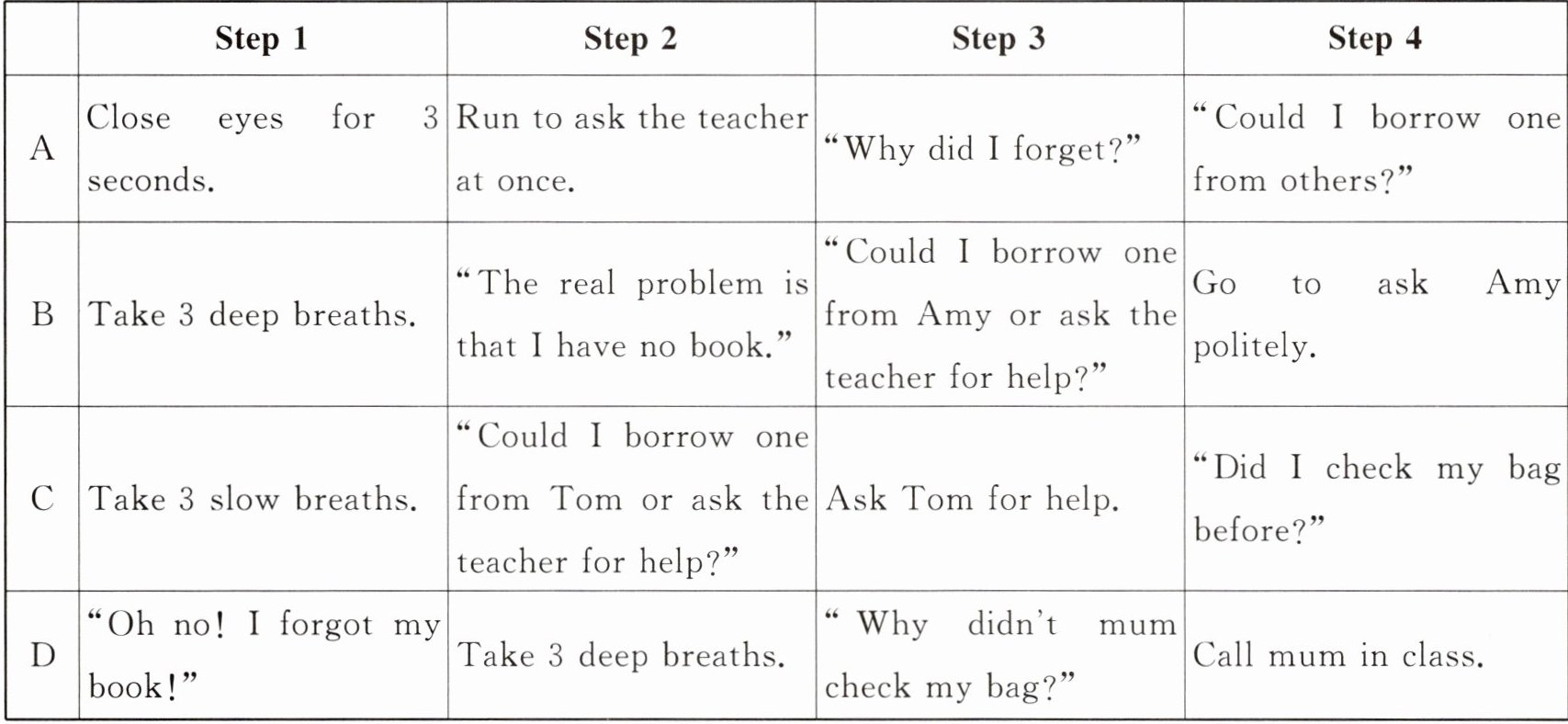
A. A
B. B
C. C
D. D
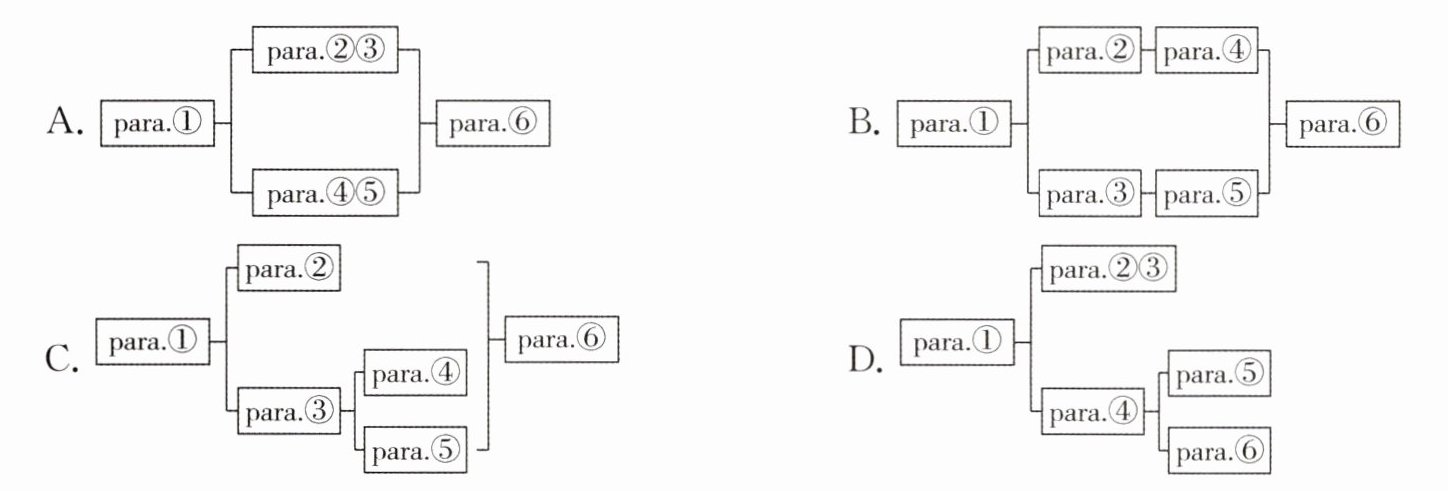
4. 新趋势·篇章结构 What is the best structure of the passage?
>>> 篇章结构题解题策略见 P105 重点精讲
体裁: 说明文 主题: 哲理感悟 难度: ★★★★★ 建议用时: 9 min 正确率: /4
①Life is full of unexpected moments—like a sudden test or a friend forgetting our plans. When these happen, we often face a choice: to react(反应) right away or to respond(回应) thoughtfully? These two words sound similar, but they are different ways to solve problems. Knowing the difference helps us make smarter choices.
②Reacting is what our brain does naturally—it's fast, and it comes from our first feelings. Here are the situations: if you get a bad test grade, you might throw the paper angrily or say “I'm terrible!” without thinking. If a friend breaks your favourite pencil, you might shout at him before he says sorry. That's reacting: something happens, strong feelings come, and you act without pausing(停顿). This often leads to regrets because you don't take time to cool down or see the whole picture.
③Responding, however, is more thoughtful. Before solving the problem, it helps to create more space. This space helps us to notice our feelings and understand the situation clearly. It may take a longer time, but we'll greatly avoid our regrets later. Four steps help us respond in a smart way: pause, process, plan, and act.
④This way of responding works for many kinds of problems. We might just leave our homework at home or have a fight with a friend. Instead of reacting right away, try the following four steps: first, stop and take three deep breaths. Second, say to ourselves how we're feeling and find out what the problem is. Third, think about what choices we have. Fourth, choose the best one and do it.
⑤A study from the University of California, Los Angeles shows that a simple thing works out well when we're processing—speaking out our feelings like saying “I'm worried” or “I'm angry.” It can greatly make us feel less worried, because we jump out of the situation to see the whole picture.
⑥At every crossroad, we may meet unexpected moments. The choice between reacting and responding greatly affects our life journey. By practicing the art of thoughtful response again and again, we change the unexpected into chances for improving ourselves.
1. According to the passage, which two adjectives best describe “reacting”?
A. Slow and natural.
B. Quick and natural.
C. Quick and thoughtful.
D. Slow and unexpected.
2. 新趋势·写作手法 How does the writer explain the idea of reacting in Paragraph 2?
>>> 写作手法题解题策略见 P121 重点精讲
A. By telling stories.
B. By giving examples.
C. By showing reasons.
D. By asking questions.
3. 新趋势·创新设问 Which shows the right order of the 4 responding steps from the passage? (You forgot to bring your book to school ... )
>>> 重点精讲
A. A
B. B
C. C
D. D
4. 新趋势·篇章结构 What is the best structure of the passage?
>>> 篇章结构题解题策略见 P105 重点精讲
答案
C
【语篇解读】本文是一篇说明文。文章主要介绍了“反应”和“回应”的区别以及“回应”的四个步骤。
1. B 细节理解题。根据第二段“Reacting is what our brain does naturally—it's fast, and it comes from our first feelings.”和“you act without pausing”可知“反应”自然和快速。故选 B。
2. B 写作手法题。根据第二段“Here are the situations: if you get a bad test grade ... If a friend breaks your favourite pencil, you might shout at him before he says sorry.”可知本段通过列举考试得低分和朋友弄坏铅笔的例子来解释“反应”的概念。故选 B。
3. B 推理判断题。根据第四段“first, stop and take three deep breaths ... Fourth, choose the best one and do it”可知首先,停下来深呼吸三次。第二,告诉自己我们的感受,找出问题所在。第三,想想我们有什么选择。第四,选择最好的一个去做。故选 B。
4. C 篇章结构题。结合文章内容可知,第一段引出“反应”和“回应”的区别,第二段介绍“反应”,第三至五段介绍“回应”及其步骤,第六段总结,文章结构是“引入—反应—回应—总结”。故选 C。
【语篇解读】本文是一篇说明文。文章主要介绍了“反应”和“回应”的区别以及“回应”的四个步骤。
1. B 细节理解题。根据第二段“Reacting is what our brain does naturally—it's fast, and it comes from our first feelings.”和“you act without pausing”可知“反应”自然和快速。故选 B。
2. B 写作手法题。根据第二段“Here are the situations: if you get a bad test grade ... If a friend breaks your favourite pencil, you might shout at him before he says sorry.”可知本段通过列举考试得低分和朋友弄坏铅笔的例子来解释“反应”的概念。故选 B。
3. B 推理判断题。根据第四段“first, stop and take three deep breaths ... Fourth, choose the best one and do it”可知首先,停下来深呼吸三次。第二,告诉自己我们的感受,找出问题所在。第三,想想我们有什么选择。第四,选择最好的一个去做。故选 B。
4. C 篇章结构题。结合文章内容可知,第一段引出“反应”和“回应”的区别,第二段介绍“反应”,第三至五段介绍“回应”及其步骤,第六段总结,文章结构是“引入—反应—回应—总结”。故选 C。
解析
【分析】
1. 第1题是细节理解题,需定位原文中描述“reacting”的语句,提取对应形容词;
2. 第2题是写作手法题,分析第二段解释“reacting”时的论证方式,判断是否通过举例说明;
3. 第3题是顺序排序题,需准确定位第四段中“responding”的四个步骤,按原文顺序匹配选项;
4. 第4题是篇章结构题,梳理各段落核心内容,划分文章的结构类型。
【解析】
1. 第1题:根据第二段“Reacting is what our brain does naturally—it's fast, and it comes from our first feelings.”可知,“reacting”具有自然、快速的特点,对应选项B;
2. 第2题:第二段通过列举“考试得低分生气扔试卷”“朋友弄坏铅笔就大喊”两个具体例子来解释“reacting”的含义,属于举例论证,对应选项B;
3. 第3题:第四段明确给出“responding”的四个步骤:①停下并深呼吸三次;②说出自身感受并找出问题;③思考可选择的方案;④选择最佳方案并执行,对应选项B;
4. 第4题:第一段引出“reacting与responding的区别”,第二段介绍“reacting”的特点,第三至五段介绍“responding”的方法及步骤,第六段总结全文,结构为“引入—反应—回应—总结”,对应选项C。
【答案】
1.B;2.B;3.B;4.C
【知识点】
细节理解题、写作手法题、篇章结构题
【点评】
本文是一篇关于哲理感悟的说明文,围绕“反应”与“回应”的差异展开,题目涵盖细节查找、写作手法分析、顺序排序、篇章结构划分四类常见英语阅读题型,要求学生精准定位原文信息,理清文章逻辑脉络,需具备一定的文本分析能力。
【难度系数】
0.3
1. 第1题是细节理解题,需定位原文中描述“reacting”的语句,提取对应形容词;
2. 第2题是写作手法题,分析第二段解释“reacting”时的论证方式,判断是否通过举例说明;
3. 第3题是顺序排序题,需准确定位第四段中“responding”的四个步骤,按原文顺序匹配选项;
4. 第4题是篇章结构题,梳理各段落核心内容,划分文章的结构类型。
【解析】
1. 第1题:根据第二段“Reacting is what our brain does naturally—it's fast, and it comes from our first feelings.”可知,“reacting”具有自然、快速的特点,对应选项B;
2. 第2题:第二段通过列举“考试得低分生气扔试卷”“朋友弄坏铅笔就大喊”两个具体例子来解释“reacting”的含义,属于举例论证,对应选项B;
3. 第3题:第四段明确给出“responding”的四个步骤:①停下并深呼吸三次;②说出自身感受并找出问题;③思考可选择的方案;④选择最佳方案并执行,对应选项B;
4. 第4题:第一段引出“reacting与responding的区别”,第二段介绍“reacting”的特点,第三至五段介绍“responding”的方法及步骤,第六段总结全文,结构为“引入—反应—回应—总结”,对应选项C。
【答案】
1.B;2.B;3.B;4.C
【知识点】
细节理解题、写作手法题、篇章结构题
【点评】
本文是一篇关于哲理感悟的说明文,围绕“反应”与“回应”的差异展开,题目涵盖细节查找、写作手法分析、顺序排序、篇章结构划分四类常见英语阅读题型,要求学生精准定位原文信息,理清文章逻辑脉络,需具备一定的文本分析能力。
【难度系数】
0.3
