

 登录
登录
D
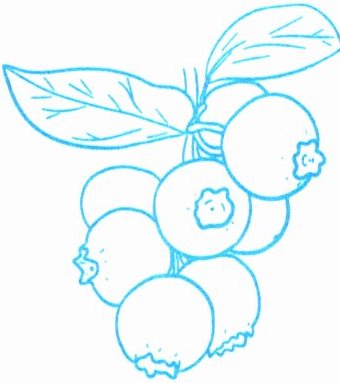
Do you like blueberries? If so, next time before eating them, take a closer look. Then ask yourself: Are blueberries really blue? Surprisingly, they mostly aren’t. Peel(剥) off the skin and you’ll see white flesh(果肉) inside. If you gently rub the outside of a blueberry, the blue colour disappears and the berry looks almost black. But the moment you pick one, it does look blue. What’s going on?
Well, there are two ways to create colours. The first is through pigments(色素). The most common pigment in plants is chlorophyll(叶绿素), a green pigment. Plant leaves appear green because chlorophyll doesn’t take in green light. It sends it out instead while taking in blue and red light. Plants prefer to take in blue light.
The second way to make colour is through structural colour(结构色). This happens when the structure of a surface(表面) makes some colours of light look different. Have you ever seen the rainbow colours of a CD? These colours show up because of the tiny spaces between the disk’s thin layers. These places only allow certain colours to reach our eyes.
Blueberries also create structural colour in their own way. The berries look black when they are ripe(成熟), but the plants build a thin layer of wax(蜡) on their outside. This layer is thin, but it gives the berries their blue look. The blue colour benefits the plants because birds are attracted to it. They eat the berries and spread seeds far and wide.
Now your bowl of blueberries suddenly look more interesting. The fruit is beautiful, but its beauty is only skin deep.
(
A. Red light. B. Blue light.
C. Green light. D. Chlorophyll.
(
A. A CD appears colourful. B. A tree leaf appears green.
C. A ripe blueberry appears black. D. A fallen leaf appears yellow.
(
A. It makes the flesh inside look white.
B. It shows up because of the pigments in the skin.
C. It attracts birds to help spread the seeds.
D. It makes blueberries look more beautiful.
(

Do you like blueberries? If so, next time before eating them, take a closer look. Then ask yourself: Are blueberries really blue? Surprisingly, they mostly aren’t. Peel(剥) off the skin and you’ll see white flesh(果肉) inside. If you gently rub the outside of a blueberry, the blue colour disappears and the berry looks almost black. But the moment you pick one, it does look blue. What’s going on?
Well, there are two ways to create colours. The first is through pigments(色素). The most common pigment in plants is chlorophyll(叶绿素), a green pigment. Plant leaves appear green because chlorophyll doesn’t take in green light. It sends it out instead while taking in blue and red light. Plants prefer to take in blue light.
The second way to make colour is through structural colour(结构色). This happens when the structure of a surface(表面) makes some colours of light look different. Have you ever seen the rainbow colours of a CD? These colours show up because of the tiny spaces between the disk’s thin layers. These places only allow certain colours to reach our eyes.
Blueberries also create structural colour in their own way. The berries look black when they are ripe(成熟), but the plants build a thin layer of wax(蜡) on their outside. This layer is thin, but it gives the berries their blue look. The blue colour benefits the plants because birds are attracted to it. They eat the berries and spread seeds far and wide.
Now your bowl of blueberries suddenly look more interesting. The fruit is beautiful, but its beauty is only skin deep.
(
C
)27. What does the underlined pronoun “it” in Paragraph 2 refer to?A. Red light. B. Blue light.
C. Green light. D. Chlorophyll.
(
A
)28. Which of the following is the same as how blueberries get blue?A. A CD appears colourful. B. A tree leaf appears green.
C. A ripe blueberry appears black. D. A fallen leaf appears yellow.
(
C
)29. What benefit does the blue colour of blueberries bring to the plant?A. It makes the flesh inside look white.
B. It shows up because of the pigments in the skin.
C. It attracts birds to help spread the seeds.
D. It makes blueberries look more beautiful.
(
A
)30. What’s the structure of the passage?答案
27. C 28. A 29. C 30. A
解析
【分析】
本题为科普类英语阅读理解,共4道选择题,解题思路如下:
1. 第27题(代词指代题):定位划线词所在句,结合上下文逻辑,查找前文被指代的名词;
2. 第28题(细节理解题):明确蓝莓蓝色的形成原理,对比选项找出原理相同的事物;
3. 第29题(细节理解题):定位第四段关于蓝莓蓝色好处的描述,匹配对应选项;
4. 第30题(文章结构题):梳理各段落作用,判断整体结构类型,匹配选项。
【解析】
27题:根据第二段“Plant leaves appear green because chlorophyll doesn’t take in green light. It sends it out instead while taking in blue and red light.”可知,叶绿素不吸收绿光,而是反射绿光,因此划线词“it”指代“green light”,选C。
28题:根据第三段,CD呈现彩色源于结构色;第四段提到蓝莓的蓝色来自结构色,二者原理相同,选A。
29题:根据第四段“The blue colour benefits the plants because birds are attracted to it. They eat the berries and spread seeds far and wide.”可知,蓝莓的蓝色能吸引鸟类帮助传播种子,选C。
30题:文章第一段总起提出蓝莓颜色的疑问,第二、三段分述植物显色的两种方式,第四段具体说明蓝莓的显色原理,第五段总结,整体为总-分-总结构,对应选项A,选A。
【答案】
27.C 28.A 29.C 30.A
【知识点】
英语阅读理解、细节理解、文章结构
【点评】
本文为科普类英语阅读,考查学生细节定位、代词理解及结构分析能力,需学生研读原文抓取关键信息,难度适中。
【难度系数】
0.6
本题为科普类英语阅读理解,共4道选择题,解题思路如下:
1. 第27题(代词指代题):定位划线词所在句,结合上下文逻辑,查找前文被指代的名词;
2. 第28题(细节理解题):明确蓝莓蓝色的形成原理,对比选项找出原理相同的事物;
3. 第29题(细节理解题):定位第四段关于蓝莓蓝色好处的描述,匹配对应选项;
4. 第30题(文章结构题):梳理各段落作用,判断整体结构类型,匹配选项。
【解析】
27题:根据第二段“Plant leaves appear green because chlorophyll doesn’t take in green light. It sends it out instead while taking in blue and red light.”可知,叶绿素不吸收绿光,而是反射绿光,因此划线词“it”指代“green light”,选C。
28题:根据第三段,CD呈现彩色源于结构色;第四段提到蓝莓的蓝色来自结构色,二者原理相同,选A。
29题:根据第四段“The blue colour benefits the plants because birds are attracted to it. They eat the berries and spread seeds far and wide.”可知,蓝莓的蓝色能吸引鸟类帮助传播种子,选C。
30题:文章第一段总起提出蓝莓颜色的疑问,第二、三段分述植物显色的两种方式,第四段具体说明蓝莓的显色原理,第五段总结,整体为总-分-总结构,对应选项A,选A。
【答案】
27.C 28.A 29.C 30.A
【知识点】
英语阅读理解、细节理解、文章结构
【点评】
本文为科普类英语阅读,考查学生细节定位、代词理解及结构分析能力,需学生研读原文抓取关键信息,难度适中。
【难度系数】
0.6
