

 登录
登录
六、阅读对话,完成下列各题。
Miss Li: Good morning, class! Today we will talk about garbage sorting. Do you know what colours our garbage bins are?
Lily: Let me try! There are four colours, right?
Miss Li: That's right! Great start. What is the blue bin for?
Lily: The blue bin is for recyclable waste, like paper and bottles!
Miss Li: Perfect! What about the green bin?
Lily: The green bin is for kitchen waste, like fruit skins and leftovers!
Miss Li: You're doing so well! Now how about the red bin?
Lily: The red bin is for hazardous waste(有害垃圾), like button batteries(纽扣电池)! They are bad for the earth.
Miss Li: Great! And the last one, the gray bin?
Lily: The gray bin is for other waste, like used napkins!
Miss Li: Wow, you remember all of them! So what should we always do with garbage?
Lily: We should put the garbage into the right bins! It helps keep our city clean.
Miss Li: That's the most important rule! Let's all remember to sort garbage from today on.
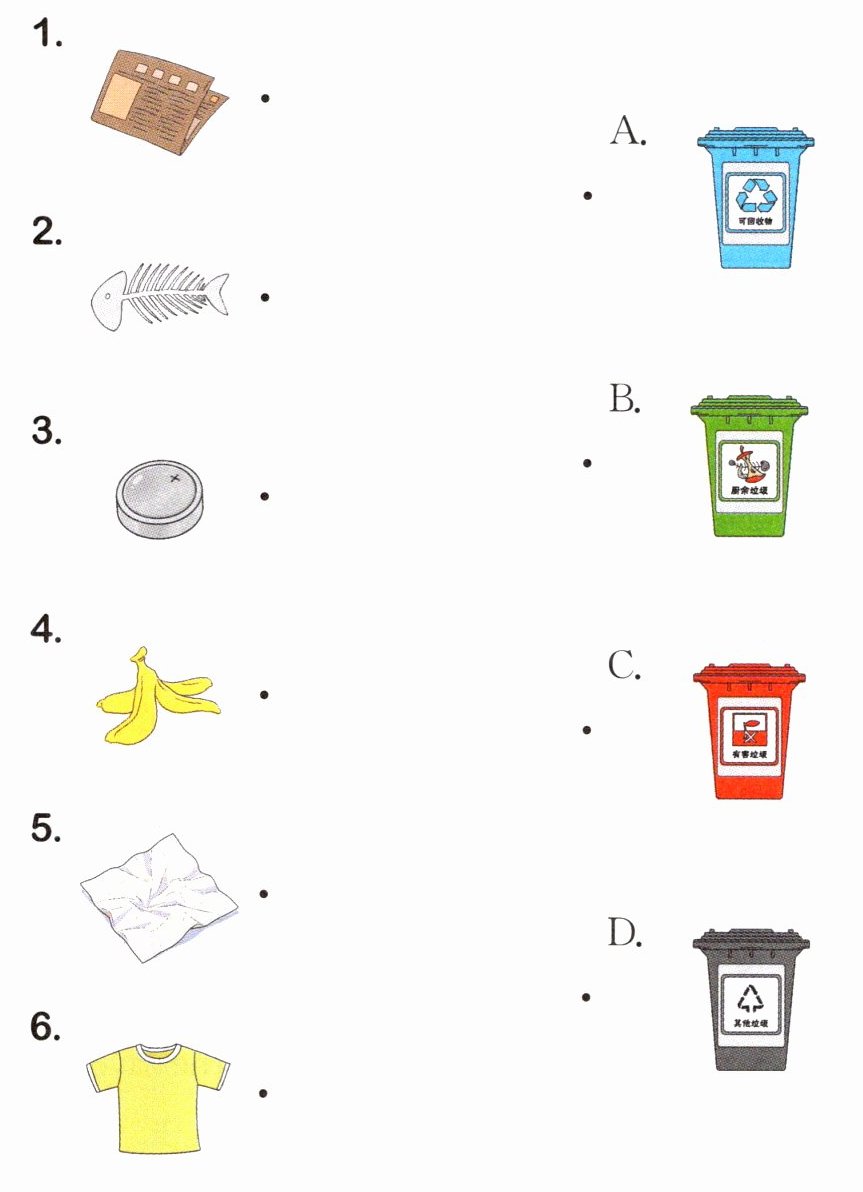
(一)知识运用 请根据学到的知识,给下列垃圾找到相应的垃圾桶。
(二)判断正(T)误(F)。
()1. There are three kinds of garbage bins in the dialogue.
()2. 逻辑推理 We should try not to use button batteries.
()3. 写作意图 The dialogue wants to tell us how to sort garbage and keep the city clean.
Miss Li: Good morning, class! Today we will talk about garbage sorting. Do you know what colours our garbage bins are?
Lily: Let me try! There are four colours, right?
Miss Li: That's right! Great start. What is the blue bin for?
Lily: The blue bin is for recyclable waste, like paper and bottles!
Miss Li: Perfect! What about the green bin?
Lily: The green bin is for kitchen waste, like fruit skins and leftovers!
Miss Li: You're doing so well! Now how about the red bin?
Lily: The red bin is for hazardous waste(有害垃圾), like button batteries(纽扣电池)! They are bad for the earth.
Miss Li: Great! And the last one, the gray bin?
Lily: The gray bin is for other waste, like used napkins!
Miss Li: Wow, you remember all of them! So what should we always do with garbage?
Lily: We should put the garbage into the right bins! It helps keep our city clean.
Miss Li: That's the most important rule! Let's all remember to sort garbage from today on.
(一)知识运用 请根据学到的知识,给下列垃圾找到相应的垃圾桶。
(二)判断正(T)误(F)。
()1. There are three kinds of garbage bins in the dialogue.
()2. 逻辑推理 We should try not to use button batteries.
()3. 写作意图 The dialogue wants to tell us how to sort garbage and keep the city clean.
答案
(一)1. A 2. B 3. C 4. B 5. D 6. A
(二)1. F 2. T 解析 根据对话可知,纽扣电池属于有害垃圾,由“They are bad for the earth.”可推理出,我们应该尽量减少使用纽扣电池。
3. T
(二)1. F 2. T 解析 根据对话可知,纽扣电池属于有害垃圾,由“They are bad for the earth.”可推理出,我们应该尽量减少使用纽扣电池。
3. T
解析
【分析】
本题围绕垃圾分类知识展开,需先从对话中提取各颜色垃圾桶对应的垃圾类型:蓝色为可回收物(如纸、瓶子),绿色为厨余垃圾如果皮、剩菜,红色为有害垃圾如纽扣电池,灰色为其他垃圾如用过的餐巾纸。再逐一判断各垃圾所属类别完成连线,判断题需结合对话内容核对描述是否正确。
【解析】
(一)连线题:根据对话内容,1.报纸属于可回收物,对应蓝色可回收垃圾桶A;2.鱼骨是厨余垃圾,对应绿色厨余垃圾桶B;3.纽扣电池是有害垃圾,对应红色有害垃圾桶C;4.香蕉皮是厨余垃圾,对应绿色厨余垃圾桶B;5.用过的纸巾是其他垃圾,对应灰色其他垃圾桶D;6.衣服属于可回收物,对应蓝色可回收垃圾桶A。
(二)判断题:1.对话中提到了蓝、绿、红、灰四种垃圾桶,题目说三种,故错误;2.纽扣电池属于有害垃圾,对地球有害,因此应尽量减少使用,故正确;3.对话最后强调要将垃圾放入正确垃圾桶以保持城市清洁,主旨是教垃圾分类并保持城市干净,故正确。
【答案】
(一)1. A 2. B 3. C 4. B 5. D 6. A;(二)1. F 2. T 3. T
【知识点】
垃圾分类、阅读理解、对话信息提取
【点评】
本题结合对话场景考查垃圾分类知识,既考查学生对对话信息的提取能力,又巩固了生活中的垃圾分类常识,题目难度适中,贴近生活实际。
【难度系数】
0.5
本题围绕垃圾分类知识展开,需先从对话中提取各颜色垃圾桶对应的垃圾类型:蓝色为可回收物(如纸、瓶子),绿色为厨余垃圾如果皮、剩菜,红色为有害垃圾如纽扣电池,灰色为其他垃圾如用过的餐巾纸。再逐一判断各垃圾所属类别完成连线,判断题需结合对话内容核对描述是否正确。
【解析】
(一)连线题:根据对话内容,1.报纸属于可回收物,对应蓝色可回收垃圾桶A;2.鱼骨是厨余垃圾,对应绿色厨余垃圾桶B;3.纽扣电池是有害垃圾,对应红色有害垃圾桶C;4.香蕉皮是厨余垃圾,对应绿色厨余垃圾桶B;5.用过的纸巾是其他垃圾,对应灰色其他垃圾桶D;6.衣服属于可回收物,对应蓝色可回收垃圾桶A。
(二)判断题:1.对话中提到了蓝、绿、红、灰四种垃圾桶,题目说三种,故错误;2.纽扣电池属于有害垃圾,对地球有害,因此应尽量减少使用,故正确;3.对话最后强调要将垃圾放入正确垃圾桶以保持城市清洁,主旨是教垃圾分类并保持城市干净,故正确。
【答案】
(一)1. A 2. B 3. C 4. B 5. D 6. A;(二)1. F 2. T 3. T
【知识点】
垃圾分类、阅读理解、对话信息提取
【点评】
本题结合对话场景考查垃圾分类知识,既考查学生对对话信息的提取能力,又巩固了生活中的垃圾分类常识,题目难度适中,贴近生活实际。
【难度系数】
0.5
