

 登录
登录
(
— , because I have to wait for long before it takes off (起飞).
A.Cheer up
B.Not at all
C.It doesn't matter
D.I don't agree
B
) 7. — Do you like travelling by plane?— , because I have to wait for long before it takes off (起飞).
A.Cheer up
B.Not at all
C.It doesn't matter
D.I don't agree
答案
7.B
解析
【分析】首先理解对话语境:问句询问是否喜欢乘飞机旅行,答句给出原因是起飞前要等待很久,说明是不喜欢坐飞机,需选择符合“不喜欢”含义的应答语,再逐一分析选项。
【解析】逐一分析选项:A选项“Cheer up”意为“振作起来”,不符合语境;B选项“Not at all”意为“一点也不,根本不”,可用来表示不喜欢,契合答句语境;C选项“It doesn't matter”意为“没关系”,用于回应道歉,不符合;D选项“I don't agree”意为“我不同意”,通常用于反驳观点,此处并非不同意,而是不喜欢,不符合。因此选B。
【答案】B
【知识点】日常交际用语、情景交际
【点评】本题考查日常情景对话的应答,需结合上下文语境选择合适表达,属于基础题型,难度较低。
【难度系数】0.8
【解析】逐一分析选项:A选项“Cheer up”意为“振作起来”,不符合语境;B选项“Not at all”意为“一点也不,根本不”,可用来表示不喜欢,契合答句语境;C选项“It doesn't matter”意为“没关系”,用于回应道歉,不符合;D选项“I don't agree”意为“我不同意”,通常用于反驳观点,此处并非不同意,而是不喜欢,不符合。因此选B。
【答案】B
【知识点】日常交际用语、情景交际
【点评】本题考查日常情景对话的应答,需结合上下文语境选择合适表达,属于基础题型,难度较低。
【难度系数】0.8
四、完成句子
1. 他惊恐地看着他的父亲,不知道说什么。
He looked at his father
2. 野火向四面八方蔓延,越来越大。
The wildfire
3. 我不知道这起交通事故是否严重。
I didn't know
4. 生日歌响起时,彩带正像雨点般从天花板纷纷落下。
Colourful ribbons
1. 他惊恐地看着他的父亲,不知道说什么。
He looked at his father
in fear
, not knowing what to say.2. 野火向四面八方蔓延,越来越大。
The wildfire
spread in all directions
and became larger and larger.3. 我不知道这起交通事故是否严重。
I didn't know
if the traffic accident was serious
.4. 生日歌响起时,彩带正像雨点般从天花板纷纷落下。
Colourful ribbons
were raining down
from the ceiling as the birthday song played.答案
1. in fear 2. spread in all directions
3. if the traffic accident was serious 4. were raining down
3. if the traffic accident was serious 4. were raining down
解析
【分析】
本题为英语完成句子题,需结合中文提示和语法规则补全句子。1题中“惊恐地”修饰动词looked,需用状语对应固定介词短语;2题“向四面八方蔓延”是固定动词短语,结合后文过去式动词确定时态;3题“是否”引导宾语从句,需用陈述语序且时态与主句一致;4题“像雨点般落下”是固定表达,结合as引导的过去式从句,确定主句用过去进行时,注意主语单复数。
【解析】
1. 空格处需作状语修饰动词looked,“惊恐地”对应固定短语in fear,符合语境;
2. “向四面八方蔓延”为固定短语spread in all directions,由后文became(过去式)可知,此处用一般过去时,spread过去式不变;
3. 空格处为宾语从句,“是否”用if引导,宾语从句需用陈述语序,主句为一般过去时,从句时态对应为一般过去时,故填if the traffic accident was serious;
4. “像雨点般落下”为固定表达rain down,as引导的时间状语从句为一般过去时,主句需用过去进行时,主语colourful ribbons为复数,故填were raining down。
【答案】
1. in fear 2. spread in all directions 3. if the traffic accident was serious 4. were raining down
【知识点】
介词短语作状语;宾语从句;过去进行时
【点评】
本题考查英语基础短语及语法的运用,涉及常用介词短语、宾语从句和过去进行时,难度适中,需学生掌握相关固定搭配和时态规则。
【难度系数】
0.6
本题为英语完成句子题,需结合中文提示和语法规则补全句子。1题中“惊恐地”修饰动词looked,需用状语对应固定介词短语;2题“向四面八方蔓延”是固定动词短语,结合后文过去式动词确定时态;3题“是否”引导宾语从句,需用陈述语序且时态与主句一致;4题“像雨点般落下”是固定表达,结合as引导的过去式从句,确定主句用过去进行时,注意主语单复数。
【解析】
1. 空格处需作状语修饰动词looked,“惊恐地”对应固定短语in fear,符合语境;
2. “向四面八方蔓延”为固定短语spread in all directions,由后文became(过去式)可知,此处用一般过去时,spread过去式不变;
3. 空格处为宾语从句,“是否”用if引导,宾语从句需用陈述语序,主句为一般过去时,从句时态对应为一般过去时,故填if the traffic accident was serious;
4. “像雨点般落下”为固定表达rain down,as引导的时间状语从句为一般过去时,主句需用过去进行时,主语colourful ribbons为复数,故填were raining down。
【答案】
1. in fear 2. spread in all directions 3. if the traffic accident was serious 4. were raining down
【知识点】
介词短语作状语;宾语从句;过去进行时
【点评】
本题考查英语基础短语及语法的运用,涉及常用介词短语、宾语从句和过去进行时,难度适中,需学生掌握相关固定搭配和时态规则。
【难度系数】
0.6
五、阅读理解
Recently, scientists have already found out how and why earthquakes happen.
Long ago, people believed that the earth was solid (固态的), but today, scientists know that the earth is made up of layers (层).
The centre of the earth is called the core (地核). The core is very hot. The inner core is a solid ball made of iron (铁), and the outer core is made of iron that can flow (流动) slowly.
The mantle (地幔) around the core is made of very hot rock. The lower part of the mantle is soft and can move very slowly. The mantle makes up most of the earth.
The top layer of the earth is called the crust (地壳), and is made of rock. It is the thinnest of all the earth's layers. It is the thinnest under the sea and much thicker under the land.
The crust and the upper part of the mantle are made up of very big, plate-like pieces of rock that move slowly on the lower part of the mantle, so they are always moving. Most of the time, the pieces are moving so slowly that people cannot feel them.
These big pieces of rock are called tectonic plates (构造板块). They are in different sizes, and each one has a name. When the plates meet, they can move in different directions, go past each other, or push against each other until part of one plate is under the other.
The movements of the plates make the earth's crust break (断裂). These broken places are called faults (地质断层). Some faults are easy to see. Most faults don't move, but the plates keep moving slowly. Over time, this causes stress (压力) in the rocks.
When the stress is too much for the rocks, they break suddenly along the fault. This kind of shaking runs out in all directions, and makes the ground shake. This is an earthquake, and it is why most earthquakes happen near the sides of tectonic plates.
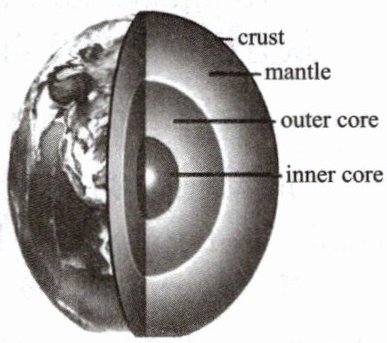
(
A. 2. B. 3. C. 5. D. 6.
(
“I am now in the deep earth and made of hot iron. After going through the layer made of hot rock, you can find me flowing softly like water.”
A. inner core B. outer core C. mantle D. crust
(
A. Layers of the earth. B. Big and plate-like pieces of rock.
C. The lower part of the mantle. D. The upper part of the mantle.
(
A. What an earthquake is. B. Results of earthquakes.
C. Movements of tectonic plates. D. How and why earthquakes happen.
Recently, scientists have already found out how and why earthquakes happen.
Long ago, people believed that the earth was solid (固态的), but today, scientists know that the earth is made up of layers (层).
The centre of the earth is called the core (地核). The core is very hot. The inner core is a solid ball made of iron (铁), and the outer core is made of iron that can flow (流动) slowly.
The mantle (地幔) around the core is made of very hot rock. The lower part of the mantle is soft and can move very slowly. The mantle makes up most of the earth.
The top layer of the earth is called the crust (地壳), and is made of rock. It is the thinnest of all the earth's layers. It is the thinnest under the sea and much thicker under the land.
The crust and the upper part of the mantle are made up of very big, plate-like pieces of rock that move slowly on the lower part of the mantle, so they are always moving. Most of the time, the pieces are moving so slowly that people cannot feel them.
These big pieces of rock are called tectonic plates (构造板块). They are in different sizes, and each one has a name. When the plates meet, they can move in different directions, go past each other, or push against each other until part of one plate is under the other.
The movements of the plates make the earth's crust break (断裂). These broken places are called faults (地质断层). Some faults are easy to see. Most faults don't move, but the plates keep moving slowly. Over time, this causes stress (压力) in the rocks.
When the stress is too much for the rocks, they break suddenly along the fault. This kind of shaking runs out in all directions, and makes the ground shake. This is an earthquake, and it is why most earthquakes happen near the sides of tectonic plates.
(
B
) 1. How many layers are there in the earth according to the text?A. 2. B. 3. C. 5. D. 6.
(
B
) 2. The following sentences are describing (描述) .“I am now in the deep earth and made of hot iron. After going through the layer made of hot rock, you can find me flowing softly like water.”
A. inner core B. outer core C. mantle D. crust
(
B
) 3. What does “they” in Paragraph 6 refer to (指代)?A. Layers of the earth. B. Big and plate-like pieces of rock.
C. The lower part of the mantle. D. The upper part of the mantle.
(
D
) 4. Which is the main idea of the text?A. What an earthquake is. B. Results of earthquakes.
C. Movements of tectonic plates. D. How and why earthquakes happen.
答案
1.B 2.B 3.B 4.D
解析
【分析】
本题为科普类阅读理解题,共4道选择题,分别考查细节查找、词义猜测和主旨大意。解题思路:1. 第1题需定位原文中地球的整体层数描述,区分地核的细分与总层数;2. 第2题需抓住描述中的关键词,对应原文中外核的特征;3. 第3题需依据代词指代的就近原则,定位前文对应的名词;4. 第4题需梳理全文核心内容,确定主旨。
【解析】
1. 细节理解题:原文明确地球的层包括地壳(crust)、地幔(mantle)、地核(core),共3层,故选B。
2. 细节理解题:描述中“由热铁构成、缓慢流动”对应原文“outer core is made of iron that can flow slowly”,故选B。
3. 词义猜测题:根据就近原则,第6段前半句提到“大的板状岩石块”,后半句“they are always moving”中they指代该名词,故选B。
4. 主旨大意题:原文开头点明核心“科学家已弄清地震如何发生及为何发生”,后续围绕地球结构、板块运动解释地震成因,故选D。
【答案】
1.B 2.B 3.B 4.D
【知识点】
英语阅读理解、细节理解、主旨大意
【点评】
本题结合地球科学科普知识,考查学生对英语阅读中细节信息、代词指代及文章主旨的理解,题目设置基础,贴近学生认知。
【难度系数】
0.7
本题为科普类阅读理解题,共4道选择题,分别考查细节查找、词义猜测和主旨大意。解题思路:1. 第1题需定位原文中地球的整体层数描述,区分地核的细分与总层数;2. 第2题需抓住描述中的关键词,对应原文中外核的特征;3. 第3题需依据代词指代的就近原则,定位前文对应的名词;4. 第4题需梳理全文核心内容,确定主旨。
【解析】
1. 细节理解题:原文明确地球的层包括地壳(crust)、地幔(mantle)、地核(core),共3层,故选B。
2. 细节理解题:描述中“由热铁构成、缓慢流动”对应原文“outer core is made of iron that can flow slowly”,故选B。
3. 词义猜测题:根据就近原则,第6段前半句提到“大的板状岩石块”,后半句“they are always moving”中they指代该名词,故选B。
4. 主旨大意题:原文开头点明核心“科学家已弄清地震如何发生及为何发生”,后续围绕地球结构、板块运动解释地震成因,故选D。
【答案】
1.B 2.B 3.B 4.D
【知识点】
英语阅读理解、细节理解、主旨大意
【点评】
本题结合地球科学科普知识,考查学生对英语阅读中细节信息、代词指代及文章主旨的理解,题目设置基础,贴近学生认知。
【难度系数】
0.7
