

 登录
登录
Ⅵ. (2025·济南中考)阅读还原(有两项多余)
"What do you think I should do?" asks your friend, as she sits beside you, waiting for your advice. This is no easy situation. Say something your friend disagrees with or something helpless, and you might feel you've disappointed her.
It's human nature to want to offer solutions when someone comes to you with a problem. It's also easy to fall into the trap of simply saying that "Everything will be OK". 1 But we often say that because we believe we need to say something. This is because we're glad that our friend has come to us for help, even if we don't really think we're able to give it. 2 The answer is yes... if it's done in the right way.
In fact, friends often really only want someone to listen to them. It's important to try to work out whether they're actually asking for advice, or simply wanting to talk over whatever is going round in their head. 3 There's no harm in asking whether they'd like you to give suggestions.
It's also important to be honest. If you're unable to think of a way to solve your friends' problems, just say so. Your friends won't feel upset, and you can still listen carefully and try to put yourself in their shoes. 4 You can ask yourself "What would I do if I were to experience the same thing?" Later you can go back to your friends with a few helpful suggestions.
5 It can be hard to listen to your friends going over and over the same thing without being able to help them. They will certainly be thankful if you just allow them to "talk it out", though. Maybe they're building up courage to take action, and need to convince (说服) themselves they're doing the right thing. Just being there for them may be all you have to do to make things better.
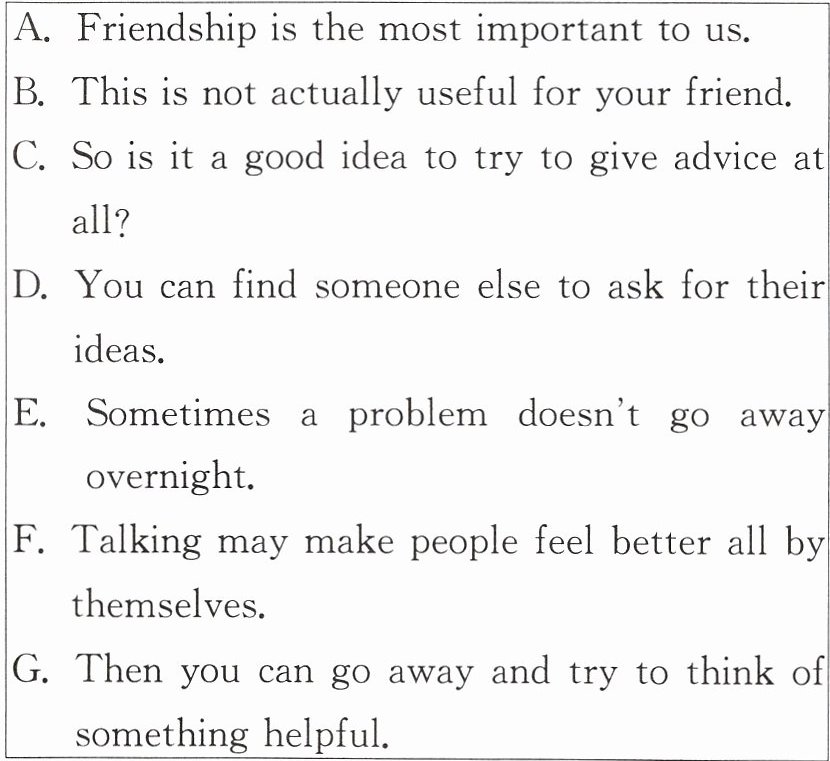
1. 2. 3.
4. 5.
"What do you think I should do?" asks your friend, as she sits beside you, waiting for your advice. This is no easy situation. Say something your friend disagrees with or something helpless, and you might feel you've disappointed her.
It's human nature to want to offer solutions when someone comes to you with a problem. It's also easy to fall into the trap of simply saying that "Everything will be OK". 1 But we often say that because we believe we need to say something. This is because we're glad that our friend has come to us for help, even if we don't really think we're able to give it. 2 The answer is yes... if it's done in the right way.
In fact, friends often really only want someone to listen to them. It's important to try to work out whether they're actually asking for advice, or simply wanting to talk over whatever is going round in their head. 3 There's no harm in asking whether they'd like you to give suggestions.
It's also important to be honest. If you're unable to think of a way to solve your friends' problems, just say so. Your friends won't feel upset, and you can still listen carefully and try to put yourself in their shoes. 4 You can ask yourself "What would I do if I were to experience the same thing?" Later you can go back to your friends with a few helpful suggestions.
5 It can be hard to listen to your friends going over and over the same thing without being able to help them. They will certainly be thankful if you just allow them to "talk it out", though. Maybe they're building up courage to take action, and need to convince (说服) themselves they're doing the right thing. Just being there for them may be all you have to do to make things better.
1. 2. 3.
4. 5.
答案
Ⅵ. [文章大意]本文主要探讨当朋友寻求建议时如何有效回应,强调倾听比直接给建议更重要。
1~5 B C F G E
1~5 B C F G E
解析
【分析】
这是中考典型的七选五阅读还原题,解题思路是先通读全文,明确本文核心主题是探讨朋友向你求助时,如何用恰当的方式回应对方,优先梳理每一处空缺前后的逻辑线索:
1. 先看第1空:前文提到人们很容易随口说“一切都会好的”这类空泛安慰,后文转折说我们这么说只是觉得自己必须说点什么,空缺处需要点明这类空泛安慰的弊端,匹配对应选项。
2. 第2空后文直接出现了“The answer is yes”的回应,说明空缺处必然是一个疑问句,直接从剩余选项里锁定唯一的疑问句即可。
3. 第3空前文提到很多时候朋友找你只是想倾诉烦心事,并非真的要解决方案,空缺处需要承接“倾诉”的作用,衔接后文“询问对方是否需要建议也无妨”的内容。
4. 第4空前文说当下想不出解决办法可以直接告知朋友,后文说之后你可以带着有用的建议回到朋友身边,空缺处要衔接“当下倾听”和“后续返回给建议”的动作顺序。
5. 第5空所在段落核心是说明朋友反复念叨烦心事时,只需要陪伴倾听就足够,空缺处要引出“问题不会立刻解决”的背景,契合段落逻辑。
【解析】
1. 第1空:前文提到人们遇到朋友求助时,很容易陷入只会说“一切都会好的”的空泛安慰的误区,后文转折说明我们这么说只是觉得自己必须说点什么,B选项“这实际上对你的朋友没有用”刚好点出这类空泛安慰的弊端,承上启下,符合语境。
2. 第2空:后文直接给出“The answer is yes”的回应,说明空缺处是提出一个对应疑问,C选项“那到底给出建议是不是个好主意呢?”是全文唯一的疑问句,和后文的回答完美呼应,逻辑连贯。
3. 第3空:前文点明很多时候朋友找你,只是想要把脑子里的烦心事倾诉出来,并非索要解决方案,F选项“仅仅是倾诉本身就会让人感觉好很多”承接前文的“倾诉需求”,也自然引出后文“询问对方是否需要建议也没有坏处”的表述,衔接顺畅。
4. 第4空:前文说明如果当下想不出解决办法可以直接告诉朋友,认真倾听换位思考即可,后文提到之后你可以带着有用的建议回到朋友身边,G选项“然后你可以离开去思考一些有用的应对思路”刚好衔接前后的动作先后顺序,符合行文逻辑。
5. 第5空:后文提到朋友会反复念叨同一件烦心事,不需要你立刻给出解决方案,只需要陪伴倾听就足够,E选项“有时候问题不会一夜之间就消失”引出对应背景,解释了朋友反复诉说的原因,契合段落核心逻辑。
【答案】
1~5 B C F G E
【知识点】
七选五阅读,语篇逻辑衔接,语篇理解
【点评】
本题是中考常见的阅读还原题型,选取贴近日常交友的实用话题,没有设置过难的词汇障碍,解题核心是引导学生抓住前后文的显性逻辑线索,比如问答呼应、动作先后顺序、语义承接关系,考察学生对整篇文章行文脉络的把控能力,整体区分度合理。
【难度系数】
0.6
这是中考典型的七选五阅读还原题,解题思路是先通读全文,明确本文核心主题是探讨朋友向你求助时,如何用恰当的方式回应对方,优先梳理每一处空缺前后的逻辑线索:
1. 先看第1空:前文提到人们很容易随口说“一切都会好的”这类空泛安慰,后文转折说我们这么说只是觉得自己必须说点什么,空缺处需要点明这类空泛安慰的弊端,匹配对应选项。
2. 第2空后文直接出现了“The answer is yes”的回应,说明空缺处必然是一个疑问句,直接从剩余选项里锁定唯一的疑问句即可。
3. 第3空前文提到很多时候朋友找你只是想倾诉烦心事,并非真的要解决方案,空缺处需要承接“倾诉”的作用,衔接后文“询问对方是否需要建议也无妨”的内容。
4. 第4空前文说当下想不出解决办法可以直接告知朋友,后文说之后你可以带着有用的建议回到朋友身边,空缺处要衔接“当下倾听”和“后续返回给建议”的动作顺序。
5. 第5空所在段落核心是说明朋友反复念叨烦心事时,只需要陪伴倾听就足够,空缺处要引出“问题不会立刻解决”的背景,契合段落逻辑。
【解析】
1. 第1空:前文提到人们遇到朋友求助时,很容易陷入只会说“一切都会好的”的空泛安慰的误区,后文转折说明我们这么说只是觉得自己必须说点什么,B选项“这实际上对你的朋友没有用”刚好点出这类空泛安慰的弊端,承上启下,符合语境。
2. 第2空:后文直接给出“The answer is yes”的回应,说明空缺处是提出一个对应疑问,C选项“那到底给出建议是不是个好主意呢?”是全文唯一的疑问句,和后文的回答完美呼应,逻辑连贯。
3. 第3空:前文点明很多时候朋友找你,只是想要把脑子里的烦心事倾诉出来,并非索要解决方案,F选项“仅仅是倾诉本身就会让人感觉好很多”承接前文的“倾诉需求”,也自然引出后文“询问对方是否需要建议也没有坏处”的表述,衔接顺畅。
4. 第4空:前文说明如果当下想不出解决办法可以直接告诉朋友,认真倾听换位思考即可,后文提到之后你可以带着有用的建议回到朋友身边,G选项“然后你可以离开去思考一些有用的应对思路”刚好衔接前后的动作先后顺序,符合行文逻辑。
5. 第5空:后文提到朋友会反复念叨同一件烦心事,不需要你立刻给出解决方案,只需要陪伴倾听就足够,E选项“有时候问题不会一夜之间就消失”引出对应背景,解释了朋友反复诉说的原因,契合段落核心逻辑。
【答案】
1~5 B C F G E
【知识点】
七选五阅读,语篇逻辑衔接,语篇理解
【点评】
本题是中考常见的阅读还原题型,选取贴近日常交友的实用话题,没有设置过难的词汇障碍,解题核心是引导学生抓住前后文的显性逻辑线索,比如问答呼应、动作先后顺序、语义承接关系,考察学生对整篇文章行文脉络的把控能力,整体区分度合理。
【难度系数】
0.6
