

 登录
登录
3. (2025 南通中考)—Millie, can you
the cranes for us?
—OK. They are tall and have long legs and a
long neck.
A.count
B.describe
C.raise
D.protect
B
the cranes for us?
—OK. They are tall and have long legs and a
long neck.
A.count
B.describe
C.raise
D.protect
答案
3. B 提示:count 数;describe 描述;raise 举起;
protect 保护。句意:——米莉,你能给我们描
述一下鹤吗? ——好的。它们很高,有长长
的腿和长长的脖子。
protect 保护。句意:——米莉,你能给我们描
述一下鹤吗? ——好的。它们很高,有长长
的腿和长长的脖子。
解析
【分析】
首先观察对话的答句内容,答句中详细描述了鹤的外形特征(很高、长腿、长脖子),由此可以推断问句是请求对方对鹤进行描述。接下来分析四个选项的含义:count表示“数”,describe表示“描述”,raise表示“举起;饲养”,protect表示“保护”,结合答句的描述内容,只有describe符合语境需求。
【解析】
第一步:理解对话语境。问句询问Millie能否为“我们”做某事,答句是对鹤的外形特征进行详细说明。
第二步:辨析选项词义:
A. count:意为“数;计数”,与答句描述外形的内容不符;
B. describe:意为“描述”,符合答句中对鹤外形进行说明的语境;
C. raise:意为“举起;饲养”,不符合对话逻辑;
D. protect:意为“保护”,与答句内容无关。
第三步:结合语境确定答案为B。
【答案】
B
【知识点】
动词词义辨析、情景语境判断
【点评】
本题考查动词词义辨析,解题关键在于结合对话的语境逻辑,通过答句的描述内容反向推断问句的需求。学生需掌握常见动词的词义,同时培养结合语境判断词义的能力。
【难度系数】
0.8
首先观察对话的答句内容,答句中详细描述了鹤的外形特征(很高、长腿、长脖子),由此可以推断问句是请求对方对鹤进行描述。接下来分析四个选项的含义:count表示“数”,describe表示“描述”,raise表示“举起;饲养”,protect表示“保护”,结合答句的描述内容,只有describe符合语境需求。
【解析】
第一步:理解对话语境。问句询问Millie能否为“我们”做某事,答句是对鹤的外形特征进行详细说明。
第二步:辨析选项词义:
A. count:意为“数;计数”,与答句描述外形的内容不符;
B. describe:意为“描述”,符合答句中对鹤外形进行说明的语境;
C. raise:意为“举起;饲养”,不符合对话逻辑;
D. protect:意为“保护”,与答句内容无关。
第三步:结合语境确定答案为B。
【答案】
B
【知识点】
动词词义辨析、情景语境判断
【点评】
本题考查动词词义辨析,解题关键在于结合对话的语境逻辑,通过答句的描述内容反向推断问句的需求。学生需掌握常见动词的词义,同时培养结合语境判断词义的能力。
【难度系数】
0.8
4. I can't understand this sentence
there are no new words in it.
A.if
B.because
C.as
D.though
D
there are no new words in it.
A.if
B.because
C.as
D.though
答案
4. D 提示:if 如果;because 因为;as 因为;当……
时;though 尽管。句意:尽管这个句子里没有新
单词,但我还是不能理解它。
时;though 尽管。句意:尽管这个句子里没有新
单词,但我还是不能理解它。
解析
【分析】
首先要理清句子前后的逻辑关系:前半句“我无法理解这个句子”,后半句“里面没有生词”,正常情况下无生词应该容易理解,此处前后语义存在转折,需要选择能表达让步转折关系的连词。接着逐一分析选项词义,判断哪个符合该逻辑:A选项表条件,B、C选项表原因,均不符合转折逻辑;D选项表让步,符合句子语境。
【解析】
先分析各选项词义:
A. if:如果,引导条件状语从句;
B. because:因为,引导原因状语从句;
C. as:因为/当……时,可引导原因或时间状语从句;
D. though:尽管,引导让步状语从句。
结合句子句意“______这个句子里没有生词,我还是不能理解它”,前后语义存在让步转折关系,只有though符合语境,所以选D。
【答案】
D
【知识点】
连词词义辨析;让步状语从句;语境逻辑判断
【点评】
本题主要考查连词的词义辨析及对句子逻辑关系的把握,需要学生熟悉不同连词的用法,准确判断前后句的语义关系,避免混淆原因连词与让步连词。
【难度系数】
0.7
首先要理清句子前后的逻辑关系:前半句“我无法理解这个句子”,后半句“里面没有生词”,正常情况下无生词应该容易理解,此处前后语义存在转折,需要选择能表达让步转折关系的连词。接着逐一分析选项词义,判断哪个符合该逻辑:A选项表条件,B、C选项表原因,均不符合转折逻辑;D选项表让步,符合句子语境。
【解析】
先分析各选项词义:
A. if:如果,引导条件状语从句;
B. because:因为,引导原因状语从句;
C. as:因为/当……时,可引导原因或时间状语从句;
D. though:尽管,引导让步状语从句。
结合句子句意“______这个句子里没有生词,我还是不能理解它”,前后语义存在让步转折关系,只有though符合语境,所以选D。
【答案】
D
【知识点】
连词词义辨析;让步状语从句;语境逻辑判断
【点评】
本题主要考查连词的词义辨析及对句子逻辑关系的把握,需要学生熟悉不同连词的用法,准确判断前后句的语义关系,避免混淆原因连词与让步连词。
【难度系数】
0.7
5. —Reading is the best way to pass the time on
the train.
—
book.
A.You're joking
B.With pleasure
C.That's true
D.It sounds like fun
the train.
—
C
. I never go travelling without abook.
A.You're joking
B.With pleasure
C.That's true
D.It sounds like fun
答案
5. C 提示:句意:——读书是在火车上打发时
间的最好方法。——没错。我旅行时都会带
一本书。
间的最好方法。——没错。我旅行时都会带
一本书。
解析
【分析】
首先要理解对话的语境:第一句表达了“读书是火车上打发时间的最佳方式”这一观点,第二句答语中“我旅行时都会带一本书”表明答话人完全赞同对方的观点。接下来需要逐一分析选项的含义,匹配符合语境的应答:A选项表示质疑对方的话,B选项用于回应请求,D选项表示觉得某事有趣,均不符合语境;C选项表示认同对方观点,与答语后半部分呼应,是正确选择。
【解析】
逐个分析选项:
A. You're joking(你在开玩笑):用于表达对对方话语的不相信,不符合对话中赞同的语境;
B. With pleasure(乐意效劳):通常用来回应他人的帮忙请求,与本题语境不符;
C. That's true(没错):表示赞同对方的观点,与答语中“我旅行时都会带一本书”的表述相呼应,符合语境;
D. It sounds like fun(听起来很有趣):用于评价某事有趣,并非表达赞同观点,不符合语境。
因此正确答案为C。
【答案】
C
【知识点】
情景交际用语
【点评】
本题考查日常情景交际中的应答能力,解题关键在于准确理解对话语境,并掌握各选项交际用语的适用场景。平时需积累不同场景下的常用口语表达,提升语境判断和用语选择能力。
【难度系数】
0.8
首先要理解对话的语境:第一句表达了“读书是火车上打发时间的最佳方式”这一观点,第二句答语中“我旅行时都会带一本书”表明答话人完全赞同对方的观点。接下来需要逐一分析选项的含义,匹配符合语境的应答:A选项表示质疑对方的话,B选项用于回应请求,D选项表示觉得某事有趣,均不符合语境;C选项表示认同对方观点,与答语后半部分呼应,是正确选择。
【解析】
逐个分析选项:
A. You're joking(你在开玩笑):用于表达对对方话语的不相信,不符合对话中赞同的语境;
B. With pleasure(乐意效劳):通常用来回应他人的帮忙请求,与本题语境不符;
C. That's true(没错):表示赞同对方的观点,与答语中“我旅行时都会带一本书”的表述相呼应,符合语境;
D. It sounds like fun(听起来很有趣):用于评价某事有趣,并非表达赞同观点,不符合语境。
因此正确答案为C。
【答案】
C
【知识点】
情景交际用语
【点评】
本题考查日常情景交际中的应答能力,解题关键在于准确理解对话语境,并掌握各选项交际用语的适用场景。平时需积累不同场景下的常用口语表达,提升语境判断和用语选择能力。
【难度系数】
0.8
四、选词填空
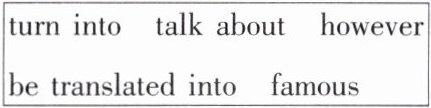
(2025 南京玄武期中)When people 1
Chinese literature, Journey to the West always
ranks at the top of their lists. This classic novel,
written by Wu Cheng'en during the Ming Dynasty,
2 different languages and has inspired many
movies and video games. The story follows Monk
Tang Sanzang and his three disciples on their
difficult journey to bring Buddhist scriptures from
India to China.
Sun Wukong, also known as the Monkey
King, is 3 character in the story. He can
4 72 different forms, jump over mountains in
one leap, and see hidden dangers with his golden
eyes. Wukong is playful by nature. 5, he
always bravely protects his friends when they face
danger. Along their journey, the group meets 81
challenges, showing readers how teamwork and
perseverance help overcome difficulties.
1.
4.
(2025 南京玄武期中)When people 1
Chinese literature, Journey to the West always
ranks at the top of their lists. This classic novel,
written by Wu Cheng'en during the Ming Dynasty,
2 different languages and has inspired many
movies and video games. The story follows Monk
Tang Sanzang and his three disciples on their
difficult journey to bring Buddhist scriptures from
India to China.
Sun Wukong, also known as the Monkey
King, is 3 character in the story. He can
4 72 different forms, jump over mountains in
one leap, and see hidden dangers with his golden
eyes. Wukong is playful by nature. 5, he
always bravely protects his friends when they face
danger. Along their journey, the group meets 81
challenges, showing readers how teamwork and
perseverance help overcome difficulties.
1.
talk about
2. has been translated into
3. the most famous
4.
turn into
5. However
答案
四、【语篇导读】本文主要介绍了中国古典文
学名著《西游记》及其主角孙悟空。
1. talk about
2. has been translated into
3. the most famous 4. turn into
5. However
学名著《西游记》及其主角孙悟空。
1. talk about
2. has been translated into
3. the most famous 4. turn into
5. However
解析
【分析】
首先通读全文,明确文章是介绍中国古典名著《西游记》及其核心角色孙悟空的内容。然后逐个分析每个空的语境和语法要求:
1. 第一空:句子表达“当人们谈论中国文学时,《西游记》总是位居榜首”,需要一个表示“谈论”的短语,结合选项确定talk about,主语people是复数,用一般现在时原形即可。
2. 第二空:句中主语是“这部经典小说”,和“语言”的关系是被翻译成不同语言,且强调对现在的影响(启发了很多影视和游戏),所以要用现在完成时的被动语态,对应has been translated into。
3. 第三空:结合语境,孙悟空是故事里最著名的角色,这里需要用形容词的最高级形式,famous的最高级是the most famous。
4. 第四空:根据常识,孙悟空能变成72种形态,turn into表示“变成”,且情态动词can后接动词原形,所以用turn into。
5. 第五空:前文说孙悟空天性顽皮,后文说他遇到危险时勇敢保护同伴,前后是转折关系,所以用转折连词However。
【解析】
1. 第一空:根据语境“当人们谈论中国文学时”,选择talk about,主语people为复数,一般现在时用动词原形,故填talk about。
2. 第二空:主语“novel”和“translate”是被动关系,且强调对现在的影响,用现在完成时的被动语态“has been translated into”,主语是单数,助动词用has,故填has been translated into。
3. 第三空:结合语境,孙悟空是故事里最著名的角色,famous的最高级形式为the most famous,故填the most famous。
4. 第四空:根据“72 different forms”可知此处表示“变成”,情态动词can后接动词原形,故填turn into。
5. 第五空:前文“playful by nature”和后文“bravely protects his friends”是转折关系,故填However(注意首字母大写)。
【答案】
1. talk about
2. has been translated into
3. the most famous
4. turn into
5. However
【知识点】
动词短语运用、被动语态、形容词最高级
【点评】
本题围绕中国古典名著《西游记》展开,考查学生对动词短语、被动语态、形容词最高级及转折连词的综合运用能力,既需要结合语境理解语义,也需要掌握相关语法规则,同时借助文化常识能更好地完成填空。
【难度系数】
0.6
首先通读全文,明确文章是介绍中国古典名著《西游记》及其核心角色孙悟空的内容。然后逐个分析每个空的语境和语法要求:
1. 第一空:句子表达“当人们谈论中国文学时,《西游记》总是位居榜首”,需要一个表示“谈论”的短语,结合选项确定talk about,主语people是复数,用一般现在时原形即可。
2. 第二空:句中主语是“这部经典小说”,和“语言”的关系是被翻译成不同语言,且强调对现在的影响(启发了很多影视和游戏),所以要用现在完成时的被动语态,对应has been translated into。
3. 第三空:结合语境,孙悟空是故事里最著名的角色,这里需要用形容词的最高级形式,famous的最高级是the most famous。
4. 第四空:根据常识,孙悟空能变成72种形态,turn into表示“变成”,且情态动词can后接动词原形,所以用turn into。
5. 第五空:前文说孙悟空天性顽皮,后文说他遇到危险时勇敢保护同伴,前后是转折关系,所以用转折连词However。
【解析】
1. 第一空:根据语境“当人们谈论中国文学时”,选择talk about,主语people为复数,一般现在时用动词原形,故填talk about。
2. 第二空:主语“novel”和“translate”是被动关系,且强调对现在的影响,用现在完成时的被动语态“has been translated into”,主语是单数,助动词用has,故填has been translated into。
3. 第三空:结合语境,孙悟空是故事里最著名的角色,famous的最高级形式为the most famous,故填the most famous。
4. 第四空:根据“72 different forms”可知此处表示“变成”,情态动词can后接动词原形,故填turn into。
5. 第五空:前文“playful by nature”和后文“bravely protects his friends”是转折关系,故填However(注意首字母大写)。
【答案】
1. talk about
2. has been translated into
3. the most famous
4. turn into
5. However
【知识点】
动词短语运用、被动语态、形容词最高级
【点评】
本题围绕中国古典名著《西游记》展开,考查学生对动词短语、被动语态、形容词最高级及转折连词的综合运用能力,既需要结合语境理解语义,也需要掌握相关语法规则,同时借助文化常识能更好地完成填空。
【难度系数】
0.6
五、根据汉语补全句子
1. (原创)我们要勇敢地面对糟糕的选择带来
的后果。
We should be brave enough to
.
2. (原创)他们在打开销售市场上遇到了困难。
They
3. (原创)这本小说描述了戴维和他朋友们的
一系列冒险。
The novel
his friends.
4. (原创)打扰了,我必须在一周之内归还这
些书吗?
5. (原创)这个令人激动的故事发生在一个遥
远的岛屿。
This exciting story
1. (原创)我们要勇敢地面对糟糕的选择带来
的后果。
We should be brave enough to
face the results of bad choices
.
2. (原创)他们在打开销售市场上遇到了困难。
They
have difficulty (in) opening up
the sales market.3. (原创)这本小说描述了戴维和他朋友们的
一系列冒险。
The novel
describes a series of adventures
of David andhis friends.
4. (原创)打扰了,我必须在一周之内归还这
些书吗?
Excuse me, must
I return these books within a week
?5. (原创)这个令人激动的故事发生在一个遥
远的岛屿。
This exciting story
happens on a faraway island
.答案
五、1. face the results of bad choices
2. have difficulty (in) opening up
3. describes a series of adventures
4. Excuse me, must; return these books
within a week
5. happens on a faraway island
2. have difficulty (in) opening up
3. describes a series of adventures
4. Excuse me, must; return these books
within a week
5. happens on a faraway island
解析
【分析】
1. 第1题:先明确句意核心是“面对糟糕的选择带来的后果”,“面对”对应动词face,“糟糕的选择带来的后果”用“the results of bad choices”表达(of表所属关系),结合be brave enough to后接动词原形的规则,确定填写内容。
2. 第2题:回忆“做某事有困难”的固定搭配have difficulty (in) doing sth,其中in可省略;“打开销售市场”译为open up the sales market,open需用动名词形式,主语They为复数,故确定短语形式。
3. 第3题:“描述”describe因主语The novel是第三人称单数,需用describes;“一系列冒险”是固定短语a series of adventures,组合即可得到答案。
4. 第4题:先确定礼貌用语“打扰了”是Excuse me;“必须”是情态动词must,引导一般疑问句时要前置,“在一周之内归还这些书”译为return these books within a week,据此组合句子结构。
5. 第5题:“发生”happen因主语是第三人称单数,需用happens;“在遥远的岛屿”中岛屿前用介词on,“遥远的岛屿”译为a faraway island,据此完成填空。
【解析】
1. 根据句意,“面对”译为face,“糟糕的选择带来的后果”译为the results of bad choices,be brave enough to后接动词原形,故填face the results of bad choices。
2. 固定搭配have difficulty (in) doing sth表示“做某事有困难”,“打开销售市场”译为open up the sales market,open用动名词形式opening up,主语They为复数,故填have difficulty (in) opening up。
3. “描述”describe的第三人称单数形式是describes,“一系列冒险”是固定短语a series of adventures,故填describes a series of adventures。
4. 礼貌用语“打扰了”是Excuse me;情态动词must引导一般疑问句需提前,“在一周之内归还这些书”译为return these books within a week,故填Excuse me, must; return these books within a week。
5. “发生”happen的第三人称单数形式是happens,“在一个遥远的岛屿”译为on a faraway island,故填happens on a faraway island。
【答案】
五、1. face the results of bad choices
2. have difficulty (in) opening up
3. describes a series of adventures
4. Excuse me, must; return these books within a week
5. happens on a faraway island
【知识点】
1. 固定短语搭配
2. 主谓一致
3. 情态动词用法
【点评】
本题围绕日常语境考查英语基础知识点,涵盖固定短语、主谓一致、情态动词及交际用语,既考查英汉互译能力,也强化学生对基础语法和常用表达的掌握。
【难度系数】
0.6
1. 第1题:先明确句意核心是“面对糟糕的选择带来的后果”,“面对”对应动词face,“糟糕的选择带来的后果”用“the results of bad choices”表达(of表所属关系),结合be brave enough to后接动词原形的规则,确定填写内容。
2. 第2题:回忆“做某事有困难”的固定搭配have difficulty (in) doing sth,其中in可省略;“打开销售市场”译为open up the sales market,open需用动名词形式,主语They为复数,故确定短语形式。
3. 第3题:“描述”describe因主语The novel是第三人称单数,需用describes;“一系列冒险”是固定短语a series of adventures,组合即可得到答案。
4. 第4题:先确定礼貌用语“打扰了”是Excuse me;“必须”是情态动词must,引导一般疑问句时要前置,“在一周之内归还这些书”译为return these books within a week,据此组合句子结构。
5. 第5题:“发生”happen因主语是第三人称单数,需用happens;“在遥远的岛屿”中岛屿前用介词on,“遥远的岛屿”译为a faraway island,据此完成填空。
【解析】
1. 根据句意,“面对”译为face,“糟糕的选择带来的后果”译为the results of bad choices,be brave enough to后接动词原形,故填face the results of bad choices。
2. 固定搭配have difficulty (in) doing sth表示“做某事有困难”,“打开销售市场”译为open up the sales market,open用动名词形式opening up,主语They为复数,故填have difficulty (in) opening up。
3. “描述”describe的第三人称单数形式是describes,“一系列冒险”是固定短语a series of adventures,故填describes a series of adventures。
4. 礼貌用语“打扰了”是Excuse me;情态动词must引导一般疑问句需提前,“在一周之内归还这些书”译为return these books within a week,故填Excuse me, must; return these books within a week。
5. “发生”happen的第三人称单数形式是happens,“在一个遥远的岛屿”译为on a faraway island,故填happens on a faraway island。
【答案】
五、1. face the results of bad choices
2. have difficulty (in) opening up
3. describes a series of adventures
4. Excuse me, must; return these books within a week
5. happens on a faraway island
【知识点】
1. 固定短语搭配
2. 主谓一致
3. 情态动词用法
【点评】
本题围绕日常语境考查英语基础知识点,涵盖固定短语、主谓一致、情态动词及交际用语,既考查英汉互译能力,也强化学生对基础语法和常用表达的掌握。
【难度系数】
0.6
六、阅读理解
(2025 南京玄武期中)Buck did not read the
newspapers. He did not know that trouble was
coming for every big dog in California. Gold-
diggers淘金者 had found gold in northwest
Canada, and these men wanted big, strong dogs to
work for them in the cold and snow of the north.
Buck had lived in Mr Miller's house for four
years since he was born. There were large gardens
and fields of fruit trees around the house, and a
river nearby. In a big place like this, of course,
there were many other dogs, but they lived together
in the kennels犬舍, or inside the house. But
Buck was neither a house dog nor a kennel dog.
He was king—king over the whole of Mr Miller's
lands. He went swimming with Mr Miller's sons,
and walking with his daughters. He carried the
grandchildren on his back, and he sat at Mr
Miller's feet in front of the fire in winter.
It was 1897 and the discovery of gold brought
men from everywhere to northwest Canada for gold-
digging. But Buck did not read the newspapers.
And he did not know that Manuel, one of Mr
Miller's farmers, needed money for his large
family. One day, when Mr Miller was away on
business, Manuel and Buck left the garden
together. It was just an evening walk, Buck
thought. No one saw them go, and only a strange
man saw them arrive at the railway station. This
man talked to Manuel, and gave him some money.
Then he tied a piece of rope around Buck's neck.
Buck growled低吼. Gradually it was hard
for him to breathe when the rope was pulled hard
around his neck. He jumped at the man in anger.
The man caught Buck and forced him to lie on his
back. For a few moments he was unable to move.
When the train arrived, the man threw him into the
train. . .
—Taken from The Call of the Wild
1. Why did these gold-diggers want big dogs?
A. To kill big dogs for meat.
B. To sell big dogs for money.
C. To train big dogs for gold-digging.
D. To take care of their children.
2. What does the writer want to show by using the
sentence "Buck did not read the newspapers."
twice?
A. Buck didn't have the good habit of
reading.
B. Buck didn't know how to get help from the
newspapers.
C. Buck didn't expect himself to be in a
dangerous situation.
D. Buck didn't know Manuel just wanted an
evening walk with him.
3. What might Buck do when he was thrown into
the train?
A. Buck missed Manuel and his family.
B. Buck was angry and tried to run away.
C. Buck was excited about the new adventure.
D. Buck lay down and went to sleep peacefully.
4. What is the correct order of the events in the
story?
①Buck was thrown into the train.
②Manuel took Buck out.
③Buck was tied with a rope and sold.
④Buck lived as a king in Mr Miller's house.
A. ④②③① B. ④①②③
C. ②④③① D. ③①④②
(2025 南京玄武期中)Buck did not read the
newspapers. He did not know that trouble was
coming for every big dog in California. Gold-
diggers淘金者 had found gold in northwest
Canada, and these men wanted big, strong dogs to
work for them in the cold and snow of the north.
Buck had lived in Mr Miller's house for four
years since he was born. There were large gardens
and fields of fruit trees around the house, and a
river nearby. In a big place like this, of course,
there were many other dogs, but they lived together
in the kennels犬舍, or inside the house. But
Buck was neither a house dog nor a kennel dog.
He was king—king over the whole of Mr Miller's
lands. He went swimming with Mr Miller's sons,
and walking with his daughters. He carried the
grandchildren on his back, and he sat at Mr
Miller's feet in front of the fire in winter.
It was 1897 and the discovery of gold brought
men from everywhere to northwest Canada for gold-
digging. But Buck did not read the newspapers.
And he did not know that Manuel, one of Mr
Miller's farmers, needed money for his large
family. One day, when Mr Miller was away on
business, Manuel and Buck left the garden
together. It was just an evening walk, Buck
thought. No one saw them go, and only a strange
man saw them arrive at the railway station. This
man talked to Manuel, and gave him some money.
Then he tied a piece of rope around Buck's neck.
Buck growled低吼. Gradually it was hard
for him to breathe when the rope was pulled hard
around his neck. He jumped at the man in anger.
The man caught Buck and forced him to lie on his
back. For a few moments he was unable to move.
When the train arrived, the man threw him into the
train. . .
—Taken from The Call of the Wild
1. Why did these gold-diggers want big dogs?
A. To kill big dogs for meat.
B. To sell big dogs for money.
C. To train big dogs for gold-digging.
D. To take care of their children.
2. What does the writer want to show by using the
sentence "Buck did not read the newspapers."
twice?
A. Buck didn't have the good habit of
reading.
B. Buck didn't know how to get help from the
newspapers.
C. Buck didn't expect himself to be in a
dangerous situation.
D. Buck didn't know Manuel just wanted an
evening walk with him.
3. What might Buck do when he was thrown into
the train?
A. Buck missed Manuel and his family.
B. Buck was angry and tried to run away.
C. Buck was excited about the new adventure.
D. Buck lay down and went to sleep peacefully.
4. What is the correct order of the events in the
story?
①Buck was thrown into the train.
②Manuel took Buck out.
③Buck was tied with a rope and sold.
④Buck lived as a king in Mr Miller's house.
A. ④②③① B. ④①②③
C. ②④③① D. ③①④②
答案
六、【语篇导读】本文节选自小说《野性的呼
唤》,主要讲述了主角巴克的悲惨遭遇。
1. C 提示:推理判断题。根据第一段中“Gold-
diggers had found gold in northwest Canada, and
these men wanted big, strong dogs to work for
them in the cold and snow of the north. ”可知,
淘金者在加拿大西北部发现了黄金,这些人
想要又大又强壮的狗在北方寒冷的雪地里为
他们工作。由此可推知,这些淘金者想要训
练大狗去淘金。
2. C 提示:推理判断题。通读全文可知,巴克
曾经幸福自在地生活着,然而,一名园丁却把
它卖给了淘金者,从此巴克的命运发生了改
变。所以作者提到两次画线句是为了说明巴
克没想到自己会处于危险的境地。
3. B 提示:推理判断题。根据最后一段中
“Buck growled. Gradually it was hard for him to
breathe when the rope was pulled hard around
his neck. He jumped at the man in anger. ”可
知,巴克很生气,它会想方设法逃跑。
4. A 提示:细节理解题。根据第二段中“Buck
had lived in Mr Miller's house for four years
since he was born. . . He was king—king over
the whole of Mr Miller's lands. ”可知,巴克和米
勒一家幸福地生活在一起;根据第三段中
“Manuel and Buck left the garden together”可
知,曼纽埃勒带巴克出去了;根据第三段中
“This man talked to Manuel, and gave him some
money. Then he tied a piece of rope around
Buck's neck. ”可知,曼纽埃勒把巴克卖了,巴
克被绳子系着;根据第四段中“When the train
arrived, the man threw him into the train. . . ”可
知,巴克被扔到了火车上,所以正确顺序为④
②③①。
唤》,主要讲述了主角巴克的悲惨遭遇。
1. C 提示:推理判断题。根据第一段中“Gold-
diggers had found gold in northwest Canada, and
these men wanted big, strong dogs to work for
them in the cold and snow of the north. ”可知,
淘金者在加拿大西北部发现了黄金,这些人
想要又大又强壮的狗在北方寒冷的雪地里为
他们工作。由此可推知,这些淘金者想要训
练大狗去淘金。
2. C 提示:推理判断题。通读全文可知,巴克
曾经幸福自在地生活着,然而,一名园丁却把
它卖给了淘金者,从此巴克的命运发生了改
变。所以作者提到两次画线句是为了说明巴
克没想到自己会处于危险的境地。
3. B 提示:推理判断题。根据最后一段中
“Buck growled. Gradually it was hard for him to
breathe when the rope was pulled hard around
his neck. He jumped at the man in anger. ”可
知,巴克很生气,它会想方设法逃跑。
4. A 提示:细节理解题。根据第二段中“Buck
had lived in Mr Miller's house for four years
since he was born. . . He was king—king over
the whole of Mr Miller's lands. ”可知,巴克和米
勒一家幸福地生活在一起;根据第三段中
“Manuel and Buck left the garden together”可
知,曼纽埃勒带巴克出去了;根据第三段中
“This man talked to Manuel, and gave him some
money. Then he tied a piece of rope around
Buck's neck. ”可知,曼纽埃勒把巴克卖了,巴
克被绳子系着;根据第四段中“When the train
arrived, the man threw him into the train. . . ”可
知,巴克被扔到了火车上,所以正确顺序为④
②③①。
解析
【分析】
1. 第1题:属于推理判断题,解题时需定位到第一段中关于淘金者需要大狗的描述,根据“wanted big, strong dogs to work for them in the cold and snow of the north”,结合选项推理出淘金者想要大狗的目的是训练它们帮忙淘金。
2. 第2题:需结合全文语境理解重复句子的作用,文章开头和中间两次提到巴克不看报纸,而后续它被园丁卖掉陷入危险,由此可知作者用这句话是为了说明巴克对即将到来的危险毫无察觉。
3. 第3题:属于推理判断题,根据最后一段中巴克被绑时愤怒低吼、扑向绑它的人的反应,可推断它被扔到火车里后会因愤怒试图逃跑。
4. 第4题:是事件排序题,需按文章叙述顺序梳理事件:先讲巴克在米勒家像国王一样生活,接着曼纽埃勒带它出去,然后它被绑住卖掉,最后被扔上火车,据此确定正确顺序。
【解析】
1. 第1题:根据第一段“Gold-diggers had found gold in northwest Canada, and these men wanted big, strong dogs to work for them in the cold and snow of the north.”可知,淘金者需要强壮的大狗在北方的严寒雪地中为他们工作,由此可推知他们是想训练大狗帮忙淘金,故选C。
2. 第2题:通读全文可知,巴克原本在米勒家过着无忧无虑的生活,却被园丁曼纽埃勒偷偷卖掉,命运发生剧变。作者两次提到“Buck did not read the newspapers”,是为了强调巴克对即将到来的危险一无所知,没有预料到自己会陷入危险境地,故选C。
3. 第3题:根据最后一段“Buck growled. Gradually it was hard for him to breathe when the rope was pulled hard around his neck. He jumped at the man in anger.”可知,巴克被绑时非常愤怒,做出了反抗行为,由此可推断它被扔到火车里后会继续愤怒地试图逃跑,故选B。
4. 第4题:根据文章内容:首先第二段提到“Buck had lived in Mr Miller's house for four years since he was born... He was king—king over the whole of Mr Miller's lands.”对应事件④;接着第三段“Manuel and Buck left the garden together”对应事件②;然后第三段“This man talked to Manuel, and gave him some money. Then he tied a piece of rope around Buck's neck.”对应事件③;最后第四段“When the train arrived, the man threw him into the train...”对应事件①。所以正确顺序是④②③①,故选A。
【答案】
1. C
2. C
3. B
4. A
【知识点】
细节推理判断、文本语境理解、事件排序
【点评】
本文节选自经典小说《野性的呼唤》,题目围绕巴克的遭遇展开,考查学生对文本细节的提取能力、逻辑推理能力以及对语境的理解能力。解题时需紧密结合原文内容,通过定位关键信息、梳理事件顺序来作答,有助于提升学生的阅读理解综合素养。
【难度系数】
0.6
1. 第1题:属于推理判断题,解题时需定位到第一段中关于淘金者需要大狗的描述,根据“wanted big, strong dogs to work for them in the cold and snow of the north”,结合选项推理出淘金者想要大狗的目的是训练它们帮忙淘金。
2. 第2题:需结合全文语境理解重复句子的作用,文章开头和中间两次提到巴克不看报纸,而后续它被园丁卖掉陷入危险,由此可知作者用这句话是为了说明巴克对即将到来的危险毫无察觉。
3. 第3题:属于推理判断题,根据最后一段中巴克被绑时愤怒低吼、扑向绑它的人的反应,可推断它被扔到火车里后会因愤怒试图逃跑。
4. 第4题:是事件排序题,需按文章叙述顺序梳理事件:先讲巴克在米勒家像国王一样生活,接着曼纽埃勒带它出去,然后它被绑住卖掉,最后被扔上火车,据此确定正确顺序。
【解析】
1. 第1题:根据第一段“Gold-diggers had found gold in northwest Canada, and these men wanted big, strong dogs to work for them in the cold and snow of the north.”可知,淘金者需要强壮的大狗在北方的严寒雪地中为他们工作,由此可推知他们是想训练大狗帮忙淘金,故选C。
2. 第2题:通读全文可知,巴克原本在米勒家过着无忧无虑的生活,却被园丁曼纽埃勒偷偷卖掉,命运发生剧变。作者两次提到“Buck did not read the newspapers”,是为了强调巴克对即将到来的危险一无所知,没有预料到自己会陷入危险境地,故选C。
3. 第3题:根据最后一段“Buck growled. Gradually it was hard for him to breathe when the rope was pulled hard around his neck. He jumped at the man in anger.”可知,巴克被绑时非常愤怒,做出了反抗行为,由此可推断它被扔到火车里后会继续愤怒地试图逃跑,故选B。
4. 第4题:根据文章内容:首先第二段提到“Buck had lived in Mr Miller's house for four years since he was born... He was king—king over the whole of Mr Miller's lands.”对应事件④;接着第三段“Manuel and Buck left the garden together”对应事件②;然后第三段“This man talked to Manuel, and gave him some money. Then he tied a piece of rope around Buck's neck.”对应事件③;最后第四段“When the train arrived, the man threw him into the train...”对应事件①。所以正确顺序是④②③①,故选A。
【答案】
1. C
2. C
3. B
4. A
【知识点】
细节推理判断、文本语境理解、事件排序
【点评】
本文节选自经典小说《野性的呼唤》,题目围绕巴克的遭遇展开,考查学生对文本细节的提取能力、逻辑推理能力以及对语境的理解能力。解题时需紧密结合原文内容,通过定位关键信息、梳理事件顺序来作答,有助于提升学生的阅读理解综合素养。
【难度系数】
0.6
