

 登录
登录
Ⅰ. 根据句意及首字母或汉语提示完成句子或对话
1. Can you r
2. —Do you have a bike now?
—Yes. My father has a
3. Shakespeare's plays are important
4. We should
5. Volunteering helps us understand different parts of
1. Can you r
recommend
a good book about science to me?2. —Do you have a bike now?
—Yes. My father has a
already
bought one for me.3. Shakespeare's plays are important
literary
(文学的)works.4. We should
base
(以……为根据)our opinions on facts, not feelings.5. Volunteering helps us understand different parts of
society
(社会).答案
1. recommend 2. already 3. literary
4. base 5. society
4. base 5. society
解析
【分析】本题为根据句意、首字母或汉语提示完成单词的题型,解题时需先理解句子语境,再结合给出的首字母或汉语提示,回忆对应的英语单词,同时注意单词的词性、形式及固定搭配。第1题:语境为请求推荐书籍,首字母为r,需填表示“推荐”的动词;第2题:对话语境表“已经”的动作,首字母为a,填对应副词;第3题:需填形容词修饰名词works,对应汉语“文学的”;第4题:需用动词原形构成固定短语“base...on”,对应汉语“以……为根据”;第5题:需填名词作介词of的宾语,对应汉语“社会”。
【解析】1. 结合语境“推荐好书”及首字母r,填动词recommend;2. 结合对话语境“已经买了”及首字母a,填副词already;3. 修饰名词works需用形容词,汉语“文学的”对应literary;4. 固定短语base...on意为“以……为根据”,should后接动词原形,故填base;5. 介词of后接名词,汉语“社会”对应society。
【答案】1. recommend 2. already 3. literary 4. base 5. society
【知识点】英语词汇运用、形容词用法、动词短语
【点评】本题考查基础词汇的掌握与运用,需结合语境和提示准确填写,难度适中,适合巩固基础词汇。
【难度系数】0.7
【解析】1. 结合语境“推荐好书”及首字母r,填动词recommend;2. 结合对话语境“已经买了”及首字母a,填副词already;3. 修饰名词works需用形容词,汉语“文学的”对应literary;4. 固定短语base...on意为“以……为根据”,should后接动词原形,故填base;5. 介词of后接名词,汉语“社会”对应society。
【答案】1. recommend 2. already 3. literary 4. base 5. society
【知识点】英语词汇运用、形容词用法、动词短语
【点评】本题考查基础词汇的掌握与运用,需结合语境和提示准确填写,难度适中,适合巩固基础词汇。
【难度系数】0.7
Ⅱ. 按要求完成下列各题
1. I have already bought a book in this store.(改为一般疑问句)
2. I have told my parents the news.(对画线部分提问)
3. Have they decided to take a long journey?(作否定回答)
4. He has already made a decision to teach in the village school.(改为否定句)
He
5. She is reading Oliver Twist.(用现在完成时改写句子)
She
1. I have already bought a book in this store.(改为一般疑问句)
Have
you bought
a book in this store yet
?2. I have told my parents the news.(对画线部分提问)
What
have
you told
your parents?3. Have they decided to take a long journey?(作否定回答)
No
, they haven't
.4. He has already made a decision to teach in the village school.(改为否定句)
He
hasn't
made
a decision to teach in the village school yet
.5. She is reading Oliver Twist.(用现在完成时改写句子)
She
has
read
Oliver Twist.答案
1. Have; bought; yet
2. What have; told 3. No; haven't
4. hasn't made; yet 5. has read
2. What have; told 3. No; haven't
4. hasn't made; yet 5. has read
解析
【分析】本题考查现在完成时的相关句式运用,需掌握现在完成时的结构(have/has+过去分词),以及其一般疑问句、特殊疑问句、否定句的构成规则,还有already/yet的用法差异,同时要学会对划线部分提问的方法。具体解题思路:1. 变一般疑问句时,将助动词have提前,already改为yet放句末;2. 对物提问用what,现在完成时特殊疑问句需提前助动词;3. 现在完成时一般疑问句的否定回答用No+主语+haven't/hasn't;4. 变否定句时,在has后加not,already改yet放句末;5. 现在完成时主语是第三人称单数时,助动词用has,动词用过去分词。
【解析】1. 现在完成时的一般疑问句,主语为you,助动词用Have,过去分词为bought,肯定句中的already在疑问句中改为yet,故填Have; bought; yet。2. 划线部分是事物the news,用What提问,现在完成时特殊疑问句结构为“疑问词+have/has+主语+过去分词+其他”,主语you对应助动词have,动词过去分词为told,故填What have; told。3. 现在完成时一般疑问句的否定回答,用No开头,主语they对应助动词have的否定形式haven't,故填No; haven't。4. 现在完成时的否定句,在助动词has后加not,缩写为hasn't,动词过去分词为made,肯定句中的already在否定句中改为yet放句末,故填hasn't made; yet。5. 现在完成时结构为have/has+过去分词,主语she是第三人称单数,助动词用has,read的过去分词是read,故填has read。
【答案】1. Have; bought; yet 2. What have; told 3. No; haven't 4. hasn't made; yet 5. has read
【知识点】现在完成时的句式变化、特殊疑问句构成、时态转换
【点评】本题聚焦初中英语核心时态——现在完成时的基础运用,涵盖多种句式转换,是巩固时态知识点的典型练习,难度适中,适合夯实基础。
【难度系数】0.7
【解析】1. 现在完成时的一般疑问句,主语为you,助动词用Have,过去分词为bought,肯定句中的already在疑问句中改为yet,故填Have; bought; yet。2. 划线部分是事物the news,用What提问,现在完成时特殊疑问句结构为“疑问词+have/has+主语+过去分词+其他”,主语you对应助动词have,动词过去分词为told,故填What have; told。3. 现在完成时一般疑问句的否定回答,用No开头,主语they对应助动词have的否定形式haven't,故填No; haven't。4. 现在完成时的否定句,在助动词has后加not,缩写为hasn't,动词过去分词为made,肯定句中的already在否定句中改为yet放句末,故填hasn't made; yet。5. 现在完成时结构为have/has+过去分词,主语she是第三人称单数,助动词用has,read的过去分词是read,故填has read。
【答案】1. Have; bought; yet 2. What have; told 3. No; haven't 4. hasn't made; yet 5. has read
【知识点】现在完成时的句式变化、特殊疑问句构成、时态转换
【点评】本题聚焦初中英语核心时态——现在完成时的基础运用,涵盖多种句式转换,是巩固时态知识点的典型练习,难度适中,适合夯实基础。
【难度系数】0.7
Ⅲ. 阅读理解
Recently, I asked a seeing friend who had just walked in the woods what she had noticed. “Nothing special,” she replied.
How was it possible, I asked myself, to walk through the woods and see nothing worthy of note? I who cannot see find hundreds of things to interest me only through touch. If I can get so much pleasure from touch, how much more beauty must be found by sight(视力)? And I have imagined what I should most like to see if I were given the use of my eyes for just three days.
On the first day, I should want to see the people who have made my life worth living and the books which have been read to me. In the afternoon, I should take a walk in the woods and admire the beauties of nature. That night, I should not be able to sleep.
On my second day, I should go to the museum to see man's progress. I should try to explore the spirit of man through art. In the evening, I should spend at the movies.
The following day, I should spend in the world of common people going about the business of life. At midnight permanent(永久的) night would close in on me again, and I should realize how much I had left unseen.
I who am blind can give one suggestion to those who see: Use your eyes as if tomorrow you would be blind. The same is true of other senses. Hear the songs of birds, as if you would be deaf tomorrow. Smell the flowers, as if tomorrow you could never smell again ... But of all the senses, I'm sure that sight must be the most pleasant.
(Adapted from *Three Days to See* by Helen Keller)
1. What makes the writer start imagining the three days?
A. Walking in the woods.
B. Asking herself questions.
C. Seeing natural beauties.
D. Touching interesting things.
2. What does the writer want to do during the three days?
A. Read books to people on the first day.
B. Go to the movies on the second day.
C. Succeed in business on the third day.
D. Have a wonderful dream every day.
3. What does the last paragraph mainly talk about?
A. A description of different senses.
B. A method of living a pleasant life.
C. Encouragement to the blind people.
D. Advice to people without disabilities.
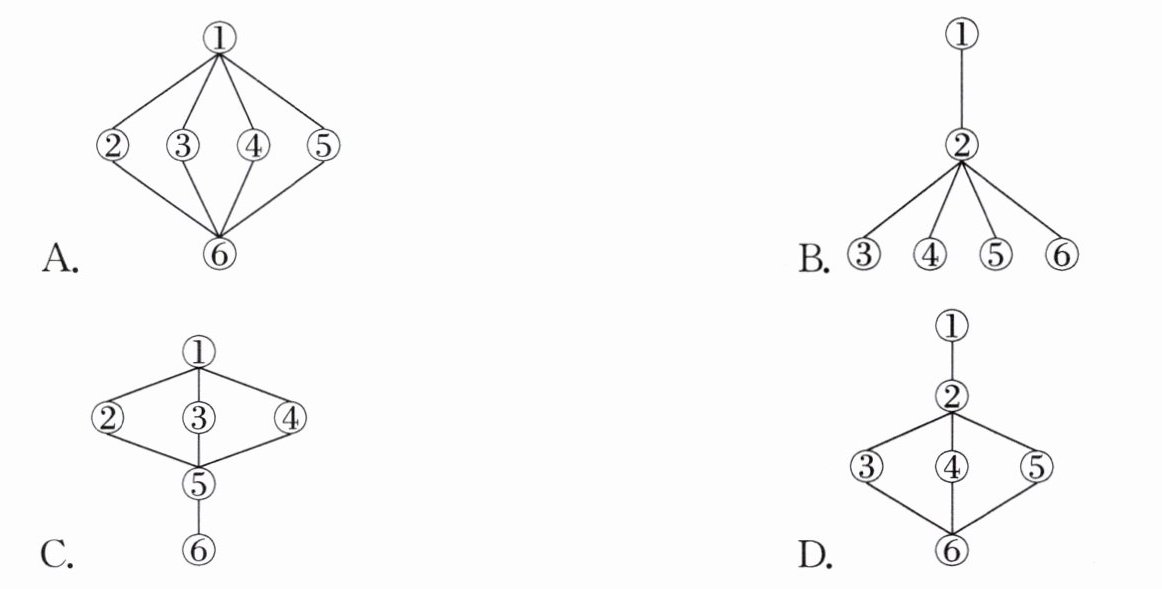
4. Which is the best structure of the passage? (①=paragraph 1;②=paragraph 2 ... )
5. Which of the following sayings may the writer agree with?
A. Time is what we want most, but what we use worst.
B. Never leave until tomorrow what you can do today.
C. Live every moment and be thankful for what you have.
D. The future belongs to those who are preparing for it now.
Recently, I asked a seeing friend who had just walked in the woods what she had noticed. “Nothing special,” she replied.
How was it possible, I asked myself, to walk through the woods and see nothing worthy of note? I who cannot see find hundreds of things to interest me only through touch. If I can get so much pleasure from touch, how much more beauty must be found by sight(视力)? And I have imagined what I should most like to see if I were given the use of my eyes for just three days.
On the first day, I should want to see the people who have made my life worth living and the books which have been read to me. In the afternoon, I should take a walk in the woods and admire the beauties of nature. That night, I should not be able to sleep.
On my second day, I should go to the museum to see man's progress. I should try to explore the spirit of man through art. In the evening, I should spend at the movies.
The following day, I should spend in the world of common people going about the business of life. At midnight permanent(永久的) night would close in on me again, and I should realize how much I had left unseen.
I who am blind can give one suggestion to those who see: Use your eyes as if tomorrow you would be blind. The same is true of other senses. Hear the songs of birds, as if you would be deaf tomorrow. Smell the flowers, as if tomorrow you could never smell again ... But of all the senses, I'm sure that sight must be the most pleasant.
(Adapted from *Three Days to See* by Helen Keller)
1. What makes the writer start imagining the three days?
A. Walking in the woods.
B. Asking herself questions.
C. Seeing natural beauties.
D. Touching interesting things.
2. What does the writer want to do during the three days?
A. Read books to people on the first day.
B. Go to the movies on the second day.
C. Succeed in business on the third day.
D. Have a wonderful dream every day.
3. What does the last paragraph mainly talk about?
A. A description of different senses.
B. A method of living a pleasant life.
C. Encouragement to the blind people.
D. Advice to people without disabilities.
4. Which is the best structure of the passage? (①=paragraph 1;②=paragraph 2 ... )
5. Which of the following sayings may the writer agree with?
A. Time is what we want most, but what we use worst.
B. Never leave until tomorrow what you can do today.
C. Live every moment and be thankful for what you have.
D. The future belongs to those who are preparing for it now.
答案
1.B 2.B 3.D 4.D 5.C
解析
【分析】
1. 第1题:需定位原文,找到作者开始想象三天的触发原因。原文第2段作者通过自问“视力能发现更多美好吗”等问题,进而展开想象,对应选项B。
2. 第2题:考查细节查找,需对应原文各天的计划,第4段明确提到第二天晚上去看电影,直接匹配选项B。
3. 第3题:分析最后一段主旨,该段是作者对有视力(无障碍)人群的感官使用建议,对应选项D。
4. 第4题:梳理文章段落逻辑,①段引出话题,②段过渡到想象,③-⑤段分别讲三天计划,⑥段给出建议,对应选项D的结构。
5. 第5题:推理作者观点,作者强调珍惜当下拥有的感官,与“活在当下、感恩拥有”的表述一致,对应选项C。
【解析】
1. 解析:根据原文第2段内容,作者因询问自身关于视力与触摸的差异等问题,进而开始想象拥有视力的三天,故答案为B。
2. 解析:根据原文第4段“On my second day...In the evening, I should spend at the movies.”可知,作者第二天计划去看电影,B项正确;A项“给人读书”与原文“看读过的书”不符,C项“成功做生意”原文未提及,D项“做美梦”无依据,故选B。
3. 解析:最后一段作者向有视力的无障碍人群提出关于合理使用感官的建议,核心是针对无障碍人群的提醒,故答案为D。
4. 解析:文章段落结构为:①引出话题→②作者的思考与想象开端→③第一天计划→④第二天计划→⑤第三天计划→⑥给出建议,对应选项D的结构,故选D。
5. 解析:作者强调珍惜当下拥有的感官(视力、听觉等),因为可能明天失去,与C项“Live every moment and be thankful for what you have”(活在当下,感恩拥有)的观点一致,故选C。
【答案】1.B 2.B 3.D 4.D 5.C
【知识点】阅读理解细节理解、阅读理解主旨大意、阅读理解文章结构
【点评】本题选取海伦·凯勒的经典作品片段,考查学生对英语阅读文本的细节查找、主旨把握、结构梳理及观点推理能力,题目设置贴合文本,难度适中,能有效考查学生的阅读理解水平。
【难度系数】0.6
1. 第1题:需定位原文,找到作者开始想象三天的触发原因。原文第2段作者通过自问“视力能发现更多美好吗”等问题,进而展开想象,对应选项B。
2. 第2题:考查细节查找,需对应原文各天的计划,第4段明确提到第二天晚上去看电影,直接匹配选项B。
3. 第3题:分析最后一段主旨,该段是作者对有视力(无障碍)人群的感官使用建议,对应选项D。
4. 第4题:梳理文章段落逻辑,①段引出话题,②段过渡到想象,③-⑤段分别讲三天计划,⑥段给出建议,对应选项D的结构。
5. 第5题:推理作者观点,作者强调珍惜当下拥有的感官,与“活在当下、感恩拥有”的表述一致,对应选项C。
【解析】
1. 解析:根据原文第2段内容,作者因询问自身关于视力与触摸的差异等问题,进而开始想象拥有视力的三天,故答案为B。
2. 解析:根据原文第4段“On my second day...In the evening, I should spend at the movies.”可知,作者第二天计划去看电影,B项正确;A项“给人读书”与原文“看读过的书”不符,C项“成功做生意”原文未提及,D项“做美梦”无依据,故选B。
3. 解析:最后一段作者向有视力的无障碍人群提出关于合理使用感官的建议,核心是针对无障碍人群的提醒,故答案为D。
4. 解析:文章段落结构为:①引出话题→②作者的思考与想象开端→③第一天计划→④第二天计划→⑤第三天计划→⑥给出建议,对应选项D的结构,故选D。
5. 解析:作者强调珍惜当下拥有的感官(视力、听觉等),因为可能明天失去,与C项“Live every moment and be thankful for what you have”(活在当下,感恩拥有)的观点一致,故选C。
【答案】1.B 2.B 3.D 4.D 5.C
【知识点】阅读理解细节理解、阅读理解主旨大意、阅读理解文章结构
【点评】本题选取海伦·凯勒的经典作品片段,考查学生对英语阅读文本的细节查找、主旨把握、结构梳理及观点推理能力,题目设置贴合文本,难度适中,能有效考查学生的阅读理解水平。
【难度系数】0.6
