

 登录
登录
五、立德树人·科学精神 任务型阅读
The space station is not only home to astronauts but also many small animals and plants. Scientists send them there to study life in microgravity(微重力).
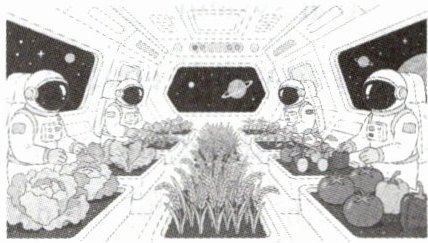
Many plants grow in space. Astronauts have grown lettuce, rice, tomatoes and peppers. These plants use LED lights and special soil. They take in carbon dioxide and give out oxygen, helping astronauts breathe. Fresh space-grown vegetables are also good for their health.
Some animals live in the space station too. Zebrafish are common. They are small and have similar genes(基因)to humans. In China’s Tiangong station, zebrafish and water plants made a self-sustaining aquatic(水生的)system. Fruit flies and mice are also used for experiments. They help scientists learn how space affects bones, muscles and hearts.
Studying space life helps us know more about human space travel. One day, we may live on other planets with our own space gardens and animal friends.
26. Why do scientists send animals to space?(不超过5个词)
27. What do plants in space give astronauts?(不超过5个词)
28. What is special about the zebrafish experiment in China’s space station?(不超过10个词)
The space station is not only home to astronauts but also many small animals and plants. Scientists send them there to study life in microgravity(微重力).
Many plants grow in space. Astronauts have grown lettuce, rice, tomatoes and peppers. These plants use LED lights and special soil. They take in carbon dioxide and give out oxygen, helping astronauts breathe. Fresh space-grown vegetables are also good for their health.
Some animals live in the space station too. Zebrafish are common. They are small and have similar genes(基因)to humans. In China’s Tiangong station, zebrafish and water plants made a self-sustaining aquatic(水生的)system. Fruit flies and mice are also used for experiments. They help scientists learn how space affects bones, muscles and hearts.
Studying space life helps us know more about human space travel. One day, we may live on other planets with our own space gardens and animal friends.
26. Why do scientists send animals to space?(不超过5个词)
To study life in microgravity.
27. What do plants in space give astronauts?(不超过5个词)
Oxygen and food.
28. What is special about the zebrafish experiment in China’s space station?(不超过10个词)
It made a self-sustaining aquatic system.
答案
26. To study life in microgravity. 27. Oxygen and food. 28. It made a self-sustaining aquatic system.
解析
【分析】
本题为任务型阅读,需根据题干问题定位原文对应内容,同时严格遵守答案的字数限制。第26题需定位科学家送动物去太空的原因;第27题需定位太空植物为宇航员提供的物质;第28题需定位中国空间站斑马鱼实验的特殊之处,提取核心信息即可。
【解析】
26. 由原文第一段“Scientists send them there to study life in microgravity.”可知,科学家送动物去太空是为研究微重力环境下的生命,符合字数要求。
27. 由原文第二段“They take in carbon dioxide and give out oxygen... Fresh space-grown vegetables are also good for their health.”可知,太空植物为宇航员提供氧气和食物,符合字数要求。
28. 由原文第三段“In China’s Tiangong station, zebrafish and water plants made a self-sustaining aquatic system.”可知,该实验的特别之处是构建了自给自足的水生系统,符合字数要求。
【答案】
26. To study life in microgravity.
27. Oxygen and food.
28. It made a self-sustaining aquatic system.
【知识点】
任务型阅读、信息提取
【点评】
本题考查任务型阅读的信息定位与提取能力,需精准对应原文内容,同时注意答案的字数限制,难度适中。
【难度系数】
0.5
本题为任务型阅读,需根据题干问题定位原文对应内容,同时严格遵守答案的字数限制。第26题需定位科学家送动物去太空的原因;第27题需定位太空植物为宇航员提供的物质;第28题需定位中国空间站斑马鱼实验的特殊之处,提取核心信息即可。
【解析】
26. 由原文第一段“Scientists send them there to study life in microgravity.”可知,科学家送动物去太空是为研究微重力环境下的生命,符合字数要求。
27. 由原文第二段“They take in carbon dioxide and give out oxygen... Fresh space-grown vegetables are also good for their health.”可知,太空植物为宇航员提供氧气和食物,符合字数要求。
28. 由原文第三段“In China’s Tiangong station, zebrafish and water plants made a self-sustaining aquatic system.”可知,该实验的特别之处是构建了自给自足的水生系统,符合字数要求。
【答案】
26. To study life in microgravity.
27. Oxygen and food.
28. It made a self-sustaining aquatic system.
【知识点】
任务型阅读、信息提取
【点评】
本题考查任务型阅读的信息定位与提取能力,需精准对应原文内容,同时注意答案的字数限制,难度适中。
【难度系数】
0.5
