

 登录
登录
C
KEY→P44
范畴:人与社会 主题:技术创新 体裁:说明文 难度:★★★★ 建议用时:6分钟 评价:/5
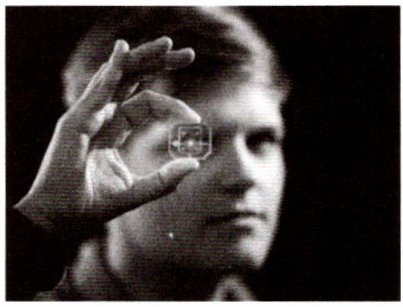
热考素材 现代科技 Scientists have made a great new discovery. They are helping people with poor eyesight see again by putting small electronic chips(芯片) into the backs of their eyes. The chips are two millimeters wide, about as thick as a grain of rice.
A test included 38 patients with an eye problem named age-related macular degeneration(AMD, 黄斑变性). This problem mostly harms old people. It blurs the center of their sight. About 20 million people in the US have AMD, and there is no way to treat it now.
The test was held at 17 hospitals in Europe. All the patients had a kind of AMD called "dry AMD". The disease harms the cells at the back of the eye that sense light. These cells turn light into electrical signals. The signals tell the brain what the eyes are seeing. When the cells are harmed or dead, people can't see well.
Patients wear a pair of glasses with a small camera inside. They also carry a small black box in their pocket. The box processes the picture information. When a patient looks at something, like a book, the camera in the glasses takes a picture. It sends the information to the black box. The box makes the picture clearer and sends it back to the glasses. Patients need time to train their brains to understand the new pictures. The pictures are only black and white. But the chip still changes the lives of many patients a lot.
Sheila Irvine took part in the test. Before the test, she was almost blind. "I loved reading books very much, and I wanted to read again," she said. After many hours of training to use the chip and glasses, she can now read books and play games. "It's amazing," she said. "I'm so happy now."
(
A. They are very small in size.
B. They are too heavy to wear.
C. They are expensive to make.
D. They can take clear pictures.
(
A. To create pictures in the brain.
B. To protect the back of the eye.
C. To send light directly to the brain.
D. To change light into electrical signals.
(
A. Takes in.
B. Works on.
C. Sends out.
D. Gives away.
英语嗨吧
(

(
A. Forget about her eye problems.
B. Stop using the chip and glasses.
C. Read books more often than before.
D. Help doctors make more black boxes.
D
KEY→P44
KEY→P44
范畴:人与社会 主题:技术创新 体裁:说明文 难度:★★★★ 建议用时:6分钟 评价:/5
热考素材 现代科技 Scientists have made a great new discovery. They are helping people with poor eyesight see again by putting small electronic chips(芯片) into the backs of their eyes. The chips are two millimeters wide, about as thick as a grain of rice.
A test included 38 patients with an eye problem named age-related macular degeneration(AMD, 黄斑变性). This problem mostly harms old people. It blurs the center of their sight. About 20 million people in the US have AMD, and there is no way to treat it now.
The test was held at 17 hospitals in Europe. All the patients had a kind of AMD called "dry AMD". The disease harms the cells at the back of the eye that sense light. These cells turn light into electrical signals. The signals tell the brain what the eyes are seeing. When the cells are harmed or dead, people can't see well.
Patients wear a pair of glasses with a small camera inside. They also carry a small black box in their pocket. The box processes the picture information. When a patient looks at something, like a book, the camera in the glasses takes a picture. It sends the information to the black box. The box makes the picture clearer and sends it back to the glasses. Patients need time to train their brains to understand the new pictures. The pictures are only black and white. But the chip still changes the lives of many patients a lot.
Sheila Irvine took part in the test. Before the test, she was almost blind. "I loved reading books very much, and I wanted to read again," she said. After many hours of training to use the chip and glasses, she can now read books and play games. "It's amazing," she said. "I'm so happy now."
(
A
)1. What can we infer about the electronic chips?A. They are very small in size.
B. They are too heavy to wear.
C. They are expensive to make.
D. They can take clear pictures.
(
D
)2. According to Paragraph 3, what is the main job of the light-sensing cells?A. To create pictures in the brain.
B. To protect the back of the eye.
C. To send light directly to the brain.
D. To change light into electrical signals.
(
B
)3. What does the underlined word "processes" in Paragraph 4 mean?A. Takes in.
B. Works on.
C. Sends out.
D. Gives away.
英语嗨吧
(
C
)4. 新考法·篇章结构 Which of the following shows the structure of the passage?(
C
)5. 新考法·情节推断 What may Sheila do next?A. Forget about her eye problems.
B. Stop using the chip and glasses.
C. Read books more often than before.
D. Help doctors make more black boxes.
D
KEY→P44
答案
本文介绍了一项重大科学发现:科学家通过向眼部植入微型电子芯片,帮助干性AMD患者恢复视力。
1. A 推理判断题。由第一段中"The chips are two millimeters wide, about as thick as a grain of rice."可知,芯片体积很小。
2. D 细节理解题。由第三段中"These cells turn light into electrical signals."可知,主要功能是将光转换为电信号。
3. B 词义猜测题。由"当患者看某物,比如一本书时,眼镜中的摄像头会拍摄照片,它将信息发送到黑盒"可知,上文对应表示:这个盒子处理图像信息。
4. C 篇章结构题。第一段总述:介绍科学新发现--电子芯片帮助视力不佳者重见光明;第二、三段分别介绍AMD眼病、患病情况及致病原理;第四、五段介绍芯片设备的工作方式、使用效果,并举例说明其作用。故本文结构为①/②③/④⑤。
5. C 情节推断题。由第五段中"I loved reading books very much, and I wanted to read again ... she can now read books and play games."可知,她会更多地读书。
1. A 推理判断题。由第一段中"The chips are two millimeters wide, about as thick as a grain of rice."可知,芯片体积很小。
2. D 细节理解题。由第三段中"These cells turn light into electrical signals."可知,主要功能是将光转换为电信号。
3. B 词义猜测题。由"当患者看某物,比如一本书时,眼镜中的摄像头会拍摄照片,它将信息发送到黑盒"可知,上文对应表示:这个盒子处理图像信息。
4. C 篇章结构题。第一段总述:介绍科学新发现--电子芯片帮助视力不佳者重见光明;第二、三段分别介绍AMD眼病、患病情况及致病原理;第四、五段介绍芯片设备的工作方式、使用效果,并举例说明其作用。故本文结构为①/②③/④⑤。
5. C 情节推断题。由第五段中"I loved reading books very much, and I wanted to read again ... she can now read books and play games."可知,她会更多地读书。
