

 登录
登录
二、句子
(一)看图写话。根据图片和提示词写出至少一个句子。
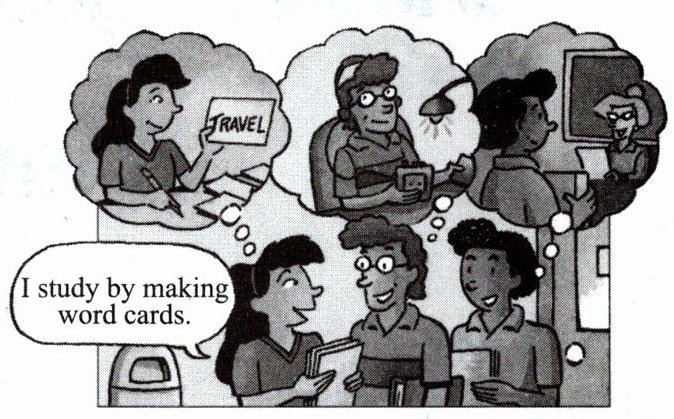
listen to tapes,ask the teacher for help
(一)看图写话。根据图片和提示词写出至少一个句子。
listen to tapes,ask the teacher for help
I study by listening to tapes.
I study by asking the teacher for help.
答案
I study by listening to tapes. I study by asking the teacher for help.
解析
【分析】首先观察图片,中间人物对应提示词“listen to tapes”,右边人物对应“ask the teacher for help”;结合例句结构“I study by doing sth.”,将提示词转化为动名词短语,组成符合要求的句子。
【解析】根据图片内容和提示词,使用“主语+study by + 动名词短语”的句型,分别对应两个提示词造句:将“listen to tapes”变为动名词短语“listening to tapes”,组成句子;将“ask the teacher for help”变为动名词短语“asking the teacher for help”,组成句子。
【答案】I study by listening to tapes. I study by asking the teacher for help.
【知识点】英语句型、动名词用法
【点评】本题结合图片与提示词,考查“study by doing sth.”句型的运用,需学生准确匹配图片内容并正确转换动词形式,属于基础句型运用题。
【难度系数】0.3
【解析】根据图片内容和提示词,使用“主语+study by + 动名词短语”的句型,分别对应两个提示词造句:将“listen to tapes”变为动名词短语“listening to tapes”,组成句子;将“ask the teacher for help”变为动名词短语“asking the teacher for help”,组成句子。
【答案】I study by listening to tapes. I study by asking the teacher for help.
【知识点】英语句型、动名词用法
【点评】本题结合图片与提示词,考查“study by doing sth.”句型的运用,需学生准确匹配图片内容并正确转换动词形式,属于基础句型运用题。
【难度系数】0.3
(二)英汉互译。
1. 我通过小组学习的方式学英语。
2. 你通过大声朗读来学英语吗?
3. 如何才能改善我的发音?
4. I was afraid of asking questions because of my poor pronunciation.
5. I find the meanings of new words in a dictionary by looking them up.
1. 我通过小组学习的方式学英语。
I learn by working with a group.
2. 你通过大声朗读来学英语吗?
Do you learn English by reading aloud?
3. 如何才能改善我的发音?
How can I improve pronunciation?
4. I was afraid of asking questions because of my poor pronunciation.
我发音不好,所以我害怕问问题。
5. I find the meanings of new words in a dictionary by looking them up.
我通过查词典来获取新词的意思。
答案
1. I learn by working with a group.
2. Do you learn English by reading aloud?
3. How can I improve pronunciation?
4. 我发音不好,所以我害怕问问题。
5. 我通过查词典来获取新词的意思。
2. Do you learn English by reading aloud?
3. How can I improve pronunciation?
4. 我发音不好,所以我害怕问问题。
5. 我通过查词典来获取新词的意思。
解析
【分析】
这类英汉互译题的解题思路为:1. 确定核心表达结构:英语中“通过某种方式做某事”常用“by + 动名词短语”结构,汉语翻译需符合目标语言的表达习惯;2. 明确句式类型:疑问句需注意助动词、疑问词的位置,特殊疑问句以How等疑问词开头;3. 掌握固定搭配:如be afraid of、look up、improve pronunciation等;4. 翻译时避免逐字硬译,调整为通顺的目标语言表述。
【解析】
1. “通过小组学习”对应“by working with a group”,结合语境省略重复的“学英语”相关表述,译为I learn by working with a group。
2. 一般疑问句以助动词Do开头,“通过大声朗读”为by reading aloud,“学英语”是learn English,组合为Do you learn English by reading aloud?
3. 特殊疑问句以How引导,“改善发音”是improve pronunciation,“如何才能”对应How can I,译为How can I improve pronunciation?
4. 逐句拆解:I was afraid of(我害怕)→ asking questions(问问题)→ because of(因为)→ my poor pronunciation(我的发音不好),调整为汉语通顺语序:我发音不好,所以我害怕问问题。
5. 拆解:I find the meanings of new words(我找到新词的意思)→ in a dictionary(在词典里)→ by looking them up(通过查它们),整合为通顺汉语:我通过查词典来获取新词的意思。
【答案】
1. I learn by working with a group.
2. Do you learn English by reading aloud?
3. How can I improve pronunciation?
4. 我发音不好,所以我害怕问问题。
5. 我通过查词典来获取新词的意思。
【知识点】
英汉互译,动词短语,固定搭配
【点评】
本题为英语入门阶段的基础英汉互译题,聚焦核心表达结构与常用短语,是巩固英语基础的典型题型,只要掌握基础句式和搭配即可轻松完成。
【难度系数】
0.8
这类英汉互译题的解题思路为:1. 确定核心表达结构:英语中“通过某种方式做某事”常用“by + 动名词短语”结构,汉语翻译需符合目标语言的表达习惯;2. 明确句式类型:疑问句需注意助动词、疑问词的位置,特殊疑问句以How等疑问词开头;3. 掌握固定搭配:如be afraid of、look up、improve pronunciation等;4. 翻译时避免逐字硬译,调整为通顺的目标语言表述。
【解析】
1. “通过小组学习”对应“by working with a group”,结合语境省略重复的“学英语”相关表述,译为I learn by working with a group。
2. 一般疑问句以助动词Do开头,“通过大声朗读”为by reading aloud,“学英语”是learn English,组合为Do you learn English by reading aloud?
3. 特殊疑问句以How引导,“改善发音”是improve pronunciation,“如何才能”对应How can I,译为How can I improve pronunciation?
4. 逐句拆解:I was afraid of(我害怕)→ asking questions(问问题)→ because of(因为)→ my poor pronunciation(我的发音不好),调整为汉语通顺语序:我发音不好,所以我害怕问问题。
5. 拆解:I find the meanings of new words(我找到新词的意思)→ in a dictionary(在词典里)→ by looking them up(通过查它们),整合为通顺汉语:我通过查词典来获取新词的意思。
【答案】
1. I learn by working with a group.
2. Do you learn English by reading aloud?
3. How can I improve pronunciation?
4. 我发音不好,所以我害怕问问题。
5. 我通过查词典来获取新词的意思。
【知识点】
英汉互译,动词短语,固定搭配
【点评】
本题为英语入门阶段的基础英汉互译题,聚焦核心表达结构与常用短语,是巩固英语基础的典型题型,只要掌握基础句式和搭配即可轻松完成。
【难度系数】
0.8
三、语篇
Reading for pleasure is the easiest way to become a better reader in English. It is the most important way.
Some students say that they don't want to read for pleasure. They say they want to use their time to learn the rules of the language and new words. They say that pleasure reading is too easy.
Many experts say that pleasure reading is very important for English learners. Dr. Stephen Krashen,a famous expert on learning languages,says that pleasure reading helps you learn many important things about English. ③Students learn more grammar and more words when they read for pleasure. They also learn more about good writings.
Dr. Krashen tells us that pleasure reading helps each student in a different way. Each student needs to learn something different. Pleasure reading makes it possible for each student to learn what he or she needs.
④Reading for pleasure is not the same as studying. When you read for pleasure,you choose your own books,and you don't have to remember everything. There are no tests for your pleasure reading. Pleasure reading will help you:
● learn how English speakers use English
● find examples of good writing in English
● learn about the cultures of English speakers
● read faster in English
● learn new words
根据短文内容,完成下列小题。
1. How can we become better readers?
2. What do some students think of pleasure reading?
3. 将短文画线处③译成汉语。
4. 将短文画线处④译成汉语。
5. 给短文拟一个合适的题目。
Reading for pleasure is the easiest way to become a better reader in English. It is the most important way.
Some students say that they don't want to read for pleasure. They say they want to use their time to learn the rules of the language and new words. They say that pleasure reading is too easy.
Many experts say that pleasure reading is very important for English learners. Dr. Stephen Krashen,a famous expert on learning languages,says that pleasure reading helps you learn many important things about English. ③Students learn more grammar and more words when they read for pleasure. They also learn more about good writings.
Dr. Krashen tells us that pleasure reading helps each student in a different way. Each student needs to learn something different. Pleasure reading makes it possible for each student to learn what he or she needs.
④Reading for pleasure is not the same as studying. When you read for pleasure,you choose your own books,and you don't have to remember everything. There are no tests for your pleasure reading. Pleasure reading will help you:
● learn how English speakers use English
● find examples of good writing in English
● learn about the cultures of English speakers
● read faster in English
● learn new words
根据短文内容,完成下列小题。
1. How can we become better readers?
By reading for pleasure.
2. What do some students think of pleasure reading?
It's too easy.
3. 将短文画线处③译成汉语。
学生们在进行趣味阅读时能学到更多的语法和单词,他们也能读到更多佳作。
4. 将短文画线处④译成汉语。
趣味阅读不同于学习。
5. 给短文拟一个合适的题目。
Reading for Pleasure
答案
1. By reading for pleasure.
2. It's too easy.
3. 学生们在进行趣味阅读时能学到更多的语法和单词,他们也能读到更多佳作。
4. 趣味阅读不同于学习。
5. Reading for Pleasure
2. It's too easy.
3. 学生们在进行趣味阅读时能学到更多的语法和单词,他们也能读到更多佳作。
4. 趣味阅读不同于学习。
5. Reading for Pleasure
解析
【分析】
解题时需先通读全文把握主旨,再针对各小题的题型定位原文对应内容:第1、2题是细节理解题,需定位原文中关于成为更好读者的方法、学生对趣味阅读看法的句子提取答案;第3、4题是英汉翻译题,需准确理解画线句的词汇和句式,用通顺中文表达;第5题是主旨大意题,需梳理全文核心话题提炼标题。
【解析】
1. 定位原文第一段第一句“Reading for pleasure is the easiest way to become a better reader in English.”,可知成为更好读者的方法是通过趣味阅读,故答案为By reading for pleasure.
2. 定位原文第二段最后一句“They say that pleasure reading is too easy.”,可知学生认为趣味阅读太简单,故答案为It's too easy.
3. 画线句③的英文意为:学生在进行趣味阅读时能学到更多语法和单词,也能学到更多关于佳作的内容,整合后翻译为:学生们在进行趣味阅读时能学到更多的语法和单词,他们也能读到更多佳作。
4. 画线句④的英文意为:趣味阅读不同于学习,直接翻译为:趣味阅读不同于学习。
5. 全文围绕“趣味阅读的重要性”展开,核心话题是趣味阅读,故标题为Reading for Pleasure.
【答案】
1. By reading for pleasure.
2. It's too easy.
3. 学生们在进行趣味阅读时能学到更多的语法和单词,他们也能读到更多佳作。
4. 趣味阅读不同于学习。
5. Reading for Pleasure
【知识点】
英语阅读理解、英汉互译、主旨大意题
【点评】
本题是一篇关于英语趣味阅读重要性的阅读理解题,涵盖细节理解、英汉翻译、主旨大意三类基础题型,考查学生对原文信息的定位提取、英汉转换及主旨概括能力,整体难度适中,适合初中阶段学生练习。
【难度系数】
0.6
解题时需先通读全文把握主旨,再针对各小题的题型定位原文对应内容:第1、2题是细节理解题,需定位原文中关于成为更好读者的方法、学生对趣味阅读看法的句子提取答案;第3、4题是英汉翻译题,需准确理解画线句的词汇和句式,用通顺中文表达;第5题是主旨大意题,需梳理全文核心话题提炼标题。
【解析】
1. 定位原文第一段第一句“Reading for pleasure is the easiest way to become a better reader in English.”,可知成为更好读者的方法是通过趣味阅读,故答案为By reading for pleasure.
2. 定位原文第二段最后一句“They say that pleasure reading is too easy.”,可知学生认为趣味阅读太简单,故答案为It's too easy.
3. 画线句③的英文意为:学生在进行趣味阅读时能学到更多语法和单词,也能学到更多关于佳作的内容,整合后翻译为:学生们在进行趣味阅读时能学到更多的语法和单词,他们也能读到更多佳作。
4. 画线句④的英文意为:趣味阅读不同于学习,直接翻译为:趣味阅读不同于学习。
5. 全文围绕“趣味阅读的重要性”展开,核心话题是趣味阅读,故标题为Reading for Pleasure.
【答案】
1. By reading for pleasure.
2. It's too easy.
3. 学生们在进行趣味阅读时能学到更多的语法和单词,他们也能读到更多佳作。
4. 趣味阅读不同于学习。
5. Reading for Pleasure
【知识点】
英语阅读理解、英汉互译、主旨大意题
【点评】
本题是一篇关于英语趣味阅读重要性的阅读理解题,涵盖细节理解、英汉翻译、主旨大意三类基础题型,考查学生对原文信息的定位提取、英汉转换及主旨概括能力,整体难度适中,适合初中阶段学生练习。
【难度系数】
0.6
