

 登录
登录
二、老师正在介绍宇航员在太空的精彩生活。读一读,选择正确的答案。
() 1. What are Chinese astronauts called?
A. Taikonauts.
B. Pilots.
C. Workers.
() 2. How do taikonauts wash their faces in space?
A. With water.
B. With a wet cloth.
C. With a toothbrush.
() 3. How many times can taikonauts see the sunrise and sunset a day?
A. 6.
B. 16.
C. 60.
() 4. Why do taikonauts do exercise every afternoon?
A. To keep healthy.
B. To play games.
C. To grow vegetables.
() 5. What do taikonauts do in space?
A. Grow vegetables.
B. Go shopping.
C. Watch TV.
() 1. What are Chinese astronauts called?
A. Taikonauts.
B. Pilots.
C. Workers.
() 2. How do taikonauts wash their faces in space?
A. With water.
B. With a wet cloth.
C. With a toothbrush.
() 3. How many times can taikonauts see the sunrise and sunset a day?
A. 6.
B. 16.
C. 60.
() 4. Why do taikonauts do exercise every afternoon?
A. To keep healthy.
B. To play games.
C. To grow vegetables.
() 5. What do taikonauts do in space?
A. Grow vegetables.
B. Go shopping.
C. Watch TV.
答案
1. A 2. B 3. B 4. A 5. A
解析
【分析】
这是关于中国宇航员太空生活的英语选择题,解题思路是结合太空科普知识和英语词汇含义逐一分析选项:第1题考查中国宇航员的专属英文称呼;第2题考查太空失重环境下的生活细节;第3题考查太空绕地周期相关的天文常识;第4题考查太空锻炼的目的;第5题考查宇航员的太空任务内容。
【解析】
1. 选项A“Taikonaut”是中国宇航员的英文专属称呼,B“Pilot”意为飞行员,C“Worker”意为工人,因此选A。
2. 太空失重环境中,水会漂浮无法正常使用,宇航员无法像地面一样用水洗脸,只能用湿毛巾清洁,因此选B。
3. 国际空间站绕地球一周约90分钟,一天24小时共1440分钟,1440÷90=16次,因此选B。
4. 太空失重会导致肌肉萎缩、骨密度降低,宇航员每天锻炼是为了维持身体健康,因此选A。
5. 太空任务中会开展太空蔬菜种植等实验,购物、看电视不是宇航员的主要活动,因此选A。
【答案】
1.A 2.B 3.B 4.A 5.A
【知识点】
太空科普常识、英语词汇辨析
【点评】
本题结合英语知识与太空生活常识,考察学生的科普积累和英语应用能力,题目贴近生活,难度适中。
【难度系数】
0.5
这是关于中国宇航员太空生活的英语选择题,解题思路是结合太空科普知识和英语词汇含义逐一分析选项:第1题考查中国宇航员的专属英文称呼;第2题考查太空失重环境下的生活细节;第3题考查太空绕地周期相关的天文常识;第4题考查太空锻炼的目的;第5题考查宇航员的太空任务内容。
【解析】
1. 选项A“Taikonaut”是中国宇航员的英文专属称呼,B“Pilot”意为飞行员,C“Worker”意为工人,因此选A。
2. 太空失重环境中,水会漂浮无法正常使用,宇航员无法像地面一样用水洗脸,只能用湿毛巾清洁,因此选B。
3. 国际空间站绕地球一周约90分钟,一天24小时共1440分钟,1440÷90=16次,因此选B。
4. 太空失重会导致肌肉萎缩、骨密度降低,宇航员每天锻炼是为了维持身体健康,因此选A。
5. 太空任务中会开展太空蔬菜种植等实验,购物、看电视不是宇航员的主要活动,因此选A。
【答案】
1.A 2.B 3.B 4.A 5.A
【知识点】
太空科普常识、英语词汇辨析
【点评】
本题结合英语知识与太空生活常识,考察学生的科普积累和英语应用能力,题目贴近生活,难度适中。
【难度系数】
0.5
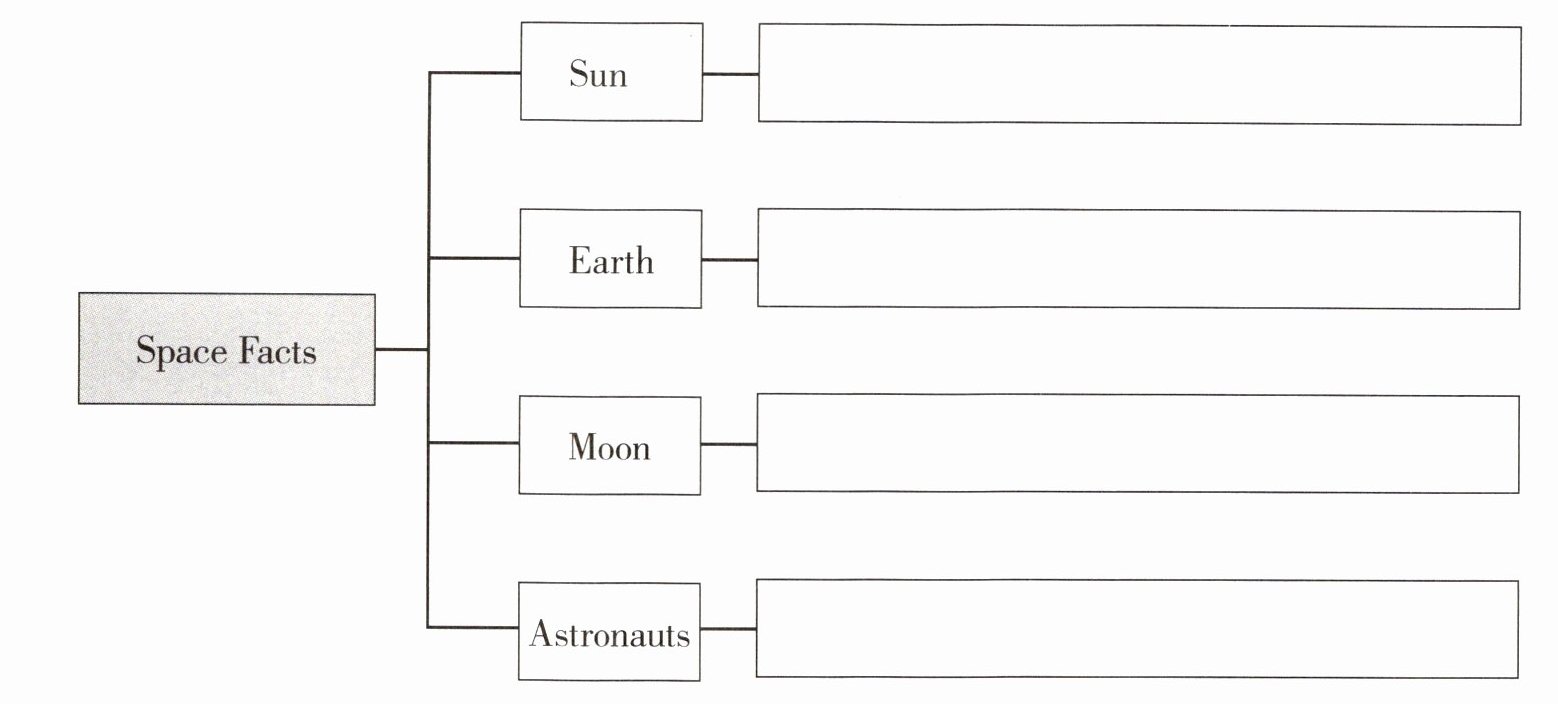
你了解了哪些和宇宙有关的知识?请完成下列思维导图。
答案
参考示例(答案不唯一):
Sun: It is a very hot star, it gives light and warmth to us.
Earth: It is our home planet, it travels around the Sun.
Moon: It is the satellite of the Earth, we can see it at night.
Astronauts: They are space workers, they can walk in space.
Sun: It is a very hot star, it gives light and warmth to us.
Earth: It is our home planet, it travels around the Sun.
Moon: It is the satellite of the Earth, we can see it at night.
Astronauts: They are space workers, they can walk in space.
解析
【分析】本题是宇宙相关知识的思维导图填空题,需围绕太阳、地球、月球、宇航员四个类别,结合基础天文常识,用简单英语描述每个类别的核心特征,完成填空。
【解析】根据常见宇宙基础常识,分别对四类内容进行准确描述:
1. 太阳:是非常热的恒星,为人类提供光和热;
2. 地球:是人类的家园行星,围绕太阳运转;
3. 月球:是地球的卫星,夜晚可见;
4. 宇航员:是太空工作者,可在太空行走。
【答案】
Sun: It is a very hot star, it gives light and warmth to us.
Earth: It is our home planet, it travels around the Sun.
Moon: It is the satellite of the Earth, we can see it at night.
Astronauts: They are space workers, they can walk in space.
【知识点】天文常识、英语句子表达、思维导图梳理
【点评】本题结合基础天文知识与英语应用,考察学生对宇宙常识的掌握及简单英语组织能力,形式直观,难度适中。
【难度系数】0.7
【解析】根据常见宇宙基础常识,分别对四类内容进行准确描述:
1. 太阳:是非常热的恒星,为人类提供光和热;
2. 地球:是人类的家园行星,围绕太阳运转;
3. 月球:是地球的卫星,夜晚可见;
4. 宇航员:是太空工作者,可在太空行走。
【答案】
Sun: It is a very hot star, it gives light and warmth to us.
Earth: It is our home planet, it travels around the Sun.
Moon: It is the satellite of the Earth, we can see it at night.
Astronauts: They are space workers, they can walk in space.
【知识点】天文常识、英语句子表达、思维导图梳理
【点评】本题结合基础天文知识与英语应用,考察学生对宇宙常识的掌握及简单英语组织能力,形式直观,难度适中。
【难度系数】0.7
