

 登录
登录
一、从方框中选择适当的词并用其正确形式填空。
ice - skate chat kung fu push outing
1. My father is very understanding, and he never
2. I fell down a lot when I tried to
3. Listen! She is
4. We often go on a family
5. When I want to relax, I usually choose to watch
ice - skate chat kung fu push outing
1. My father is very understanding, and he never
pushes
me to do things I don't like.2. I fell down a lot when I tried to
ice - skate
yesterday afternoon.3. Listen! She is
chatting
with her friends on the phone now.4. We often go on a family
outing
together on Sundays.5. When I want to relax, I usually choose to watch
kung fu
movies.答案
1. pushes 2. ice - skate 3. chatting 4. outing 5. kung fu
解析
【分析】
解题时可以按三步推进:第一步先明确方框内所有单词的含义和基本词性:ice-skate(动词,滑冰)、chat(动词,聊天)、kung fu(名词,功夫)、push(动词,推、逼迫)、outing(名词,郊游、短途出行)。第二步逐句翻译理解语义,先判断空格处所需的词性,再结合时态、固定搭配规则确定正确形式:先根据句子提示的时态特征判断动词是否需要变形,再结合固定搭配的常用表达匹配剩余词汇。第三步代入所有答案通读检查,确认语义通顺、形式完全符合语法要求。
【解析】
1. 句意为“我的父亲非常善解人意,他从不逼迫我做我不喜欢的事”,固定搭配push sb. to do sth. 表示逼迫某人做某事;句子是一般现在时,主语he是第三人称单数,谓语动词push要变为第三人称单数形式pushes。
2. 句意为“昨天下午我尝试滑冰的时候摔了很多次”,try to do sth. 结构后接动词原形,结合语义选ice-skate即可。
3. 句意为“听!她现在正在和朋友打电话聊天”,提示词Listen!和now说明句子是现在进行时,结构为be+动词现在分词,chat的现在分词要双写末尾的t再加-ing,即chatting。
4. 句意为“我们经常周日一起进行家庭出游”,固定搭配go on a family outing表示家庭郊游,直接填名词outing。
5. 句意为“当我想要放松的时候,我通常选择看功夫电影”,常用表达kung fu movies表示功夫片,直接填kung fu。
【答案】
1. pushes 2. ice-skate 3. chatting 4. outing 5. kung fu
【知识点】
动词时态变形;固定短语搭配;名词作定语
【点评】
本题是基础类选词填空题,主要考察学生对核心词汇含义、词性的掌握,以及常见时态变化规则、固定搭配的积累,唯一的小易错点是chat变现在分词时的双写规则,结合语境和语法规则逐一推导就可以顺利得到全部正确答案。
【难度系数】
0.8
解题时可以按三步推进:第一步先明确方框内所有单词的含义和基本词性:ice-skate(动词,滑冰)、chat(动词,聊天)、kung fu(名词,功夫)、push(动词,推、逼迫)、outing(名词,郊游、短途出行)。第二步逐句翻译理解语义,先判断空格处所需的词性,再结合时态、固定搭配规则确定正确形式:先根据句子提示的时态特征判断动词是否需要变形,再结合固定搭配的常用表达匹配剩余词汇。第三步代入所有答案通读检查,确认语义通顺、形式完全符合语法要求。
【解析】
1. 句意为“我的父亲非常善解人意,他从不逼迫我做我不喜欢的事”,固定搭配push sb. to do sth. 表示逼迫某人做某事;句子是一般现在时,主语he是第三人称单数,谓语动词push要变为第三人称单数形式pushes。
2. 句意为“昨天下午我尝试滑冰的时候摔了很多次”,try to do sth. 结构后接动词原形,结合语义选ice-skate即可。
3. 句意为“听!她现在正在和朋友打电话聊天”,提示词Listen!和now说明句子是现在进行时,结构为be+动词现在分词,chat的现在分词要双写末尾的t再加-ing,即chatting。
4. 句意为“我们经常周日一起进行家庭出游”,固定搭配go on a family outing表示家庭郊游,直接填名词outing。
5. 句意为“当我想要放松的时候,我通常选择看功夫电影”,常用表达kung fu movies表示功夫片,直接填kung fu。
【答案】
1. pushes 2. ice-skate 3. chatting 4. outing 5. kung fu
【知识点】
动词时态变形;固定短语搭配;名词作定语
【点评】
本题是基础类选词填空题,主要考察学生对核心词汇含义、词性的掌握,以及常见时态变化规则、固定搭配的积累,唯一的小易错点是chat变现在分词时的双写规则,结合语境和语法规则逐一推导就可以顺利得到全部正确答案。
【难度系数】
0.8
二、用括号内所给单词的正确形式填空。
1. When you are in trouble, feel free
2. I often hear her
3. He is interested in nature, so he enjoys
4. Mr Wang always encourages us
5. It is difficult for me
6. It is a fine day today. Let's
7. Yuan Lei is very funny. His stories always make us
8. You should ask Bob
9. Many people went to big cities
10. You can't expect
1. When you are in trouble, feel free
to ask
(ask) me for help at any time.2. I often hear her
sing
(sing) in the next room.3. He is interested in nature, so he enjoys
watching
(watch) birds and insects in his free time.4. Mr Wang always encourages us
to speak
(speak) English after class.5. It is difficult for me
to remember
(remember) new words.6. It is a fine day today. Let's
go
(go) for a picnic.7. Yuan Lei is very funny. His stories always make us
laugh
(laugh) a lot.8. You should ask Bob
to wash
(wash) his own clothes. He is old enough now.9. Many people went to big cities
to search
(search) for jobs in the past.10. You can't expect
to learn
(learn) a foreign language well in a few months.答案
1. to ask 2. sing 3. watching 4. to speak 5. to remember 6. go 7. laugh 8. to wash 9. to search 10. to learn
解析
【分析】
这道题全部围绕非谓语动词的固定搭配考点展开,解题思路非常清晰:拿到题目后先定位空格前的核心动词/句型标志,回忆对应的非谓语动词搭配规则,再对括号内的动词做对应变形即可。比如看到feel free就想到它后面要接to do结构,看到enjoy就想到后面要接doing结构,看到Let's就想到后面接动词原形,逐个对应规则就能顺利得出答案。
【解析】
1. 考查固定搭配feel free to do sth,意为“随意做某事”,因此填to ask。
2. 考查固定搭配hear sb do sth,该结构表示听到某人做经常性动作/动作全过程,句中出现often提示是经常性动作,因此填动词原形sing。
3. 考查固定搭配enjoy doing sth,意为“喜欢做某事”,enjoy后接动名词作宾语,因此填watching。
4. 考查固定搭配encourage sb to do sth,意为“鼓励某人做某事”,因此填to speak。
5. 考查固定句型It is + 形容词 + for sb to do sth,不定式是句子的真正主语,因此填to remember。
6. 考查固定搭配Let's do sth,使役动词let后接不带to的不定式,因此填动词原形go。
7. 考查固定搭配make sb do sth,使役动词make后接不带to的不定式,意为“让某人做某事”,因此填laugh。
8. 考查固定搭配ask sb to do sth,意为“要求某人做某事”,因此填to wash。
9. 此处用不定式作目的状语,说明人们去大城市的目的是找工作,因此填to search。
10. 考查固定搭配expect to do sth,意为“期待做某事”,因此填to learn。
【答案】
1. to ask 2. sing 3. watching 4. to speak 5. to remember 6. go 7. laugh 8. to wash 9. to search 10. to learn
【知识点】
非谓语动词固定搭配,不定式用法,常用动词句型
【点评】
本题全部是初中阶段最核心的高频基础非谓语考点,没有偏难怪的设置,只要学生牢记课本要求掌握的接to do、doing、不带to的不定式的动词和对应句型,就可以顺利完成,是非常适合巩固基础搭配的典型练习题。
【难度系数】
0.8
这道题全部围绕非谓语动词的固定搭配考点展开,解题思路非常清晰:拿到题目后先定位空格前的核心动词/句型标志,回忆对应的非谓语动词搭配规则,再对括号内的动词做对应变形即可。比如看到feel free就想到它后面要接to do结构,看到enjoy就想到后面要接doing结构,看到Let's就想到后面接动词原形,逐个对应规则就能顺利得出答案。
【解析】
1. 考查固定搭配feel free to do sth,意为“随意做某事”,因此填to ask。
2. 考查固定搭配hear sb do sth,该结构表示听到某人做经常性动作/动作全过程,句中出现often提示是经常性动作,因此填动词原形sing。
3. 考查固定搭配enjoy doing sth,意为“喜欢做某事”,enjoy后接动名词作宾语,因此填watching。
4. 考查固定搭配encourage sb to do sth,意为“鼓励某人做某事”,因此填to speak。
5. 考查固定句型It is + 形容词 + for sb to do sth,不定式是句子的真正主语,因此填to remember。
6. 考查固定搭配Let's do sth,使役动词let后接不带to的不定式,因此填动词原形go。
7. 考查固定搭配make sb do sth,使役动词make后接不带to的不定式,意为“让某人做某事”,因此填laugh。
8. 考查固定搭配ask sb to do sth,意为“要求某人做某事”,因此填to wash。
9. 此处用不定式作目的状语,说明人们去大城市的目的是找工作,因此填to search。
10. 考查固定搭配expect to do sth,意为“期待做某事”,因此填to learn。
【答案】
1. to ask 2. sing 3. watching 4. to speak 5. to remember 6. go 7. laugh 8. to wash 9. to search 10. to learn
【知识点】
非谓语动词固定搭配,不定式用法,常用动词句型
【点评】
本题全部是初中阶段最核心的高频基础非谓语考点,没有偏难怪的设置,只要学生牢记课本要求掌握的接to do、doing、不带to的不定式的动词和对应句型,就可以顺利完成,是非常适合巩固基础搭配的典型练习题。
【难度系数】
0.8
三、从方框中选择适当的短语并用其正确形式填空。
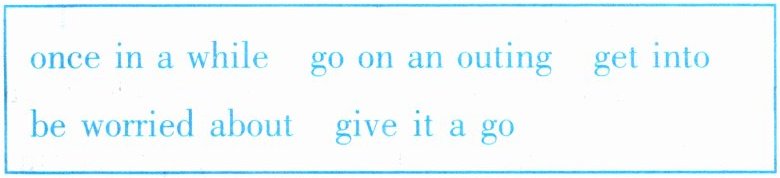
once in a while go on an outing get into be worried about give it a go
1. —How did you
—I saw my grandfather do it every day, so I got interested in it.
2. Winning the writing competition is never easy, but I'll
3. Although my grandparents prefer homemade food, they eat at restaurants
4. Harry got lost in the zoo yesterday morning, and his mother
5. Our class
once in a while go on an outing get into be worried about give it a go
1. —How did you
get into
doing calligraphy?—I saw my grandfather do it every day, so I got interested in it.
2. Winning the writing competition is never easy, but I'll
give it a go
.3. Although my grandparents prefer homemade food, they eat at restaurants
once in a while
.4. Harry got lost in the zoo yesterday morning, and his mother
was worried about
him.5. Our class
went on an outing
to the Forest Park by bus yesterday.答案
1. get into 2. give it a go 3. once in a while 4. was worried about 5. went on an outing
解析
【分析】
做这类选词填空的题目,首先第一步先明确所有备选短语的含义:get into表示开始从事、迷上;give it a go表示试一试;once in a while表示偶尔、间或;be worried about表示为……担心;go on an outing表示去出游、去远足。接下来逐句分析语境、时态和语法要求:
1. 第一句答句说明是逐渐对书法产生兴趣、开始做书法,结合前面的助动词did,后面要接动词原形,匹配对应短语即可。
2. 第二句前半句说获奖不容易,转折后表达自己愿意尝试,will后面接动词原形,匹配对应短语。
3. 第三句前半句说祖父母偏爱家常菜,后半句补充说明他们下馆子的频率,对应表频率的短语,该短语无需变形。
4. 第四句前半句说Harry昨天迷路,后半句表达妈妈很担心他,句子是一般过去时,主语是单数,调整be动词的形式即可。
5. 第五句时间状语是yesterday,说明是过去发生的动作,表达班级去森林公园出游,把go变为过去式即可。
【解析】
1. 句意:——你是怎么开始迷上书法的?——我之前每天看我爷爷写,就对它产生兴趣了。助动词did后接动词原形,get into符合语境,故填get into。
2. 句意:赢得写作比赛从来都不容易,但我会试一试。情态动词will后接动词原形,give it a go表示尝试,符合语境,故填give it a go。
3. 句意:虽然我的祖父母更喜欢家常菜,但他们偶尔也会去餐馆吃饭。once in a while是频度短语,意为偶尔,符合语境,无需变形,故填once in a while。
4. 句意:Harry昨天早上在动物园迷路了,他的妈妈很担心他。句子时态为一般过去时,主语his mother是第三人称单数,be动词用was,故填was worried about。
5. 句意:我们班昨天乘公交车去森林公园出游了。时间状语yesterday表明时态为一般过去时,go的过去式为went,故填went on an outing。
【答案】
1. get into 2. give it a go 3. once in a while 4. was worried about 5. went on an outing
【知识点】
固定短语辨析,一般过去时,情态动词用法
【点评】
本题是基础的短语运用题型,既考查学生对常见固定短语含义的识记能力,也结合时态、助动词/情态动词的语法规则考查短语的正确变形,整体语境贴近日常,只要熟记短语含义、掌握基础时态规则就可以顺利完成。
【难度系数】
0.8
做这类选词填空的题目,首先第一步先明确所有备选短语的含义:get into表示开始从事、迷上;give it a go表示试一试;once in a while表示偶尔、间或;be worried about表示为……担心;go on an outing表示去出游、去远足。接下来逐句分析语境、时态和语法要求:
1. 第一句答句说明是逐渐对书法产生兴趣、开始做书法,结合前面的助动词did,后面要接动词原形,匹配对应短语即可。
2. 第二句前半句说获奖不容易,转折后表达自己愿意尝试,will后面接动词原形,匹配对应短语。
3. 第三句前半句说祖父母偏爱家常菜,后半句补充说明他们下馆子的频率,对应表频率的短语,该短语无需变形。
4. 第四句前半句说Harry昨天迷路,后半句表达妈妈很担心他,句子是一般过去时,主语是单数,调整be动词的形式即可。
5. 第五句时间状语是yesterday,说明是过去发生的动作,表达班级去森林公园出游,把go变为过去式即可。
【解析】
1. 句意:——你是怎么开始迷上书法的?——我之前每天看我爷爷写,就对它产生兴趣了。助动词did后接动词原形,get into符合语境,故填get into。
2. 句意:赢得写作比赛从来都不容易,但我会试一试。情态动词will后接动词原形,give it a go表示尝试,符合语境,故填give it a go。
3. 句意:虽然我的祖父母更喜欢家常菜,但他们偶尔也会去餐馆吃饭。once in a while是频度短语,意为偶尔,符合语境,无需变形,故填once in a while。
4. 句意:Harry昨天早上在动物园迷路了,他的妈妈很担心他。句子时态为一般过去时,主语his mother是第三人称单数,be动词用was,故填was worried about。
5. 句意:我们班昨天乘公交车去森林公园出游了。时间状语yesterday表明时态为一般过去时,go的过去式为went,故填went on an outing。
【答案】
1. get into 2. give it a go 3. once in a while 4. was worried about 5. went on an outing
【知识点】
固定短语辨析,一般过去时,情态动词用法
【点评】
本题是基础的短语运用题型,既考查学生对常见固定短语含义的识记能力,也结合时态、助动词/情态动词的语法规则考查短语的正确变形,整体语境贴近日常,只要熟记短语含义、掌握基础时态规则就可以顺利完成。
【难度系数】
0.8
四、根据材料内容选择最佳答案。
When I was a young girl, I loved paper - cutting and I was pretty good at it. As I grew up, I became busy and didn't have much time for it. Later, I stopped doing it.
However, a piece of online news touched my heart and changed my mind. A little girl from Guangdong was practising lion dance when a professional (专业的) lion dance performance team passed by. As soon as they saw the little girl practising, they started to beat drums and gongs (锣) for her, and quickly she did a lion dance in return. People around all cheered for her. Her love for the ancient Chinese culture evoked my strong memories of paper - cutting.
I remembered the happy times of making paper - cuts with my teacher and friends in a club. When I was ten, I joined the paper - cutting club. Every Monday and Friday, I learned to make paper - cuts there. Our teacher, Ms Li, was very talented. With a pair of scissors and a piece of paper, she could create lively works. That amazed us. And we learned much from her. Together we created lots of works. They covered many topics, including animals, flowers and things about Chinese history. Every time we held a paper - cutting show, our works attracted (吸引) many visitors.
The girl in the news encouraged me a lot. I want to be an inheritor (继承人) of the ancient Chinese culture. Together with other inheritors, I hope to pass down our excellent culture.
(
A. She cheered for the team.
B. She did a lion dance in return.
C. She watched their show carefully.
D. She made a paper - cut for the team.
(
A. Brought back.
B. Took away.
C. Cut off.
D. Depended on.
(
A. The long history of paper - cutting.
B. The steps of making paper - cuts.
C. The writer's happy times of making paper - cuts.
D. The writer's plans for setting up a paper - cutting club.
(
A. The writer practises paper - cutting twice a week now.
B. The writer wasn't interested in paper - cutting at a young age.
C. The writer hopes to be a drummer in the lion dance.
D. The online news touched and encouraged the writer a lot.
(
A. She might take a trip to Guangdong.
B. She might continue with her hobby.
C. She might learn to practise the lion dance.
D. She might create lively works with the little girl.
When I was a young girl, I loved paper - cutting and I was pretty good at it. As I grew up, I became busy and didn't have much time for it. Later, I stopped doing it.
However, a piece of online news touched my heart and changed my mind. A little girl from Guangdong was practising lion dance when a professional (专业的) lion dance performance team passed by. As soon as they saw the little girl practising, they started to beat drums and gongs (锣) for her, and quickly she did a lion dance in return. People around all cheered for her. Her love for the ancient Chinese culture evoked my strong memories of paper - cutting.
I remembered the happy times of making paper - cuts with my teacher and friends in a club. When I was ten, I joined the paper - cutting club. Every Monday and Friday, I learned to make paper - cuts there. Our teacher, Ms Li, was very talented. With a pair of scissors and a piece of paper, she could create lively works. That amazed us. And we learned much from her. Together we created lots of works. They covered many topics, including animals, flowers and things about Chinese history. Every time we held a paper - cutting show, our works attracted (吸引) many visitors.
The girl in the news encouraged me a lot. I want to be an inheritor (继承人) of the ancient Chinese culture. Together with other inheritors, I hope to pass down our excellent culture.
(
B
)1. What did the little girl do after the team began to beat drums and gongs for her?A. She cheered for the team.
B. She did a lion dance in return.
C. She watched their show carefully.
D. She made a paper - cut for the team.
(
A
)2. What does the underlined word "evoked" mean in Paragraph 2?A. Brought back.
B. Took away.
C. Cut off.
D. Depended on.
(
C
)3. What is Paragraph 3 mainly about?A. The long history of paper - cutting.
B. The steps of making paper - cuts.
C. The writer's happy times of making paper - cuts.
D. The writer's plans for setting up a paper - cutting club.
(
D
)4. What can we know from the text?A. The writer practises paper - cutting twice a week now.
B. The writer wasn't interested in paper - cutting at a young age.
C. The writer hopes to be a drummer in the lion dance.
D. The online news touched and encouraged the writer a lot.
(
B
)5. What might the writer do next?A. She might take a trip to Guangdong.
B. She might continue with her hobby.
C. She might learn to practise the lion dance.
D. She might create lively works with the little girl.
答案
1—5 BACDB
解析
【分析】
这是一篇记叙文类阅读理解,解题时首先通读全文梳理脉络:作者年少时热爱剪纸,长大后因忙碌放弃,后来一则关于小女孩热爱舞狮的网络新闻触动了她,唤起了她对剪纸时光的回忆,最终她决定重新拾起剪纸、做中国传统文化的传承人。接下来逐题对应思路:1题是细节题,直接定位题干相关的第二段原文找对应动作;2题是词义猜测题,结合划线词后的搭配"剪纸的回忆"推导词义;3题是段落大意题,重点看第三段的核心开篇句,排除段落未提及的无关选项;4题是细节判断题,将每个选项和原文内容逐一比对,排除描述错误的选项;5题是推理判断题,结合文章结尾作者的表态,合理推断后续行为,不要选无原文依据的内容。
【解析】
1. 细节定位:根据第二段原文"As soon as they saw the little girl practising, they started to beat drums and gongs (锣) for her, and quickly she did a lion dance in return.",可知小女孩在舞狮队为她敲锣打鼓之后,回以了一段舞狮表演,对应选项B。
2. 词义猜测:划线词evoked后接的内容是"my strong memories of paper-cutting",即小女孩对传统文化的热爱让作者重新想起了自己和剪纸相关的回忆,A选项Brought back意为"使想起、带回",完全符合语境,其余选项Took away(带走)、Cut off(切断)、Depended on(依靠)均不符合语义,选A。
3. 段落大意:第三段开篇就点明核心"I remembered the happy times of making paper - cuts with my teacher and friends in a club",整段都在回忆作者当年在剪纸俱乐部学习、创作、办展览的快乐经历,文中完全没有提及剪纸的历史、剪纸的步骤、作者要新建俱乐部的计划,对应选项C。
4. 细节判断:逐一排除错误选项:A选项文中只提到作者小时候每周一、周五去俱乐部学剪纸,没有提到现在每周练习两次;B选项第一段明确说明作者年少时热爱剪纸还很擅长,描述错误;C选项结尾提到作者想做中国传统文化的传承人,并没有说要当舞狮队的鼓手,描述错误;D选项第二段提到这则网络新闻触动了作者,最后一段提到新闻里的小女孩极大鼓舞了作者,符合原文内容,选D。
5. 推理判断:作者此前已经放弃了剪纸爱好,被新闻触动后明确表示想要做中国传统文化的传承人、传递优秀文化,因此最合理的后续行为是重新拾起自己的剪纸爱好,其余选项去广东旅行、学舞狮、和小女孩一起创作作品都没有原文依据,选B。
【答案】
1—5 BACDB
【知识点】
细节信息查找,词义猜测,段落大意归纳
【点评】
本篇阅读以中国传统民俗文化为主题,整体考点设置梯度平缓,大部分题目都可以通过题干关键词精准定位原文直接得到答案,仅词义猜测和推理判断类题目需要结合上下文逻辑做简单推导,既考察学生的基础信息提取能力,也渗透了传统文化传承的正向价值引导,学生解题时注意不要脱离原文主观臆断即可轻松得分。
【难度系数】
0.8
这是一篇记叙文类阅读理解,解题时首先通读全文梳理脉络:作者年少时热爱剪纸,长大后因忙碌放弃,后来一则关于小女孩热爱舞狮的网络新闻触动了她,唤起了她对剪纸时光的回忆,最终她决定重新拾起剪纸、做中国传统文化的传承人。接下来逐题对应思路:1题是细节题,直接定位题干相关的第二段原文找对应动作;2题是词义猜测题,结合划线词后的搭配"剪纸的回忆"推导词义;3题是段落大意题,重点看第三段的核心开篇句,排除段落未提及的无关选项;4题是细节判断题,将每个选项和原文内容逐一比对,排除描述错误的选项;5题是推理判断题,结合文章结尾作者的表态,合理推断后续行为,不要选无原文依据的内容。
【解析】
1. 细节定位:根据第二段原文"As soon as they saw the little girl practising, they started to beat drums and gongs (锣) for her, and quickly she did a lion dance in return.",可知小女孩在舞狮队为她敲锣打鼓之后,回以了一段舞狮表演,对应选项B。
2. 词义猜测:划线词evoked后接的内容是"my strong memories of paper-cutting",即小女孩对传统文化的热爱让作者重新想起了自己和剪纸相关的回忆,A选项Brought back意为"使想起、带回",完全符合语境,其余选项Took away(带走)、Cut off(切断)、Depended on(依靠)均不符合语义,选A。
3. 段落大意:第三段开篇就点明核心"I remembered the happy times of making paper - cuts with my teacher and friends in a club",整段都在回忆作者当年在剪纸俱乐部学习、创作、办展览的快乐经历,文中完全没有提及剪纸的历史、剪纸的步骤、作者要新建俱乐部的计划,对应选项C。
4. 细节判断:逐一排除错误选项:A选项文中只提到作者小时候每周一、周五去俱乐部学剪纸,没有提到现在每周练习两次;B选项第一段明确说明作者年少时热爱剪纸还很擅长,描述错误;C选项结尾提到作者想做中国传统文化的传承人,并没有说要当舞狮队的鼓手,描述错误;D选项第二段提到这则网络新闻触动了作者,最后一段提到新闻里的小女孩极大鼓舞了作者,符合原文内容,选D。
5. 推理判断:作者此前已经放弃了剪纸爱好,被新闻触动后明确表示想要做中国传统文化的传承人、传递优秀文化,因此最合理的后续行为是重新拾起自己的剪纸爱好,其余选项去广东旅行、学舞狮、和小女孩一起创作作品都没有原文依据,选B。
【答案】
1—5 BACDB
【知识点】
细节信息查找,词义猜测,段落大意归纳
【点评】
本篇阅读以中国传统民俗文化为主题,整体考点设置梯度平缓,大部分题目都可以通过题干关键词精准定位原文直接得到答案,仅词义猜测和推理判断类题目需要结合上下文逻辑做简单推导,既考察学生的基础信息提取能力,也渗透了传统文化传承的正向价值引导,学生解题时注意不要脱离原文主观臆断即可轻松得分。
【难度系数】
0.8
