

 登录
登录
6. 新考法 图示理解 The pictures of the

A.empty
B.broken
C.dirty
D.lively
A
plate on the walls of restaurants warn people not to waste food.A.empty
B.broken
C.dirty
D.lively
答案
6. A 解析:考查形容词。empty plate意为“空盘子”,提醒不要浪费食物。
解析
【分析】首先明确题目语境:墙上的盘子图案用于提醒人们不要浪费食物,需选择修饰盘子的形容词,结合“节约粮食”的生活常识,分析各选项词义,选出符合语境的答案。
【解析】本题考查形容词词义辨析。A选项empty意为“空的”,empty plate表示“空盘子”,对应“光盘行动”的理念,可用来提醒人们不浪费食物;B选项broken意为“破碎的”,C选项dirty意为“脏的”,D选项lively意为“活泼的”,均不符合“提醒不浪费食物”的语境,因此选A。
【答案】A
【知识点】形容词词义辨析、语境理解
【点评】本题结合生活实际(节约粮食常识)考查形容词的词义运用,贴近生活,易于理解。
【难度系数】0.6
【解析】本题考查形容词词义辨析。A选项empty意为“空的”,empty plate表示“空盘子”,对应“光盘行动”的理念,可用来提醒人们不浪费食物;B选项broken意为“破碎的”,C选项dirty意为“脏的”,D选项lively意为“活泼的”,均不符合“提醒不浪费食物”的语境,因此选A。
【答案】A
【知识点】形容词词义辨析、语境理解
【点评】本题结合生活实际(节约粮食常识)考查形容词的词义运用,贴近生活,易于理解。
【难度系数】0.6
7. Excuse me, sir, you'd better not smoke here.
It's a non-smoking
A.address
B.street
C.area
D.ground
It's a non-smoking
C
.A.address
B.street
C.area
D.ground
答案
7. C 解析:考查名词。non-smoking area意为“非吸烟区”。
解析
【分析】首先理解对话句意:对方提醒不要在此抽烟,因为这里是禁烟的______。接着分析各选项词义:A.address意为“地址”,B.street意为“街道”,C.area意为“区域”,D.ground意为“地面”。再结合固定搭配,“non-smoking area”是固定表达“禁烟区”,由此确定答案。
【解析】本题考查名词词义辨析及固定搭配。句意为:打扰一下,先生,您最好不要在这里抽烟,这里是禁烟区。A.address(地址)、B.street(街道)、D.ground(地面)均不符合语境,固定搭配“non-smoking area”表示“禁烟区”,因此选C。
【答案】C
【知识点】名词词义辨析、固定搭配
【点评】本题为基础词汇考查题,结合语境和固定搭配即可选出正确答案,难度较低。
【难度系数】0.6
【解析】本题考查名词词义辨析及固定搭配。句意为:打扰一下,先生,您最好不要在这里抽烟,这里是禁烟区。A.address(地址)、B.street(街道)、D.ground(地面)均不符合语境,固定搭配“non-smoking area”表示“禁烟区”,因此选C。
【答案】C
【知识点】名词词义辨析、固定搭配
【点评】本题为基础词汇考查题,结合语境和固定搭配即可选出正确答案,难度较低。
【难度系数】0.6
8. —Do you know the Chinese saying “Two heads are better than one.”?
—Yes. It tells us that
A.hope
B.luck
C.energy
D.teamwork
—Yes. It tells us that
D
is very important in our lives.A.hope
B.luck
C.energy
D.teamwork
答案
8. D 解析:考查名词。谚语“两个脑袋比一个好”强调团队合作(teamwork)。
解析
【分析】首先理解题目中的英语谚语“Two heads are better than one”,其含义是“人多力量大;三个臭皮匠顶个诸葛亮”,核心强调多人合作的重要性。接着分析各选项词义,判断哪个选项符合谚语表达的核心意思,进而选出正确答案。
【解析】本题考查名词词义辨析及英语谚语含义的理解。“Two heads are better than one”这句谚语的核心是强调团队合作的重要性。逐一分析选项:A选项hope意为“希望”,与谚语含义无关;B选项luck意为“运气”,不符合语境;C选项energy意为“能量”,也不符合;D选项teamwork意为“团队合作”,正好对应谚语所表达的多人协作的重要性,因此选D。
【答案】D
【知识点】名词词义辨析;英语谚语理解
【点评】本题结合英语谚语考查名词词义,属于基础题型,需要学生掌握常见英语谚语的含义,同时准确辨析各选项名词的意思,难度适中,注重基础知识的积累。
【难度系数】0.3
【解析】本题考查名词词义辨析及英语谚语含义的理解。“Two heads are better than one”这句谚语的核心是强调团队合作的重要性。逐一分析选项:A选项hope意为“希望”,与谚语含义无关;B选项luck意为“运气”,不符合语境;C选项energy意为“能量”,也不符合;D选项teamwork意为“团队合作”,正好对应谚语所表达的多人协作的重要性,因此选D。
【答案】D
【知识点】名词词义辨析;英语谚语理解
【点评】本题结合英语谚语考查名词词义,属于基础题型,需要学生掌握常见英语谚语的含义,同时准确辨析各选项名词的意思,难度适中,注重基础知识的积累。
【难度系数】0.3
9. Dad, Grandma's birthday is coming. Could you tell me
A.how to buy
B.what to buy
C.where to buy
D.when to buy
B
for her?A.how to buy
B.what to buy
C.where to buy
D.when to buy
答案
9. B 解析:考查疑问词+不定式。根据语境“为奶奶买什么礼物”用what to buy。
解析
【分析】首先理解句子语境:奶奶的生日即将到来,需要询问爸爸该为奶奶准备的物品是什么。接着分析选项:“疑问词+不定式”结构中,疑问副词(how、where、when)无法作动词buy的宾语,而疑问代词what可作buy的宾语,结合语境“买什么”,即可选出正确选项。
【解析】本题考查“疑问词+不定式”的用法。句意为“爸爸,奶奶的生日要到了,你能告诉我该为她买什么吗?”。A选项how to buy(如何买)、C选项where to buy(在哪里买)、D选项when to buy(什么时候买)中,how、where、when是疑问副词,不能作buy的宾语;B选项what to buy(买什么)中what是疑问代词,可作buy的宾语,符合语境,故选B。
【答案】B
【知识点】疑问词+不定式;语境理解
【点评】本题为基础语法题,结合日常交际语境考查疑问词加不定式的用法,需区分疑问代词与疑问副词在不定式结构中的功能,难度较低。
【难度系数】0.7
【解析】本题考查“疑问词+不定式”的用法。句意为“爸爸,奶奶的生日要到了,你能告诉我该为她买什么吗?”。A选项how to buy(如何买)、C选项where to buy(在哪里买)、D选项when to buy(什么时候买)中,how、where、when是疑问副词,不能作buy的宾语;B选项what to buy(买什么)中what是疑问代词,可作buy的宾语,符合语境,故选B。
【答案】B
【知识点】疑问词+不定式;语境理解
【点评】本题为基础语法题,结合日常交际语境考查疑问词加不定式的用法,需区分疑问代词与疑问副词在不定式结构中的功能,难度较低。
【难度系数】0.7
Ⅳ. 句子翻译
1. 在野外旅行中接近大自然是很好的。
It's nice
2. 我很高兴保持我的卧室干净整洁。
I'm happy
3. 昨晚他们轮流照顾那个生病的男孩。
4. 有时做家务对我来说太累了。
5. 通过给植物浇水我学到了生物学。
6. 在我的学校,每个学生早上读英语书。
1. 在野外旅行中接近大自然是很好的。
It's nice
to get close to nature on field trips
.2. 我很高兴保持我的卧室干净整洁。
I'm happy
to keep my bedroom clean and tidy
.3. 昨晚他们轮流照顾那个生病的男孩。
They took turns to take care of the sick boy last night.
4. 有时做家务对我来说太累了。
Sometimes doing housework is too tiring for me.
5. 通过给植物浇水我学到了生物学。
I learn/learned about biology through watering the plants.
6. 在我的学校,每个学生早上读英语书。
At my school, every student reads English books in the morning.
答案
Ⅳ. 1. to get close to nature on field trips
2. to keep my bedroom clean and tidy
3. They took turns to take care of the sick boy last night.
4. Sometimes doing housework is too tiring for me.
5. I learn/learned about biology through watering the plants.
6. At my school, every student reads English books in the morning.
2. to keep my bedroom clean and tidy
3. They took turns to take care of the sick boy last night.
4. Sometimes doing housework is too tiring for me.
5. I learn/learned about biology through watering the plants.
6. At my school, every student reads English books in the morning.
解析
【分析】
本题为汉译英题型,需根据中文句子的语义,结合英语常用句型结构、固定搭配及时态等知识,逐句匹配对应的英语表达,确保翻译准确、符合英语语法规则。具体思路:1. 第一句用“It's + adj + to do sth”的常用句型对应“做某事是……的”;2. 第二句用“be happy to do sth”结构对应“很高兴做某事”;3. 第三句结合时间状语“昨晚”用一般过去时,匹配“轮流做某事”的固定搭配;4. 第四句用动名词短语作主语对应“做某事是……的”;5. 第五句用“through + 动名词”结构对应“通过……方式”;6. 第六句结合一般现在时对应“某地某人做某事”的结构。
【解析】
1. 第一句用“It's nice to do sth”句型,“接近大自然”译为get close to nature,“在野外旅行中”译为on field trips,组合得to get close to nature on field trips;
2. 第二句用“be happy to do sth”结构,“保持……干净整洁”译为keep...clean and tidy,组合得to keep my bedroom clean and tidy;
3. 第三句时间状语“昨晚”提示用一般过去时,“轮流做某事”译为take turns to do sth,“照顾生病的男孩”译为take care of the sick boy,组合得They took turns to take care of the sick boy last night;
4. 第四句“有时”译为Sometimes,“做家务”用动名词doing housework作主语,“对我来说太累”译为too tiring for me,组合得Sometimes doing housework is too tiring for me;
5. 第五句“通过”用介词through,后接动名词watering the plants,“学到生物学”译为learn about biology,时态可选用一般现在或过去时,组合得I learn/learned about biology through watering the plants;
6. 第六句“在我的学校”译为At my school,“每个学生”译为every student,“读英语书”译为reads English books,“早上”译为in the morning,组合得At my school, every student reads English books in the morning。
【答案】
Ⅳ. 1. to get close to nature on field trips
2. to keep my bedroom clean and tidy
3. They took turns to take care of the sick boy last night.
4. Sometimes doing housework is too tiring for me.
5. I learn/learned about biology through watering the plants.
6. At my school, every student reads English books in the morning.
【知识点】
动词不定式用法、固定搭配、一般过去时
【点评】
本题考查基础汉译英能力,聚焦英语常用句型、固定表达及时态的运用,是初中英语核心基础题型,需学生熟练掌握核心句型与搭配。
【难度系数】
0.7
本题为汉译英题型,需根据中文句子的语义,结合英语常用句型结构、固定搭配及时态等知识,逐句匹配对应的英语表达,确保翻译准确、符合英语语法规则。具体思路:1. 第一句用“It's + adj + to do sth”的常用句型对应“做某事是……的”;2. 第二句用“be happy to do sth”结构对应“很高兴做某事”;3. 第三句结合时间状语“昨晚”用一般过去时,匹配“轮流做某事”的固定搭配;4. 第四句用动名词短语作主语对应“做某事是……的”;5. 第五句用“through + 动名词”结构对应“通过……方式”;6. 第六句结合一般现在时对应“某地某人做某事”的结构。
【解析】
1. 第一句用“It's nice to do sth”句型,“接近大自然”译为get close to nature,“在野外旅行中”译为on field trips,组合得to get close to nature on field trips;
2. 第二句用“be happy to do sth”结构,“保持……干净整洁”译为keep...clean and tidy,组合得to keep my bedroom clean and tidy;
3. 第三句时间状语“昨晚”提示用一般过去时,“轮流做某事”译为take turns to do sth,“照顾生病的男孩”译为take care of the sick boy,组合得They took turns to take care of the sick boy last night;
4. 第四句“有时”译为Sometimes,“做家务”用动名词doing housework作主语,“对我来说太累”译为too tiring for me,组合得Sometimes doing housework is too tiring for me;
5. 第五句“通过”用介词through,后接动名词watering the plants,“学到生物学”译为learn about biology,时态可选用一般现在或过去时,组合得I learn/learned about biology through watering the plants;
6. 第六句“在我的学校”译为At my school,“每个学生”译为every student,“读英语书”译为reads English books,“早上”译为in the morning,组合得At my school, every student reads English books in the morning。
【答案】
Ⅳ. 1. to get close to nature on field trips
2. to keep my bedroom clean and tidy
3. They took turns to take care of the sick boy last night.
4. Sometimes doing housework is too tiring for me.
5. I learn/learned about biology through watering the plants.
6. At my school, every student reads English books in the morning.
【知识点】
动词不定式用法、固定搭配、一般过去时
【点评】
本题考查基础汉译英能力,聚焦英语常用句型、固定表达及时态的运用,是初中英语核心基础题型,需学生熟练掌握核心句型与搭配。
【难度系数】
0.7
Ⅴ. 阅读理解
At school, students usually learn many
subjects in the classroom like English, Maths and so on. Now there is a new one in some schools—school gardening. It is an outdoor(户外) subject. In the gardening class, teachers teach students different kinds of vegetables and how to grow them. Then, students work in groups.
Only fun from the classes? Of course not. Students can learn something too. Keeping a school garden is difficult and all the students in the group need to come and help. This teaches students teamwork. Also, some vegetables are easy to grow, but others take a long time. This teaches students they need to wait before they get the things they want.
There may be many other good things about school gardening. But one thing is for sure—students really love having outdoor classes.
1. What does the underlined word "one" in Paragraph 1 refer to?
A. School.
B. Subject.
C. Student.
D. Classroom.
2. Which of the following can be put in " ▲ " in Paragraph 2?
A. The students really love this subject.
B. The students don't love this subject.
C. This subject is very interesting.
D. This subject takes students a lot of time.
3. What can we infer(推断) after reading the passage?
A. The students don't have fun in the gardening classes.
B. All the vegetables need a long time to grow.
C. Students may ask schools to have more outdoor subjects.
D. The garden in the school is very big and beautiful.
4.新考法 篇章结构 What's the structure of the text?
A.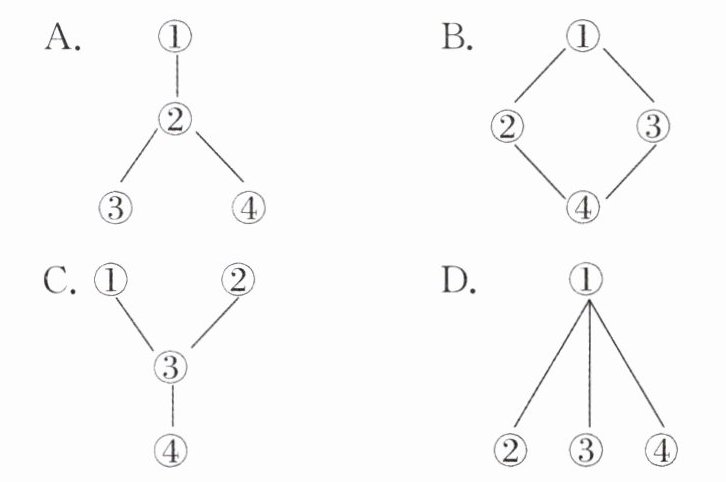
5. What's the best title for the passage?
A. Great Fun in School Gardening
B. An Outdoor School Activity
C. Group Work in School Gardening
D. A New Subject—School Gardening
At school, students usually learn many
subjects in the classroom like English, Maths and so on. Now there is a new one in some schools—school gardening. It is an outdoor(户外) subject. In the gardening class, teachers teach students different kinds of vegetables and how to grow them. Then, students work in groups.
A
▲ Why? Because they can have a lot of fun in this class. They don't have to sit at their desks in the classroom all day. They can get out, get their hands dirty, do things with their own hands, and relax. It's also fun to get something to eat and see. In some schools, students like to grow carrots and tomatoes. It's always interesting for them to get a carrot or a tomato, wash it, and eat it right in the garden. In some schools, students like to grow flowers. When it's spring, all the flowers come out and they're really beautiful. Students like to walk and talk in the beauty. That's their favourite thing to do after busy hours of study.Only fun from the classes? Of course not. Students can learn something too. Keeping a school garden is difficult and all the students in the group need to come and help. This teaches students teamwork. Also, some vegetables are easy to grow, but others take a long time. This teaches students they need to wait before they get the things they want.
There may be many other good things about school gardening. But one thing is for sure—students really love having outdoor classes.
1. What does the underlined word "one" in Paragraph 1 refer to?
A. School.
B. Subject.
C. Student.
D. Classroom.
2. Which of the following can be put in " ▲ " in Paragraph 2?
A. The students really love this subject.
B. The students don't love this subject.
C. This subject is very interesting.
D. This subject takes students a lot of time.
3. What can we infer(推断) after reading the passage?
A. The students don't have fun in the gardening classes.
B. All the vegetables need a long time to grow.
C. Students may ask schools to have more outdoor subjects.
D. The garden in the school is very big and beautiful.
4.
A.
5. What's the best title for the passage?
A. Great Fun in School Gardening
B. An Outdoor School Activity
C. Group Work in School Gardening
D. A New Subject—School Gardening
答案
Ⅴ. 1.B 2.A 3.C 4.B 5.D
【语篇解读】本文是一篇说明文,介绍了学校园艺这门新的户外课程,包括学生们的乐趣、所学到的知识以及学生的喜爱。
1. B 解析:代词指代题。代词“one”指代上文提到的“subject”(学科)。前句说“students usually learn many subjects”,下文说“there is a new one—school gardening”,故one指subject。
2. A 解析:补全文章题。空格后为“Why?”,说明前句应是一个观点陈述,且后文解释原因(因为有趣)。A项“学生们真的喜欢这门课”能够引出下文“为什么喜欢”,逻辑连贯。
易错点拨 C项虽正确描述了课程特点,但空格后的“Why?”直接针对前句的原因。若前句说“这门课很有趣”,问“为什么?”也通顺。但仔细比较:A项“学生们喜欢”更贴近下文中“Because they can have a lot of fun”的因果逻辑——因为他们觉得有趣,所以喜欢。且A项包含学生的主观感受,更能引出下文具体说明。C项仅陈述课程属性,略显生硬。故A更佳。
3. C 解析:推理判断题。文章指出学生热爱户外园艺课,可以推断他们可能会希望学校开设更多户外课程。A与原文相反;B过于绝对;D无依据。故选C。
4. B 解析:篇章结构题。第一段引入学校园艺这门新学科;第二、三段分别讲述乐趣和学到的内容(并列);第四段总结学生的喜爱。故结构为①/②③/④。
5. D 解析:标题归纳题。文章主要介绍学校园艺作为一门新学科,包括其内容、乐趣和收获。D项“A New Subject—School Gardening”概括最全面。A项只强调乐趣,B项过于宽泛,C项只提小组合作。
【语篇解读】本文是一篇说明文,介绍了学校园艺这门新的户外课程,包括学生们的乐趣、所学到的知识以及学生的喜爱。
1. B 解析:代词指代题。代词“one”指代上文提到的“subject”(学科)。前句说“students usually learn many subjects”,下文说“there is a new one—school gardening”,故one指subject。
2. A 解析:补全文章题。空格后为“Why?”,说明前句应是一个观点陈述,且后文解释原因(因为有趣)。A项“学生们真的喜欢这门课”能够引出下文“为什么喜欢”,逻辑连贯。
易错点拨 C项虽正确描述了课程特点,但空格后的“Why?”直接针对前句的原因。若前句说“这门课很有趣”,问“为什么?”也通顺。但仔细比较:A项“学生们喜欢”更贴近下文中“Because they can have a lot of fun”的因果逻辑——因为他们觉得有趣,所以喜欢。且A项包含学生的主观感受,更能引出下文具体说明。C项仅陈述课程属性,略显生硬。故A更佳。
3. C 解析:推理判断题。文章指出学生热爱户外园艺课,可以推断他们可能会希望学校开设更多户外课程。A与原文相反;B过于绝对;D无依据。故选C。
4. B 解析:篇章结构题。第一段引入学校园艺这门新学科;第二、三段分别讲述乐趣和学到的内容(并列);第四段总结学生的喜爱。故结构为①/②③/④。
5. D 解析:标题归纳题。文章主要介绍学校园艺作为一门新学科,包括其内容、乐趣和收获。D项“A New Subject—School Gardening”概括最全面。A项只强调乐趣,B项过于宽泛,C项只提小组合作。
解析
【分析】本题为英语阅读理解题,包含5道不同考点的小题,解题思路如下:1. 代词指代题:需定位上文提到的名词,确定代词指代内容;2. 语句补全题:结合空格后的因果逻辑,选择能引出原因的观点句;3. 推理判断题:依据原文信息逐一排除错误选项,得出合理推断;4. 篇章结构题:划分段落层次,梳理各段逻辑关系;5. 标题归纳题:概括全文核心内容,避免以偏概全。
【解析】1. 代词指代题:第一段前句提到“many subjects”,后句“a new one”指代前文的“subject”,故选B;2. 语句补全题:空格后以“Why?”引出原因(学生觉得有趣),A项“学生真的喜欢这门课”能自然引出下文原因,逻辑连贯,故选A;3. 推理判断题:A与原文“学生喜欢园艺课”相反,B“所有蔬菜”与原文“有些蔬菜耗时久”不符,D“学校花园很大”无依据,C“学生可能要求学校开设更多户外课程”符合原文学生喜爱户外课的推断,故选C;4. 篇章结构题:第一段引入学校园艺课,第二、三段分别讲乐趣和收获(并列),第四段总结,结构为①/②③/④,对应选项B;5. 标题归纳题:全文围绕“学校园艺这门新学科”展开,D项概括全面,A仅强调乐趣,B过于宽泛,C仅提小组合作,故选D。
【答案】1.B 2.A 3.C 4.B 5.D
【知识点】英语阅读理解;代词指代;推理判断;标题归纳
【点评】本题考查英语阅读理解的多种核心考点,要求学生具备语篇理解、逻辑分析和信息筛选能力,题型常规,难度适中。
【难度系数】0.7
【解析】1. 代词指代题:第一段前句提到“many subjects”,后句“a new one”指代前文的“subject”,故选B;2. 语句补全题:空格后以“Why?”引出原因(学生觉得有趣),A项“学生真的喜欢这门课”能自然引出下文原因,逻辑连贯,故选A;3. 推理判断题:A与原文“学生喜欢园艺课”相反,B“所有蔬菜”与原文“有些蔬菜耗时久”不符,D“学校花园很大”无依据,C“学生可能要求学校开设更多户外课程”符合原文学生喜爱户外课的推断,故选C;4. 篇章结构题:第一段引入学校园艺课,第二、三段分别讲乐趣和收获(并列),第四段总结,结构为①/②③/④,对应选项B;5. 标题归纳题:全文围绕“学校园艺这门新学科”展开,D项概括全面,A仅强调乐趣,B过于宽泛,C仅提小组合作,故选D。
【答案】1.B 2.A 3.C 4.B 5.D
【知识点】英语阅读理解;代词指代;推理判断;标题归纳
【点评】本题考查英语阅读理解的多种核心考点,要求学生具备语篇理解、逻辑分析和信息筛选能力,题型常规,难度适中。
【难度系数】0.7
