

 登录
登录
Ⅰ. 用所给单词的适当形式填空
1. Mary
2. Since he fell off the bike, John
3. He
4. The story Hou Yi Shoots the Suns
1. Mary
has worked
(work) as a volunteer at a reading programme since 2 years ago.2. Since he fell off the bike, John
has lain
(lie) in bed for nearly a week.3. He
has lived
(live) here for more than twenty years.4. The story Hou Yi Shoots the Suns
has been
(be) popular with children in China for many years.答案
1. has worked
2. has lain
3. has lived
4. has been
2. has lain
3. has lived
4. has been
解析
【分析】这几道题考查现在完成时的用法,解题思路是:首先识别句中的时间标志词(since+时间点/从句、for+时间段),这些是现在完成时的典型标志;其次,现在完成时的结构为“have/has + 动词过去分词”,需根据主语的单复数确定助动词(第三人称单数用has,其他人称用have);最后,将所给动词变为对应的过去分词形式,填入空格即可。
【解析】
1. 句中时间状语“since 2 years ago”是现在完成时的标志,主语Mary为第三人称单数,助动词用has;动词work的过去分词是worked,故填has worked。
2. 句中时间状语“since he fell off the bike”“for nearly a week”均为现在完成时的标志,主语John为第三人称单数,助动词用has;动词lie(躺)的过去分词是lain,故填has lain。
3. 句中时间状语“for more than twenty years”是现在完成时的标志,主语He为第三人称单数,助动词用has;动词live的过去分词是lived,故填has lived。
4. 句中时间状语“for many years”是现在完成时的标志,主语The story为第三人称单数,助动词用has;动词be的过去分词是been,故填has been。
【答案】1. has worked;2. has lain;3. has lived;4. has been
【知识点】现在完成时;动词过去分词;主谓一致
【点评】本题为现在完成时的基础应用题型,核心是掌握现在完成时的时间标志、结构及不规则动词的过去分词变化,属于初中英语的基础考点,只要牢记相关规则即可正确解答。
【难度系数】0.3
【解析】
1. 句中时间状语“since 2 years ago”是现在完成时的标志,主语Mary为第三人称单数,助动词用has;动词work的过去分词是worked,故填has worked。
2. 句中时间状语“since he fell off the bike”“for nearly a week”均为现在完成时的标志,主语John为第三人称单数,助动词用has;动词lie(躺)的过去分词是lain,故填has lain。
3. 句中时间状语“for more than twenty years”是现在完成时的标志,主语He为第三人称单数,助动词用has;动词live的过去分词是lived,故填has lived。
4. 句中时间状语“for many years”是现在完成时的标志,主语The story为第三人称单数,助动词用has;动词be的过去分词是been,故填has been。
【答案】1. has worked;2. has lain;3. has lived;4. has been
【知识点】现在完成时;动词过去分词;主谓一致
【点评】本题为现在完成时的基础应用题型,核心是掌握现在完成时的时间标志、结构及不规则动词的过去分词变化,属于初中英语的基础考点,只要牢记相关规则即可正确解答。
【难度系数】0.3
Ⅱ. 根据句意及首字母或汉语提示完成句子
1. Tom's two sons joined the a
2. Do you remember the first teacher who taught you in p
3. The brave s
4. Terry greeted the visitors
5. She volunteers at a c
1. Tom's two sons joined the a
army
and served our country.2. Do you remember the first teacher who taught you in p
primary
school?3. The brave s
soldier
was badly hurt, but he kept fighting.4. Terry greeted the visitors
warmly
(热情地).5. She volunteers at a c
charity
every weekend to pack food for homeless people.答案
1. army
2. primary
3. soldier
4. warmly
5. charity
2. primary
3. soldier
4. warmly
5. charity
解析
【分析】
本题为根据句意及首字母或汉语提示完成句子的题型,解题思路为:先通读每个句子理解语境,再结合给出的首字母或汉语提示回忆所学词汇,最后根据句子结构判断词汇的正确形式(如副词修饰动词等)。具体来看:1题结合“参军为国家服务”的语境和首字母a确定词汇;2题结合“小学”的固定搭配和首字母p确定词汇;3题结合“勇敢的人受伤仍战斗”的语境和首字母s确定词汇;4题结合汉语提示“热情地”及修饰动词需用副词的规则确定词汇;5题结合“为无家可归者打包食物”的语境和首字母c确定词汇。
【解析】
1. 句意:汤姆的两个儿子参军为国家服务,“参军”是固定短语join the army,结合首字母a,填army。
2. 句意:你记得小学教你的第一个老师吗?“小学”是固定短语primary school,结合首字母p,填primary。
3. 句意:勇敢的士兵受重伤但仍继续战斗,结合语境和首字母s,可知是士兵soldier,填soldier。
4. 句意:特里热情地问候访客,此处修饰动词greeted需用副词,汉语提示“热情地”对应副词warmly,填warmly。
5. 句意:她每个周末在慈善机构为无家可归的人打包食物,结合语境和首字母c,可知是慈善机构charity,填charity。
【答案】
1. army
2. primary
3. soldier
4. warmly
5. charity
【知识点】
根据首字母提示填单词、根据汉语提示填副词、固定短语搭配
【点评】
本题考查英语基础词汇的运用,涵盖固定短语、词性变化等知识点,是英语学习中的基础题型,侧重词汇积累与语境理解,难度适中。
【难度系数】
0.8
本题为根据句意及首字母或汉语提示完成句子的题型,解题思路为:先通读每个句子理解语境,再结合给出的首字母或汉语提示回忆所学词汇,最后根据句子结构判断词汇的正确形式(如副词修饰动词等)。具体来看:1题结合“参军为国家服务”的语境和首字母a确定词汇;2题结合“小学”的固定搭配和首字母p确定词汇;3题结合“勇敢的人受伤仍战斗”的语境和首字母s确定词汇;4题结合汉语提示“热情地”及修饰动词需用副词的规则确定词汇;5题结合“为无家可归者打包食物”的语境和首字母c确定词汇。
【解析】
1. 句意:汤姆的两个儿子参军为国家服务,“参军”是固定短语join the army,结合首字母a,填army。
2. 句意:你记得小学教你的第一个老师吗?“小学”是固定短语primary school,结合首字母p,填primary。
3. 句意:勇敢的士兵受重伤但仍继续战斗,结合语境和首字母s,可知是士兵soldier,填soldier。
4. 句意:特里热情地问候访客,此处修饰动词greeted需用副词,汉语提示“热情地”对应副词warmly,填warmly。
5. 句意:她每个周末在慈善机构为无家可归的人打包食物,结合语境和首字母c,可知是慈善机构charity,填charity。
【答案】
1. army
2. primary
3. soldier
4. warmly
5. charity
【知识点】
根据首字母提示填单词、根据汉语提示填副词、固定短语搭配
【点评】
本题考查英语基础词汇的运用,涵盖固定短语、词性变化等知识点,是英语学习中的基础题型,侧重词汇积累与语境理解,难度适中。
【难度系数】
0.8
Ⅲ. 按要求完成下列各题
1. Bob bought this book two weeks ago.(改为同义句)
Bob
2. He borrowed the book yesterday.(改为同义句)
He
3. He went to Hamburg in 1996 and he still lives there now.(改为同义句)
He
4. He left his home town two years ago to study in college.(改为同义句)
He has
5. Cindy has already studied dancing for 3 years.(改为否定句)
Cindy
1. Bob bought this book two weeks ago.(改为同义句)
Bob
has
had
this book for two weeks.2. He borrowed the book yesterday.(改为同义句)
He
has
kept
the book for two days.3. He went to Hamburg in 1996 and he still lives there now.(改为同义句)
He
has
lived in Hamburg since
1996.4. He left his home town two years ago to study in college.(改为同义句)
He has
been
away
from his home town for two years to study in college.5. Cindy has already studied dancing for 3 years.(改为否定句)
Cindy
hasn't
studied dancing for 3 years yet
.答案
1. has had
2. has kept
3. has; since
4. been away
5. hasn't; yet
2. has kept
3. has; since
4. been away
5. hasn't; yet
解析
【分析】
这组题主要考查现在完成时的用法,核心考点是短暂性动词与延续性动词的转换,以及现在完成时否定句的结构。解题思路:当句子中出现“for+时间段”“since+时间点”这类表示持续时间的状语时,需将短暂性动词转换为对应的延续性动词;现在完成时的否定句要注意将肯定句中的already改为yet,放在句末,同时助动词has/have后加not。
【解析】
1. 原句是一般过去时,需改为现在完成时,时间状语为for two weeks(表持续时间段),buy是短暂性动词,对应的延续性动词是have,主语Bob为第三人称单数,故填has had。
2. borrow是短暂性动词,对应的延续性动词是keep,时间状语为for two days,现在完成时主语为he,故填has kept。
3. 原句表达“自1996年起就住在汉堡”,用现在完成时,since后接时间点1996,故填has; since。
4. leave是短暂性动词,对应的延续性短语是be away,时间状语为for two years,现在完成时has后接been,故填been away。
5. 现在完成时的否定句,助动词has后加not(缩写为hasn't),肯定句中的already改为yet放句末,故填hasn't; yet。
【答案】
1. has had
2. has kept
3. has; since
4. been away
5. hasn't; yet
【知识点】
现在完成时,短暂性动词转延续性动词,现在完成时的否定句
【点评】
本题围绕初中英语现在完成时的核心考点命题,重点考查短暂性动词与延续性动词的转换规则,以及现在完成时否定句中副词的变化,属于基础题型,只要掌握相关语法规则即可正确解答。
【难度系数】
0.6
这组题主要考查现在完成时的用法,核心考点是短暂性动词与延续性动词的转换,以及现在完成时否定句的结构。解题思路:当句子中出现“for+时间段”“since+时间点”这类表示持续时间的状语时,需将短暂性动词转换为对应的延续性动词;现在完成时的否定句要注意将肯定句中的already改为yet,放在句末,同时助动词has/have后加not。
【解析】
1. 原句是一般过去时,需改为现在完成时,时间状语为for two weeks(表持续时间段),buy是短暂性动词,对应的延续性动词是have,主语Bob为第三人称单数,故填has had。
2. borrow是短暂性动词,对应的延续性动词是keep,时间状语为for two days,现在完成时主语为he,故填has kept。
3. 原句表达“自1996年起就住在汉堡”,用现在完成时,since后接时间点1996,故填has; since。
4. leave是短暂性动词,对应的延续性短语是be away,时间状语为for two years,现在完成时has后接been,故填been away。
5. 现在完成时的否定句,助动词has后加not(缩写为hasn't),肯定句中的already改为yet放句末,故填hasn't; yet。
【答案】
1. has had
2. has kept
3. has; since
4. been away
5. hasn't; yet
【知识点】
现在完成时,短暂性动词转延续性动词,现在完成时的否定句
【点评】
本题围绕初中英语现在完成时的核心考点命题,重点考查短暂性动词与延续性动词的转换规则,以及现在完成时否定句中副词的变化,属于基础题型,只要掌握相关语法规则即可正确解答。
【难度系数】
0.6
Ⅳ. 阅读理解
①Is the summer vacation long enough to turn life for the better? Every person has his or her own talents and interests. Find something you care about, and you will see the difference.
②Organize a clean-up programme. People often throw litter(垃圾)in the place where there is already litter. This makes the community in a mess. The environment will become better if someone volunteers to help. You could pick up the rubbish with your friends once a week in your neighbourhood. You could also help take care of the plants every few days. Surely, a clean and tidy neighbourhood will be worth the work.
③Show your love to the old. Our city has some old people's homes. Without children around them, the old people there might feel lonely once in a while. Maybe they need your help. In fact, you can do a lot for them. For example, you can talk with them or play games with them. Listening to them carefully is also a good idea. Some old people can't see clearly and they would like you to read to them. No matter what small things you do, you can make them feel loved.
④Set up a reading project with your friends. Share your favourite books with them. Besides, you may read aloud to each other and talk about what you read. Either a book or an article can spark a lively(活跃的)discussion and your further thinking. The process often challenges more people to take action. The project is also a good way to welcome newcomers. At the same time, you may find new friends with similar hobbies.
⑤A two-month summer vacation isn't that long, but it's enough to make a difference.
1. How often could you pick up the rubbish according to the passage?
A. Once a week.
B. Every few weeks.
C. Once a month.
D. Every few months.
2. Why do you need to read to some old people at the old people's homes?
A. Because you can think further.
B. Because you are good at reading.
C. Because they can't see clearly.
D. Because they are away from their homes.
3. What does the underlined word "spark" in paragraph 4 probably mean?
A. Finish.
B. Start.
C. Waste.
D. Depend.
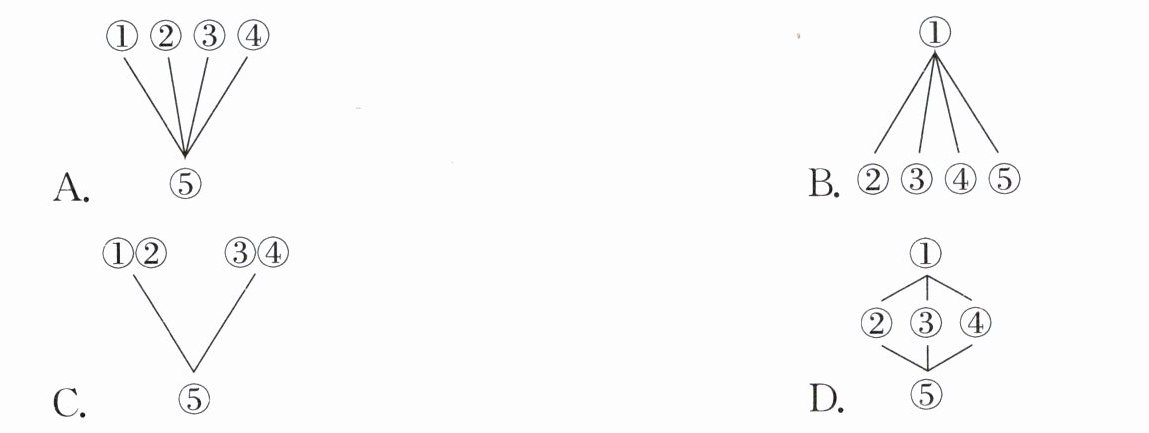
4. Which is the right structure of the passage?(①=paragraph 1;②=paragraph 2 ...)
5. What is the passage mainly about?
A. The people with different interests.
B. The greatest time to make a difference.
C. The reasons for a different summer vacation.
D. The ways of making a summer vacation different.
①Is the summer vacation long enough to turn life for the better? Every person has his or her own talents and interests. Find something you care about, and you will see the difference.
②Organize a clean-up programme. People often throw litter(垃圾)in the place where there is already litter. This makes the community in a mess. The environment will become better if someone volunteers to help. You could pick up the rubbish with your friends once a week in your neighbourhood. You could also help take care of the plants every few days. Surely, a clean and tidy neighbourhood will be worth the work.
③Show your love to the old. Our city has some old people's homes. Without children around them, the old people there might feel lonely once in a while. Maybe they need your help. In fact, you can do a lot for them. For example, you can talk with them or play games with them. Listening to them carefully is also a good idea. Some old people can't see clearly and they would like you to read to them. No matter what small things you do, you can make them feel loved.
④Set up a reading project with your friends. Share your favourite books with them. Besides, you may read aloud to each other and talk about what you read. Either a book or an article can spark a lively(活跃的)discussion and your further thinking. The process often challenges more people to take action. The project is also a good way to welcome newcomers. At the same time, you may find new friends with similar hobbies.
⑤A two-month summer vacation isn't that long, but it's enough to make a difference.
1. How often could you pick up the rubbish according to the passage?
A. Once a week.
B. Every few weeks.
C. Once a month.
D. Every few months.
2. Why do you need to read to some old people at the old people's homes?
A. Because you can think further.
B. Because you are good at reading.
C. Because they can't see clearly.
D. Because they are away from their homes.
3. What does the underlined word "spark" in paragraph 4 probably mean?
A. Finish.
B. Start.
C. Waste.
D. Depend.
4. Which is the right structure of the passage?(①=paragraph 1;②=paragraph 2 ...)
5. What is the passage mainly about?
A. The people with different interests.
B. The greatest time to make a difference.
C. The reasons for a different summer vacation.
D. The ways of making a summer vacation different.
答案
1.A 2.C 3.B 4.D 5.D
解析
【分析】
首先明确各题型的解题思路:1. 细节题需定位原文对应信息,匹配关键词得出答案;2. 词义猜测题结合上下文语境推断单词含义;3. 文章结构题梳理段落间的逻辑关系,判断总分总等结构;4. 主旨大意题需概括全文核心内容。具体到每道题:第1题定位捡垃圾频率的原文;第2题定位给老人读书的原因;第3题结合讨论的语境猜测spark的意思;第4题梳理段落结构(①总起,②③④分述方法,⑤总结);第5题概括全文围绕暑假的方法展开的核心。
【解析】
1. 第1题:细节理解题。根据第②段关键句“You could pick up the rubbish with your friends once a week in your neighbourhood.”可知,捡垃圾的频率是每周一次,对应选项A,故选A。
2. 第2题:细节理解题。根据第③段关键句“Some old people can't see clearly and they would like you to read to them.”可知,给老人读书是因为他们看不清,对应选项C,故选C。
3. 第3题:词义猜测题。第④段语境为“书或文章能______活跃的讨论和进一步思考”,结合选项,此处表示“引发、开始”讨论,spark与start含义相近,故选B。
4. 第4题:文章结构题。第①段总起,提出暑假能带来改变;第②③④段分别介绍清理社区、关爱老人、阅读项目三个具体方法;第⑤段总结,属于“总-分-总”结构,对应选项D的结构,故选D。
5. 第5题:主旨大意题。全文围绕如何让暑假变得有意义、带来积极改变,介绍了三个具体方式,核心是“让暑假变得不同的方法”,对应选项D,故选D。
【答案】
1.A 2.C 3.B 4.D 5.D
【知识点】
阅读理解解题技巧、细节理解题、主旨大意题
【点评】
本题为阅读理解专项练习,涵盖细节理解、词义猜测、文章结构、主旨大意四类常见题型,需学生掌握定位原文、语境猜词、梳理结构、概括主旨的解题方法,整体难度适中,适合巩固阅读理解基础能力。
【难度系数】
0.6
首先明确各题型的解题思路:1. 细节题需定位原文对应信息,匹配关键词得出答案;2. 词义猜测题结合上下文语境推断单词含义;3. 文章结构题梳理段落间的逻辑关系,判断总分总等结构;4. 主旨大意题需概括全文核心内容。具体到每道题:第1题定位捡垃圾频率的原文;第2题定位给老人读书的原因;第3题结合讨论的语境猜测spark的意思;第4题梳理段落结构(①总起,②③④分述方法,⑤总结);第5题概括全文围绕暑假的方法展开的核心。
【解析】
1. 第1题:细节理解题。根据第②段关键句“You could pick up the rubbish with your friends once a week in your neighbourhood.”可知,捡垃圾的频率是每周一次,对应选项A,故选A。
2. 第2题:细节理解题。根据第③段关键句“Some old people can't see clearly and they would like you to read to them.”可知,给老人读书是因为他们看不清,对应选项C,故选C。
3. 第3题:词义猜测题。第④段语境为“书或文章能______活跃的讨论和进一步思考”,结合选项,此处表示“引发、开始”讨论,spark与start含义相近,故选B。
4. 第4题:文章结构题。第①段总起,提出暑假能带来改变;第②③④段分别介绍清理社区、关爱老人、阅读项目三个具体方法;第⑤段总结,属于“总-分-总”结构,对应选项D的结构,故选D。
5. 第5题:主旨大意题。全文围绕如何让暑假变得有意义、带来积极改变,介绍了三个具体方式,核心是“让暑假变得不同的方法”,对应选项D,故选D。
【答案】
1.A 2.C 3.B 4.D 5.D
【知识点】
阅读理解解题技巧、细节理解题、主旨大意题
【点评】
本题为阅读理解专项练习,涵盖细节理解、词义猜测、文章结构、主旨大意四类常见题型,需学生掌握定位原文、语境猜词、梳理结构、概括主旨的解题方法,整体难度适中,适合巩固阅读理解基础能力。
【难度系数】
0.6
