

 登录
登录
五、跨语文·《己亥杂诗(其五)》阅读理解。
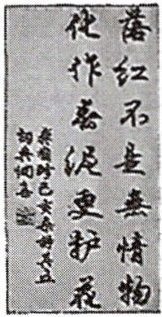
Gong Zizhen was a famous poet and thinker in the Qing Dynasty. He was born in Zhejiang in 1792. When he was young, he worked very hard and was crazy about reading. In 1839, he wrote over 300 poems. One of them was Miscellanies of the Year 1839 (V) (《己亥杂诗(其五)》) and it clearly showed his strong feelings of saving poor people and doing something for the country.
At first, Gong wrote about what was happening at that time. Then, Gong wrote about the falling sun. In Chinese poetry, to write about the falling sun is to write about the passing of time and the loss of hope. It was clear that the poet was sad that he lost the chance to work for the country.
Gong's sadness was true, but it didn't go on too long. At the end of the poem, Gong wrote about the "fallen flowers". He didn't say much about his sadness any more. He told the readers to believe fallen flowers would nurture(滋养) flowers' growth next spring instead. As a patriot (爱国主义者), he went on to teach a lot of excellent students during the rest of his life. He still cared about the country and would do something for the country in other ways.
(
A. at a young age
B. in his last years
C. in his forties
D. in his thirties
(
A. returning to hometown
B. being in the government
C. losing hope
D. writing poems
(
A. teaching more students
B. stopping writing poems
C. meeting friends in Beijing
D. doing nothing for the country
(
A. himself
B. autumn
C. feelings
D. country
Gong Zizhen was a famous poet and thinker in the Qing Dynasty. He was born in Zhejiang in 1792. When he was young, he worked very hard and was crazy about reading. In 1839, he wrote over 300 poems. One of them was Miscellanies of the Year 1839 (V) (《己亥杂诗(其五)》) and it clearly showed his strong feelings of saving poor people and doing something for the country.
At first, Gong wrote about what was happening at that time. Then, Gong wrote about the falling sun. In Chinese poetry, to write about the falling sun is to write about the passing of time and the loss of hope. It was clear that the poet was sad that he lost the chance to work for the country.
Gong's sadness was true, but it didn't go on too long. At the end of the poem, Gong wrote about the "fallen flowers". He didn't say much about his sadness any more. He told the readers to believe fallen flowers would nurture(滋养) flowers' growth next spring instead. As a patriot (爱国主义者), he went on to teach a lot of excellent students during the rest of his life. He still cared about the country and would do something for the country in other ways.
(
C
)1. Gong wrote the poem Miscellanies of the Year 1839 (V) .A. at a young age
B. in his last years
C. in his forties
D. in his thirties
(
C
)2. The falling sun usually means in Chinese poetry.A. returning to hometown
B. being in the government
C. losing hope
D. writing poems
(
D
)3. Gong felt sad about according to the passage.A. teaching more students
B. stopping writing poems
C. meeting friends in Beijing
D. doing nothing for the country
(
A
)4. In Gong's poems, "fallen flowers" refer to .A. himself
B. autumn
C. feelings
D. country
答案
1. C 【点拨】根据“He was born in Zhejiang in 1792.”以及“In 1839, he wrote over 300 poems. One of them was Miscellanies of the Year 1839 (V)(《己亥杂诗(其五)》)”可知,龚自珍于1839年写了《己亥杂诗(其五)》。他生于1792年,1839年时他47岁,即他四十多岁时写了《己亥杂诗(其五)》。故选C。
2. C 【点拨】根据“In Chinese poetry, to write about the falling sun is to write about the passing of time and the loss of hope.”可知,“落日”在中国诗歌中常象征时光流逝与希望丧失。故选C。
3. D 【点拨】根据“It was clear that the poet was sad that he lost the chance to work for the country.”可知,他因失去为国效力的机会而悲伤。即他因没有为国家做任何事而感到难过。故选D。
4. A 【点拨】根据最后一段内容可知,他告诉读者要相信落花会滋养来年春天的花朵生长,而作为一个爱国者,他像落花一样,教了很多优秀的学生。他仍然关心这个国家,并以其他方式为国家做些事情。“fallen flowers”在此喻指诗人自己,象征他虽失意却仍愿培育后人、奉献自己。故选A。
2. C 【点拨】根据“In Chinese poetry, to write about the falling sun is to write about the passing of time and the loss of hope.”可知,“落日”在中国诗歌中常象征时光流逝与希望丧失。故选C。
3. D 【点拨】根据“It was clear that the poet was sad that he lost the chance to work for the country.”可知,他因失去为国效力的机会而悲伤。即他因没有为国家做任何事而感到难过。故选D。
4. A 【点拨】根据最后一段内容可知,他告诉读者要相信落花会滋养来年春天的花朵生长,而作为一个爱国者,他像落花一样,教了很多优秀的学生。他仍然关心这个国家,并以其他方式为国家做些事情。“fallen flowers”在此喻指诗人自己,象征他虽失意却仍愿培育后人、奉献自己。故选A。
解析
【分析】本题为跨学科阅读理解题,围绕龚自珍及其《己亥杂诗(其五)》设置细节类题目,解题思路是:每道题先定位题干关键词,再回到原文找到对应语句,对比选项内容,排除错误选项,选出正确答案。第1题需结合出生年份和写诗年份计算年龄;第2题直接查找落日的象征义;第3题定位悲伤的原因;第4题结合段落语境分析落花的指代对象。
【解析】
1. 定位原文:由“He was born in Zhejiang in 1792.”和“In 1839, he wrote over 300 poems. One of them was Miscellanies of the Year 1839 (V)”可知,龚自珍1839年写该诗,1839-1792=47岁,属于forties(四十多岁),故选C。
2. 定位原文:根据“In Chinese poetry, to write about the falling sun is to write about the passing of time and the loss of hope.”,可知落日象征希望丧失,对应选项C,故选C。
3. 定位原文:由“It was clear that the poet was sad that he lost the chance to work for the country.”可知,诗人因失去为国效力的机会而悲伤,对应选项D,故选D。
4. 定位原文:根据最后一段,落花滋养来年花朵,龚自珍像落花一样教学生、继续为国奉献,故“fallen flowers”指代诗人自己,对应选项A,故选A。
【答案】1.C 2.C 3.D 4.A
【知识点】阅读理解细节理解、词义猜测、文本象征义理解
【点评】本题结合语文古诗词与英语阅读理解,考查学生的文本定位、细节分析及语境理解能力,需结合原文内容准确提取信息,难度适中。
【难度系数】0.6
【解析】
1. 定位原文:由“He was born in Zhejiang in 1792.”和“In 1839, he wrote over 300 poems. One of them was Miscellanies of the Year 1839 (V)”可知,龚自珍1839年写该诗,1839-1792=47岁,属于forties(四十多岁),故选C。
2. 定位原文:根据“In Chinese poetry, to write about the falling sun is to write about the passing of time and the loss of hope.”,可知落日象征希望丧失,对应选项C,故选C。
3. 定位原文:由“It was clear that the poet was sad that he lost the chance to work for the country.”可知,诗人因失去为国效力的机会而悲伤,对应选项D,故选D。
4. 定位原文:根据最后一段,落花滋养来年花朵,龚自珍像落花一样教学生、继续为国奉献,故“fallen flowers”指代诗人自己,对应选项A,故选A。
【答案】1.C 2.C 3.D 4.A
【知识点】阅读理解细节理解、词义猜测、文本象征义理解
【点评】本题结合语文古诗词与英语阅读理解,考查学生的文本定位、细节分析及语境理解能力,需结合原文内容准确提取信息,难度适中。
【难度系数】0.6
