

 登录
登录
Ⅶ. Read and choose. 读一读,补全对话。
Ms Wu: Good morning, Lily! 1.
Lily: Yes! What should I do first?
Ms Wu: Sort books by labels — 2.
Lily: I’ll take the red ones.
Ms Wu: Lily, please help a girl find The Very Hungry Caterpillar.
Lily: 3.
Ms Wu: How’s it going?
Lily: Really fun! 4. Can I come back next week?
Ms Wu: Of course! 5.
Lily: Bye! See you later.
A. red for storybooks, blue for science.
B. OK, I will find it for her.
C. Ready to help at the library?
D. See you next week.
E. Helping feels great.
Ms Wu: Good morning, Lily! 1.
Lily: Yes! What should I do first?
Ms Wu: Sort books by labels — 2.
Lily: I’ll take the red ones.
Ms Wu: Lily, please help a girl find The Very Hungry Caterpillar.
Lily: 3.
Ms Wu: How’s it going?
Lily: Really fun! 4. Can I come back next week?
Ms Wu: Of course! 5.
Lily: Bye! See you later.
A. red for storybooks, blue for science.
B. OK, I will find it for her.
C. Ready to help at the library?
D. See you next week.
E. Helping feels great.
答案
1. C 2. A 3. B 4. E 5. D
解析
我们根据对话上下文逻辑逐一匹配选项:
1. 第一空后Lily用Yes作答,说明此处是一般疑问句类的提问,对应C选项“Ready to help at the library?”,符合吴老师询问Lily是否准备好在图书馆帮忙的语境。
2. 第二空前提到要按标签给书分类,后文Lily说自己负责红色标签的书,对应A选项“red for storybooks, blue for science.”,是对分类标签规则的说明,衔接通顺。
3. 第三空前吴老师请Lily帮女孩找指定的书,对应B选项“OK, I will find it for her.”,是Lily对老师提出的帮忙请求的恰当回应。
4. 第四空前Lily表示帮忙很有意思,后文询问下周能不能再来,对应E选项“Helping feels great.”,是Lily表达自己做志愿帮忙的愉悦感受,逻辑连贯。
5. 第五空后Lily和吴老师道别,对应D选项“See you next week.”,和前文Lily提出下周想来的内容呼应,符合告别语境。
1. 第一空后Lily用Yes作答,说明此处是一般疑问句类的提问,对应C选项“Ready to help at the library?”,符合吴老师询问Lily是否准备好在图书馆帮忙的语境。
2. 第二空前提到要按标签给书分类,后文Lily说自己负责红色标签的书,对应A选项“red for storybooks, blue for science.”,是对分类标签规则的说明,衔接通顺。
3. 第三空前吴老师请Lily帮女孩找指定的书,对应B选项“OK, I will find it for her.”,是Lily对老师提出的帮忙请求的恰当回应。
4. 第四空前Lily表示帮忙很有意思,后文询问下周能不能再来,对应E选项“Helping feels great.”,是Lily表达自己做志愿帮忙的愉悦感受,逻辑连贯。
5. 第五空后Lily和吴老师道别,对应D选项“See you next week.”,和前文Lily提出下周想来的内容呼应,符合告别语境。
Ⅷ. Read and write. 读一读,根据短文内容填空。
Many primary school (小学) students get pocket money every week. They use this money in different ways, and we can see it from some interesting numbers.
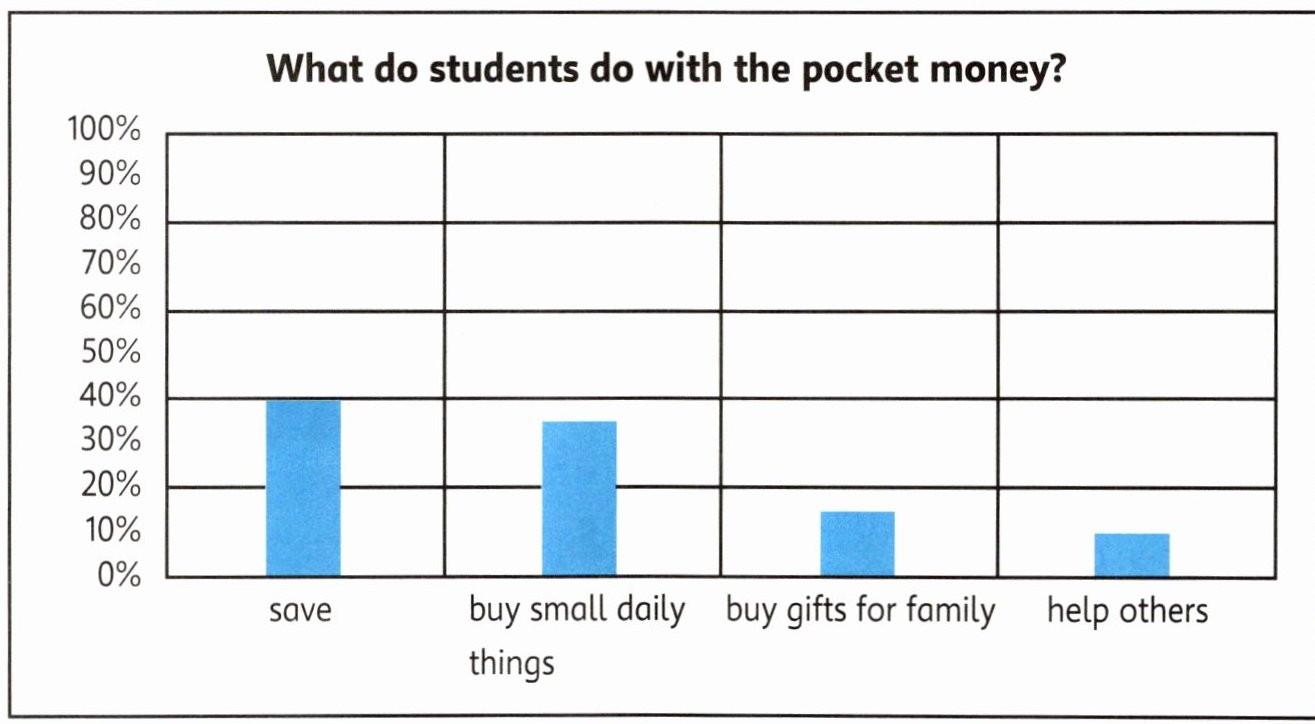
All in all, primary school students use their pocket money wisely. They learn to save, enjoy small joys, and care about others at the same time!
1. Many primary school students get pocket money each .
2. Students use their pocket money in ways according to the chart.
3. of students use their pocket money to help others.
4. 15% of students with the pocket money.
5. Primary school students spend their pocket money .
Many primary school (小学) students get pocket money every week. They use this money in different ways, and we can see it from some interesting numbers.
All in all, primary school students use their pocket money wisely. They learn to save, enjoy small joys, and care about others at the same time!
1. Many primary school students get pocket money each .
2. Students use their pocket money in ways according to the chart.
3. of students use their pocket money to help others.
4. 15% of students with the pocket money.
5. Primary school students spend their pocket money .
答案
1. week
2. four
3. 10% / Ten percent
4. buy gifts for their family
5. wisely
2. four
3. 10% / Ten percent
4. buy gifts for their family
5. wisely
解析
1. 根据短文第一句"Many primary school students get pocket money every week.",every week和each week表意相同,得出答案。
2. 观察图表,学生支配零花钱的用途一共有4类,分别是储蓄、购买小日用品、给家人买礼物、帮助他人,得出答案。
3. 对照柱状图的纵轴百分比刻度,对应help others的占比为10%,得出答案。
4. 对照柱状图的数值,占比15%的零花钱用途是给家人买礼物,得出答案。
5. 根据短文最后一段"All in all, primary school students use their pocket money wisely.",得出答案。
2. 观察图表,学生支配零花钱的用途一共有4类,分别是储蓄、购买小日用品、给家人买礼物、帮助他人,得出答案。
3. 对照柱状图的纵轴百分比刻度,对应help others的占比为10%,得出答案。
4. 对照柱状图的数值,占比15%的零花钱用途是给家人买礼物,得出答案。
5. 根据短文最后一段"All in all, primary school students use their pocket money wisely.",得出答案。
