

 登录
登录
六、阅读理解。(2024·湖北武汉)新情境
You may have a house robot that can do housework for you. But is it so smart? Meet Laura, a robot in the National Library in Madrid, Spain, copying out the old books and writings in its collection. See Aurora, a headless dog - sized robot used to keep birds and other animals away at an Alaskan airport. Watch another 1.8 - metre - tall legless robot called EveR6, waving its arms to guide musicians through a performance.
Those robots above require artificial intelligence(AI)(人工智能). AI is a computer system(系统) that can understand languages, make decisions and solve problems. AI can be taught skills using a process called machine learning. Humans give AI information such as books, photos or videos to train it. The more information it studies, the better it can do its job.
Some people worry that AI will take away a large number of jobs and also fear that AI could develop out of our control and bring danger to humans. However, AI is expected to be a more powerful production tool that will help humans achieve more in less time. It is believed that the flying car will be made to offer an easier way out of the morning traffic jam(交通堵塞). Humans imagine AI might even find a way to solve the problems of our energy needs completely. Anyway, there is still a long journey for humans and AI.
(
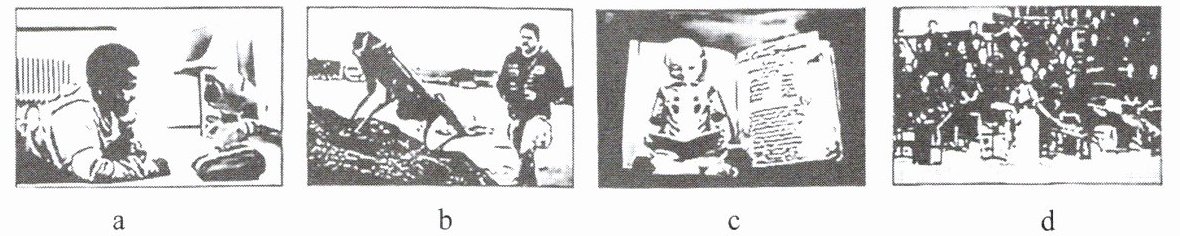
A. a, c
B. b, d
C. b, c
D. a, d
(
A. What is AI?
B. Why are AI robots made?
C. Where is AI used?
D. How many AI robots are mentioned?
(
A. AI will be developed rapidly
B. Humans depend too much on AI
C. Humans wonder if AI could think
D. AI has become part of daily life
(
A. suggest TV programmes
B. cut down food waste
C. invent new medicines
D. help produce enough energy
(
A. The end of AI.
B. The history of AI.
C. The way to get along with AI.
D. The skill of making AI robots.
You may have a house robot that can do housework for you. But is it so smart? Meet Laura, a robot in the National Library in Madrid, Spain, copying out the old books and writings in its collection. See Aurora, a headless dog - sized robot used to keep birds and other animals away at an Alaskan airport. Watch another 1.8 - metre - tall legless robot called EveR6, waving its arms to guide musicians through a performance.
Those robots above require artificial intelligence(AI)(人工智能). AI is a computer system(系统) that can understand languages, make decisions and solve problems. AI can be taught skills using a process called machine learning. Humans give AI information such as books, photos or videos to train it. The more information it studies, the better it can do its job.
D
. For example, when you watch TV, AI is watching you. It'll know what your favourite is and suggest similar ones. In hospitals, AI is very good at suggesting treatments and can even invent new medicines. To cut down food waste, some schools introduce online systems for the students to choose meals ahead of time. In cities, AI is used to watch out for cars that make black smoke. It works together with the police and transportation teams to stop them and keep the air clean. AI can help us fight climate(气候) change by finding clever ways to reduce energy use.Some people worry that AI will take away a large number of jobs and also fear that AI could develop out of our control and bring danger to humans. However, AI is expected to be a more powerful production tool that will help humans achieve more in less time. It is believed that the flying car will be made to offer an easier way out of the morning traffic jam(交通堵塞). Humans imagine AI might even find a way to solve the problems of our energy needs completely. Anyway, there is still a long journey for humans and AI.
(
B
)1. 新考法 In which pictures can we see Aurora and EveR6?A. a, c
B. b, d
C. b, c
D. a, d
(
A
)2. What BIG question does Paragraph 2 answer?A. What is AI?
B. Why are AI robots made?
C. Where is AI used?
D. How many AI robots are mentioned?
(
D
)3. 新考法 Which of the following can be put in D
?A. AI will be developed rapidly
B. Humans depend too much on AI
C. Humans wonder if AI could think
D. AI has become part of daily life
(
D
)4. In the future, AI is expected to be able to D
.A. suggest TV programmes
B. cut down food waste
C. invent new medicines
D. help produce enough energy
(
C
)5. 新考法 What would the author write about after the last paragraph?A. The end of AI.
B. The history of AI.
C. The way to get along with AI.
D. The skill of making AI robots.
答案
1. B 【点拨】根据“See Aurora, a headless dog-sized robot used to keep birds and other animals away at an Alaskan airport. Watch another 1. 8-metre-tall legless robot called EveR6, waving its arms to guide musicians through a performance.”可知,Aurora 是一个狗大小的无头机器人,在阿拉斯加机场用来驱赶鸟类和其他动物;EveR6 挥舞着手臂指挥音乐家完成表演。故选 B。
2. A 【点拨】分析第二段内容可知,主要介绍人工智能是什么以及学习方式。故选 A。
3. D 【点拨】根据后面举例内容可知,主要介绍人工智能应用在什么领域,选项 D“人工智能已经成为日常生活的一部分”符合语境。故选 D。
4. D 【点拨】根据“Humans imagine AI might even find a way to solve the problems of our energy needs completely.”可知,人类想象人工智能甚至可以找到一种完全解决我们能源需求问题的方法。所以未来人工智能有望帮助生产足够的能源。故选 D。
5. C 【点拨】最后一段讲述人工智能的问题和未来可能的发展,所以接下来可能会谈论与人工智能相处的方式。故选 C。
2. A 【点拨】分析第二段内容可知,主要介绍人工智能是什么以及学习方式。故选 A。
3. D 【点拨】根据后面举例内容可知,主要介绍人工智能应用在什么领域,选项 D“人工智能已经成为日常生活的一部分”符合语境。故选 D。
4. D 【点拨】根据“Humans imagine AI might even find a way to solve the problems of our energy needs completely.”可知,人类想象人工智能甚至可以找到一种完全解决我们能源需求问题的方法。所以未来人工智能有望帮助生产足够的能源。故选 D。
5. C 【点拨】最后一段讲述人工智能的问题和未来可能的发展,所以接下来可能会谈论与人工智能相处的方式。故选 C。
解析
【分析】
这是一篇介绍人工智能的说明文,解题时我们可以按题型逐个突破:
1. 第1题先回到原文定位Aurora和EveR6的特征描述:Aurora是机场用来驱赶动物的无头犬型机器人,对应图b;EveR6是挥舞手臂指挥音乐家演出的机器人,对应图d,即可选出答案。
2. 第2题通读第二段,发现段落开篇就定义了AI是什么,还补充介绍了AI的机器学习训练方式,核心是回答“什么是AI”的问题。
3. 第3题是选段首主题句,后文列举了AI在影音推荐、医疗、校园餐饮、城市环保、气候治理等多个日常场景的应用,对应能总领全段的主题句即可。
4. 第4题注意区分AI当前已实现的功能和未来预期的能力,定位最后一段关于未来AI作用的描述,排除已经落地的A、B、C选项,选出对应未来预期的答案。
5. 第5题推断后续写作内容,最后一段提到人们对AI的担忧,也点明AI的正向价值,最后指出人类和AI还有很长的路要走,顺理成章后续会介绍如何和AI和谐共处。
【解析】
1. 细节匹配题:根据原文第一段“Aurora, a headless dog-sized robot used to keep birds and other animals away at an Alaskan airport”可知Aurora对应图b的机场场景机器人;根据“EveR6, waving its arms to guide musicians through a performance”可知EveR6对应图d的演出指挥场景,因此选B。
2. 段落主旨题:第二段开篇直接定义“AI is a computer system that can understand languages, make decisions and solve problems”,还介绍了AI的机器学习训练逻辑,整段核心是解释什么是人工智能,对应A选项。
3. 语篇补全题:空格后列举了AI在影音推荐、医疗诊疗、校园订餐、城市尾气治理、节能减排等多个日常生活领域的应用,D选项“AI has become part of daily life”可以总领全段,引出后文的各类场景举例,符合上下文逻辑。
4. 细节理解题:A选项的推荐电视节目、B选项的减少食物浪费、C选项的研发新药都是当前AI已经落地实现的功能,根据最后一段“Humans imagine AI might even find a way to solve the problems of our energy needs completely”,可知未来AI有望帮助解决能源需求问题,对应D选项。
5. 推理判断题:最后一段既提到了人们对AI的风险担忧,也介绍了AI的正向价值,最后点明人类和AI的发展还有很长的路要走,因此作者接下来最可能介绍人类和AI的相处方式,对应C选项。
【答案】
1. B 2. A 3. D 4. D 5. C
【知识点】
细节信息定位,语篇逻辑推理,段落主旨把握
【点评】
本题选取人工智能的热点新情境,融入图片匹配、语篇推断等创新考法,既考查学生快速从文本中定位关键信息的基础阅读能力,也要求学生梳理段落逻辑、区分现有功能和未来预期,能全面检验学生的英语阅读理解综合素养,题目设置梯度合理。
【难度系数】
0.7
这是一篇介绍人工智能的说明文,解题时我们可以按题型逐个突破:
1. 第1题先回到原文定位Aurora和EveR6的特征描述:Aurora是机场用来驱赶动物的无头犬型机器人,对应图b;EveR6是挥舞手臂指挥音乐家演出的机器人,对应图d,即可选出答案。
2. 第2题通读第二段,发现段落开篇就定义了AI是什么,还补充介绍了AI的机器学习训练方式,核心是回答“什么是AI”的问题。
3. 第3题是选段首主题句,后文列举了AI在影音推荐、医疗、校园餐饮、城市环保、气候治理等多个日常场景的应用,对应能总领全段的主题句即可。
4. 第4题注意区分AI当前已实现的功能和未来预期的能力,定位最后一段关于未来AI作用的描述,排除已经落地的A、B、C选项,选出对应未来预期的答案。
5. 第5题推断后续写作内容,最后一段提到人们对AI的担忧,也点明AI的正向价值,最后指出人类和AI还有很长的路要走,顺理成章后续会介绍如何和AI和谐共处。
【解析】
1. 细节匹配题:根据原文第一段“Aurora, a headless dog-sized robot used to keep birds and other animals away at an Alaskan airport”可知Aurora对应图b的机场场景机器人;根据“EveR6, waving its arms to guide musicians through a performance”可知EveR6对应图d的演出指挥场景,因此选B。
2. 段落主旨题:第二段开篇直接定义“AI is a computer system that can understand languages, make decisions and solve problems”,还介绍了AI的机器学习训练逻辑,整段核心是解释什么是人工智能,对应A选项。
3. 语篇补全题:空格后列举了AI在影音推荐、医疗诊疗、校园订餐、城市尾气治理、节能减排等多个日常生活领域的应用,D选项“AI has become part of daily life”可以总领全段,引出后文的各类场景举例,符合上下文逻辑。
4. 细节理解题:A选项的推荐电视节目、B选项的减少食物浪费、C选项的研发新药都是当前AI已经落地实现的功能,根据最后一段“Humans imagine AI might even find a way to solve the problems of our energy needs completely”,可知未来AI有望帮助解决能源需求问题,对应D选项。
5. 推理判断题:最后一段既提到了人们对AI的风险担忧,也介绍了AI的正向价值,最后点明人类和AI的发展还有很长的路要走,因此作者接下来最可能介绍人类和AI的相处方式,对应C选项。
【答案】
1. B 2. A 3. D 4. D 5. C
【知识点】
细节信息定位,语篇逻辑推理,段落主旨把握
【点评】
本题选取人工智能的热点新情境,融入图片匹配、语篇推断等创新考法,既考查学生快速从文本中定位关键信息的基础阅读能力,也要求学生梳理段落逻辑、区分现有功能和未来预期,能全面检验学生的英语阅读理解综合素养,题目设置梯度合理。
【难度系数】
0.7
