

 登录
登录
四、阅读理解
Mulberry Street was a quiet and peaceful place. Every Monday was a special day there because it was recycling day. People, including Jenna's family, would put colourful boxes full of paper, plastic, and cans on the sidewalk. Then trucks would come to take the recyclables to the city's recycling centre.
One Saturday was different for Jenna. She woke up early, feeling very excited. She was going to the recycling centre with her dad. She wanted to share what she had learned during a school field trip to the recycling centre the week before.
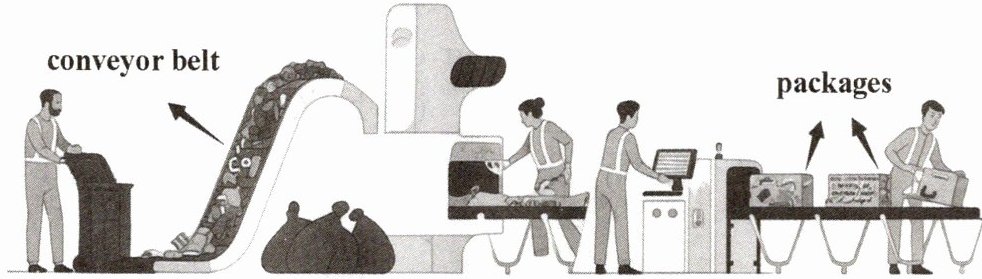
When her dad called her to start collecting recyclables, Jenna quickly ran downstairs. As they worked, Jenna told her dad many interesting facts. She suggested they should give old magazines and books to the library so that people could reuse them and they would have a second life. Jenna also explained what she had seen on her field trip. "After recyclable materials are put on the conveyor belt (传送带), the machine presses them down to make them smaller. Then it wraps (缠绕) plastic tightly around them. After that, someone takes those little packages to different places in the city. They are used to make all kinds of new things!"
Recycling was important, but reducing waste was the most important lesson learned from the field trip. "Using less means producing less waste," she said. Her dad agreed that they should think of ways to reduce what they bought. After sorting (分类) all the recyclables, they found they only had two bags this time, much fewer than the six bags they had last week. Her dad thanked Jenna and said he couldn't wait to learn more. Jenna was excited to tell everyone on Mulberry Street about what she had discovered.
(
A. people cleaned their houses
B. people put recyclables on the sidewalk
C. people went to the city library
D. people had trips to the recycling centre
(
A. Reducing waste.
B. Recycling paper products.
C. Sorting recyclables.
D. Meeting a modern machine.
(
At first, when Jenna's teacher announced the field trip, she wasn't happy at all. She thought it would be very boring. However, when she got there and saw all the amazing things that happened there, she changed her mind.
A. Paragraph 1
B. Paragraph 2
C. Paragraph 3
D. Paragraph 4
(
A. The recycling centre would be popular with Jenna's neighbours.
B. People should buy more to improve their lives and help the recycling centre.
C. Jenna thought reusing old magazines and books was better than recycling them.
D. Recycling trucks won't come to Mulberry Street because there is no waste any more.
(
A. A Great Modern Machine
B. A Special Field Trip
C. Using More, Producing Less
D. Reduce, Reuse, Recycle
Mulberry Street was a quiet and peaceful place. Every Monday was a special day there because it was recycling day. People, including Jenna's family, would put colourful boxes full of paper, plastic, and cans on the sidewalk. Then trucks would come to take the recyclables to the city's recycling centre.
One Saturday was different for Jenna. She woke up early, feeling very excited. She was going to the recycling centre with her dad. She wanted to share what she had learned during a school field trip to the recycling centre the week before.
When her dad called her to start collecting recyclables, Jenna quickly ran downstairs. As they worked, Jenna told her dad many interesting facts. She suggested they should give old magazines and books to the library so that people could reuse them and they would have a second life. Jenna also explained what she had seen on her field trip. "After recyclable materials are put on the conveyor belt (传送带), the machine presses them down to make them smaller. Then it wraps (缠绕) plastic tightly around them. After that, someone takes those little packages to different places in the city. They are used to make all kinds of new things!"
Recycling was important, but reducing waste was the most important lesson learned from the field trip. "Using less means producing less waste," she said. Her dad agreed that they should think of ways to reduce what they bought. After sorting (分类) all the recyclables, they found they only had two bags this time, much fewer than the six bags they had last week. Her dad thanked Jenna and said he couldn't wait to learn more. Jenna was excited to tell everyone on Mulberry Street about what she had discovered.
(
B
) 1. Monday was special on Mulberry Street because .A. people cleaned their houses
B. people put recyclables on the sidewalk
C. people went to the city library
D. people had trips to the recycling centre
(
A
) 2. What did Jenna think was the most important thing she learned from the field trip?A. Reducing waste.
B. Recycling paper products.
C. Sorting recyclables.
D. Meeting a modern machine.
(
B
) 3. The following paragraph can best go after .At first, when Jenna's teacher announced the field trip, she wasn't happy at all. She thought it would be very boring. However, when she got there and saw all the amazing things that happened there, she changed her mind.
A. Paragraph 1
B. Paragraph 2
C. Paragraph 3
D. Paragraph 4
(
C
) 4. What can you infer (推断) from the passage?A. The recycling centre would be popular with Jenna's neighbours.
B. People should buy more to improve their lives and help the recycling centre.
C. Jenna thought reusing old magazines and books was better than recycling them.
D. Recycling trucks won't come to Mulberry Street because there is no waste any more.
(
D
) 5. Which is the best title for this story?A. A Great Modern Machine
B. A Special Field Trip
C. Using More, Producing Less
D. Reduce, Reuse, Recycle
答案
1.B 2.A 3.B 4.C 5.D
