

 登录
登录
九、自动驾驶技术给我们的生活带来了什么?从方框中选择合适的句子补全对话。(有一项多余)
Leo is visiting Nanjing in a self-driving car.
Leo: Hello, Auto-Driver! Show me around Nanjing, please.
AI: Hi! 1.
Leo: OK!
Leo puts on the seat belt.
Leo: Now let's go to Xuanwu Lake. 2.
AI: Go along the street for 2 km. 3.
Leo: What can I see on the way?
AI: Look! 4.
Leo: Great! ... Hey, Auto-Driver, where is the lake?
AI: 5.
Leo: Are there any other interesting places near it?
AI: Of course! You can visit Zifeng Tower(紫峰大厦). It's 450 m tall and it has 89 floors!
Leo: Thank you very much.
A. Then turn left at the traffic lights.
B. You should wear your seat belt(安全带).
C. Here we are. Xuanwu Lake is on your right hand side.
D. We are passing Jiming Temple(鸡鸣寺) now!
E. There is also a zoo near it.
F. How can we get there?
Leo is visiting Nanjing in a self-driving car.
Leo: Hello, Auto-Driver! Show me around Nanjing, please.
AI: Hi! 1.
You should wear your seat belt(安全带).
Safety first!Leo: OK!
Leo puts on the seat belt.
Leo: Now let's go to Xuanwu Lake. 2.
How can we get there?
AI: Go along the street for 2 km. 3.
Then turn left at the traffic lights.
Leo: What can I see on the way?
AI: Look! 4.
We are passing Jiming Temple(鸡鸣寺) now!
Leo: Great! ... Hey, Auto-Driver, where is the lake?
AI: 5.
Here we are. Xuanwu Lake is on your right hand side.
Leo: Are there any other interesting places near it?
AI: Of course! You can visit Zifeng Tower(紫峰大厦). It's 450 m tall and it has 89 floors!
Leo: Thank you very much.
A. Then turn left at the traffic lights.
B. You should wear your seat belt(安全带).
C. Here we are. Xuanwu Lake is on your right hand side.
D. We are passing Jiming Temple(鸡鸣寺) now!
E. There is also a zoo near it.
F. How can we get there?
答案
1. B 2. F 3. A 4. D 5. C
解析
【分析】
这是一道情景对话补全题,解题思路是结合对话的上下文语境,抓住关键信息来匹配合适的句子:
1. 第一个空后提到“Safety first!”,且后面Leo系了安全带,所以要选和安全带相关的提醒语;
2. 第二个空前Leo说要去玄武湖,后面AI给出了路线指引,所以这里应该是询问路线的句子;
3. 第三个空前AI说了“Go along the street for 2 km.”,接下来应该是后续的路线指令;
4. 第四个空前Leo问“What can I see on the way?”,所以AI要回答路上能看到的地点;
5. 第五个空前Leo问“where is the lake?”,AI需要告知湖的位置,说明已经到达目的地。
【解析】
1. 第一空:根据下一句“Safety first!”以及Leo后续系安全带的行为,可知此处是提醒系安全带,对应选项B“You should wear your seat belt(安全带).”;
2. 第二空:Leo提出要去玄武湖,之后AI给出了路线,所以这里Leo是在询问去那里的路线,对应选项F“How can we get there?”;
3. 第三空:AI先给出“沿着街道走2公里”的指引,接下来应补充后续的路线动作,对应选项A“Then turn left at the traffic lights.”;
4. 第四空:Leo询问路上能看到什么,AI需要回答当前经过的地点,对应选项D“We are passing Jiming Temple(鸡鸣寺) now!”;
5. 第五空:Leo询问湖在哪里,AI告知已经到达,湖在右手边,对应选项C“Here we are. Xuanwu Lake is on your right hand side.”;
多余的选项是E,对话中未涉及相关内容。
【答案】
1. B 2. F 3. A 4. D 5. C
【知识点】
情景对话匹配、语境推理
【点评】
本题考查学生在情景对话中结合上下文理解语境、选择合适语句的能力,需紧扣对话中的关键信息,比如场景提示、问答逻辑来作答,贴近生活场景,实用性较强。
【难度系数】
0.7
这是一道情景对话补全题,解题思路是结合对话的上下文语境,抓住关键信息来匹配合适的句子:
1. 第一个空后提到“Safety first!”,且后面Leo系了安全带,所以要选和安全带相关的提醒语;
2. 第二个空前Leo说要去玄武湖,后面AI给出了路线指引,所以这里应该是询问路线的句子;
3. 第三个空前AI说了“Go along the street for 2 km.”,接下来应该是后续的路线指令;
4. 第四个空前Leo问“What can I see on the way?”,所以AI要回答路上能看到的地点;
5. 第五个空前Leo问“where is the lake?”,AI需要告知湖的位置,说明已经到达目的地。
【解析】
1. 第一空:根据下一句“Safety first!”以及Leo后续系安全带的行为,可知此处是提醒系安全带,对应选项B“You should wear your seat belt(安全带).”;
2. 第二空:Leo提出要去玄武湖,之后AI给出了路线,所以这里Leo是在询问去那里的路线,对应选项F“How can we get there?”;
3. 第三空:AI先给出“沿着街道走2公里”的指引,接下来应补充后续的路线动作,对应选项A“Then turn left at the traffic lights.”;
4. 第四空:Leo询问路上能看到什么,AI需要回答当前经过的地点,对应选项D“We are passing Jiming Temple(鸡鸣寺) now!”;
5. 第五空:Leo询问湖在哪里,AI告知已经到达,湖在右手边,对应选项C“Here we are. Xuanwu Lake is on your right hand side.”;
多余的选项是E,对话中未涉及相关内容。
【答案】
1. B 2. F 3. A 4. D 5. C
【知识点】
情景对话匹配、语境推理
【点评】
本题考查学生在情景对话中结合上下文理解语境、选择合适语句的能力,需紧扣对话中的关键信息,比如场景提示、问答逻辑来作答,贴近生活场景,实用性较强。
【难度系数】
0.7
十、我们应该如何得体地问路和指路呢?阅读材料,完形填空。
Sometimes we need to ask others the way, or tell others
When you ask the way, you need to ask politely. You can say "
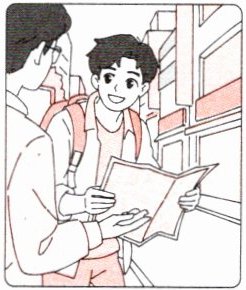
Well, how to show the way to others? First, use
(
B. when
C. how
(
B. Help
C. Sorry
(
B. nurse
C. policeman
(
B. how
C. when
(
B. easy
C. same
(
B. next to
C. after
(
B. picture
C. map
(
B. Don't worry
C. Sorry, I don't know
Sometimes we need to ask others the way, or tell others
how
1 to go to one place. But do you know how to ask and show the way clearly?When you ask the way, you need to ask politely. You can say "
Excuse me
2" and "Thank you". He or she can be very happy to help you. Asking the right person is also important. A policeman
3 can be good. At last, be sure the person knows what you are saying. Tell the person clearly where
4 you want to go, so he or she can show you the right way.Well, how to show the way to others? First, use
easy
5 words. You can say "go along" or "on your left". Second, find some marked features(显著的特征) of the place. You can tell the person "There is a river next to
6 the place". You can draw a map
7 too. It can show the way easily and clearly. If you don't know the way, just say "Sorry, I don't know
8". It's OK.(
C
)1. A. whyB. when
C. how
(
A
)2. A. Excuse meB. Help
C. Sorry
(
C
)3. A. workerB. nurse
C. policeman
(
A
)4. A. whereB. how
C. when
(
B
)5. A. difficultB. easy
C. same
(
B
)6. A. far fromB. next to
C. after
(
C
)7. A. cartoonB. picture
C. map
(
C
)8. A. No, thanksB. Don't worry
C. Sorry, I don't know
答案
1. C 2. A 3. C 4. A 5. B 6. B 7. C 8. C
解析
【分析】
这是一篇围绕问路与指路的日常交际类完形填空,解题时需结合语境、日常交际礼仪和词汇含义来逐一分析每个空:
1. 先明确文章主旨是讲解如何得体地问路和指路,再逐个结合语境分析选项;
2. 第1空结合“tell others...to go to one place”的语境,选择表达“方式”的词汇;
3. 第2空回忆日常问路时的礼貌开场用语;
4. 第3空结合职业的职能特点,选择适合问路的人群;
5. 第4空根据“让对方明确你的需求”的逻辑,选择表达“地点”的疑问词;
6. 第5空结合“指路要清晰易懂”的原则,选择对应含义的形容词;
7. 第6空根据“描述地点显著特征”的要求,选择合适的方位短语;
8. 第7空结合插图和指路的实用方式,选择辅助指路的物品;
9. 第8空根据“不知道路时的得体回应”,选择对应的礼貌表达。
【解析】
1. 第1空:
句意:有时我们需要向别人问路,或者告诉别人________去一个地方。
选项A. why(为什么),B. when(什么时候),C. how(如何,怎样)。结合语境,此处是表达“怎么去某地”,故选C。
2. 第2空:
句意:你可以说“______”和“谢谢”。
选项A. Excuse me(打扰一下,用于礼貌地引起他人注意),B. Help(帮助,用于紧急求助),C. Sorry(对不起,用于道歉)。问路时礼貌的开场语是“Excuse me”,故选A。
3. 第3空:
句意:______可能是不错的选择。
选项A. worker(工人),B. nurse(护士),C. policeman(警察)。警察通常熟悉当地路况,是问路的合适人选,故选C。
4. 第4空:
句意:清楚地告诉对方你想去________。
选项A. where(哪里),B. how(如何),C. when(什么时候)。要让对方明确你的目的地,需说明想去的“地点”,故选A。
5. 第5空:
句意:首先,使用________话语。
选项A. difficult(困难的),B. easy(简单的,易懂的),C. same(相同的)。指路时要用简单易懂的话语,方便对方理解,故选B。
6. 第6空:
句意:你可以告诉对方“这个地方________有一条河”。
选项A. far from(远离),B. next to(在……旁边),C. after(在……之后)。描述地点的显著特征时,用“在……旁边”能明确位置,故选B。
7. 第7空:
句意:你也可以画一张________。
选项A. cartoon(卡通画),B. picture(图画),C. map(地图)。地图能清晰直观地展示路线,适合辅助指路,结合插图也能得到提示,故选C。
8. 第8空:
句意:如果你不知道路,就说“______”。
选项A. No, thanks(不了,谢谢),B. Don't worry(别担心),C. Sorry, I don't know(对不起,我不知道)。不知道路时,礼貌地表达自己不清楚,故选C。
【答案】
1. C 2. A 3. C 4. A 5. B 6. B 7. C 8. C
【知识点】
日常交际用语、词汇辨析、语境理解
【点评】
这篇完形填空围绕“问路与指路”的日常实用场景展开,既考查了学生对基础词汇、交际用语的掌握,也引导学生学习得体的社交礼仪,内容贴近生活,实用性强,能帮助学生提升英语交际能力。
【难度系数】
0.7
这是一篇围绕问路与指路的日常交际类完形填空,解题时需结合语境、日常交际礼仪和词汇含义来逐一分析每个空:
1. 先明确文章主旨是讲解如何得体地问路和指路,再逐个结合语境分析选项;
2. 第1空结合“tell others...to go to one place”的语境,选择表达“方式”的词汇;
3. 第2空回忆日常问路时的礼貌开场用语;
4. 第3空结合职业的职能特点,选择适合问路的人群;
5. 第4空根据“让对方明确你的需求”的逻辑,选择表达“地点”的疑问词;
6. 第5空结合“指路要清晰易懂”的原则,选择对应含义的形容词;
7. 第6空根据“描述地点显著特征”的要求,选择合适的方位短语;
8. 第7空结合插图和指路的实用方式,选择辅助指路的物品;
9. 第8空根据“不知道路时的得体回应”,选择对应的礼貌表达。
【解析】
1. 第1空:
句意:有时我们需要向别人问路,或者告诉别人________去一个地方。
选项A. why(为什么),B. when(什么时候),C. how(如何,怎样)。结合语境,此处是表达“怎么去某地”,故选C。
2. 第2空:
句意:你可以说“______”和“谢谢”。
选项A. Excuse me(打扰一下,用于礼貌地引起他人注意),B. Help(帮助,用于紧急求助),C. Sorry(对不起,用于道歉)。问路时礼貌的开场语是“Excuse me”,故选A。
3. 第3空:
句意:______可能是不错的选择。
选项A. worker(工人),B. nurse(护士),C. policeman(警察)。警察通常熟悉当地路况,是问路的合适人选,故选C。
4. 第4空:
句意:清楚地告诉对方你想去________。
选项A. where(哪里),B. how(如何),C. when(什么时候)。要让对方明确你的目的地,需说明想去的“地点”,故选A。
5. 第5空:
句意:首先,使用________话语。
选项A. difficult(困难的),B. easy(简单的,易懂的),C. same(相同的)。指路时要用简单易懂的话语,方便对方理解,故选B。
6. 第6空:
句意:你可以告诉对方“这个地方________有一条河”。
选项A. far from(远离),B. next to(在……旁边),C. after(在……之后)。描述地点的显著特征时,用“在……旁边”能明确位置,故选B。
7. 第7空:
句意:你也可以画一张________。
选项A. cartoon(卡通画),B. picture(图画),C. map(地图)。地图能清晰直观地展示路线,适合辅助指路,结合插图也能得到提示,故选C。
8. 第8空:
句意:如果你不知道路,就说“______”。
选项A. No, thanks(不了,谢谢),B. Don't worry(别担心),C. Sorry, I don't know(对不起,我不知道)。不知道路时,礼貌地表达自己不清楚,故选C。
【答案】
1. C 2. A 3. C 4. A 5. B 6. B 7. C 8. C
【知识点】
日常交际用语、词汇辨析、语境理解
【点评】
这篇完形填空围绕“问路与指路”的日常实用场景展开,既考查了学生对基础词汇、交际用语的掌握,也引导学生学习得体的社交礼仪,内容贴近生活,实用性强,能帮助学生提升英语交际能力。
【难度系数】
0.7
